To replace your wiper blades, lift the wiper arm from the windshield carefully and locate the release mechanism. Remove the old blade by pressing or sliding the attachment clip, then select the right replacement based on your blade type. Attach the new blade securely by matching the connector to the arm’s fitting and verify it sits flat. Test the wipers and make adjustments if needed. Continue following steps to ensure your blades are installed correctly and working effectively.
Open a free Amazon Business account
Business pricing, bulk buying and tax-exempt orders.
As an affiliate, we earn on qualifying purchases.
Key Takeaways
- Carefully lift the wiper arm away from the windshield and locate the release mechanism.
- Remove the old blade by disengaging it from the wiper arm using the appropriate method.
- Select a compatible new blade type (frame, beam, or hybrid) for your vehicle.
- Attach the new blade securely to the wiper arm, ensuring proper locking or click-in connection.
- Test the wipers to confirm smooth movement and clear wiping, then lower the arm gently onto the windshield.
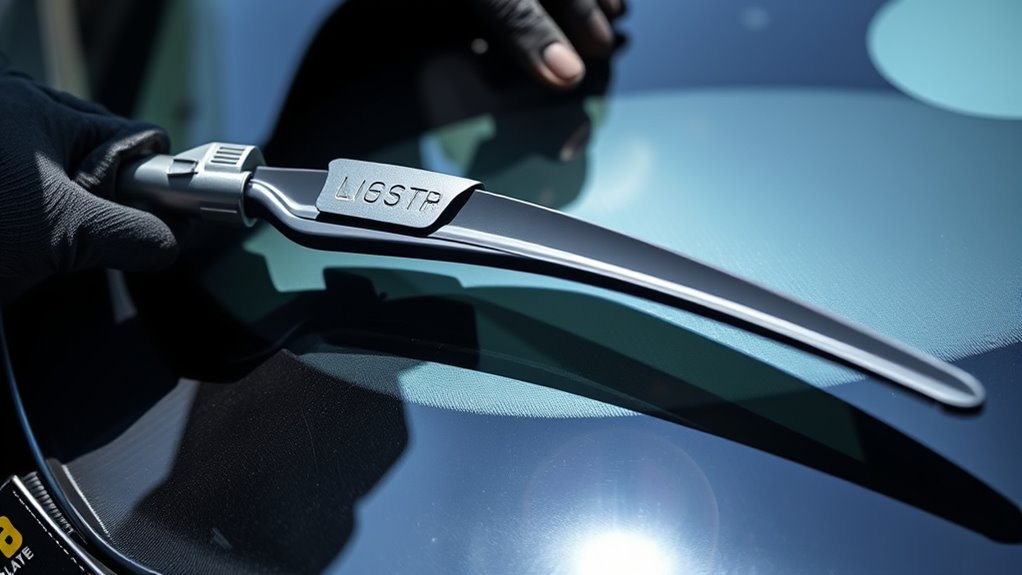
Have your wiper blades started streaking or squeaking during rain? If so, it’s a clear sign you need to replace them. Wiper blade types vary, including traditional frame-style blades, beam blades, and hybrid designs. Each type has its advantages, but regardless of which you have, proper installation techniques are essential to guarantee they work effectively.
Wiper blades streaking or squeaking? Replace them promptly and ensure proper installation for clear, effective windshield wiping.
First, identify your current wiper blade type. Some blades have a metal frame that holds the rubber, while others are sleek, single-piece beam blades. Knowing your blade type helps you select the right replacement. Once you’ve chosen the correct blades, start by lifting the wiper arm away from the windshield. Be gentle, as the arm is under tension and could snap back if not handled carefully. Most modern blades have a small tab or release mechanism; press or lift this to detach the blade from the arm.
Next, examine how your existing blades are attached. For frame-style blades, there’s usually a hook or pin system. For beam blades, the attachment might be a simple slide-in clip. When installing, always follow proper installation techniques to prevent damage or poor contact. For hook-type blades, slide the new blade onto the arm’s hook, then secure it with the locking mechanism. Make sure it clicks into place and is firmly attached. For slide-in clips, align the blade’s connector with the clip on the arm, then push until it clicks securely.
While replacing, double-check that the blade is oriented correctly and aligned properly against the windshield. Proper installation techniques involve ensuring that the blade sits flat against the glass without gaps, so it can wipe smoothly across the surface. Once attached, gently lower the wiper arm back onto the windshield. Turn on your wipers briefly to test their movement and ensure they clear water effectively. If they skip or leave streaks, double-check the installation, and make sure the blade is seated properly.
Additionally, inspecting your wiper blades regularly and replacing them when they show signs of wear prolongs their lifespan and keeps your windshield clear. Remember, choosing the correct wiper blade types and mastering proper installation techniques will make the process straightforward and maximize performance. With a little care, replacing your wiper blades becomes a quick task that improves visibility and driving safety during rainy days.
As an affiliate, we earn on qualifying purchases.
Frequently Asked Questions
How Often Should I Replace My Wiper Blades?
You should replace your wiper blades every 6 to 12 months, but it depends on blade quality and weather conditions. If you notice streaking, cracking, or squeaking, it’s time for new blades. Harsh weather like snow, ice, or intense sun can wear them faster. Regularly inspect your blades and substitute them as needed to guarantee clear visibility and safe driving in any weather.
Can I Install Wiper Blades Myself?
Yes, you can definitely install wiper blades yourself, turning a simple DIY maintenance task into a breeze. Just follow safety precautions, like wearing gloves and working carefully, to avoid any mishaps. Think of it as giving your car a quick tune-up—easy and satisfying. With the right tools and a little patience, you’ll have new wiper blades in no time, ensuring clear visibility and safer driving every day.
What Types of Wiper Blades Are Available?
You have several wiper blade types to choose from, including traditional frame blades, beam blades, and hybrid blades. Blade material varies, with rubber and silicone options, affecting durability and performance. Consider warranty options that offer protection against wear and defects. Think about your climate and driving needs to pick the best type and material, ensuring clear visibility and longevity for your wipers.
How Do I Know if My Wipers Need Replacing?
Imagine your wipers are like a painter’s brush—if the bristles are frayed or streaks appear, they’ve lost their paintability. You’ll notice reduced blade durability, especially after harsh weather impacts like snow or rain, which cause cracking or chattering. If your wipers leave streaks, squeak, or skip, it’s time to replace them. Regular checks help make certain of clear visibility, keeping your windshield pristine and your drive safe.
Are There Different Wiper Blade Sizes for Various Vehicles?
Yes, there are different wiper blade sizes for various vehicles. Wiper blade compatibility depends on your vehicle’s make and model, so you should check your owner’s manual or measure your current blades for the correct fit. If your vehicle requires custom wiper sizes, you might need to buy special blades or adapters. Always guarantee the blades match your car’s specifications to guarantee ideal visibility and safety during rain or snow.
Conclusion
Replacing your wiper blades is quick and easy, saving you money and ensuring clear visibility. Don’t let fear of doing it wrong hold you back; with just a few simple steps, you can handle it confidently. Remember, taking care of small maintenance tasks keeps your car in top shape and prevents bigger issues later. So go ahead, replace those blades—your safety and peace of mind are worth it.
Evergreen bestsellers Picks
bestsellers
As an affiliate, we earn on qualifying purchases.