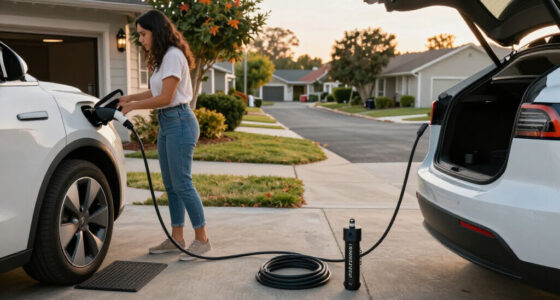
Car battery chargers range from slow maintainers for seasonal storage to powerful garage units that can also help start an engine. I’d put the NOCO GENIUS10 forward as the best overall balance of 10-amp charging, 6V/12V support, and maintenance use; the TowerTop 25A stands out for faster charging, while the NOCO GENIUS2 suits smaller batteries and long-term upkeep. The main tradeoff is speed and extra starting power versus size, simplicity, and suitability for routine maintenance. Battery chemistry, voltage, and charging current matter as much as brand or feature count. Read on for the full breakdown of all 14 options and help matching one to your vehicle and usage.

Get business pricing on garage and car supplies
- Business-only prices and quantity discounts
- Tax-exempt purchasing
- Multiple users, one account, clear invoices
Complete the kit


Key Takeaways
- The NOCO GENIUS10 is the most balanced all-purpose pick in this lineup: its 10A output is more practical for regular vehicle charging than the 1A and 2A maintainers, while its 6V/12V support broadens its uses.
- The TowerTop 25A and 20A/24V charger prioritize speed and range, but buyers should verify battery chemistry and voltage support before choosing a higher-output unit.
- Wheeled Schumacher models occupy a different role: SC1446 and SC1445 combine charging with engine-starting functions, trading compact storage and simple maintenance for garage-oriented capability.
- Low-amp chargers are better suited to upkeep than recovery: NOCO GENIUS1, Schumacher SC1355, and NOCO GENIUS2 make more sense for small batteries or maintenance than for quickly charging a depleted car battery.
- Several 6V/12V options offer more flexibility than 12V-only chargers, but voltage flexibility does not replace checking whether a charger supports the specific battery chemistry and charging task.
| 12V 10A Smart Automatic Battery Charger and Maintainer |  | Best for 12V Battery-Type Flexibility | Output voltage: 14 V DC | Input voltage: 120 V AC | Compatible batteries: 12V AGM, GEL, SLA, VRLA, and LiFePO4 | VIEW LATEST PRICE | See Our Full Breakdown |
| Schumacher Electric SC1446 Wheeled Battery Charger and Engine Starter |  | Best for Garage Starting Power | Model: SC1446 | Power source: AC powered | Battery voltage: 6V and 12V | VIEW LATEST PRICE | See Our Full Breakdown |
| NOCO GENIUS2 2A Smart Battery Charger and Maintainer, 6V/12V | 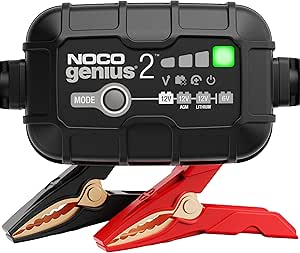 | Best for Small-Battery Maintenance | Output voltage: 12 volts | Amperage: 2 A | Battery compatibility: 6V and 12V lead-acid and LiFePO4 | VIEW LATEST PRICE | See Our Full Breakdown |
| Schumacher Electric SC1280 15A Battery Charger and Maintainer, 6V/12V |  | Best for Faster Automatic Charging | Model: SC1280 | Charging voltage: 6V and 12V | Maximum charging current: 15A | VIEW LATEST PRICE | See Our Full Breakdown |
| Schumacher Electric SC1445 Wheeled 6V/12V 250A Battery Charger and Engine Starter |  | Best for Maximum Starting Output | Model: SC1445 | Voltage: 6V and 12V | Engine start: 250A | VIEW LATEST PRICE | See Our Full Breakdown |
| NOCO GENIUS5 5A 6V/12V Smart Battery Charger and Maintainer |  | Best for Versatile Battery Care | Output voltage: 12V | Input voltage: 120V | Charging current: 5A | VIEW LATEST PRICE | See Our Full Breakdown |
| Schumacher Electric SC1281 6V/12V Battery Charger and Maintainer |  | Best for Charging and Engine Starting | Model: SC1281 | Battery voltage: 6V and 12V | Charging current: 2A–6A | VIEW LATEST PRICE | See Our Full Breakdown |
| Schumacher Electric SC1361 12V Battery Charger, Maintainer, and Engine Starter |  | Best 12V Charger with Engine-Start Backup | Model: SC1361 | Battery voltage: 12V | Charge and maintain current: 2A–6A | VIEW LATEST PRICE | See Our Full Breakdown |
| Schumacher Electric SC1355 1.5A Car Battery Charger and Maintainer |  | Best for Slow, Long-Term Maintenance | Model: SC1355 | Charging current: 1.5A | Compatible voltage: 6V and 12V | VIEW LATEST PRICE | See Our Full Breakdown |
| TowerTop 12V Smart Car Battery Charger and Maintainer, 25A |  | Best for Adjustable High-Output Charging | Output voltage: 12V | Input voltage: 120V AC | Charging current settings: 2A, 10A, 25A, and AUTO | VIEW LATEST PRICE | See Our Full Breakdown |
| NOCO GENIUS10 10A 6V/12V Smart Battery Charger and Maintainer |  | Best Overall | Supported battery voltages: 6V and 12V | Amperage: 10A | Compatible battery types: Lead-acid (AGM, Gel, SLA, VRLA) and LiFePO4 | VIEW LATEST PRICE | See Our Full Breakdown |
| CRAFTSMAN CMXCESM258 6V/12V 12A Battery Charger and Maintainer |  | Best for Battery Checks and Care | Model: CMXCESM258 | Supported battery voltages: 6V and 12V | Maximum charging current: 12A | VIEW LATEST PRICE | See Our Full Breakdown |
| 20-Amp Car Battery Charger, 12V/20A and 24V/10A LiFePO4 & Lead-Acid Automatic Smart Trickle Charger with Desulfator |  | Best for 24V and Faster Charging | Output voltage and current: 12V at 20A; 24V at 10A | Power output: 300W | Input voltage: 100–240V AC, 50–60Hz | VIEW LATEST PRICE | See Our Full Breakdown |
| NOCO GENIUS1 1A 6V/12V Smart Battery Charger and Maintainer |  | Best Compact Maintainer | Supported battery voltages: 6V and 12V | Amperage: 1A | Compatible batteries: Lead-acid and LiFePO4 | VIEW LATEST PRICE | See Our Full Breakdown |
More Details on Our Top Picks
12V 10A Smart Automatic Battery Charger and Maintainer
This 10A smart charger stands out for covering both several 12V lead-acid formats and LiFePO4, with charging, maintenance, trickle, and pulse-repair modes in one unit. Its backlit LCD reports voltage, current, temperature, battery level, and seasonal mode, giving more at-a-glance information than the NOCO GENIUS2, whose lower 2A output suits smaller batteries and slower maintenance. Winter and summer settings adjust charging voltage for seasonal conditions, while protections address reverse connection, short circuits, overcurrent, and overheating. The tradeoff is a clear operating limit: the instructions say not to leave it running unattended for more than 12 hours. It also needs a power source before use, so this is a garage or driveway charger, not roadside backup.
Pros:- Supports multiple 12V lead-acid types as well as LiFePO4
- 10A output is a stronger charging option than the 2A NOCO GENIUS2
- LCD shows charging readings, battery level, temperature, and selected season
- Includes seasonal voltage modes and several electrical protections
Cons:- Should not be left operating unattended for more than 12 hours
- Requires an AC power source and is not a portable jump-start option
Best for: Owners of 12V vehicles or equipment with different lead-acid battery types or LiFePO4 batteries who want a display and selectable charging modes.
Not ideal for: Drivers seeking a set-and-forget maintainer for overnight or extended unattended use, because the stated limit is 12 hours.
- Output voltage:14 V DC
- Input voltage:120 V AC
- Compatible batteries:12V AGM, GEL, SLA, VRLA, and LiFePO4
- Charging modes:Charging, maintenance, trickle charging, and pulse repair
- Seasonal settings:Winter and summer
- Display:Backlit LCD showing voltage, current, temperature, battery level, and seasonal mode
- Cable lengths:102 cm input cable; 60 cm output cable
- Dimensions:5 x 9 x 2 in (D x W x H)
Our verdict“Choose this for flexible 12V battery support and informative controls, but skip it if you need long unattended maintenance.”
Schumacher Electric SC1446 Wheeled Battery Charger and Engine Starter
The SC1446 is the lineup’s practical choice when a charger also needs to deliver an engine-starting boost. It handles 6V and 12V batteries, offers a 200A 12V start, and rolls on a wheeled steel case, making it better suited to a garage or farm than compact maintainers such as the NOCO GENIUS2. Its 10A charging rate and higher boost settings give it more range for hands-on recovery work, while the analog ammeter and 135-minute timer let the operator monitor and control the process. That manual approach is also the main drawback: this is not an automatic charger to connect and leave alone. It must stay plugged into AC power, and its size and wheels favor a work area over a vehicle emergency kit.
Pros:- Combines charging, boost charging, and 200A 12V engine-start capability
- Works with 6V and 12V standard, AGM, gel, and deep-cycle batteries
- Wheels and retractable handle help move the steel unit around a work area
- Analog ammeter and 135-minute timer provide manual monitoring and control
Cons:- Manual operation requires the user to monitor charging and manage the timer
- Requires AC power during use
- Wheeled steel construction is less convenient for storage or roadside carrying than a compact maintainer
Best for: Garage, workshop, or farm owners who want a wheeled charger for 6V and 12V batteries plus engine-start assistance.
Not ideal for: Drivers wanting a compact, automatic maintainer or a charger they can use away from an AC outlet.
- Model:SC1446
- Power source:AC powered
- Battery voltage:6V and 12V
- Engine start:200A at 12V
- Boost charge:40A at 12V; 20A at 6V/12V
- Charging rate:10A at 12V
- Compatible battery types:Standard, AGM, gel, and deep-cycle
- Controls:Manual controls, analog ammeter, and 135-minute timer
- Construction:Steel case with heavy-duty clamps, retractable handle, and wheels
Our verdict“Pick the SC1446 for a powered garage setup where engine-start assistance matters more than automatic, unattended charging.”
NOCO GENIUS2 2A Smart Battery Charger and Maintainer, 6V/12V
At 2A, the GENIUS2 prioritizes steady maintenance and recovery over fast charging. Its 6V and 12V compatibility includes lead-acid and LiFePO4, while a temperature sensor adjusts charging to surrounding conditions. Force Mode can work with batteries discharged to zero volts, and pulse charging targets sulfation—useful features for batteries that have sat unused. Against the 10A YDBAO charger, this NOCO is slower and has a lower stated capacity ceiling, but its 40Ah limit makes its intended scale clearer: smaller vehicle, motorcycle, or equipment batteries rather than larger packs needing a quick recharge. Clamps, eyelet terminals, and mounting hardware add installation flexibility. Buyers should skip it if charging speed or support for batteries above 40Ah is the priority.
Pros:- Supports 6V and 12V lead-acid and LiFePO4 batteries
- Temperature sensing adjusts charging for ambient conditions
- Force Mode can charge batteries down to zero volts
- Includes clamps, eyelet terminals, and mounting hardware for different connection setups
Cons:- 2A output makes it slower than higher-current options such as the 10A YDBAO charger
- Designed for batteries up to 40Ah
- Not an engine starter or high-output recovery charger
Best for: Owners maintaining smaller 6V or 12V lead-acid and LiFePO4 batteries, especially for seasonal vehicles or equipment.
Not ideal for: Drivers who need fast charging or have batteries above the stated 40Ah maximum capacity.
- Output voltage:12 volts
- Amperage:2 A
- Battery compatibility:6V and 12V lead-acid and LiFePO4
- Maximum battery capacity:40 Ah
- Battery charge time:10 hours
- AC cable length:72 inches
- DC cable length:80 inches
- Warranty:3 years
Our verdict“Choose the GENIUS2 for low-current maintenance and recovery on smaller batteries, not for rapid charging or larger batteries.”
Schumacher Electric SC1280 15A Battery Charger and Maintainer, 6V/12V
The SC1280 suits buyers who want more charging output than a low-current maintainer without stepping up to a wheeled engine starter. Its maximum 15A charging current, automatic 6V/12V detection, and multi-stage charging give it a more hands-off role than the manual SC1446, which asks the operator to manage a timer and watch an ammeter. It also adds maintenance, battery testing, restoration, and desulfation for standard, AGM, gel, and deep-cycle batteries. The compromise is that it is still an AC-powered charger, not a portable starting tool, and its listed 3A maintenance current is distinct from its 15A maximum charging rate. Buyers looking for LiFePO4 support should choose a model that explicitly lists that chemistry instead.
Pros:- Up to 15A charging current for a faster-charging role than low-output maintainers
- Automatically detects 6V and 12V batteries
- Combines charging, maintenance, testing, and restoration functions
- Multi-stage charging and reverse-clamp protection add useful control and safety features
Cons:- Requires an AC power outlet during use
- Compatible battery types listed do not include LiFePO4
- Does not offer the engine-start function found on the wheeled SC1446
Best for: Drivers with 6V or 12V standard, AGM, gel, or deep-cycle batteries who want a higher-current charger with automatic voltage detection.
Not ideal for: LiFePO4 battery owners, shoppers needing engine-start capability, or anyone without access to an AC outlet.
- Model:SC1280
- Charging voltage:6V and 12V
- Maximum charging current:15A
- 12V maintenance current:3A
- 6V charging current:2A
- Compatible battery types:Standard, AGM, gel, and deep-cycle
- Functions:Charging, maintaining, testing, and restoring
- Cables:6 ft power cord and 6 ft booster cables
- Safety feature:Reverse-clamp protection
Our verdict“Choose the SC1280 for automatic, higher-current charging of supported lead-acid batteries, but look elsewhere for LiFePO4 or jump-start capability.”
Schumacher Electric SC1445 Wheeled 6V/12V 250A Battery Charger and Engine Starter
The SC1445 is the stronger starting option in this pair of wheeled Schumacher units: its 250A engine start exceeds the SC1446’s 200A rating, making it the better fit when starting assistance is the deciding feature. It also charges at 10A and offers a 50A 12V boost or 25A boost for 6V and 12V batteries, covering more than routine battery maintenance. Like the SC1446, it supports standard, AGM, gel, and deep-cycle batteries and uses a manual timer and analog ammeter, so the operator remains responsible for monitoring the process. The unit’s steel case, wheels, and retractable handle suit a garage or shop, but its AC requirement and manual controls make it less convenient than automatic chargers such as the SC1280 for everyday unattended charging.
Pros:- 250A engine-start rating is higher than the SC1446’s 200A rating
- Offers 10A charging plus 25A and 50A boost modes
- Supports 6V and 12V standard, AGM, gel, and deep-cycle batteries
- Wheels, retractable handle, and steel case suit movement around a workshop
Cons:- Manual timer and analog monitoring require the operator’s attention
- 50A boost mode is specified for 12V batteries only
- Requires AC power and is less suited to portable roadside use
Best for: Garage or workshop owners who need strong 12V engine-start assistance and charging support for both 6V and 12V lead-acid batteries.
Not ideal for: Buyers seeking automatic maintenance, portability for roadside use, or LiFePO4 compatibility.
- Model:SC1445
- Voltage:6V and 12V
- Engine start:250A
- Boost charge:25A for 6V and 12V; 50A for 12V
- Charge mode:10A
- Compatible battery types:Standard, AGM, gel, and deep-cycle
- Timer and display:Manual timer up to 135 minutes; analog ammeter
- Construction and mobility:Heavy-duty steel case, wheels, and retractable handle
- Power cord:6 feet
Our verdict“Pick the SC1445 over the SC1446 when its higher 250A starting output is worth the same manual, workshop-oriented approach.”
NOCO GENIUS5 5A 6V/12V Smart Battery Charger and Maintainer
The NOCO GENIUS5 suits owners who want one charger for both 6V and 12V lead-acid or LiFePO4 batteries, including a battery that has been deeply discharged. Its temperature-adjusted charging helps tailor the process to conditions, while maintenance and pulse charging add useful support for vehicles stored between drives. Compared with the 1.5A Schumacher SC1355, its 5A output gives it more headroom for larger batteries, though it remains a charger rather than a high-current jump-start unit like the Schumacher SC1281. The tradeoff is speed: 5A can take time on a large battery, and reviving a completely dead one with Force Mode requires manual intervention. The included clamps and eyelet terminals also make it easier to choose between temporary charging and a fixed connection.
Pros:- Supports both 6V and 12V lead-acid and LiFePO4 batteries
- Temperature-adjusted charging supports more tailored charging conditions
- Can charge deeply discharged batteries, with Force Mode
- Includes clamps, eyelet terminals, mounting hardware, and a three-year warranty
Cons:- 5A charging can be slow for larger batteries
- Force Mode requires manual operation for completely dead batteries
Best for: Owners maintaining a mix of 6V and 12V lead-acid or LiFePO4 batteries, including vehicles kept in storage.
Not ideal for: Drivers seeking fast recovery or engine starting; its 5A output is modest and it has no listed engine-start function.
- Output voltage:12V
- Input voltage:120V
- Charging current:5A
- Battery compatibility:6V and 12V lead-acid and LiFePO4
- Maximum battery capacity:120Ah
- Listed charge time:8 hours
- AC cable length:72 inches
- DC cable length:80 inches
- Warranty:3 years
Our verdict“Choose the GENIUS5 for flexible 6V/12V charging and long-term care, not for rapid charging or jump-starting.”
Schumacher Electric SC1281 6V/12V Battery Charger and Maintainer
The Schumacher SC1281 is the pick in this group for drivers who want charging and maintenance plus a substantial 100A engine-start function. It also combines battery reconditioning with battery and alternator testing, so it can serve as a broader garage tool than the NOCO GENIUS5, which focuses on charging and upkeep. Support for 6V and 12V batteries, including AGM, deep-cycle, and 12V LiFePO4, adds range across vehicles and battery setups. That breadth comes with less clarity about day-to-day charging: the listed charging current is 2A–6A, and the product data gives no charge-time estimate or dimensions. Unlike the 12V-only SC1361, the SC1281 also accommodates 6V batteries. Choose it for its starting and diagnostic functions, not for a clearly documented compact setup.
Pros:- Offers a 100A engine-start function alongside charging and maintenance
- Supports 6V and 12V batteries, including 12V LiFePO4
- Combines battery and alternator testing with reconditioning
- Includes reverse-polarity protection and automatic shutoff
Cons:- Charging current is listed as 2A–6A, with no stated charge-time estimate
- Physical dimensions are not provided in the product data
- Engine-start assistance adds functions that may be unnecessary for buyers seeking a simple maintainer
Best for: Drivers and home mechanics who want one unit for 6V/12V charging, battery checks, reconditioning, and engine-start assistance.
Not ideal for: Buyers who need a specified charge time, physical dimensions, or a dedicated charger for unattended long-term battery care.
- Model:SC1281
- Battery voltage:6V and 12V
- Charging current:2A–6A
- Boost charging current:12A–30A
- Engine-start current:100A
- Battery types:Standard, AGM, deep-cycle, and 12V LiFePO4
- Functions:Charging, maintaining, testing, and reconditioning
- Safety features:Reverse-polarity protection and automatic shutoff
Our verdict“Choose the SC1281 if engine-start help and battery diagnostics matter as much as routine charging.”
Schumacher Electric SC1361 12V Battery Charger, Maintainer, and Engine Starter
For a garage centered on 12V vehicles, the Schumacher SC1361 pairs routine charging and float-mode maintenance with a 50A engine-start function and 10A boost charging. That makes it a more substantial recovery tool than the 1.5A SC1355, though the SC1355 covers 6V batteries while this model is limited to 12V. Automatic multi-stage charging and float monitoring suit batteries that sit unused, and reverse-polarity protection and spark-proof clamps add safeguards during connection. The main compromise is less charging power than the SC1281’s 100A engine-start function, so buyers needing the stronger starting output should compare the two closely. The product information also describes charging as 2A–6A despite a title that calls it a 6A charger, making the exact charging-mode presentation less clear.
Pros:- Combines charging, maintenance, boost charging, and engine starting
- Automatic multi-stage charging includes float-mode monitoring
- Supports standard, AGM, and LiFePO4 12V batteries
- Includes reverse-polarity protection, spark-proof clamps, and automatic shutoff
Cons:- Limited to 12V batteries, unlike the 6V/12V SC1281 and NOCO GENIUS5
- The listed 2A–6A charging range is not presented consistently with the 6A title
- Its 50A engine-start function is lower than the SC1281’s 100A
Best for: Owners of 12V cars or other compatible vehicles who want a maintainer with boost charging and engine-start assistance.
Not ideal for: People maintaining 6V batteries or needing the SC1281’s 100A engine-start output.
- Model:SC1361
- Battery voltage:12V
- Charge and maintain current:2A–6A
- Boost charge:10A
- Engine-start current:50A
- Battery compatibility:Standard, AGM, and LiFePO4
- Charging features:Automatic multi-stage charging and float-mode monitoring
- Safety features:Reverse-polarity protection, spark-proof clamps, and automatic shutoff
Our verdict“Choose the SC1361 for a 12V-focused garage that wants maintenance and moderate engine-start support in one unit.”
Schumacher Electric SC1355 1.5A Car Battery Charger and Maintainer
The Schumacher SC1355 favors gentle upkeep over quick charging: its 1.5A output is a sensible fit for maintaining a battery during storage, but a poor match for fast recovery of a large, depleted battery. It works with 6V and 12V standard, AGM, and deep-cycle batteries, and adds reconditioning, desulfation, and smart trickle charging. Compared with the NOCO GENIUS5, it supplies less current and does not list LiFePO4 compatibility, so the NOCO is the more flexible choice for mixed battery types or larger charging jobs. The SC1355’s case for buyers is its simple maintenance focus and the included clamps and ring connectors, which support either temporary connections or a more convenient installed hookup. Its low current remains the central limitation.
Pros:- Supports both 6V and 12V standard, AGM, and deep-cycle batteries
- Includes charging, maintenance, reconditioning, and desulfation features
- Smart trickle charging and reverse-polarity protection support maintenance use
- Includes quick-connect clamps and ring connectors
Cons:- 1.5A charging can be very slow for larger or deeply discharged batteries
- LiFePO4 compatibility is not listed, unlike the NOCO GENIUS5
- Provides less charging headroom than the 5A GENIUS5
Best for: Owners of 6V or 12V vehicles kept in storage who want a low-current maintainer with clamps and ring connectors.
Not ideal for: Drivers needing quick charging, higher current for larger batteries, or stated LiFePO4 compatibility.
- Model:SC1355
- Charging current:1.5A
- Compatible voltage:6V and 12V
- Battery types:Standard, AGM, and deep-cycle
- Functions:Charging, maintenance, and reconditioning
- Power cord length:6 ft
- Booster cable length:5 ft
- Included accessories:Quick-connect clamps, quick-connect ring connectors, and user manual
Our verdict“Choose the SC1355 for low-current care of stored 6V or 12V batteries, not for quick charging.”
TowerTop 12V Smart Car Battery Charger and Maintainer, 25A
The TowerTop 25A stands apart from the lower-current NOCO GENIUS5 and Schumacher SC1355 by offering selectable 2A, 10A, and 25A settings, plus automatic charging. That range lets owners choose a gentler maintenance setting or a faster charge for supported 12V batteries; its 100A engine-start function adds another recovery option. Eight-stage charging, repair and pulse-maintenance modes, winter mode, and a display give it more operating choices than the simpler SC1361. The tradeoff is narrower battery-voltage and chemistry coverage: this unit is designed for 12V lead-acid types, not 6V or LiFePO4 batteries. It also cannot repair completely drained batteries, so its repair feature should not be mistaken for a solution to every dead-battery situation.
Pros:- Selectable 2A, 10A, and 25A settings plus automatic charging
- Supports a broad range of 12V lead-acid battery types
- Includes eight-stage charging, repair, pulse maintenance, and winter modes
- Provides a 100A engine-start function and several listed safety protections
Cons:- Designed for 12V lead-acid batteries rather than 6V or LiFePO4 batteries
- Cannot repair completely drained batteries
- Its additional modes and selectable settings may be unnecessary for buyers seeking a basic maintainer
Best for: Owners of 12V lead-acid vehicles who want selectable charging rates, seasonal modes, and engine-start assistance.
Not ideal for: People with 6V or LiFePO4 batteries, or anyone expecting repair mode to revive a completely drained battery.
- Output voltage:12V
- Input voltage:120V AC
- Charging current settings:2A, 10A, 25A, and AUTO
- Maximum charging current:25A
- Engine-start current:100A
- Compatible batteries:STD, AGM, GEL, wet, MF, EFB, calcium, and deep-cycle
- Charging stages:8
- Dimensions:7.68 × 10.04 × 4.92 inches
- Certifications:BC, ETL, FCC
Our verdict“Choose the TowerTop for flexible, higher-output charging of 12V lead-acid batteries, but skip it if you need 6V or LiFePO4 support.”
NOCO GENIUS10 10A 6V/12V Smart Battery Charger and Maintainer
The GENIUS10 is a strong all-around choice for buyers who need more than long-term maintenance: its 10A output can charge larger batteries, and it supports both lead-acid and LiFePO4 chemistries. Temperature-adjusted charging helps tailor the charge to conditions, while Force Mode can work with batteries that read zero volts. That gives it a wider recovery role than the NOCO GENIUS1, though the GENIUS1 is smaller and better suited to maintaining lower-capacity batteries. The tradeoff is a more involved setup: NOCO advises reading the manual to use its modes correctly, and this unit does not offer the 24V charging listed for the 20-Amp Car Battery Charger. For mixed household and vehicle use, its combination of charging power, battery compatibility, and maintenance features makes the most sense.
Pros:- 10A output suits larger batteries better than the GENIUS1’s 1A output.
- Works with 6V and 12V lead-acid and LiFePO4 batteries.
- Temperature adjustment helps tailor charging to ambient conditions.
- Force Mode supports charging batteries that read zero volts.
Cons:- The manual needs careful reading to use the modes correctly.
- Does not provide the 24V charging offered by the 20-Amp Car Battery Charger.
Best for: Drivers who maintain several 6V or 12V vehicles or equipment and want one charger for lead-acid and LiFePO4 batteries, including larger batteries up to 230 Ah.
Not ideal for: Buyers who want a simple, low-output maintainer for a small battery, or who need 24V charging; the GENIUS1 is a smaller-fit choice, while the 20-Amp Car Battery Charger supports 24V.
- Supported battery voltages:6V and 12V
- Amperage:10A
- Compatible battery types:Lead-acid (AGM, Gel, SLA, VRLA) and LiFePO4
- Maximum battery capacity:Up to 230 Ah
- Input voltage:120V
- AC cable length:72 inches
- DC cable length:80 inches
- Warranty:3 years
Our verdict“Choose the GENIUS10 for a versatile 6V/12V charger that balances substantial output, broad battery compatibility, and recovery features.”
CRAFTSMAN CMXCESM258 6V/12V 12A Battery Charger and Maintainer
The CRAFTSMAN CMXCESM258 stands apart by combining charging with battery testing and restoration. Its digital display and automatic voltage detection make it a practical choice for someone who wants status information and several care functions in one unit, rather than a charger limited to routine maintenance. It supports standard, AGM, deep-cycle, and 12V LiFePO4 batteries, with a stated 12A maximum charge current. That exceeds the GENIUS10’s 10A output on paper, but the CRAFTSMAN also specifies lower 3A 12V and 2A 6V charge/maintain modes, so buyers should distinguish those operating modes from its maximum. Its combined 12-foot reach offers flexibility around a vehicle, while the 2-year limited warranty is shorter than the three-year coverage on the NOCO models.
Pros:- Combines charging, maintenance, testing, and restoration functions.
- Supports standard, AGM, deep-cycle, and 12V LiFePO4 batteries.
- Digital display provides charging information.
- Six-foot power and battery cables provide 12 feet of combined reach.
Cons:- The 12A maximum is distinct from the specified 3A 12V and 2A 6V charge/maintain modes.
- Its 2-year limited warranty is shorter than the three-year coverage on the NOCO GENIUS10 and GENIUS1.
Best for: Vehicle owners who want a charger that also tests and restores batteries, with a display and enough cable reach to work around a parked car or equipment.
Not ideal for: Buyers who want a straightforward charger with clearly emphasized charging behavior, or who prioritize a longer warranty; the GENIUS10 and GENIUS1 have three-year warranties.
- Model:CMXCESM258
- Supported battery voltages:6V and 12V
- Maximum charging current:12A
- 12V charge/maintain mode:3A
- 6V charge/maintain mode:2A
- Compatible battery types:Standard, AGM, deep-cycle, and 12V LiFePO4
- Total reach:12 feet
- Warranty:2-year limited
Our verdict“Pick the CRAFTSMAN if testing and restoration functions matter as much as charging, and check its mode-specific current before buying.”
20-Amp Car Battery Charger, 12V/20A and 24V/10A LiFePO4 & Lead-Acid Automatic Smart Trickle Charger with Desulfator
For buyers who need both 12V and 24V charging, this 20-Amp Car Battery Charger fills a gap the other three picks do not: it delivers up to 20A at 12V or 10A at 24V. Its listed battery range of 6–200 Ah and support for LiFePO4 plus numerous lead-acid types make it suited to varied vehicles and equipment. The large LCD shows voltage, current, temperature, and status, offering more at-a-glance information than the GENIUS10’s listed feature set. It also combines charging, maintaining, trickle charging, and desulfation. The tradeoff is that its feature set does not make it a rescue tool for every failed battery: the product description says it cannot revive completely dead or severely damaged batteries, unlike the GENIUS10’s Force Mode claim. It also needs AC mains power, so it is not a standalone portable charger.
Pros:- Provides 20A charging for 12V batteries and 10A for 24V batteries.
- Supports LiFePO4 and a wide range of lead-acid battery types.
- LCD displays voltage, current, temperature, and charging status.
- Includes charge, maintain, trickle, and desulfation functions.
Cons:- Cannot revive completely dead or severely damaged batteries.
- Requires AC mains power, limiting use away from an outlet.
- Its 24V compatibility is less useful to buyers who only need a basic 12V car-battery maintainer.
Best for: Owners of 12V and 24V vehicles or equipment who want higher charging current, broad battery chemistry support, and an informative display near an AC outlet.
Not ideal for: Drivers seeking a charger for completely dead or severely damaged batteries, or anyone who needs to charge away from AC power; the GENIUS10 specifically offers Force Mode for batteries reading zero volts.
- Output voltage and current:12V at 20A; 24V at 10A
- Power output:300W
- Input voltage:100–240V AC, 50–60Hz
- Battery capacity range:6–200 Ah
- Compatible batteries:LiFePO4 and lead-acid: AGM, Gel, SLA, VRLA, flooded, calcium, and EFB
- Modes:Charge, maintain, trickle, desulfate, and summer/winter temperature compensation
- Display:LCD showing voltage, current, temperature, and status
- Safety protections:Overcharge, reverse-polarity, and overheating protection
Our verdict“Choose this charger when 24V support and higher charging current matter more than zero-volt recovery or outlet-free use.”
NOCO GENIUS1 1A 6V/12V Smart Battery Charger and Maintainer
The GENIUS1 is the maintenance-first pick here: its 1A output is suited to keeping a smaller battery topped up over time, not quickly charging a large one. It handles 6V and 12V lead-acid and LiFePO4 batteries, and its temperature sensor adjusts charging to ambient conditions. Like the GENIUS10, it has Force Mode for batteries down to zero volts, but the GENIUS10’s 10A output is a far better match when charging speed or battery capacity is the priority. The GENIUS1 is specified for batteries up to 30 Ah, which gives buyers a clearer size boundary than the CRAFTSMAN CMXCESM258’s broader mode-based description. Its 110-inch cable and included eyelet terminals help with a fixed maintenance setup. The drawback is the slow 1A rate, and the listed charge-time figure is unclear.
Pros:- Works with 6V and 12V lead-acid and LiFePO4 batteries.
- Temperature sensing adjusts charging for ambient conditions.
- Force Mode can charge batteries that read zero volts.
- Long 110-inch cable and eyelet terminals suit a fixed maintenance setup.
Cons:- 1A output can make charging slow, especially compared with the GENIUS10.
- Specified battery capacity is limited to 30 Ah.
- The listed battery charge-time figure is unclear.
Best for: Owners of motorcycles, small cars, or seasonal equipment with batteries up to 30 Ah who want a compact charger for ongoing maintenance.
Not ideal for: People who need to charge a large battery quickly or maintain batteries above 30 Ah; the GENIUS10 offers 10A output and supports capacity up to 230 Ah.
- Supported battery voltages:6V and 12V
- Amperage:1A
- Compatible batteries:Lead-acid and LiFePO4
- Battery capacity:Up to 30 Ah
- Input voltage:120V
- Cable length:110 inches
- Included accessories:Battery clamps and integrated eyelet terminals
- Warranty:3 years
Our verdict“Choose the GENIUS1 for gentle, ongoing care of a smaller 6V or 12V battery, not for fast charging or larger batteries.”
How We Picked
I compared the 14 chargers by the jobs buyers are most likely to need them for: routine battery maintenance, recharging a discharged automotive battery, supporting different battery voltages or chemistries, and adding engine-starting capability. I treated output current as a practical distinction rather than a standalone measure of quality: higher amperage can shorten charging time, while lower-amperage models can be easier to reserve for maintenance. I also weighed whether a unit combines charging and maintaining, how clear its intended role is, and whether its format makes sense for a home garage or occasional use.
The ranking favors useful breadth and a clear everyday role, which puts the NOCO GENIUS10 ahead of specialist slow maintainers and bulky starter-chargers. Higher-output options rank well for buyers who need speed, but their compatibility requirements and more specialized use keep them from being automatic picks for everyone. Compact maintainers rank lower for all-purpose charging, not because they lack a use, but because their lower output narrows the jobs they handle well. I do not treat model names or feature counts as substitutes for matching the charger to the battery and task.
Factors to Consider When Choosing Car Battery Chargers
Before choosing among these car battery chargers, I’d match the charger to the battery, how quickly it needs charging, and where it will be used. A feature that helps in one situation—such as engine starting or high output—can add bulk or complexity without helping a buyer who only wants winter storage maintenance.
Match voltage and battery chemistry first
Check the battery label and vehicle guidance before shopping, rather than assuming every automotive charger works with every battery. A 6V/12V charger offers more flexibility for compatible vehicles and equipment, but it does not automatically support every battery chemistry. Confirm that the charger lists the battery type you own, such as AGM, gel, or lithium, when relevant. The 20A/24V model in this group advertises LiFePO4 and lead-acid support, while many other listed models emphasize 6V/12V charging. Do not choose based on a broad compatibility phrase alone; verify the exact chemistry and voltage combination in the product documentation.
Choose charging current for the job, not just the biggest number
Higher amperage can reduce the time needed to recharge a suitable battery, which can matter when a vehicle must return to service soon. Low-output chargers are usually a better fit for maintaining a battery over time than for quickly replenishing a deeply discharged car battery. A larger current rating is not a reason to ignore the battery maker’s charging guidance. Think about your typical task: a rarely driven car may need maintenance more often than rapid charging, while a garage serving several vehicles may benefit from a higher-output option. If your needs vary, a midrange charger can be a more useful compromise than either a very slow maintainer or a large specialist unit.
Separate maintenance from recovery and starting
Maintaining a healthy battery during storage is different from charging a battery that has gone flat, and both differ from helping start an engine. A maintainer is designed for ongoing upkeep; it should not be mistaken for a jump starter or an engine-start feature. Schumacher’s wheeled SC1446 and SC1445 combine charging with engine-starting functions, making them more garage-oriented than compact NOCO maintainers. That capability may be unnecessary if the only goal is to keep a parked vehicle’s battery topped up. Decide which task you need most, then pay for additional functions only if you have a real use for them.
Consider where the charger will live
A charger that stays in a garage can be larger and heavier than one you plan to move between vehicles or store in a small space. Wheeled units can make sense in a workshop, but they are less convenient for a driver seeking a compact device for occasional use. Smaller maintainers take less room and suit long-term storage setups, though their lower output makes them less versatile for faster charging. Also check whether the supplied cables can reach the battery and a safe power outlet in your intended setup. A practical fit for your workspace can matter more than an extra mode you rarely use.
Treat safety features as part of usability
Automatic operation can reduce the need to monitor charging constantly, but buyers should still follow the charger’s instructions and the vehicle maker’s guidance. Check for clear connection instructions, protections against common connection errors, and a stated maintenance function if you plan to leave a battery connected for storage. Never assume that the word “smart” means the charger suits every battery or can be left in every environment. Read the manual for ventilation, placement, and connection requirements before use. If you are new to charging, straightforward controls and a clearly stated battery compatibility list are more useful than a long list of modes you do not understand.
Pay more for a capability you will actually use
Extra output, broader battery support, or an engine-start function can justify choosing a more capable charger when those features match regular needs. They add less value for someone maintaining one vehicle through a quiet season, where a compact lower-amp model may be sufficient. Buyers with multiple types of vehicles should compare supported voltages and chemistries across their batteries before paying for flexibility. A fast charger can also be a poor fit if the battery manufacturer calls for a different charging approach. I’d spend first on correct compatibility and a suitable charging rate, then on convenience features.
Frequently Asked Questions
Can I use a 1A or 2A charger to recharge a dead car battery?
It may be able to charge a compatible battery, but low-current models such as the NOCO GENIUS1, GENIUS2, and Schumacher SC1355 are better matched to maintenance or gradual charging than speed. A deeply discharged battery could take a long time to recover, and a battery that will not accept a charge may have a fault that a charger cannot fix. Check the battery maker’s guidance and the charger manual before connecting it. If regular recovery charging is part of your need, compare a higher-output model instead of expecting a small maintainer to work quickly.
Should I choose a 6V/12V charger if my car has a 12V battery?
A 6V/12V charger can be useful if you also own compatible 6V equipment, but the extra voltage option does not automatically improve charging for a 12V car. A 12V-only charger may be a simpler match when your needs are limited to one standard 12V battery. In either case, check battery chemistry support as well as voltage; the two are separate compatibility questions. Follow the product instructions for selecting the correct setting before connecting the charger.
Is a charger with an engine-start function a substitute for a jump starter?
Not automatically. The Schumacher SC1446, SC1445, and SC1361 are listed as chargers with engine-start functions, but their operating requirements and intended use should be checked in each manual. A portable jump starter and a garage charger serve different use cases, especially when the vehicle is away from a power outlet. Do not assume that an engine-start feature means a unit is portable or suitable for every vehicle. Choose based on where you need help and the manufacturer’s stated starting procedure.
Can I leave a smart charger connected while my car is in storage?
Only if the charger’s manual specifically describes maintenance use for your battery type and gives instructions for extended connection. A maintainer function is intended to support upkeep, but it does not remove the need to follow placement, ventilation, and connection guidance. Check the battery maker’s storage recommendations too, since the battery’s condition and the vehicle’s setup can affect what is appropriate. If you are unsure whether a charger supports unattended maintenance, disconnect it when the charging instructions say to do so.
When is a 20A or 25A charger worth choosing over a 10A model?
A higher-output charger may be useful when reducing charge time is a recurring priority and the battery is compatible with that charging rate. The TowerTop 25A and the 20A/24V model offer more output than the NOCO GENIUS10, but their specifications and supported battery types need closer checking. For occasional upkeep or a single vehicle, the added output may not change the buying decision enough to justify a larger or more specialized unit. Compare the battery manufacturer’s charging guidance, the charger’s stated compatibility, and your expected use before choosing on amperage alone.
Conclusion
For the broadest everyday fit, I’d choose the NOCO GENIUS10: it combines 10A output with 6V/12V support and maintenance use without taking the specialist route of a wheeled starter-charger. The best value by role is the NOCO GENIUS5 for buyers who want a middle ground between slow maintainers and higher-output units; confirm its compatibility with your battery before buying. For beginners who mainly want to maintain a compatible vehicle battery, the NOCO GENIUS2 keeps the job narrower than a high-output garage model. For premium, speed-focused needs, compare the TowerTop 25A with the 20A/24V charger and let battery compatibility—not the largest output figure—decide. Choose a Schumacher wheeled model if you specifically want charging plus engine-start capability in a garage, or a low-amp NOCO GENIUS1 or Schumacher SC1355 if long-term maintenance and compact storage matter more than fast charging.
Halloween Picks
halloween
As an affiliate, we earn on qualifying purchases.