Portable tire inflators make it easier to top up a low tire at home or handle a pressure warning on the road without relying on a service station. My best overall pick is the DEWALT 20V MAX Corded/Cordless Air Inflator, which stands out for drivers who want flexible power options and an established tool-platform format. The ETENWOLF Vortex S6 is a cordless alternative for buyers who put battery-powered convenience first, while the CRAFTSMAN 12V inflator suits drivers who prefer power from a vehicle outlet. The main tradeoffs are cordless freedom versus dependable external power, and compact size versus the runtime and pace needed for repeated inflation. Read on for the full comparison, including which models make more sense for beginners, occasional use, and a garage already stocked with compatible batteries.

Get business pricing on garage and car supplies
- Business-only prices and quantity discounts
- Tax-exempt purchasing
- Multiple users, one account, clear invoices
Complete the kit


Key Takeaways
- Power-source flexibility separates the leading picks: the DEWALT DCC020IB can work with a compatible 20V battery or external power, while the CRAFTSMAN and AstroAI AIRUN H are 12V choices built around a vehicle outlet.
- Cordless convenience comes with a runtime tradeoff: battery-powered models such as the ETENWOLF Vortex S6 and Airmoto avoid a tether to the car, but battery capacity and recharge planning matter for repeated tire top-ups.
- Maximum PSI is not a speed ranking: several inflators list 150 PSI or more, but that figure alone does not tell buyers how quickly a unit handles a car tire or how long it can run.
- Digital controls and auto shut-off favor simpler operation: models including the CRAFTSMAN and AstroAI AIRUN H offer useful set-and-stop features, while buyers should still confirm the pressure reading and valve connection suit their routine.
- Tool-platform compatibility can change the value equation: DEWALT’s battery-powered option makes more sense for existing 20V users than for someone who must buy a battery, while standalone rechargeable models avoid that dependency.
| CRAFTSMAN Portable 12V Tire Inflator with Digital Gauge and Auto Shut-Off |  | Best for Reliable Car Top-Offs | Power source: 12V DC corded electric | Maximum pressure: 150 PSI | Hose length: 2.17 ft | VIEW LATEST PRICE | See Our Full Breakdown |
| Airmoto Cordless Tire Inflator with Digital Pressure Gauge |  | Best Compact Cordless Pick | Power source: Rechargeable battery | Battery capacity: 2000 mAh | Maximum pressure: 120 PSI | VIEW LATEST PRICE | See Our Full Breakdown |
| ETENWOLF Vortex S6 Cordless Tire Inflator and Air Compressor |  | Best for Heavy-Duty Inflation | Power source: Battery-powered | Battery capacity: 19,200 mAh | Maximum pressure: 160 PSI | VIEW LATEST PRICE | See Our Full Breakdown |
| Hafuloky Portable Tire Inflator with Digital Gauge, 150 PSI |  | Best for Multi-Mode Convenience | Power source: Battery-powered | Maximum pressure: 150 PSI | Manual pressure range: 3–150 PSI | VIEW LATEST PRICE | See Our Full Breakdown |
| OlarHike Cordless Tire Inflator, 4 × 3000mAh Battery |  | Best Lightweight Pick for Standard Tires | Power source: Battery-powered | Battery capacity: Four 3000mAh batteries | Maximum pressure: 150 PSI | VIEW LATEST PRICE | See Our Full Breakdown |
| Lamicall Portable Cordless Tire Inflator, 150 PSI |  | Best for Compact, Multi-Use Carry | Maximum pressure: 150 PSI | Airflow: 35 L/min (1.25 CFM) | Power: Rechargeable battery; maximum 120 W | VIEW LATEST PRICE | See Our Full Breakdown |
| AstroAI L7 Cordless Tire Inflator, 150 PSI Portable Air Compressor |  | Best for Battery-Endurance Information | Maximum pressure: 150 PSI | Battery capacity: 4000 mAh | Inflation capacity: Up to 8 tires (195/65R15) from 30 to 36 PSI per charge | VIEW LATEST PRICE | See Our Full Breakdown |
| OlarHike Portable Tire Inflator with Rechargeable Battery and 12V DC Power |  | Best for Battery or Car-Outlet Backup | Power sources: Rechargeable battery or 12V DC | Battery capacity: Three built-in 2000mAh batteries | Maximum tire pressure: 51 PSI | VIEW LATEST PRICE | See Our Full Breakdown |
| DEWALT Portable Tire Inflator, 150 PSI, 12V DC and Battery Powered |  | Best for a Roadside-Ready Kit | Maximum pressure: 150 PSI | Power sources: Built-in battery or 12V DC car plug | Battery capacity and charge time: 2600 mAh; 6 hours | VIEW LATEST PRICE | See Our Full Breakdown |
| AIRSURE Portable Tire Inflator, 150 PSI Cordless Air Compressor |  | Best for Pressure-Reading Precision | Maximum pressure: 150 PSI | Power source: Battery powered | Pressure tolerance: ±1 PSI | VIEW LATEST PRICE | See Our Full Breakdown |
| AstroAI Cordless Tire Inflator, 160 PSI, Dual Power |  | Best Dual-Power Compact Pick | Maximum pressure: 160 PSI | Power sources: 20V rechargeable battery; 12V DC vehicle adapter | Hose length: 19.7 inches | VIEW LATEST PRICE | See Our Full Breakdown |
| DEWALT 20V MAX Corded/Cordless Air Inflator (DCC020IB), Tool Only |  | Best for Multi-Mode Inflation | Model: DCC020IB | Maximum pressure: 80 PSI | Power sources: 20V MAX battery, 12V DC, or 110V AC | VIEW LATEST PRICE | See Our Full Breakdown |
| ST10 Portable Tire Inflator with Rechargeable Battery and 12V Car Adapter |  | Best for Simple Preset Controls | Model: ST10R | Maximum pressure: 150 PSI | Pressure accuracy: ±1 PSI | VIEW LATEST PRICE | See Our Full Breakdown |
| KeenPower 21V Portable Tire Inflator with 160 PSI Maximum Pressure |  | Best Ready-to-Use Cordless Kit | Model: KPYC218 (C218Y) | Maximum pressure: 160 PSI | Power sources: 21V rechargeable battery; 12V DC car adapter | VIEW LATEST PRICE | See Our Full Breakdown |
| AstroAI AIRUN H 12V Portable Tire Inflator with Digital Gauge, Auto Shut-Off, and LED Light |  | Best Simple Glove-Box Backup | Power source: 12V DC car outlet | Maximum pressure: 100 PSI | Airflow: 35 L/min | VIEW LATEST PRICE | See Our Full Breakdown |
| portable tire inflator | Maximum pressure | Weight |
|---|---|---|
| CRAFTSMAN Portable 12V Tire In | 150 PSI | 1.9 lb (listed as 1.13 kg) |
| Airmoto Cordless Tire Inflator | 120 PSI | 1.2 lb |
| ETENWOLF Vortex S6 Cordless Ti | 160 PSI | 6 lb |
| Hafuloky Portable Tire Inflato | 150 PSI | — |
| OlarHike Cordless Tire Inflato | 150 PSI | 1.3 lb |
| Lamicall Portable Cordless Tir | 150 PSI | — |
| AstroAI L7 Cordless Tire Infla | 150 PSI | 15.36 ounces |
| OlarHike Portable Tire Inflato | — | — |
| DEWALT Portable Tire Inflator | 150 PSI | — |
| AIRSURE Portable Tire Inflator | 150 PSI | — |
| AstroAI Cordless Tire Inflator | 160 PSI | 1.15 kg |
| DEWALT 20V MAX Corded/Cordless | 80 PSI | 2.9 pounds |
| ST10 Portable Tire Inflator wi | 150 PSI | 16 ounces |
| KeenPower 21V Portable Tire In | 160 PSI | — |
| AstroAI AIRUN H 12V Portable T | 100 PSI | — |
More Details on Our Top Picks
CRAFTSMAN Portable 12V Tire Inflator with Digital Gauge and Auto Shut-Off
The CRAFTSMAN is a good fit for drivers who want a straightforward roadside inflator and prefer car-powered operation over keeping a battery charged. Its 12V plug supplies power from the vehicle, while the display shows both current and target pressure and auto shut-off stops inflation at the selected setting. The stated example—raising a 195/65 R15 tire from 30 to 36 PSI in under a minute—makes it more suited to routine top-offs than the Airmoto, whose cordless design is handier away from a power outlet but depends on its battery.
The tradeoff is reach: the 2.17-foot hose may make access awkward around some vehicles, and the unit needs a working 12V accessory outlet. At 1.9 pounds, with a bag and useful adapters, it remains easy to store. Choose it for dependable car-based use; skip it if outlet-free operation is your priority.
Pros:- 12V vehicle power avoids reliance on a rechargeable battery
- Digital display shows current and target pressure in three units
- Automatic shut-off helps prevent over-inflation
- Includes a carry bag, adapters, and a three-mode LED light
Cons:- Requires a 12V car accessory outlet
- Short 2.17-foot hose can limit reach around a vehicle
- 78 dB operating noise may be intrusive in quiet settings
Best for: Drivers who want a compact, car-powered inflator for routine tire top-offs and occasional bike or ball inflation.
Not ideal for: Drivers who need to inflate tires away from a vehicle or need a long hose to reach wheels comfortably.
- Power source:12V DC corded electric
- Maximum pressure:150 PSI
- Hose length:2.17 ft
- Power cord length:10 ft
- Weight:1.9 lb (listed as 1.13 kg)
- Pressure units:PSI, BAR, kg/cm²
- Display and lighting:LCD digital gauge; built-in LED with three modes
- Noise level:78 dB
Our verdict“Choose the CRAFTSMAN if you want a compact, car-powered inflator for routine top-offs and can work around its short hose.”
Airmoto Cordless Tire Inflator with Digital Pressure Gauge
The Airmoto puts cordless convenience ahead of high-volume work. At 1.2 pounds and about six inches long, it is easy to keep in a glove box or take along for a bicycle, motorcycle, or car-pressure check without routing a cord from the vehicle. The digital gauge supports four units, and automatic shut-off makes setting a target simpler than manually watching the pressure rise. Compared with the larger Hafuloky, the Airmoto is lighter and more compact, though Hafuloky adds a deflation function and power-bank capability.
Its 120 PSI ceiling and battery-powered design suit ordinary top-offs, not sustained heavy-duty tire work. The manufacturer also rules it out for large-volume inflatables such as air mattresses and paddle boards. Battery performance can fall in cold weather or with larger, higher-pressure tires, so it is a less dependable choice for repeated demanding jobs than the ETENWOLF Vortex S6. Pick it for occasional, portable use rather than capacity.
Pros:- Lightweight 1.2-pound cordless design is easy to store and carry
- Automatic shut-off works with a digital pressure gauge
- Gauge supports PSI, kPa, BAR, and kg/cm²
- Includes Schrader and Presta adapters, sports needle, LED light, and pouch
Cons:- 120 PSI maximum and limited capacity make it a poor fit for heavy-duty use
- Not intended for large-volume inflatables such as air mattresses or paddle boards
- Battery performance may decline in cold weather and during demanding inflation
Best for: Drivers, motorcyclists, and cyclists who want a small cordless inflator for occasional pressure checks and top-offs.
Not ideal for: Owners of heavy-duty vehicles or large inflatables, and anyone who needs repeated high-pressure inflation or wants to avoid battery charging.
- Power source:Rechargeable battery
- Battery capacity:2000 mAh
- Maximum pressure:120 PSI
- Airflow:20 L/min
- Dimensions:6.1 × 2.4 × 1.59 in
- Weight:1.2 lb
- Pressure units:PSI, kPa, BAR, kg/cm²
- Hose length:6.1 in
Our verdict“Pick the Airmoto for compact cordless convenience on ordinary tires and small inflatables, not for heavy-duty or high-volume jobs.”
ETENWOLF Vortex S6 Cordless Tire Inflator and Air Compressor
Among these five, the ETENWOLF Vortex S6 is the strongest match for buyers who need a cordless unit with more capacity than a compact emergency top-off tool. Its dual-cylinder design, 42 L/min airflow at 0 PSI, 160 PSI maximum, and stated 100% duty cycle are aimed at longer or more demanding inflation jobs. That makes it a different proposition from the Airmoto, which is far easier to stash but is not intended for heavy-load tires. Preset modes, pressure memory, and a gauge rated to ±1 PSI also reduce fiddling when repeating a setting.
The capacity comes with a clear portability cost: at 6 pounds, this is much bulkier than the 1.2-pound Airmoto or the 1.3-pound OlarHike. Its 45 cm hose is not especially long, and ETENWOLF says it is not for SUPs. The 1,000-lumen light and two-way USB-C charging add useful roadside utility, but this is the pick for capability, not the lightest kit.
Pros:- Dual cylinders and 42 L/min airflow support demanding inflation tasks
- 160 PSI maximum pressure and stated 100% duty cycle
- Automatic shut-off, seven preset modes, and pressure memory
- 1,000-lumen light and two-way 45W USB-C charging
Cons:- Six-pound weight makes it less convenient to carry than compact cordless options
- Not intended for SUP inflation
- 45 cm hose may limit reach around some vehicles
Best for: Drivers who need a cordless inflator for repeated car or heavier vehicle tire work and value airflow and duty cycle over minimal weight.
Not ideal for: Buyers seeking a glove-box-sized emergency pump, or anyone who needs an inflator for SUPs.
- Power source:Battery-powered
- Battery capacity:19,200 mAh
- Maximum pressure:160 PSI
- Airflow:1.5 CFM / 42 L/min at 0 PSI
- Duty cycle:100%
- Inflation mechanism:Dual cylinder
- Weight:6 lb
- Hose length:45 cm
- Gauge accuracy:±1 PSI
Our verdict“Choose the Vortex S6 when cordless capacity and sustained use matter more than a lightweight, glove-box-friendly design.”
Hafuloky Portable Tire Inflator with Digital Gauge, 150 PSI
The Hafuloky is the most feature-packed middle ground here for buyers who want more than a tire-only pump. It combines 36 L/min airflow and a 150 PSI ceiling with car, motorcycle, bicycle, ball, and manual settings; a deflation function and power-bank capability widen its use beyond the CRAFTSMAN, which is simpler and runs from a 12V outlet. Its preset shut-off is helpful for routine top-offs, while the manual range from 3 to 150 PSI gives more control when a preset does not match the job.
Those extras do not make it the best choice for everyone. The battery-powered design needs charging, and its plastic construction is a less reassuring fit for buyers prioritizing a more rugged body. The listed 40 dB noise level is lower than the 78 dB figures listed for the CRAFTSMAN and Airmoto, but durability details are limited. Choose Hafuloky for flexible functions; choose the CRAFTSMAN if you prefer vehicle-powered simplicity.
Pros:- 36 L/min airflow and 150 PSI maximum pressure
- Multiple inflation modes plus a 3–150 PSI manual range
- Preset automatic shut-off and a deflation function
- Includes LED lighting, power-bank functionality, and multiple adapters
Cons:- Battery-powered operation requires advance charging
- Plastic construction may be less durable than metal-bodied alternatives
- Listed specifications do not state battery capacity or weight
Best for: Drivers who want one rechargeable inflator for tires, balls, and other small items, with manual pressure control and a deflation function.
Not ideal for: Buyers who need a rugged metal-bodied tool or prefer an inflator powered directly from a car outlet.
- Power source:Battery-powered
- Maximum pressure:150 PSI
- Manual pressure range:3–150 PSI
- Airflow:36 L/min
- Inflation modes:Bicycle, motorcycle, car, ball, and manual
- Functions:Automatic shut-off, deflation, LED light, and power bank
- Construction:Plastic; oil-free
- Noise level:40 dB
- Warranty:1 year
Our verdict“Choose Hafuloky if you want a rechargeable inflator with flexible settings, deflation, and power-bank functions rather than a simpler 12V tool.”
OlarHike Cordless Tire Inflator, 4 × 3000mAh Battery
The OlarHike makes a strong case as a compact cordless option for everyday car and pickup tire top-offs. It weighs 1.3 pounds, includes a 23.6-inch hose, and offers four inflation modes with pressure memory and a dual LED display. Compared with the Airmoto, it lists a higher 150 PSI maximum and a longer hose, though the stated 51 PSI tire limit matters more than the headline maximum for vehicle fit. Its four 3000mAh batteries, auto shut-off, flashlight, and USB output make it a practical self-contained kit for drivers who do not want a 12V cable.
The main limitation is specialization: it is not suitable for heavy-duty pickup trucks or RVs, and it has no 12V car cable as a backup power option. At 26 L/min, it also does not match the ETENWOLF Vortex S6’s listed 42 L/min airflow for more demanding work. Pick OlarHike for portability and standard tires, not broad vehicle coverage.
Pros:- Lightweight 1.3-pound cordless design with a 23.6-inch hose
- Four 3000mAh batteries and USB output
- Four inflation modes, pressure memory, and automatic shut-off
- Dual LED display, flashlight, storage bag, and included adapters
Cons:- Limited to car and pickup tires up to 51 PSI
- Not compatible with heavy-duty pickup trucks or RVs
- No 12V car cable for plugged-in operation
Best for: Drivers of standard cars and pickups who want a lightweight cordless inflator with a longer hose, presets, and USB device charging.
Not ideal for: RV owners and drivers of heavy-duty pickups, or anyone who wants a 12V car-power fallback.
- Power source:Battery-powered
- Battery capacity:Four 3000mAh batteries
- Maximum pressure:150 PSI
- Tire inflation limit:Car and pickup tires up to 51 PSI
- Airflow:26 L/min
- Hose length:23.6 in
- Weight:1.3 lb
- Inflation modes:Car, motorcycle, bicycle, and sports equipment
- Display and units:Dual LED display; PSI, BAR, KPA, kg/cm²
Our verdict“Choose the OlarHike for portable cordless top-offs on standard car or pickup tires, but skip it if you need heavy-duty coverage or backup 12V power.”
Lamicall Portable Cordless Tire Inflator, 150 PSI
The Lamicall Portable Cordless Tire Inflator makes the most sense for drivers who want one small tool for occasional tire top-offs and sports equipment. At 450 g and 6.3 inches long, it is especially easy to stash in a glove box or backpack. Its five presets, manual mode, and four pressure units offer more setup flexibility than the simpler task-focused options, while the automatic shutoff and digital pressure-and-battery display make target pressure easier to track. Compared with the AstroAI L7, Lamicall includes a Presta adapter and ball needle but does not list a battery capacity or tire-per-charge figure, so buyers have less information for planning repeated use. The stated ±2 PSI shutoff error also calls for checking pressure with a separate gauge when precision matters.
Pros:- Compact 450 g body is easy to store and carry.
- Five presets plus manual mode support varied inflation tasks.
- Digital pressure and battery display helps monitor use.
- Includes a Presta valve adapter and ball needle, plus a three-mode emergency light.
Cons:- Automatic shutoff has a stated pressure error of ±2 PSI.
- No battery capacity or per-charge tire estimate is provided.
- Charging requires an adapter with output above 5V/2A.
Best for: Drivers and cyclists who want a very small cordless inflator for occasional car top-offs, bicycle valves, and sports balls.
Not ideal for: Drivers who need a documented multi-tire battery capacity or tightly controlled pressure, since the listing gives no charge-per-tire figure and states a ±2 PSI shutoff error.
- Maximum pressure:150 PSI
- Airflow:35 L/min (1.25 CFM)
- Power:Rechargeable battery; maximum 120 W
- Inflation modes:5 presets and 1 manual mode
- Pressure units:PSI, BAR, KPA, KG/CM²
- Automatic shutoff:Yes; stated error ±2 PSI
- Size and weight:6.3 × 2.7 × 2.1 in; 450 g
- Included accessories:Presta valve adapter and ball inflation needle
Our verdict“Choose Lamicall for a lightweight, multi-purpose inflator you can keep close at hand, but look elsewhere if you need a stated battery endurance figure or more precise shutoff.”
AstroAI L7 Cordless Tire Inflator, 150 PSI Portable Air Compressor
The AstroAI L7 stands out for buyers who want a cordless inflator with a clearly stated car top-off capacity: its 4,000 mAh battery is listed for up to eight 195/65R15 tires from 30 to 36 PSI per charge. That makes it easier to judge whether it suits a household’s routine than the Lamicall, whose listing gives no per-charge estimate. Presets for cars, motorcycles, bicycles, and balls, plus a custom range from 3 to 150 PSI, keep common jobs straightforward. Its USB-C and USB input/output add backup-device utility the Lamicall does not list. The tradeoffs are a 15-minute continuous-use limit followed by a 10-minute rest, an 80 dB noise level, and a stated restriction against tires larger than 25 inches. It is a compact car-and-light-duty pick, not a truck inflator.
Pros:- Published battery capacity and tire top-off estimate help set expectations.
- Presets and custom pressure settings cover cars, bikes, motorcycles, and balls.
- USB-C and USB input/output add practical backup-power options.
- Lightweight at 15.36 ounces, with flashlight, SOS, and strobe modes.
Cons:- Not suitable for tires larger than 25 inches, including heavy-duty truck tires.
- Continuous use is limited to 15 minutes before a 10-minute rest.
- Listed noise level is 80 dB.
Best for: Car owners who want a cordless top-off tool with a published per-charge estimate and occasional backup charging for a phone.
Not ideal for: Owners of heavy-duty trucks or anyone planning long inflation sessions, since it is not suited to tires over 25 inches and requires rest after 15 minutes of continuous use.
- Maximum pressure:150 PSI
- Battery capacity:4000 mAh
- Inflation capacity:Up to 8 tires (195/65R15) from 30 to 36 PSI per charge
- Preset modes:Car, motorcycle, bicycle, ball, and custom
- Custom pressure range:3–150 PSI
- Continuous-use limit:15 minutes, followed by a 10-minute rest
- Weight:15.36 ounces
- Ports and light:USB-C and USB input/output; flashlight, SOS, and strobe
Our verdict“Pick the AstroAI L7 for compact cordless car top-offs when its stated battery capacity and USB ports matter more than extended run time or truck compatibility.”
OlarHike Portable Tire Inflator with Rechargeable Battery and 12V DC Power
The OlarHike Portable Tire Inflator is the flexible choice for drivers who do not want a depleted battery to end a roadside top-off. It runs from its built-in batteries or a 12V car outlet, unlike the cordless-only Lamicall. The listing also gives useful performance context: a 195/65 R15 tire goes from 30 to 35 PSI in 55 seconds, while an SUV tire takes 2.2 minutes; battery capacity is listed as up to 18 standard-car or 11 SUV top-offs over that same pressure change. A dual LED screen, automatic shutoff, four presets, USB output, and a storage bag make it a capable car-kit option. The limit is its 51 PSI maximum, which rules it out for heavy-duty truck and RV tires; its charging adapter requirement is another detail to plan around.
Pros:- Can run from its rechargeable battery or a 12V car outlet.
- Published inflation times and per-charge top-off estimates help with planning.
- Dual LED display, automatic shutoff, and setting memory support straightforward operation.
- Includes a storage bag, long hose, valve adapters, ball needle, and USB output.
Cons:- Maximum tire pressure of 51 PSI excludes many heavy-duty and RV applications.
- Charging requires a 5V 2A or 5V 3A adapter.
- The listing limits its recommended vehicle use to cars and pickup trucks.
Best for: Drivers who want a compact inflator for standard car or pickup tires and value a 12V fallback if the rechargeable battery runs down.
Not ideal for: RV and heavy-duty pickup owners who need pressures above 51 PSI, or buyers seeking one inflator for high-pressure applications.
- Power sources:Rechargeable battery or 12V DC
- Battery capacity:Three built-in 2000mAh batteries
- Maximum tire pressure:51 PSI
- Inflation time:195/65 R15 tire from 30 to 35 PSI in 55 seconds
- Battery inflation capacity:Up to 18 standard-car or 11 SUV tire top-offs from 30 to 35 PSI
- Preset modes:Car, bike, motorcycle, and sports equipment
- Size and weight:6.5 × 2.76 × 2.17 in; 1.2 lb
- Included power and accessories:12V DC power cord, Type-C charging cable, long hose, adapters, ball needle, and storage bag
Our verdict“Choose OlarHike if you want battery convenience with a 12V backup for ordinary vehicle tires, but skip it for applications that exceed 51 PSI.”
DEWALT Portable Tire Inflator, 150 PSI, 12V DC and Battery Powered
The DEWALT DXIF1201 suits drivers who want an inflator kit that can work cordless or draw power from the car. Its built-in 2600 mAh battery is smaller than the AstroAI L7’s 4000 mAh unit, but DEWALT adds a 10-foot 12V cord, extra fuse, storage bag, and several adapters, giving buyers a useful set of roadside spares. Five presets, four pressure units, a digital gauge, and automatic shutoff cover the routine controls, while the built-in cooling fan and LED light add practical support during use. Compared with the OlarHike, it has a much higher stated maximum pressure, but the listing does not provide a tire-per-charge estimate. Its six-hour charge time and 85 dB noise level are meaningful compromises for a compact backup tool.
Pros:- Battery and 12V car-plug operation provide two ways to power inflation.
- Five presets, digital gauge, and automatic shutoff simplify common jobs.
- Includes a 10-foot car cord, extra fuse, multiple adapters, and storage bag.
- Built-in cooling fan, LED light, and power-bank function add roadside utility.
Cons:- Battery charging takes 6 hours.
- Listed noise level is 85 dB.
- No battery-powered tire-per-charge estimate is provided.
Best for: Drivers assembling a roadside kit who want battery operation, a car-outlet backup, multiple valve adapters, and an included spare fuse.
Not ideal for: Buyers who need a quick recharge or documented multi-tire battery endurance; the listed charge time is six hours and no per-charge tire figure is given.
- Maximum pressure:150 PSI
- Power sources:Built-in battery or 12V DC car plug
- Battery capacity and charge time:2600 mAh; 6 hours
- Maximum current:7 A
- Pressure units:PSI, kPa, bar, kg/cm²
- Presets:Car, motorcycle, bike, ball, and custom
- Weight and noise:0.63 kg; 85 dB
- Included accessories:10 ft 12V cord, extra fuse, Presta adapter, ball needle, inflatable adapter, hose, USB-C cable, and storage bag
Our verdict“Choose the DEWALT for a well-equipped roadside kit with dual power options, but not if fast recharging or a published battery run estimate is a priority.”
AIRSURE Portable Tire Inflator, 150 PSI Cordless Air Compressor
The AIRSURE Portable Tire Inflator is the precision-focused compact pick in this group: its stated ±1 PSI pressure tolerance is tighter than Lamicall’s ±2 PSI shutoff figure. That makes it a better fit for buyers who want a closer pressure target from a small cordless unit, though a separate gauge remains useful when exact readings matter. Its compact 2.83 × 1.69 × 5.11-inch body, preset memory, automatic shutoff, LED light, and USB output cover the everyday conveniences found on the AstroAI L7 as well. AIRSURE also lists use for camping gear and includes four nozzles. The tradeoff is sparse performance data: unlike the AstroAI L7, it provides no battery capacity, per-charge tire estimate, or continuous-use limit. The instructions also call for short bursts when inflating small items.
Pros:- Stated pressure tolerance of ±1 PSI is tighter than Lamicall’s listed ±2 PSI shutoff error.
- Small dimensions and cordless operation make it easy to pack.
- Preset memory, digital gauge, and automatic shutoff support repeatable settings.
- Four nozzles, storage bag, LED light, and USB output add multi-use convenience.
Cons:- No battery capacity or per-charge tire estimate is provided.
- Small items should be inflated slowly in short bursts.
- No continuous-use limit or inflation-time data is listed.
Best for: Drivers and cyclists who prioritize a compact cordless inflator with a stated ±1 PSI tolerance for occasional tire and gear inflation.
Not ideal for: Buyers who need a verified battery runtime or plan long inflation sessions, since the listing gives no battery capacity, tire-per-charge estimate, or continuous-use limit.
- Maximum pressure:150 PSI
- Power source:Battery powered
- Pressure tolerance:±1 PSI
- Pressure units:PSI, BAR, KPA, KG/CM²
- Dimensions:2.83 × 1.69 × 5.11 in
- Materials:ABS+PC
- Features:Digital gauge, preset memory, automatic shutoff, LED light, and USB output
- Included components:Air hose, charging cable, storage bag, and four nozzles
Our verdict“Pick AIRSURE for a compact, multi-use inflator with a tighter stated pressure tolerance, but choose the AstroAI L7 if battery endurance information matters more.”
AstroAI Cordless Tire Inflator, 160 PSI, Dual Power
Battery or 12V backup is the main reason I’d choose this AstroAI: it can handle roadside top-ups without a corded outlet, while the vehicle adapter offers a fallback when the battery is depleted. Its preset auto shut-off and digital gauge make setting a target straightforward, and the metal cylinder and gear system distinguish it from simpler plastic-bodied options such as the ST10. It also includes adapters for balls and inflatables, so it can serve beyond car tires.
The tradeoff is that the charger is not included, adding a setup step, and continuous operation is capped at 20 minutes. Compared with the more versatile DEWALT DCC020IB, it lacks AC power and high-volume inflation and deflation modes, but it is a more focused choice for tire checks and portable use.
Pros:- Runs on a rechargeable 20V battery or a 12V vehicle adapter
- Preset auto shut-off and a digital gauge help control target pressure
- Metal cylinder and gear system
- Includes adapters for tires, sports balls, and inflatables
Cons:- Charger is not included
- Continuous operation is limited to 20 minutes
Best for: Drivers who want cordless tire top-ups with a 12V vehicle-powered backup and occasional use for bicycles or sports balls
Not ideal for: Buyers who need a ready-to-use kit with a charger included, or who want AC power and high-volume modes for large inflatables
- Maximum pressure:160 PSI
- Power sources:20V rechargeable battery; 12V DC vehicle adapter
- Hose length:19.7 inches
- Continuous operation:Up to 20 minutes
- Display units:PSI, BAR, KPA
- Weight:1.15 kg
- Dimensions:6.69 × 3.15 × 9.45 inches
- Included accessories:Storage bag, nozzle adapters, USB-C charging cord
- Charger:Not included
Our verdict“Choose this AstroAI for cordless tire inflation with a useful vehicle-powered fallback, but skip it if you need a complete charging kit or high-volume inflating.”
DEWALT 20V MAX Corded/Cordless Air Inflator (DCC020IB), Tool Only
The three power options make the DEWALT DCC020IB the most adaptable pick here for a garage, vehicle, or campsite: it can run from a 20V MAX battery, 12V DC, or 110V AC. Its digital gauge and automatic shutoff suit tire pressure adjustments, while high-volume inflation and deflation modes extend its usefulness to larger inflatables. That gives it a broader job list than the tire-focused AstroAI 160 PSI, which has a higher pressure ceiling but no high-volume mode.
The key compromise is a maximum of 80 PSI, below the 100–160 PSI limits listed for the other inflators in this group. This is a tool-only unit: the battery, charger, and AC power adapter are sold separately, so buyers without compatible DEWALT gear face extra setup needs. I’d pick it for versatility, not for the highest pressure rating.
Pros:- Supports 20V MAX battery, 12V DC, and 110V AC power
- High-pressure and high-volume inflation modes, plus deflation
- Digital gauge and automatic shutoff support controlled tire inflation
- Onboard accessory storage, LED light, and rubber feet
Cons:- Maximum pressure is 80 PSI, lower than the other listed inflators
- Battery, charger, and AC power adapter are sold separately
Best for: DEWALT 20V MAX owners who want one inflator for vehicle tires and larger inflatables, with access to multiple power sources
Not ideal for: Drivers who need a higher pressure ceiling, or buyers who want a complete battery-and-charger kit out of the box
- Model:DCC020IB
- Maximum pressure:80 PSI
- Power sources:20V MAX battery, 12V DC, or 110V AC
- Power:120 watts
- Weight:2.9 pounds
- Dimensions:12.97 × 10.22 × 5.59 inches
- Included components:12V DC power cord, high-pressure tapered nozzle, inflator needle, Presta valve adapter
- Battery and charger:Sold separately
- Warranty:3 years on material and workmanship
Our verdict“Choose the DEWALT if you value multi-mode use and already have compatible power gear; pick a higher-pressure model for tire inflation beyond 80 PSI.”
ST10 Portable Tire Inflator with Rechargeable Battery and 12V Car Adapter
The ST10 is a practical fit for drivers who want a clear preset-based routine rather than a long list of operating modes. Five settings cover bicycles, motorcycles, cars, balls, and custom pressure, while its LCD shows live pressure and the unit stops automatically at the chosen target. At 16 ounces, it is lighter than the DEWALT DCC020IB and includes both a rechargeable battery and a 12V car adapter, giving it flexibility for use away from the vehicle or at the roadside.
Its 150 PSI maximum sits below the 160 PSI AstroAI and KeenPower models, though that difference may not matter for typical car-tire top-ups. The plastic construction is a less rugged material choice than the AstroAI’s metal cylinder and gear system. USB-C charging and a 5V/2A output add utility, but I’d look elsewhere if a more robust build is the priority.
Pros:- Five preset modes plus a custom setting simplify pressure selection
- Rechargeable battery and included 12V car adapter provide two power options
- Lightweight at 16 ounces
- USB-C charging, USB output, and LED light add practical functions
Cons:- 150 PSI maximum is below the 160 PSI AstroAI and KeenPower models
- Plastic construction may not suit buyers seeking a more robust build
Best for: Drivers who want a lightweight inflator with labeled modes for cars, bikes, motorcycles, and sports balls
Not ideal for: Buyers prioritizing metal internal components or a 160 PSI maximum pressure rating
- Model:ST10R
- Maximum pressure:150 PSI
- Pressure accuracy:±1 PSI
- Preset modes:Bicycle, motorcycle, car, ball, custom
- Power sources:Rechargeable lithium-ion battery; 12V car adapter
- Pressure units:BAR, KPA, PSI, KG/CM²
- USB output:5V/2A
- Weight:16 ounces
- Charging port:USB-C
Our verdict“Pick the ST10 for lightweight, preset-driven tire and ball inflation, but choose the AstroAI 160 PSI if its higher pressure ceiling and metal internal system matter more.”
KeenPower 21V Portable Tire Inflator with 160 PSI Maximum Pressure
The KeenPower is the easiest of these cordless choices to buy as a ready-to-go package: it includes a 21V battery, charger, car adapter, bag, and nozzles. Its 160 PSI ceiling matches the AstroAI dual-power model, and automatic shutoff with a digital gauge supports set-and-stop pressure adjustments. A three-mode flashlight and QC3.0 USB output give it some roadside and device-charging utility that the ST10 does not match in the same combination.
There are limits to that convenience. KeenPower specifies that it is not suitable for large truck tires, so its pressure rating should not be mistaken for heavy-duty capacity. Its 50 cm hose is also shorter than the AstroAI’s 19.7-inch hose, and its listed noise level is 78 dB. I’d choose it for a supplied cordless kit, not for the quietest operation or truck use.
Pros:- Includes a 21V battery, charger, 12V car adapter, storage bag, and nozzles
- Automatic shutoff and digital pressure gauge
- Flashlight offers SOS, steady, and strobe modes
- QC3.0 USB output can charge compatible devices
Cons:- Not suitable for large truck tires
- 50 cm hose is shorter than the AstroAI 160 PSI model’s 19.7-inch hose
- Listed noise level is 78 dB
Best for: Drivers who want a cordless inflator with battery, charger, vehicle adapter, and accessories included for car, motorcycle, e-bike, or ball inflation
Not ideal for: Owners of large truck tires, or buyers who prioritize quieter operation and a longer hose
- Model:KPYC218 (C218Y)
- Maximum pressure:160 PSI
- Power sources:21V rechargeable battery; 12V DC car adapter
- Hose length:50 cm
- Flashlight modes:SOS, steady light, strobe
- USB output:QC3.0
- Battery charging time:About 1 hour
- Noise level:78 dB
- Included components:Inflator, 21V lithium-ion battery, charger, car power adapter cable, storage bag, nozzles
Our verdict“Choose KeenPower for a cordless kit with its battery and charger included, but skip it for large truck tires or if a longer hose is a priority.”
AstroAI AIRUN H 12V Portable Tire Inflator with Digital Gauge, Auto Shut-Off, and LED Light
The AIRUN H suits drivers who prefer a simple 12V plug-in backup over managing a rechargeable battery. Its 9.84-foot cord and 3 m hose give it reach around a parked vehicle, and the digital display, preset targets, and automatic shutoff make routine tire top-ups easier to control. It also includes adapters for sports balls and bicycles. Compared with the cordless ST10, it avoids battery charging but depends on having access to a car outlet.
Its 100 PSI maximum is lower than every other model in this batch, and it is not designed for high-volume inflatables. The 15-minute continuous-use limit followed by a 10-minute cooldown can interrupt longer jobs; the KeenPower and AstroAI 160 PSI are better fits for buyers seeking cordless operation and higher pressure ceilings. At 80 dB, it is also not a quiet option.
Pros:- Preset digital gauge and automatic shutoff help control inflation
- Long 9.84-foot cord and 3 m hose provide reach around a vehicle
- Includes adapters for tires, sports balls, and Presta-to-Schrader valves
- Compact format, LED light, and 15A fuse protection
Cons:- Requires a 12V DC car outlet and is not cordless
- Continuous use is limited to 15 minutes, followed by a 10-minute cooldown
- Not designed for high-volume inflatables and has a 100 PSI maximum
Best for: Drivers who want a compact, corded emergency inflator for car, motorcycle, bicycle tires, and sports balls
Not ideal for: Buyers who need cordless use, more than 100 PSI, high-volume inflation, or extended continuous operation
- Power source:12V DC car outlet
- Maximum pressure:100 PSI
- Airflow:35 L/min
- Cord length:9.84 ft
- Hose length:3 m
- Continuous-use limit:15 minutes
- Recommended cooldown:10 minutes
- Noise level:80 dB
- Safety features:15A fuse protection, overheat protection, automatic shut-off
Our verdict“Choose the AIRUN H as a straightforward corded tire-and-ball inflator for a vehicle kit, but pick a cordless model for use away from a 12V outlet.”
How We Picked
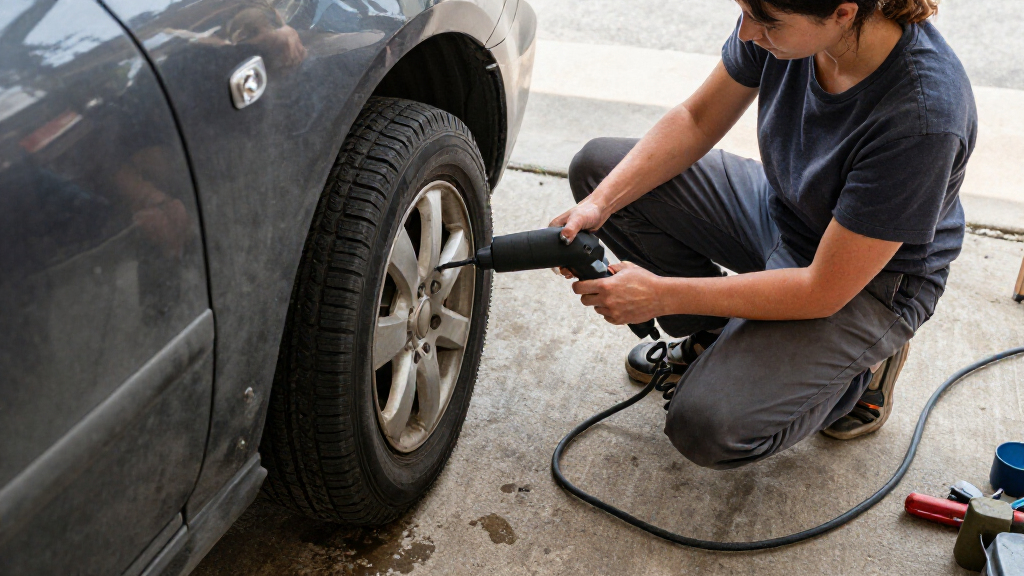
I compared the 15 portable tire inflators by the factors that affect real ownership: power source, portability, pressure-setting controls, stated maximum pressure, and likely fit for roadside or home use. I gave weight to models that offer more than one practical way to power the unit, clear pressure controls, or an obvious advantage for a defined buyer. I also separated compact emergency top-up tools from larger or more flexible inflators rather than treating every high PSI figure as proof of equal performance.
The ranking favors useful versatility and a clear everyday role over headline specifications alone. That puts the DEWALT DCC020IB first for its corded-and-cordless flexibility, while dedicated cordless models rank well for convenience and 12V units remain compelling when reliable access to a vehicle outlet matters more than freedom from a cord. Battery compatibility, included power options, and the buyer’s expected frequency of use affect value; a tool-only model can be a smart fit for an existing battery owner but a poor match for someone starting from scratch.
Factors to Consider When Choosing Portable Tire Inflators
Before choosing, match the inflator to where and how often you expect to use it. The best portable tire inflator for occasional pressure corrections may be different from the right option for several vehicles, longer trips, or a garage where compatible tool batteries are already on hand.
Choose a power source around where you will inflate
A rechargeable inflator is convenient when you want to move around the car without a cable reaching the outlet, but it depends on a charged battery being available when a tire needs attention. A 12V model can draw power from a vehicle, which avoids managing a separate battery but ties you to the car and its outlet. Dual-power designs offer more flexibility, though each extra power route can add setup steps or require compatible accessories. Before buying, check whether the listing includes the power supply you plan to use rather than assuming every cord or battery is in the box. For occasional roadside use, a vehicle-powered option may be reassuring; for inflating tires in a driveway away from the car, cordless operation can be more convenient.
Treat maximum PSI as a limit, not a performance promise
Maximum PSI describes the upper pressure a unit is rated to reach, not how quickly it will inflate a particular tire or how well it handles repeated jobs. Most passenger-car owners should focus on whether the inflator can reach the pressure specified on the vehicle’s tire placard, not on chasing the highest number. Larger tires and repeated inflation can place greater demands on a compact unit, so check product guidance for compatible tire types and duty-cycle limits. A device that pauses to cool may be perfectly suitable for occasional top-ups but inconvenient for a fleet or several low tires. Compare usable operating guidance and intended tire applications rather than choosing by a headline PSI figure alone.
Know what a battery model means for runtime and ownership
Battery capacity affects how much work a cordless inflator can do between charges, but capacity figures are not directly comparable across products unless the units and test conditions match. A built-in rechargeable battery keeps setup simple, while a removable tool battery may be easier to swap if you already own compatible packs. Tool-only products can have a lower barrier for existing platform users but require a separate battery and charger for new owners. Think about whether you will store the inflator in a car for months, since a neglected battery may need charging before an emergency. For road trips, charging access and a habit of checking the battery before departure can matter more than a small difference in advertised capacity.
Look beyond the display when judging ease of use
A digital gauge and preset shut-off can reduce guesswork, especially for drivers unfamiliar with tire pressures, but they do not replace checking the vehicle’s recommended cold-tire pressure. The target pressure is usually listed on the driver-side door placard or in the owner’s manual, not on the tire sidewall. A bright display, simple buttons, and a clearly readable unit selection help when using the inflator in low light or under roadside pressure. Check whether it supports the pressure units you use and whether its hose and valve fitting are practical to attach without losing air. Beginners may benefit more from clear controls and a stable connection than from extra modes they are unlikely to use.
Balance compact storage against repeated-use needs
A small inflator is easier to keep in a trunk or glove compartment, but compactness can come with shorter runtime, a smaller battery, or a less comfortable setup for repeated jobs. A larger unit may suit home use or multiple vehicles better if it offers more flexible power and a design intended for longer sessions. Consider where it will live, how often it will be used, and whether you need to inflate only passenger-car tires or other equipment as well. For a roadside kit, also leave room for the hose, cables, adapters, and charging accessories the product needs. Avoid buying a very small unit solely for portability if it will spend most of its life in a garage.
Check the whole ownership setup, not just the inflator
Accessories and maintenance affect whether a portable inflator is ready when you need it. Confirm what comes with the unit, including its charging cable, vehicle power cord, storage case, and any adapters required for non-car valves. Keep the connection clean, store cables without sharp bends, and follow the manual’s directions for cooling and charging. A pressure gauge can be checked against a trusted gauge from time to time, particularly if readings seem inconsistent. If you are choosing between a standalone kit and a tool-platform model, include the battery, charger, storage, and replacement needs in your comparison rather than looking at the inflator body alone.
Frequently Asked Questions
Should I choose a cordless tire inflator or one that plugs into my car?
Choose cordless if you want to move around the vehicle freely or inflate tires where a car outlet is not convenient. A 12V inflator is a better fit if you want the car to supply power and do not want to track a separate battery’s charge. Dual-power models can cover both situations, though you should check exactly which power accessories are included. For longer trips, either type can work if you plan ahead: charge a cordless model or confirm the vehicle outlet and cable reach suit your setup. Your normal parking location and expected use matter more than the power source that sounds most convenient on paper.
Is a 150 PSI inflator enough for a regular car?
For ordinary passenger-car tires, a model rated to 150 PSI is generally well above the pressure target the vehicle requires. The correct inflation pressure is the vehicle maker’s recommendation on the door placard or in the manual, not the tire’s maximum pressure marking. A higher maximum PSI does not automatically mean faster inflation or a better fit for your car. Buyers should check the inflator’s stated tire applications and operating limits, especially if they also plan to use it on larger tires. For routine car use, control, connection, and power availability are often more useful comparison points than a very high maximum rating.
Does auto shut-off make a tire inflator accurate enough to use without checking?
Auto shut-off helps stop inflation near a selected target, which can reduce the chance of overshooting while you watch the process. It does not remove the need to set the correct target or confirm that the hose is seated properly. Readings can vary between gauges, and a poor valve connection can affect the result. Use the pressure listed for your vehicle and recheck the tire if the displayed reading seems unexpected. Drivers who want extra confidence can compare the inflator’s reading with a separate, trusted tire gauge from time to time.
Is a tool-only inflator a good choice if I do not own that battery platform?
It may be a poor fit if the inflator body is sold without the battery and charger needed to operate it. Add the cost and convenience of those components to your comparison, even though product prices are not the only ownership factor. If you already own compatible batteries and a charger, a tool-only model can make better use of equipment you have on hand. If you are starting from scratch, a complete rechargeable or vehicle-powered kit may be simpler to keep ready. Check compatibility carefully, since batteries from different voltage platforms or tool families may not work with the inflator.
Can one portable tire inflator handle my car and other inflatables?
Some inflators can handle multiple kinds of inflatables, but compatibility depends on the included adapters, operating pressure, and the maker’s stated uses. Car tires need a secure valve connection and pressure control, while sports balls and other items may require separate fittings and lower pressure settings. Do not assume a car-tire hose or high maximum PSI makes a unit suitable for every inflatable. Check the product instructions for supported equipment and use the correct adapter for each job. If you plan to inflate large-volume items, confirm that the model is designed for that workload rather than relying on its tire-focused specifications.
Conclusion
For most drivers who want one versatile unit, I’d start with the DEWALT 20V MAX DCC020IB as the best overall choice, especially if a compatible battery is already in the garage. The CRAFTSMAN 12V inflator is my best value-style pick for drivers who prefer vehicle power and straightforward pressure controls, while the ETENWOLF Vortex S6 suits buyers willing to prioritize cordless convenience and a more capable battery-powered format. Beginners should look first at a model with a clear digital gauge and auto shut-off, such as the CRAFTSMAN, rather than paying for features they will rarely use. For specific needs, choose the DEWALT DCC020IB if you want flexible power in an existing tool ecosystem, or a dedicated 12V model such as the AstroAI AIRUN H if you want an inflator built around a vehicle outlet. The right choice comes down to where you will use it, how often you need it, and whether its battery or power setup is ready when a tire is low.