Among these high-end chef knives, I rate the Wüsthof Classic 8-Inch Chef’s Knife as the best overall for its versatile, approachable design and practical durability. The Miyabi Black 5000MCD67 stands out for buyers drawn to refined Japanese styling, while the Victorinox Fibrox Pro offers a more forgiving, lower-commitment route into a capable everyday knife. The main tradeoff is between durable, familiar handling and harder, finer-edged blades that call for more careful use and upkeep. Blade length, handle feel, and sharpening needs matter as much as steel or appearance. Read on for the full breakdown and guidance on choosing the right knife for your kitchen.

Get business pricing on garage and car supplies
- Business-only prices and quantity discounts
- Tax-exempt purchasing
- Multiple users, one account, clear invoices
Complete the kit


Key Takeaways
- Wüsthof Classic is the strongest all-around choice: Its familiar Western-style format makes it a practical pick for a wide range of daily prep, while several Japanese options favor a more particular cutting style.
- Miyabi Birchwood SG2 models are closely related but not interchangeable: The 9.5-inch blade gives more reach and working room; the 8-inch version is easier to place in a typical home kitchen.
- Premium appearance does not settle the choice: Damascus patterns and decorative handles distinguish options such as the Shun Premier and SHAN ZU, but buyers should weigh handling, care, and edge preferences first.
- The lineup spans very different levels of commitment: The Victorinox Fibrox Pro offers a more forgiving entry point, while harder Japanese-style blades reward careful cutting habits and suitable sharpening.
- Blade length and edge character divide the field: The 8-inch models suit many everyday tasks, while the longer MIYABI Birchwood SG2 is better suited to cooks who value extra reach and have room to work.
| Victorinox Fibrox Pro 8-Inch Chef’s Knife, Black | 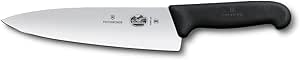 | Best Practical Workhorse | Blade length: 8 inches | Blade material: Stainless steel | Construction: Stamped | VIEW ON AMAZON | See Our Full Breakdown |
| Miyabi Black 5000MCD67 8-Inch Chef’s Knife |  | Best Premium 8-Inch Japanese Pick | Blade length: 8 inches | Blade material: MC66 micro-carbide steel | Blade construction: 133 layers of steel | VIEW ON AMAZON | See Our Full Breakdown |
| MIYABI Birchwood SG2 Japanese Chef’s Knife, 9.5-Inch Blade |  | Best for Long, Precise Slicing | Blade length: 9.5 inches | Blade material: SG2 Damascus steel | Blade construction: 100 layers of steel | VIEW ON AMAZON | See Our Full Breakdown |
| HOSHANHO 8-Inch Japanese High-Carbon Steel Chef’s Knife |  | Best for a Hand-Sharpened Japanese-Style Edge | Blade length: 8 inches | Blade steel: 10Cr15CoMoV Japanese high-carbon steel | Hardness: 60 HRC | VIEW ON AMAZON | See Our Full Breakdown |
| Wüsthof Classic 8-Inch Chef’s Knife, Black |  | Best Forged Western-Style Workhorse | Blade length: 8 inches | Handle length: 5 inches | Weight: 8.5 oz | VIEW ON AMAZON | See Our Full Breakdown |
| Shun Shiranami 8-Inch Chef’s Knife |  | Best Balanced Japanese Pick | Blade length: 8 inches | Blade material: Dual Core VG10 / VG2 stainless steel | Blade construction: 71-layer Damascus steel | VIEW ON AMAZON | See Our Full Breakdown |
| MIYABI Birchwood SG2 8-Inch Japanese Chef’s Knife |  | Best for a Razor-Fine Edge | Blade length: 8 inches | Blade material: SG2 Damascus steel | Blade construction: 100-layer flower Damascus pattern | VIEW ON AMAZON | See Our Full Breakdown |
| SHAN ZU 8-Inch Damascus Steel Chef Knife |  | Best for a G10 Handle | Blade length: 8 inches | Blade material: 10Cr15MoV Japanese steel core with 67 layers | Hardness: 62 HRC | VIEW ON AMAZON | See Our Full Breakdown |
| Shun Premier 8-Inch Chef’s Knife |  | Best for Everyday Versatility | Model: TDM0706 | Blade length: 8 inches | Blade material: VG-MAX steel with 68 layers of Damascus cladding | VIEW ON AMAZON | See Our Full Breakdown |
| MIYABI Artisan 8-Inch Chef’s Knife |  | Best Premium Finish | Blade length: 8 inches | Blade material: SG2 micro-carbide powder steel | Blade finish: Tsuchime | VIEW ON AMAZON | See Our Full Breakdown |
| high end chef knife | Blade length | Handle material | Blade material | Construction |
|---|---|---|---|---|
| Victorinox Fibrox Pro 8-Inch C | 8 inches | Thermoplastic elastomer (TPE) | Stainless steel | Stamped |
| Miyabi Black 5000MCD67 8-Inch | 8 inches | Black-dyed Bigleaf maple wood | MC66 micro-carbide steel | — |
| MIYABI Birchwood SG2 Japanese | 9.5 inches | Karelian birch | SG2 Damascus steel | Forged |
| HOSHANHO 8-Inch Japanese High- | 8 inches | Wood | — | — |
| Wüsthof Classic 8-Inch Chef’s | 8 inches | Synthetic | High-carbon stainless steel | Precision forged, full tang, triple riveted |
| Shun Shiranami 8-Inch Chef’s K | 8 inches | Jute micarta | Dual Core VG10 / VG2 stainless steel | Forged |
| MIYABI Birchwood SG2 8-Inch Ja | 8 inches | Karelian birch | SG2 Damascus steel | Forged |
| SHAN ZU 8-Inch Damascus Steel | 8 inches | G10 glass fiber | 10Cr15MoV Japanese steel core with 67 layers | Forged |
| Shun Premier 8-Inch Chef’s Kni | 8 inches | Pakkawood | VG-MAX steel with 68 layers of Damascus cladding | — |
| MIYABI Artisan 8-Inch Chef’s K | 8 inches | Pakkawood | SG2 micro-carbide powder steel | Forged |
More Details on Our Top Picks
Victorinox Fibrox Pro 8-Inch Chef’s Knife, Black
I’d choose the Victorinox Fibrox Pro for a capable everyday knife rather than for luxury materials or fine finishing. Its 8-inch stainless steel blade covers routine chopping, slicing, and mincing, while the non-slip TPE handle gives it a practical advantage in busy kitchens where hands may be wet. Compared with the forged Wüsthof Classic, this knife is stamped and lighter in character, so it suits buyers who favor straightforward handling over a heavier, full-tang build. It also asks less careful upkeep than the Japanese high-hardness Miyabi models in this roundup: dishwasher-safe construction is listed, though handwashing can still help preserve an edge. The tradeoff is a less premium build and no included sharpener, so it is a functional value pick, not a showcase knife.
Pros:- 8-inch stainless steel blade handles common chopping, slicing, and mincing tasks.
- TPE handle is designed to provide a non-slip grip, including when wet.
- Dishwasher-safe care is more convenient than the Miyabi knives listed here.
- Swiss-made, with a lifetime warranty against original manufacturer’s defects.
Cons:- Stamped construction lacks the forged build of the Wüsthof Classic and the Miyabi models.
- A knife sharpener is sold separately.
- Its practical finish may disappoint buyers seeking a distinctive premium appearance.
Best for: Home cooks seeking a versatile, easy-care 8-inch knife with a secure grip for frequent everyday prep.
Not ideal for: Buyers seeking a handcrafted, high-hardness Japanese blade, refined Damascus finish, or a forged full-tang feel.
- Blade length:8 inches
- Blade material:Stainless steel
- Construction:Stamped
- Handle material:Thermoplastic elastomer (TPE)
- Item length:13.4 inches
- Item weight:22.68 g
- Origin:Switzerland
- Care:Dishwasher safe
- Warranty:Lifetime warranty against original manufacturer’s defects
Our verdict“Choose the Fibrox Pro if everyday grip and easy care matter more to you than handcrafted materials or a forged construction.”
Miyabi Black 5000MCD67 8-Inch Chef’s Knife
The Miyabi Black 5000MCD67 is the premium Japanese option here for cooks who want an 8-inch blade with striking finish and very hard steel. Its MC66 micro-carbide steel, rated at Rockwell 66, is built around edge performance rather than carefree handling; the floral Damascus layers add visual character, while the D-shaped maple handle gives the knife a distinct fit. Compared with the Wüsthof Classic, this Miyabi offers a harder blade and more decorative construction, but it requires more careful care and is handwash-only. The MIYABI Birchwood SG2 9.5-inch reaches farther across a board and has a notably thin stated edge angle, making this model a more manageable length choice rather than the longest-reach slicer. Buyers should accept extra maintenance and handle fit preference as part of the package.
Pros:- MC66 micro-carbide steel is hardened to Rockwell 66.
- 133-layer steel construction carries a floral Damascus pattern.
- D-shaped Bigleaf maple handle offers a distinctive ergonomic profile.
- 8-inch blade provides a more familiar length than the 9.5-inch MIYABI Birchwood SG2.
Cons:- Handwash-only care takes more attention than the listed care for the Victorinox Fibrox Pro.
- Very hard steel and premium materials call for careful maintenance.
- D-shaped handle may not suit cooks who prefer a symmetrical grip.
Best for: Experienced home cooks who want an 8-inch Japanese knife with a very hard steel blade, decorative Damascus finish, and shaped wood handle.
Not ideal for: Cooks who want dishwasher convenience, a forgiving low-maintenance blade, or a handle shape that fits every grip equally well.
- Blade length:8 inches
- Blade material:MC66 micro-carbide steel
- Blade construction:133 layers of steel
- Hardness:Rockwell 66
- Construction type:Forged
- Handle material:Black-dyed Bigleaf maple wood
- Handle shape:D-shaped
- Origin:Seki, Japan
- Care:Handwash only
Our verdict“Pick this Miyabi if you want a premium, hard-steel 8-inch Japanese knife and are willing to handwash and maintain it carefully.”
MIYABI Birchwood SG2 Japanese Chef’s Knife, 9.5-Inch Blade
I’d steer cooks toward the MIYABI Birchwood SG2 when blade reach and a finely honed edge matter more than compact handling. The 9.5-inch blade is longer than the 8-inch Miyabi Black 5000MCD67 and Wüsthof Classic, giving it more room for long cuts across large ingredients—but it can feel like more knife than many home cooks need. Its SG2 powder-steel core, protected by 100 layers of steel, and hand-honed 9.5–12-degree edge make it the most precision-focused choice in this group. The Karelian birch handle adds a natural-material touch, though it requires care and will not suit buyers seeking a dishwasher-friendly tool. Compared with the Miyabi Black, this model offers greater length and a thinner stated edge angle; the tradeoff is less convenient control in tight prep spaces.
Pros:- 9.5-inch blade provides more reach than the 8-inch Miyabi Black and Wüsthof Classic.
- SG2 micro-carbide powder steel core with 100-layer Damascus construction.
- Hand-honed edge angle of 9.5–12 degrees is suited to precise cutting.
- Karelian birch handle offers a distinctive natural-wood grip.
Cons:- Long blade may be unwieldy on small boards or for cooks accustomed to 8-inch knives.
- Wood handle needs more care than the Victorinox Fibrox Pro’s TPE handle.
- The thin edge and premium steel call for careful use and maintenance.
Best for: Confident cooks who regularly slice large vegetables, roasts, or other broad ingredients and prefer a long, finely honed blade.
Not ideal for: Newer cooks, small-kitchen users, or anyone who prefers a compact 8-inch knife and low-maintenance synthetic handle.
- Blade length:9.5 inches
- Blade material:SG2 Damascus steel
- Blade construction:100 layers of steel
- Edge angle:Hand-honed to 9.5–12 degrees
- Construction:Forged
- Handle material:Karelian birch
- Item weight:14.4 ounces
- Origin:Seki, Japan
- Warranty:Lifetime
Our verdict“Choose this MIYABI if you want long reach and a finely honed edge, and have the space and skill to handle a 9.5-inch knife.”
HOSHANHO 8-Inch Japanese High-Carbon Steel Chef’s Knife
The HOSHANHO 8-Inch Chef’s Knife gives buyers a stated hard-steel specification without the elaborate layered construction of the Miyabi models. Its 10Cr15CoMoV blade is heat treated to 60 HRC and hand-sharpened to 13 degrees per side, a combination aimed at a keen everyday cutting edge. The 8-inch length keeps it closer to the familiar format of the Wüsthof Classic than the longer MIYABI Birchwood SG2, while the sloped bolster is designed to support a pinch grip. The tradeoff is that the product information provides no care instructions, so I would not assume dishwasher safety; its wood handle also calls for more care than the Victorinox’s TPE. It makes sense for buyers drawn to a Japanese-style edge, but it offers less documented construction detail than the forged Miyabi picks.
Pros:- 10Cr15CoMoV Japanese high-carbon steel is heat treated to 60 HRC.
- Hand-sharpened to 13 degrees per side.
- 8-inch blade length suits cooks who prefer a standard-size chef’s knife.
- Sloped bolster is designed to support a pinch grip.
Cons:- Product information does not specify care instructions, so maintenance expectations are unclear.
- Wood handle requires more care than the Victorinox Fibrox Pro’s synthetic-style TPE handle.
- Construction details are less fully documented than those for the forged Miyabi knives.
Best for: Home cooks seeking an 8-inch knife with a specified Japanese high-carbon steel, hardening level, and hand-sharpened edge angle.
Not ideal for: Buyers who need clear care guidance, dishwasher-safe construction, or the documented layered forging and handle details of the Miyabi models.
- Blade length:8 inches
- Blade steel:10Cr15CoMoV Japanese high-carbon steel
- Hardness:60 HRC
- Sharpening angle:13 degrees per side
- Handle material:Wood
- Blade finish:Matte
Our verdict“Consider the HOSHANHO if a hard, hand-sharpened 8-inch blade is your priority and you are comfortable seeking out care guidance.”
Wüsthof Classic 8-Inch Chef’s Knife, Black
The Wüsthof Classic is the forged, full-tang choice for cooks who want a substantial Western-style knife with a durable handle assembly. Its 8-inch high-carbon stainless steel blade and Precision Edge Technology are intended to support sharpness and edge retention across everyday chopping, mincing, slicing, and dicing. At 8.5 ounces, it has more heft than the 7.04-ounce Miyabi Black, which may help cooks who like a weightier feel but can tire those who prefer a lighter knife. Compared with the Victorinox Fibrox Pro, the Wüsthof has a forged full-tang build and triple-riveted handle, while the Victorinox offers listed dishwasher-safe care and a non-slip TPE grip. This is a grounded premium workhorse, not the pick for a very thin Japanese-style edge or the least-maintenance routine.
Pros:- Precision-forged, full-tang construction with a triple-riveted synthetic handle.
- High-carbon stainless steel blade is designed for varied chopping, mincing, slicing, and dicing.
- Precision Edge Technology is intended to improve sharpness and edge retention.
- 8-inch length offers familiar control compared with the 9.5-inch MIYABI Birchwood SG2.
Cons:- At 8.5 ounces, it may feel heavy compared with the 7.04-ounce Miyabi Black.
- Its Western-style build is less suited to buyers seeking a very thin Japanese-style edge.
- The product details do not list dishwasher-safe care.
Best for: Cooks who prefer a substantial, forged 8-inch Western-style knife with a full-tang, triple-riveted handle for varied kitchen prep.
Not ideal for: Users who prefer a lightweight knife, a very thin Japanese-style edge, or the Victorinox Fibrox Pro’s listed dishwasher-safe convenience.
- Blade length:8 inches
- Handle length:5 inches
- Weight:8.5 oz
- Blade material:High-carbon stainless steel
- Construction:Precision forged, full tang, triple riveted
- Hardness:58 HRC
- Handle material:Synthetic
- Country of manufacture:Germany
- Model number:1040100120
Our verdict“Choose the Wüsthof Classic if you want a substantial forged Western-style knife and are comfortable with its heavier feel.”
Shun Shiranami 8-Inch Chef’s Knife
The Shun Shiranami suits cooks who want a refined Japanese edge without stepping up to the narrower, more demanding geometry of the MIYABI Birchwood SG2. Its 16-degree edge and 8-inch blade offer a versatile profile for everyday slicing, dicing, and mincing, while the VG10/VG2 core and 71-layer Damascus construction give it a more detailed steel build than the straightforward Western-style Wüsthof Classic. The jute micarta handle is a practical counterpoint to decorative wood handles: it is designed for a secure grip and works for left- and right-handed users. The tradeoff is that this is still a fine-edged Japanese knife, so it calls for careful cutting habits and suitable sharpening. Buyers seeking a tougher, less specialized workhorse may prefer the Wüsthof.
Pros:- VG10/VG2 core with 71-layer Damascus construction
- 16-degree edge supports precise slicing and general prep
- Jute micarta handle is designed for secure use by left- and right-handed cooks
- Handcrafted in Japan
Cons:- Fine Japanese edge calls for careful use and appropriate sharpening
- Less suited to heavy chopping or hard ingredients than a more robust Western-style knife
Best for: Home cooks who want an 8-inch Japanese knife with a fine edge and a durable-feeling, ambidextrous handle.
Not ideal for: Cooks who routinely cut through bones, frozen food, or other hard materials, or who prefer a more forgiving Western-style workhorse.
- Blade length:8 inches
- Blade material:Dual Core VG10 / VG2 stainless steel
- Blade construction:71-layer Damascus steel
- Edge angle:16 degrees
- Handle material:Jute micarta
- Construction:Forged
- Weight:0.33 kg
- Country of manufacture:Japan
Our verdict“Choose the Shiranami for versatile Japanese-style prep and a practical micarta grip, but choose the Wüsthof Classic if you need a more robust, forgiving workhorse.”
MIYABI Birchwood SG2 8-Inch Japanese Chef’s Knife
The MIYABI Birchwood SG2 is the precision-first choice here: its hand-honed 9.5–12-degree edge is narrower than the 16-degree edge on the Shun Premier, favoring fine slicing over rough, forceful prep. The SG2 micro-carbide powder steel core and ice-hardened blade are aimed at cooks who want a high-end edge that holds up through regular kitchen work. Its Karelian birch handle adds a distinctive natural feel, though that material asks for more attentive care than the Shun Premier’s Pakkawood. This knife makes the most sense for skilled cooks who use controlled cuts and maintain their blades. If your routine includes twisting through dense squash or careless contact with hard surfaces, the more forgiving edge geometry of the Shun Premier is a safer fit.
Pros:- SG2 micro-carbide powder steel core
- Hand-honed 9.5–12-degree edge for precise cutting
- Ice-hardened blade is designed to retain sharpness
- Karelian birch handle offers a natural, distinctive grip
Cons:- Narrow edge requires careful cutting technique and suitable sharpening
- Wood handle needs more careful maintenance than synthetic handle materials
Best for: Experienced home cooks who prioritize fine slicing, can maintain a narrow Japanese edge, and appreciate a natural wood handle.
Not ideal for: New knife owners or cooks who want a low-maintenance blade for rough chopping and frequent hard-surface contact.
- Blade length:8 inches
- Blade material:SG2 Damascus steel
- Blade construction:100-layer flower Damascus pattern
- Edge angle:9.5–12 degrees
- Handle material:Karelian birch
- Handle length:5.39 inches
- Construction:Forged
- Country of manufacture:Japan
Our verdict“Pick the Birchwood SG2 if a very fine edge and natural handle matter more than forgiving use or minimal upkeep.”
SHAN ZU 8-Inch Damascus Steel Chef Knife
The SHAN ZU Damascus Steel Chef Knife stands apart from the wood-handled MIYABI Birchwood SG2 and Shun Premier with a G10 glass-fiber handle, a sensible fit for cooks who favor a stable, low-fuss grip over natural materials. Its 10Cr15MoV core, 67-layer Damascus construction, and 15-degree cutting angle give it a Japanese-style profile, while the listed 62 HRC hardness signals a blade intended to hold a keen edge. That harder, sharper setup rewards careful technique; it is not the choice for scraping food with the edge or chopping through bones. The source data also gives two different weights, 260 g and 270 g, so I would not treat its balance as precisely documented. Compared with the premium MIYABI options, its clearest distinction is the practical handle rather than a more elaborate steel or finish story.
Pros:- 10Cr15MoV steel core with 67-layer Damascus construction
- 62 HRC hardness and 15-degree cutting angle
- G10 glass-fiber handle offers a solid alternative to wood
- Forged construction
Cons:- Product data lists conflicting weights of 260 g and 270 g
- Hard, fine-edged blade needs careful use and maintenance
- Provided product details do not identify a country of manufacture
Best for: Cooks who want a Japanese-style 8-inch blade with a synthetic G10 grip and are comfortable caring for a hard, fine-edged knife.
Not ideal for: Buyers who need precise weight information, want a natural wood handle, or expect a knife to tolerate rough chopping.
- Blade length:8 inches
- Blade material:10Cr15MoV Japanese steel core with 67 layers
- Hardness:62 HRC
- Blade thickness:2.2 mm
- Cutting angle:15 degrees
- Handle material:G10 glass fiber
- Construction:Forged
- Listed weight:260 g or 270 g
Our verdict“Choose the SHAN ZU if you want a Damascus-style Japanese knife with a G10 handle, but skip it if documented weight precision or a highly refined premium finish is a priority.”
Shun Premier 8-Inch Chef’s Knife
The Shun Premier is the more approachable everyday pick beside the sharper-edged MIYABI Birchwood SG2. Its 16-degree edge gives it a versatile cutting profile for slicing, dicing, and mincing, while the VG-MAX core and 68 layers of Damascus cladding bring high-end Japanese construction without the Birchwood’s especially narrow 9.5–12-degree geometry. A hammered finish is intended to reduce food sticking, which can make repetitive prep less fussy when ingredients cling to a smooth blade. The contoured Pakkawood handle offers a comfortable grip, but it still requires the usual care expected of a fine-edged knife. Edge upkeep is part of ownership, and cooks who want an especially hard, precision-focused blade may prefer the MIYABI Artisan’s SG2 core. The Shun’s lifetime warranty is a useful ownership detail.
Pros:- VG-MAX steel core with 68 layers of Damascus cladding
- Hammered finish is designed to help reduce food sticking
- 16-degree edge suits a broad range of kitchen prep
- Lifetime warranty
Cons:- Requires honing and sharpening to maintain its edge
- Fine Japanese blade is not suited to bones or forceful twisting cuts
Best for: Home cooks who want a versatile Japanese chef’s knife for routine vegetable, meat, and herb prep, with a less acute edge than the MIYABI SG2 options.
Not ideal for: Cooks who want to avoid regular honing and sharpening, or who prefer a heavy-duty knife for rough work.
- Model:TDM0706
- Blade length:8 inches
- Blade material:VG-MAX steel with 68 layers of Damascus cladding
- Blade edge:Plain, 16-degree edge
- Blade finish:Hammered
- Handle material:Pakkawood
- Weight:214 g
- Origin:Japan
- Warranty:Lifetime warranty
Our verdict“The Shun Premier fits cooks seeking a versatile high-end Japanese knife with a hammered blade, while the MIYABI Birchwood SG2 is better for those chasing a narrower precision edge.”
MIYABI Artisan 8-Inch Chef’s Knife
The MIYABI Artisan pairs a precision-oriented SG2 core with a hand-hammered Tsuchime finish, making it the most visually distinctive option in this group. Its 9.5–12-degree edge is similarly acute to the Birchwood SG2’s, so both favor controlled, fine cuts over rough treatment. The Artisan’s D-shaped Pakkawood handle brings a shaped, decorated grip with brass and red spacers, a mosaic pin, and a stainless steel end cap; the Birchwood instead offers a Karelian birch handle and a 100-layer flower Damascus pattern. Those details make the Artisan appealing to buyers who value finish and handle design as well as cutting performance. The tradeoff is care: its fine edge and specialized materials call for attentive maintenance, and the D-shaped handle may not suit every grip.
Pros:- SG2 micro-carbide powder steel core
- Hand-honed 9.5–12-degree edge
- Tsuchime finish is designed to help reduce food sticking
- D-shaped Pakkawood handle includes decorative spacers, mosaic pin, and stainless end cap
Cons:- Acute edge needs careful technique and appropriate sharpening
- D-shaped grip may not feel natural to every user
- Specialized steel and handle materials call for attentive care
Best for: Experienced cooks who want an SG2 Japanese blade with a hammered finish and an ornate, shaped handle.
Not ideal for: Buyers seeking a forgiving first chef’s knife, a symmetric handle, or minimal-care materials and edge maintenance.
- Blade length:8 inches
- Blade material:SG2 micro-carbide powder steel
- Blade finish:Tsuchime
- Edge angle:9.5–12 degrees
- Handle material:Pakkawood
- Handle design:D-shaped with brass and red spacers, mosaic pin, and stainless steel end cap
- Weight:9.6 ounces
- Origin:Seki, Japan
- Construction:Forged
Our verdict“Choose the MIYABI Artisan for SG2 cutting performance paired with a distinctive hammered finish and ornate D-shaped handle, rather than for low-maintenance practicality.”

How We Picked
I compared these knives on the factors that shape daily use: cutting performance, handling, construction, maintenance, versatility, and value. Steel type and blade geometry matter, but I also considered whether a knife’s format makes sense for a typical home cook, how much care its edge may ask of its owner, and whether its features justify its place among high-end choices. The Victorinox is included as a useful reference point for buyers weighing premium refinement against straightforward utility.
The ranking favors knives that balance capability with broad usability, rather than rewarding price positioning, ornament, or a single standout specification. The Wüsthof Classic leads for versatility; the Miyabi and Shun models follow for buyers who place more weight on Japanese-style refinement, distinctive materials, or appearance. The longer Birchwood model serves a narrower preference, while the HOSHANHO and SHAN ZU are judged with extra attention to how their stated design appeals compare with established alternatives. Each pick has tradeoffs, and the best choice depends on cooking habits and willingness to maintain the blade.
| high end chef knife | Construction | Origin |
|---|---|---|
| Victorinox Fibrox Pro 8-Inch C | Stamped | Switzerland |
| Miyabi Black 5000MCD67 8-Inch | — | Seki, Japan |
| MIYABI Birchwood SG2 Japanese | Forged | Seki, Japan |
| HOSHANHO 8-Inch Japanese High- | — | — |
| Wüsthof Classic 8-Inch Chef’s | Precision forged, full tang, triple riveted | — |
| Shun Shiranami 8-Inch Chef’s K | Forged | — |
| MIYABI Birchwood SG2 8-Inch Ja | Forged | — |
| SHAN ZU 8-Inch Damascus Steel | Forged | — |
| Shun Premier 8-Inch Chef’s Kni | — | Japan |
| MIYABI Artisan 8-Inch Chef’s K | Forged | Seki, Japan |
Factors to Consider When Choosing High End Chef Knives
Choosing among high-end chef knives is less about finding one universally superior blade and more about matching its design to your kitchen habits. I would start with cutting technique and care routine, then use steel, length, and handle details to narrow the field.
Match the Blade to Your Cutting Style
A chef knife should suit the motion you use most, whether that is rocking through herbs or making straight downward cuts through vegetables. Western-style blades often feel natural to cooks who rock the knife, while many Japanese-style knives are designed around precise, straighter cuts. Neither approach is inherently better; a mismatch can make an expensive knife feel awkward. If you are unsure, prioritize a shape similar to the knife you already handle comfortably. Avoid choosing by country of origin alone, since geometry and balance vary between individual models.
Choose Steel for Your Care Habits
Harder steels can support a fine edge, but they usually benefit from careful cutting and appropriate sharpening. Softer, more forgiving blades can be easier to live with when a knife gets frequent use or is shared among cooks with different habits. A high-end knife is not maintenance-free: hand washing, prompt drying, and a suitable storage method protect both edge and finish. Do not assume that a harder steel will stay sharp indefinitely or that any honing rod is right for every blade. Pick the maintenance routine you will actually follow, not the one you hope to adopt.
Treat Blade Length as a Workspace Decision
An 8-inch blade is a versatile starting point for many home kitchens, but the best length depends on your board, ingredients, and storage. A longer blade can make broad cuts and large produce easier, yet it may feel cumbersome on a small board or in a crowded prep area. Shorter does not automatically mean less capable; control can matter more than reach for detailed work. Before buying, imagine the knife moving across your usual board and fitting into your storage setup. Check whether the maker’s listed blade length matches how you measure knives, since handle and overall length are not the same.
Prioritize Handle Fit and Balance
Handle shape, thickness, and balance affect comfort over a full round of prep more directly than decorative details do. A knife that feels secure in a pinch grip may not suit someone who holds the handle with a full grip, and hand size changes what feels natural. Weight distribution is personal: some cooks prefer a forward balance that helps the blade fall through food, while others want a lighter feel for quick control. If possible, handle a similar knife in person before committing to a premium model. A beautiful handle is a poor trade if it causes fatigue or feels slippery when your hands are wet.
Know What Decorative Finishes Do—and Do Not—Offer
Damascus-style patterns, layered construction, and figured wood can make a knife distinctive, but appearance alone does not prove cutting performance. Some finishes are part of the blade’s construction; others are primarily visual, so read the manufacturer’s material description rather than relying on the pattern. A premium finish can also ask for more careful cleaning and storage to keep it looking its best. If the knife will see heavy daily use, choose a design you will not feel compelled to baby. Spend on handling and edge characteristics first, then treat visual appeal as a deciding factor between otherwise suitable options.
Consider Sharpening Before You Buy
Every knife eventually needs sharpening, and the edge geometry can affect which service or tools are appropriate. Check whether you have access to a sharpener who understands the blade style or are willing to learn a suitable method. Using an incompatible pull-through sharpener can remove too much material or damage a fine edge. A honing rod may help maintain some edges, but it is not a substitute for sharpening and may not suit every harder Japanese-style blade. Factor future care into the purchase so the knife remains useful rather than becoming a display piece.
Frequently Asked Questions
Is a Japanese-style knife a better first high-end chef knife than a Western-style one?
Not automatically. Japanese-style knives can appeal to cooks who favor precise cuts and are comfortable with more careful edge care, while a Western-style knife may feel more familiar for rocking motions and varied prep. The best first choice is the one whose shape and handling match your technique. If you share knives with other people or want a forgiving all-purpose tool, that matters more than choosing a style by reputation. Treat steel and geometry as practical differences, not a quality ladder.
Should I choose the 9.5-inch Miyabi Birchwood or the 8-inch version?
Choose the 9.5-inch version if you regularly prep large ingredients, have a spacious board, and prefer extra reach. The 8-inch version is easier to maneuver in compact work areas and may feel more natural for everyday home tasks. A longer blade is not automatically faster or more capable if it crowds your board or storage. Consider your hand position and the size of the ingredients you cut most often. If you cannot handle both, the 8-inch format is the less specialized choice for many kitchens.
Can I use a high-end chef knife on bones or frozen food?
A chef knife is generally meant for food prep, not chopping through bones or frozen ingredients. Harder, thinner-edged blades can chip if they strike hard material, and even a more robust knife can suffer damage under that kind of force. Use a cleaver or another tool designed for the task instead. Keep the knife on a suitable cutting board, since stone, glass, and hard surfaces can also harm an edge. Careful use protects both cutting performance and the value of the knife.
Is a Damascus pattern a good reason to pay more for a chef knife?
It can be a valid reason if you value the look and the pattern comes with materials and construction that suit your needs. The visible pattern by itself does not tell you how well the knife will handle, cut, or hold its edge. Compare the blade geometry, handle comfort, care demands, and maker’s material details before placing much weight on appearance. A less ornate knife may be a better daily tool if it fits your hand and sharpening routine more closely. Think of the finish as a preference, not a shortcut for judging performance.
How should I maintain a premium chef knife if I do not own sharpening stones?
Start by hand washing and drying the knife promptly, then store it so the edge cannot contact loose utensils or other blades. For sharpening, find a service familiar with the knife’s steel and edge style rather than assuming every general sharpener is suitable. Avoid using a pull-through device until you know it matches the blade’s requirements. A honing tool may help with some knives, but it cannot restore a genuinely dull edge. If regular sharpening access is inconvenient, favor a model whose care needs you can realistically support.
Conclusion
For the broadest mix of everyday tasks, I recommend the Wüsthof Classic as best overall. Buyers seeking a straightforward, more forgiving option can choose the Victorinox Fibrox Pro for best value, while the Miyabi Black 5000MCD67 is my best premium pick for cooks drawn to refined Japanese-style construction and appearance. For beginners, the Wüsthof’s familiar all-purpose format is a more approachable starting point than a longer or more specialized blade. If you specifically want a longer knife, the 9.5-inch MIYABI Birchwood SG2 fits cooks with ample board space; for decorative styling, compare the Shun Premier, Shun Shiranami, and SHAN ZU by handle feel and care needs rather than pattern alone. Choose based on the blade you will use and maintain comfortably, not the one with the most striking finish.