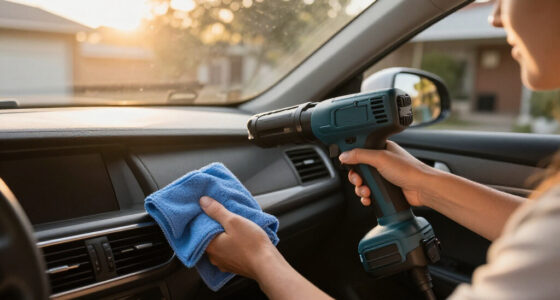
For a dependable corded choice, I’d start with the Griot’s Garage G9: its dual-action motion and variable speed suit a broad range of paint correction and polishing jobs. The DEWALT DWP849X offers more reach and power for experienced users, while the Niusken cordless kit trades sustained runtime for freedom from a cord. The main decision is whether you value forgiving control, rotary cutting ability, or portability most. Backing-plate size, handling, and battery limits can matter as much as motor power. Read on for how the 12 options compare and which one fits your work.

Get business pricing on garage and car supplies
- Business-only prices and quantity discounts
- Tax-exempt purchasing
- Multiple users, one account, clear invoices
Complete the kit


Key Takeaways
- The Griot’s Garage G9 earns the broadest recommendation because its dual-action design and variable speed make it a flexible choice for routine polishing and paint refinement.
- The DEWALT DWP849X and the 1600W rotary models suit buyers who need rotary-style cutting power, but that power calls for steadier technique than a dual-action buffer.
- Cordless kits such as Niusken’s make sense when outlet access and cord management are the main obstacles; battery runtime and charging remain practical limits.
- The SPTA 5-inch kit and Porter-Cable 7424XP offer smaller-format dual-action alternatives for users prioritizing control and manageable coverage over large-pad speed.
- The WEN 6010 is a simpler waxer-polisher, while the variable-speed, larger-pad options are better aligned with correction work that demands more control or reach.
| Griot’s Garage G9 Random Orbital Polisher 10901 |  | Best Overall | Power: 1000 W | Polishing motion: Dual action, 9 mm orbit | Speed settings: 6 | VIEW ON AMAZON | See Our Full Breakdown |
| Niusken Cordless Dual-Action Car Polisher Kit with Two 21V Batteries |  | Best Cordless Kit | Model: PGJ-21V | Motor: Pure copper brushed motor | Polishing motion: 8 mm random orbital dual action | VIEW ON AMAZON | See Our Full Breakdown |
| Cordless Car Buffer Polisher Kit with 2 Batteries, 6-Inch Variable Speed Waxer |  | Best Lightweight Cordless Pick | Motor power: 300 W | Battery voltage: 21 V | Battery capacity: 2.0 Ah | VIEW ON AMAZON | See Our Full Breakdown |
| GEVEELIFE Buffer Polisher, 6 Inch/7 Inch, 1600W Rotary Car Buffer Waxer |  | Best for Rotary Polishing | Motor power: 1600 W | Polisher size: 6 or 7 inches | Polishing motion: Rotary | VIEW ON AMAZON | See Our Full Breakdown |
| ZOTA Buffer Polisher, 1600W, 7 Inch/6 Inch Variable Speed Kit |  | Best for Long Reach | Power: 1600 W | Motor type: Pure copper wire motor | Polisher size: 6 or 7 inches | VIEW ON AMAZON | See Our Full Breakdown |
| Cordless Car Buffer Polisher, 8-Speed, 2×21V 2000mAh Batteries |  | Best Cordless for Controlled Detailing | Power source: Cordless | Battery: 2 × 21 V, 2000 mAh | Speed levels: 8 | VIEW ON AMAZON | See Our Full Breakdown |
| PORTER-CABLE 6-Inch Variable-Speed Random Orbit Polisher (7424XP) |  | Best for Controlled, Corded Polishing | Model: 7424XP | Motor: 4.5 A | Power source: Corded electric | VIEW ON AMAZON | See Our Full Breakdown |
| SPTA 5-Inch Dual-Action Random Orbital Car Polisher Kit |  | Best Accessory-Rich Starter Kit | Model: DAPSET-US | Power source: Corded electric | Voltage: 110 V | VIEW ON AMAZON | See Our Full Breakdown |
| DEWALT DWP849X 7- to 9-Inch Variable-Speed Corded Buffer Polisher, 12 Amp |  | Best for Large-Pad, Heavy-Duty Work | Model: DWP849X | Type: Corded buffer/polisher | Motor: 12 A | VIEW ON AMAZON | See Our Full Breakdown |
| WEN 6010 6-Inch Waxer/Polisher |  | Best for Simple Wax Application | Motor voltage: 120 V | Motor power: 0.5 A | Speed: 3,500 RPM | VIEW ON AMAZON | See Our Full Breakdown |
| OFISPEED 1600W Rotary Buffer Polisher, 6- and 7-Inch, Blue |  | Best Lightweight Rotary Pick | Motor power: 1600W | Polisher type: Rotary | Pad sizes: 6 and 7 inches | VIEW ON AMAZON | See Our Full Breakdown |
| LDHTHOPI 1600W Rotary Buffer Polisher, 6- and 7-Inch, 7-Speed |  | Best Accessory-Rich Rotary Kit | Motor power: 1600W | Polisher type: Rotary | Pad sizes: 6 and 7 inches | VIEW ON AMAZON | See Our Full Breakdown |
| high quality automotive buffer | Speed range | Speed settings | Weight |
|---|---|---|---|
| Griot’s Garage G9 Random Orbit | 2000–6400 OPM | 6 | 5.3 lb |
| Niusken Cordless Dual-Action C | 2800–5800 RPM | 6 | 3.3 lb |
| Cordless Car Buffer Polisher K | 2500–6000 RPM | — | 3 lb |
| GEVEELIFE Buffer Polisher | 1000–3500 RPM | 7 | 4.5 lb |
| ZOTA Buffer Polisher | 1000–3500 RPM | 7 | — |
| Cordless Car Buffer Polisher | 2,800–6,300 RPM | — | 3 lbs |
| PORTER-CABLE 6-Inch Variable-S | — | — | 5.5 lbs |
| SPTA 5-Inch Dual-Action Random | — | 6 | — |
| DEWALT DWP849X 7- to 9-Inch Va | 0–3,500 RPM | — | — |
| WEN 6010 6-Inch Waxer/Polisher | — | — | — |
| OFISPEED 1600W Rotary Buffer P | 1000–3500 RPM | 7 variable speeds | 4.5 lbs |
| LDHTHOPI 1600W Rotary Buffer P | 1,000–3,500 RPM | 7 | — |
More Details on Our Top Picks
Griot’s Garage G9 Random Orbital Polisher 10901
The G9 is the strongest all-around choice here for buyers who want a corded dual-action buffer with useful control for paint correction. Its 9 mm orbit, 1000-watt motor, and constant-speed control are aimed at keeping the pad moving under pressure, while six settings let you shift between gentler waxing and more assertive polishing. Compared with the Niusken cordless polisher, the G9 trades battery freedom for steady power and avoids the cooling break noted for that model. Its 6-inch plate suits broad panels, and an optional 5-inch plate adds flexibility. The tradeoff is that it needs an outlet, and its 5.3-pound weight is more than the Niusken’s 3.3 pounds. Choose it for regular, controlled detailing; skip it if compact cordless access matters most.
Pros:- Constant-speed control is designed to resist bogging when pressure is applied.
- Six speed settings suit both waxing and paint correction.
- Optional 5-inch backing plate allows a smaller pad setup.
- Contoured grip, counterbalance, and 10-foot quick-connect cord support longer sessions.
Cons:- Corded operation limits reach compared with the Niusken and other battery models.
- At 5.3 pounds, it is heavier than the listed cordless options.
- The 5-inch backing plate is optional rather than included.
Best for: Car owners and detailers who want a corded dual-action machine for regular paint correction across larger panels.
Not ideal for: Buyers who need cordless operation for driveway work far from an outlet or want the lightest tool for overhead polishing.
- Power:1000 W
- Polishing motion:Dual action, 9 mm orbit
- Speed settings:6
- Speed range:2000–6400 OPM
- Backing plate:6 inches; optional 5-inch plate
- Power source:120 V corded electric
- Amperage:8.5 A
- Weight:5.3 lb
- Cord length:10 ft
Our verdict“Pick the G9 for controlled, corded dual-action paint care; choose the Niusken if cordless maneuverability matters more.”
Niusken Cordless Dual-Action Car Polisher Kit with Two 21V Batteries
The Niusken puts reach ahead of uninterrupted runtime. Its cordless 8 mm dual-action motion and two included 21V batteries make it easier to move around a vehicle than the corded Griot’s Garage G9, especially when polishing outdoors or away from an outlet. Six speed settings and an LED display give a clear view of speed and remaining battery, while the supplied pads and bonnets let a buyer start with several polishing tasks. Against the 3-pound, 6-inch cordless buffer in this lineup, the Niusken is slightly heavier at 3.3 pounds and uses a 5-inch plate, which favors a more compact working area. Its stated high-speed cooling shutoff after more than 20 minutes can interrupt long sessions, and its batteries do not fit DeWalt tools. Its advantage is a ready-to-use cordless setup, with runtime and battery ecosystem limits to weigh.
Pros:- Cordless design allows movement around a vehicle without managing a power cord.
- Two 21V batteries and a fast charger are included.
- LED display shows speed and battery level.
- Assorted pads and bonnets cover several polishing and finishing tasks.
Cons:- May shut off to cool after more than 20 minutes of continuous high-speed use.
- Battery system is not compatible with DeWalt batteries.
- At 3.3 pounds, it is slightly heavier than the listed 3-pound cordless buffer.
Best for: DIY detailers who work outdoors or around vehicles without convenient outlet access and want batteries and pads included.
Not ideal for: Buyers polishing several vehicles in long continuous sessions or those who need batteries compatible with DeWalt tools.
- Model:PGJ-21V
- Motor:Pure copper brushed motor
- Polishing motion:8 mm random orbital dual action
- Speed settings:6
- Speed range:2800–5800 RPM
- Batteries:Two 21 V, 2000 mAh rechargeable batteries
- Backing plate:5 inches
- Weight:3.3 lb
- Cooling protection:May shut off after more than 20 minutes of continuous high-speed use
Our verdict“Choose the Niusken for cordless convenience and a supplied accessory kit, provided its cooling breaks and separate battery system fit your work.”
Cordless Car Buffer Polisher Kit with 2 Batteries, 6-Inch Variable Speed Waxer
This cordless buffer is the simpler lightweight alternative for buyers who want a broad 6-inch working area without a cord. At 3 pounds, it weighs less than the Niusken, and its 300 W motor with speeds up to 6000 RPM gives a useful range for routine polishing and waxing. Two 21V batteries and multiple attachments are included, so it has a practical starting kit for car or boat care. The tradeoff is that the supplied information does not identify the polishing motion or speed increments, leaving less detail to judge than the Griot’s Garage G9’s specified 9 mm dual-action setup and six OPM settings. Battery life may also call for pauses or swaps during extensive work. It suits mobile, shorter jobs; buyers prioritizing clear motion specs and steady corded power may prefer the G9.
Pros:- Three-pound weight supports easier handling than the listed Niusken cordless kit.
- Cordless operation makes it convenient around a vehicle.
- Two 21V batteries are included.
- Variable speed and multiple attachments support different polishing tasks.
Cons:- Battery life may require frequent charging during extensive use.
- The supplied product details do not specify polishing motion or number of speed settings.
- A 6-inch plate may be less convenient than a smaller plate around tight contours.
Best for: DIY owners who want a light cordless tool for waxing and polishing smaller projects on a car or boat.
Not ideal for: Detailers doing extended correction sessions who need clearly specified polishing motion or uninterrupted power.
- Motor power:300 W
- Battery voltage:21 V
- Battery capacity:2.0 Ah
- Number of batteries:2
- Speed range:2500–6000 RPM
- Buffer size:6 inches
- Weight:3 lb
- Included accessories:Multiple attachments
Our verdict“Pick this buffer for light, cordless routine polishing, but choose the G9 for more clearly specified dual-action control and sustained corded work.”
GEVEELIFE Buffer Polisher, 6 Inch/7 Inch, 1600W Rotary Car Buffer Waxer
The GEVEELIFE is the rotary option for buyers who want a high-powered corded tool for polishing and broader surface work. Its 1600 W motor and seven speed settings span 1000–3500 RPM, while detachable D-handle and side-handle choices offer different ways to control the machine. That makes it a different proposition from the Griot’s Garage G9 dual-action polisher: the G9’s random-orbital motion is the more fitting choice for buyers seeking dual-action control, while this model is aimed at rotary use and also lists sanding among its applications. The cost of that versatility is a narrower compatibility constraint: it accepts M14-caliber discs only, unlike a setup that supports other thread standards. Pad selection and handling deserve care, since the listing itself advises choosing pads carefully to avoid damage. Pick it for rotary work; skip it if dual-action is your priority.
Pros:- 1600 W motor supports demanding polishing and sanding applications.
- Seven speed settings provide adjustment across the stated 1000–3500 RPM range.
- Detachable D-handle and side handle offer alternative grip positions.
- Listed for automotive, boat, furniture, floor, marble, and metal work.
Cons:- M14-only disc compatibility limits use with other thread standards.
- Rotary motion differs from the Griot’s Garage G9’s dual-action format.
- Pad choice requires care to reduce the chance of damaging a surface.
Best for: Experienced DIY users who specifically want a corded rotary buffer for automotive polishing and other compatible surface jobs.
Not ideal for: Beginners seeking a dual-action polisher or buyers whose existing polishing discs use a thread standard other than M14.
- Motor power:1600 W
- Polisher size:6 or 7 inches
- Polishing motion:Rotary
- Speed settings:7
- Speed range:1000–3500 RPM
- Weight:4.5 lb
- Handles:Detachable D-handle and side handle
- Disc compatibility:M14 caliber only
Our verdict“Choose the GEVEELIFE for a corded rotary setup with adjustable handles, provided your discs use M14 fittings and you want rotary motion.”
ZOTA Buffer Polisher, 1600W, 7 Inch/6 Inch Variable Speed Kit
The ZOTA’s defining advantage is its 13.1-foot cord, which gives more room to move around a vehicle than the Griot’s Garage G9’s 10-foot lead. It pairs that reach with a 1600 W pure copper wire motor, seven speed settings, and 6- or 7-inch size options for broad coverage. Like the GEVEELIFE, it is a corded rotary buffer, so it serves a different buyer from the G9’s dual-action format. The listed 1000–3500 RPM range offers speed adjustment, but buyers focused on a dual-action machine should look to the G9 instead. ZOTA’s product data gives no weight, which makes it harder to judge comfort for prolonged use; the listed ABS, glass-filled nylon, and metal construction also does not remove the need to match pads carefully to the job. Pick it when cord reach and rotary power lead your checklist.
Pros:- 13.1-foot cord offers more reach than the Griot’s Garage G9’s 10-foot cord.
- 1600 W pure copper wire motor.
- Seven variable speed settings span 1000–3500 RPM.
- 6- and 7-inch size options suit broad surface coverage.
Cons:- Corded rotary design does not offer the cordless freedom of the Niusken.
- Rotary motion differs from the Griot’s Garage G9’s dual-action approach.
- Product details do not state the tool’s weight, making handling harder to assess.
Best for: Garage detailers who want a corded rotary buffer with extra cord reach for working around cars, boats, or furniture.
Not ideal for: Buyers seeking dual-action polishing, cordless portability, or a documented weight for judging extended-session comfort.
- Power:1600 W
- Motor type:Pure copper wire motor
- Polisher size:6 or 7 inches
- Polishing motion:Rotary
- Speed settings:7
- Speed range:1000–3500 RPM
- Cord length:13.1 ft
- Voltage:120 V
- Amperage:13.3 A
Our verdict“Choose the ZOTA if long cord reach and rotary power matter most, and choose the G9 if you want a dual-action buffer instead.”
Cordless Car Buffer Polisher, 8-Speed, 2×21V 2000mAh Batteries
Cordless reach and eight speed settings make this a flexible choice for detailing away from an outlet or moving around a vehicle without managing a cord. Its 8mm random orbit is suited to general polishing, while the 3-pound body should be easier to handle through longer sessions than the 5.5-pound PORTER-CABLE 7424XP. The LED display gives a clear speed readout, and the two batteries let you swap packs when one needs charging. The tradeoff is that runtime depends on how hard the tool is working, and its overheat protection may pause extended sessions. Unlike the corded PORTER-CABLE, this model also requires charging between uses, so it suits mobile, intermittent detailing better than uninterrupted shop work.
Pros:- Cordless operation makes it easier to move around a vehicle and work away from outlets.
- Eight speed settings and an LED display support controlled adjustments.
- At 3 pounds, the body is lighter than the PORTER-CABLE 7424XP.
- Two batteries provide a spare pack while the other is charging.
Cons:- Battery runtime varies with workload, and charging interrupts use once both packs are depleted.
- Overheat protection may pause operation during extended sessions.
Best for: Mobile detailers and car owners who need a lightweight polisher for work away from outlets and value adjustable speed control.
Not ideal for: Detailers planning long, continuous sessions who want consistent corded power without battery swaps or thermal pauses.
- Power source:Cordless
- Battery:2 × 21 V, 2000 mAh
- Speed levels:8
- Speed range:2,800–6,300 RPM
- Weight:3 lbs
- Orbital motion:8 mm
Our verdict“Choose this lightweight cordless model for flexible, controlled detailing, but pick a corded polisher for longer uninterrupted work.”
PORTER-CABLE 6-Inch Variable-Speed Random Orbit Polisher (7424XP)
Pad-specific balance and a wide operating range give the PORTER-CABLE 7424XP a more controlled, workshop-ready feel than the simpler WEN 6010. Its 2,500–6,800 OPM electronic dial lets buyers set a pace for different polishing or sanding tasks, and the random orbit action is designed to help limit swirl marks. At 5.5 pounds, it is heavier than the cordless 3-pound buffer, but the removable two-position handle offers another way to steady the tool. There is a specific setup constraint: the included counterbalance is intended for a 6-inch pad, so changing pad size may call for a compatible counterbalance. Its cord also limits movement compared with the cordless option. This makes it a strong fit for buyers who value steady power and control over portability.
Pros:- Electronic dial provides a broad 2,500–6,800 OPM range.
- Random orbit action is designed for swirl-conscious polishing and sanding.
- Removable side handle supports a controlled two-handed grip.
- Ball-and-roller bearing construction is designed for demanding workloads.
Cons:- The cord requires access to an outlet and limits movement around the vehicle.
- The included counterbalance is specified for a 6-inch pad.
Best for: Home garage detailers and marine project owners who want adjustable, continuous corded power with a 6-inch pad setup.
Not ideal for: Buyers who need cordless mobility, or those who plan to switch pad sizes without checking counterbalance compatibility.
- Model:7424XP
- Motor:4.5 A
- Power source:Corded electric
- Voltage:120 V
- Speed:2,500–6,800 OPM
- Weight:5.5 lbs
- Pad size:6 inches
- Spindle thread:5/16-24
Our verdict“Pick the 7424XP for adjustable corded control with a 6-inch pad, and choose the cordless buffer if freedom of movement matters more.”
SPTA 5-Inch Dual-Action Random Orbital Car Polisher Kit
A 5-inch backing plate and a broad accessory bundle make the SPTA a practical pick for buyers who want polishing and light sanding supplies together. Its six settings span 2,000–5,200 RPM, with smooth start and constant-speed electronics intended to help keep operation steady as pressure changes. Compared with the PORTER-CABLE 7424XP, the SPTA includes more consumables and grip options, including side and D-shaped handles; the PORTER-CABLE instead offers a higher stated maximum speed and a 6-inch pad setup. The SPTA’s cord means it still needs an outlet, and its listed 110V supply may limit where it is suitable. Buyers who already own pads and compounds may find much of the kit redundant, but newcomers get a more complete starting set.
Pros:- Six speed settings cover waxing, polishing, sanding, and defect-removal tasks.
- Smooth start and constant-speed electronics support steadier operation.
- Side and D-shaped handles offer different grip options.
- The kit includes pads, compounds, sanding discs, and a carrying bag.
Cons:- The cord limits mobility and requires an accessible outlet.
- The listed 110 V supply may not suit every work location.
Best for: First-time detailers who want a dual-action polisher with included pads, compounds, sanding discs, and handle choices.
Not ideal for: Experienced users with established accessory collections, or buyers who need cordless operation or a different supply voltage.
- Model:DAPSET-US
- Power source:Corded electric
- Voltage:110 V
- Amperage:6.5 A
- Maximum power:750 W
- Speed settings:6
- No-load speed:2,000–5,200 RPM
- Backing plate size:5 inches
- Included accessories:Polishing pads, sanding discs, compounds, brush, handles, carbon brushes, wrenches, towels, glove, apron, and carrying bag
Our verdict“Choose the SPTA if you want a dual-action polisher and a broad set of starter accessories in one kit.”
DEWALT DWP849X 7- to 9-Inch Variable-Speed Corded Buffer Polisher, 12 Amp
A 12-amp motor and support for 7- to 9-inch pads set the DEWALT DWP849X apart from the smaller-pad random orbit polishers in this lineup. Its trigger varies speed up to the dialed maximum of 3,500 RPM, giving users a way to adjust as they work across different materials. Ball-bearing construction and precision-cut steel gears are designed for durability, while a wool ingestion shield helps keep wool fibers out of the tool. Compared with the SPTA 5-inch dual-action kit, the DEWALT is geared toward larger-pad work and includes a backing pad and two handle styles, but the SPTA supplies a wider range of accessories and random-orbit action. This is a corded buffer, and its large-pad format calls for a confident grip and room to maneuver; buyers focused on smaller, controlled areas may prefer the PORTER-CABLE.
Pros:- 12-amp motor supports demanding polishing work.
- Variable-speed trigger and dial allow speed adjustment during a pass.
- Ball-bearing motor and steel gears are designed for durability.
- Wool ingestion shield and included side handles support practical shop use.
Cons:- Corded operation requires an outlet and restricts movement.
- The 7- to 9-inch pad format is less suited to tight areas than smaller polishers.
Best for: Experienced detailers and shop users handling broad panels who want a powerful corded buffer for larger pads.
Not ideal for: Beginners working mostly on small areas, or anyone who needs cordless movement and random-orbit polishing.
- Model:DWP849X
- Type:Corded buffer/polisher
- Motor:12 A
- Pad size:7–9 inches
- Speed range:0–3,500 RPM
- Construction:Ball-bearing motor with precision-cut steel gears
- Included components:Hook-and-loop backing pad, bale handle, and straight side handle
- Warranty:3 years
Our verdict“Choose the DWP849X for larger-panel work with a substantial corded buffer, and favor a smaller random-orbit model for more controlled detailing.”
WEN 6010 6-Inch Waxer/Polisher
Simple operation and a 6-inch bonnet make the WEN 6010 the least complex choice here for basic waxing and polishing. Its fixed 3,500 RPM speed avoids a learning curve around speed settings, but it also gives buyers less control than the variable-speed PORTER-CABLE 7424XP or the six-setting SPTA. The included applicator and terry cloth bonnets let a new owner get started with routine wax application, and the ergonomic body supports one- or two-handed use. The limitation is scope: this model is described as a waxer and polisher, with no variable speed listed, so it is a weaker fit for paint correction that calls for careful speed changes. It also uses 6-inch accessories only. I’d choose it for straightforward maintenance, while buyers seeking broader detailing capability should look at the SPTA or PORTER-CABLE.
Pros:- Straightforward fixed-speed operation suits routine wax application.
- Ergonomic design supports one- or two-handed use.
- Includes an applicator bonnet and terry cloth bonnets.
- 6-inch format is suited to general work across vehicle panels.
Cons:- No variable speed control is listed.
- Limited to 6-inch accessories, which restricts pad flexibility.
Best for: Car owners who mainly apply wax with a straightforward 6-inch tool and do not need variable speed.
Not ideal for: Detailers correcting paint defects or switching between tasks that benefit from adjustable speed and pad options.
- Motor voltage:120 V
- Motor power:0.5 A
- Speed:3,500 RPM
- Bonnet size:6 inches
- Speed control:Fixed speed; no variable control listed
- Included accessories:Applicator and terry cloth bonnets
Our verdict“Choose the WEN for simple wax application with included bonnets, and pick a variable-speed polisher for correction or more varied tasks.”
OFISPEED 1600W Rotary Buffer Polisher, 6- and 7-Inch, Blue
The OFISPEED PGJ suits buyers who want a corded rotary with room to handle both polishing and sanding jobs. Its 1,000–3,500 RPM range and seven settings let you adjust the pace for different pads and surfaces, while the 4.5-pound body is lighter than many full-size rotary options. Compared with the Griot’s Garage G9, this is a rotary machine rather than a dual-action polisher, so it can serve a different kind of correction work but calls for more care on delicate paint. The detachable D-handle and side handle give you options for grip, and included sponge pads, wool pads, and sandpapers broaden its use beyond cars. The tradeoff is that the product data gives no pad quantities, and rotary polishing rewards careful speed and pad selection.
Pros:- Seven speed settings cover a broad range of polishing and sanding tasks.
- At 4.5 pounds, it is relatively light for a corded rotary.
- Detachable D-handle and side handle allow different grip positions.
- Includes sponge pads, wool pads, and sandpapers for varied work.
Cons:- Rotary action requires careful speed and pad choices on delicate surfaces.
- The product data does not state how many pads are included.
Best for: DIY detailers who want a relatively light corded rotary for vehicle work and occasional sanding on other materials.
Not ideal for: First-time polishers focused on delicate paint who would prefer the more forgiving dual-action approach of the Griot’s Garage G9.
- Motor power:1600W
- Polisher type:Rotary
- Pad sizes:6 and 7 inches
- Speed settings:7 variable speeds
- Speed range:1000–3500 RPM
- Weight:4.5 lbs
- Handles:Detachable D-handle and side handle
- Warranty:2 years
Our verdict“Choose the OFISPEED if you want a lighter, multi-surface rotary and are comfortable managing its speed and pad choices.”
LDHTHOPI 1600W Rotary Buffer Polisher, 6- and 7-Inch, 7-Speed
The LDHTHOPI packs useful handling options and a broad accessory set into a 1600W rotary kit. You can hold it directly or fit the D-shaped or side handle, which gives experienced users flexibility as they move between vehicle panels and larger surfaces. Its 1,000–3,500 RPM range matches the OFISPEED, but this package adds a cloth bag, carbon brushes, suction cups, and a hex wrench alongside foam pads, wool pads, and sandpaper. That makes it the more supplied option for buyers who want accessories on hand; the OFISPEED has a stated 4.5-pound weight and two-year warranty, details not provided here for LDHTHOPI. The key limitation is its operating guidance: work is capped at 15 minutes before a five-minute cooling break, and the instructions warn against pressing too hard on the head.
Pros:- Seven speeds span 1,000–3,500 RPM for varied polishing and sanding tasks.
- Direct, D-shaped, and side-handle holding options offer grip flexibility.
- Kit includes foam and wool pads, sandpaper, a cloth bag, and service accessories.
- Listed for automotive, marine, furniture, and floor applications.
Cons:- Requires a five-minute cooling break after every 15 minutes of continuous operation.
- Rotary operation and the warning against excess head pressure call for a controlled technique.
- Product data does not specify the tool’s weight or warranty.
Best for: Experienced DIY users seeking a corded rotary kit with multiple grip choices and accessories for cars, boats, furniture, or floors.
Not ideal for: Detailers who need to polish continuously for long stretches or beginners seeking a forgiving dual-action machine.
- Motor power:1600W
- Polisher type:Rotary
- Pad sizes:6 and 7 inches
- Speed settings:7
- Speed range:1,000–3,500 RPM
- Power source:AC
- Included accessories:Foam pads, wool pads, suction cups, side handle, D-shaped handle, cloth bag, carbon brushes, hex wrench, and 1000-grit sandpaper
- Continuous operation guidance:15 minutes of operation, followed by 5 minutes of cooling
Our verdict“Pick the LDHTHOPI if its broad accessory kit and three holding options matter more to you than uninterrupted polishing time.”
How We Picked
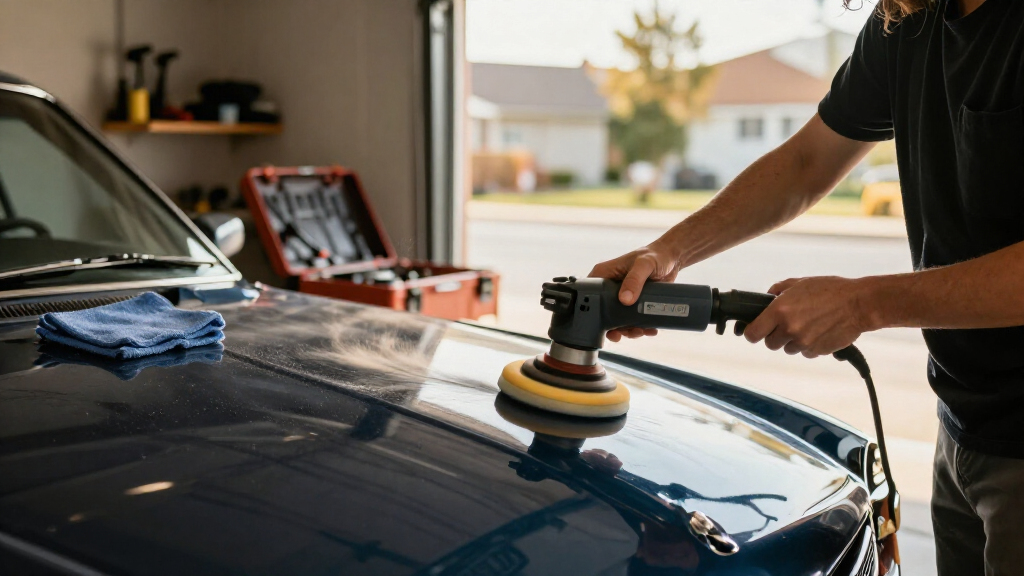
I compared these buffers by the work they are built to handle: paint correction, polishing, waxing, and access to tight or wide panels. I gave weight to motion type, speed control, pad size, power source, and the handling implications of each combination. A dual-action buffer generally offers a more forgiving route for routine paint care, while rotary models can suit experienced users seeking direct cutting action. Cordless models earned credit for mobility, with battery dependence counted as a tradeoff.
The ranking favors useful capability and control across common detailing jobs, then accounts for specialization. That puts the Griot’s Garage G9 at the top as a versatile corded dual-action choice, while the DEWALT rotary and cordless kits rank for narrower needs. The 1600W rotary models share a similar broad format, so their appeal depends on the buyer’s preference for a rotary tool and included kit details. Simpler waxers rank lower for buyers seeking correction versatility, though they may suit straightforward application work.
Factors to Consider When Choosing High Quality Automotive Buffers
Before choosing a buffer, match the tool to the kind of work you plan to repeat. The right setup depends on your paint goals, comfort with the machine, vehicle size, and ability to manage power and pads over a full session.
Choose the motion for your skill and paint goals
Dual-action and rotary buffers behave differently on paint, so motor wattage alone cannot tell you which tool is right. Dual-action motion combines rotation and oscillation, which can make it a more approachable choice for polishing and light correction. Rotary motion applies direct rotation and can suit experienced users seeking more aggressive correction. A common mistake is buying a rotary because its power figure looks stronger, then finding it harder to control around curves and edges. If you are still building technique, prioritize predictable handling and speed adjustment over maximum cutting potential.
Match pad size to the panels you actually polish
Larger pads cover broad, flat panels efficiently, but they can be awkward around mirrors, bumpers, and shaped bodywork. Smaller pads give more control in confined areas, although they take longer across a large hood or roof. Check the backing plate and pad sizes the tool supports before buying, because a stated buffer size may refer to compatible pad sizes rather than one fixed setup. Avoid assuming that one pad will handle every job well. Many detailers benefit from a main pad size suited to the vehicle and a smaller option for tight sections.
Think about cord reach and battery work time
A corded buffer can keep working without battery changes, but the cord needs to be managed around the vehicle and away from the paint. A cordless model removes that constraint and can be convenient outdoors or where outlets are inconvenient. Its practical usefulness depends on how long each battery lasts under the workload and how quickly a spare can be charged. Do not treat a kit’s battery voltage as a direct promise of session length. For larger correction jobs, consider whether you have enough charged capacity to finish a panel sequence without interruption.
Treat speed control as a working feature
Variable speed helps you adapt the tool to different compounds, pads, and stages of a job. Lower speeds can help with spreading product and maintaining control, while higher settings may support more active polishing when the setup allows it. A buffer with several settings is only useful if the controls are easy to adjust while maintaining a secure grip. New buyers sometimes focus on the maximum speed and overlook how the tool behaves at the low end. Favor a controllable range and comfortable handling over a high top speed by itself.
Budget for pads and upkeep, not just the machine
The buffer is one part of a working system: pads, compounds, backing plates, and cleaning supplies affect results and ongoing effort. Pads collect residue and heat, so they need regular cleaning and replacement as they wear. Check whether the included accessories match the kind of polishing you intend to do, rather than counting pieces in a kit. A large bundle can still leave you needing the right pad or compound for your paint. Spending more can make sense when it buys better control, useful compatibility, or a tool suited to frequent work.
Frequently Asked Questions
Should I choose a dual-action buffer or a rotary polisher for my first paint correction?
I would favor a dual-action model for a first correction because its motion is generally more forgiving during routine polishing. A rotary can be useful for experienced users who need direct cutting action, but it asks for closer attention to speed, pressure, and how long the pad stays in one area. The choice also depends on the condition of the paint: light defects may not call for a rotary at all. Practice on a test panel before working on a visible section of the car. If you expect to do mostly waxing and light refinement, a rotary’s extra intensity may not benefit you.
Is a cordless buffer practical for polishing an entire car?
It can be practical if you have enough charged batteries for your planned workload and are comfortable pausing to swap or recharge them. Cordless freedom can simplify work around a vehicle and remove the need to route an extension cord safely. Battery capacity, pad size, paint condition, and correction intensity all affect how much area you can cover per charge. For a long session on a large vehicle, a corded model avoids battery interruptions. Choose cordless when mobility matters more than uninterrupted runtime.
Does a larger backing plate make a buffer better?
A larger plate can cover broad panels with fewer passes, but it does not make the tool better for every part of a vehicle. Large pads can be harder to position around narrow pillars, curved bumpers, and small trim areas. Smaller pads trade coverage speed for access and control. Check the tool’s supported backing plate sizes and whether compatible pads are readily available to you. For mixed panel shapes, handling and pad options matter more than choosing the largest plate.
When is a rotary buffer worth choosing over a dual-action model?
A rotary can be worth choosing when you have experience with the motion and a specific need for direct rotary cutting. It can be a fit for demanding correction work, but it also makes technique and heat management more consequential. A high power rating does not remove the need to choose a suitable pad and compound or to work carefully around edges. For general polishing and waxing, dual-action options such as the Griot’s Garage G9 may be a more flexible match. Consider your usual jobs and skill level before prioritizing rotary power.
What should I check before buying a buffer kit?
Confirm the backing plate and pad sizes, speed adjustment, and whether the included pads suit your intended work. For a cordless kit, check the battery count and capacity alongside your expectations for session length. For corded machines, consider whether your workspace has enough outlet access and room to manage the cable. Also think about grip comfort, tool weight, and how easily you can clean or replace pads. A kit is a good fit when its accessories support your actual workflow, not simply because it includes many items.
Conclusion
For one versatile corded dual-action buffer, I recommend the Griot’s Garage G9 as the best overall pick. Buyers seeking strong capability in a simpler, focused waxer-polisher format can look to the WEN 6010 as a best-value style choice, while those who want cordless freedom should compare the Niusken kit with the other battery options. The DEWALT DWP849X is the premium fit for experienced users who specifically want a large rotary buffer. For beginners, I’d start with a dual-action option such as the G9 or Porter-Cable 7424XP; for tighter sections, the SPTA 5-inch kit offers a more compact format. Choose by motion, working area, and power needs first, then narrow the field by accessories and handling.