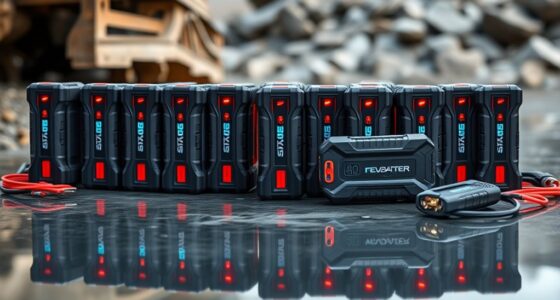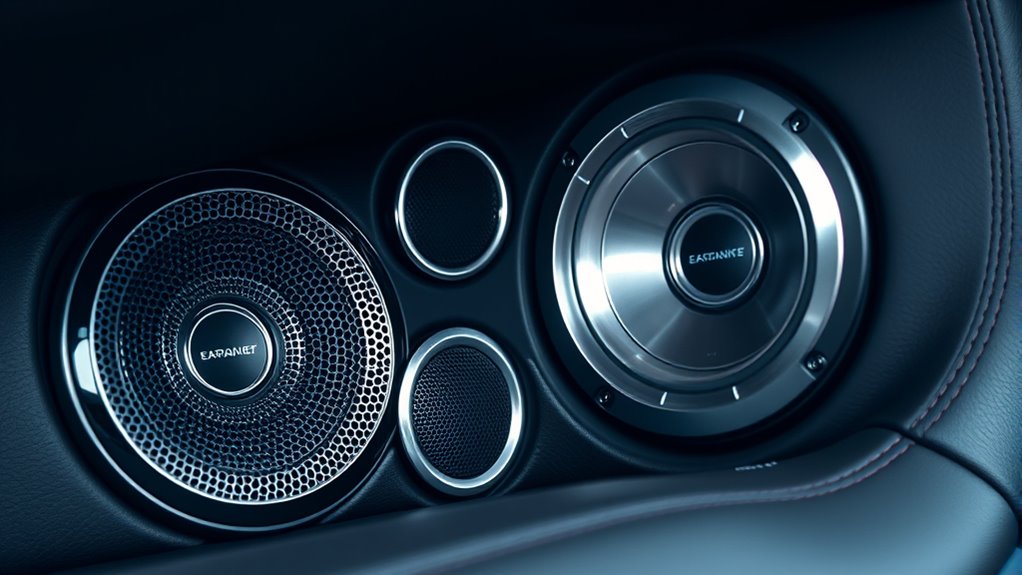

Luxury car speakers should deliver clear, balanced sound without demanding more power or installation work than your vehicle can support. My best overall pick is the Infinity Kappa 63XF, a two-way option that puts sound quality ahead of inflated peak-power claims. The JBL GTO629 is a strong alternative for buyers seeking a versatile coaxial upgrade, while the JBL GTO939 suits vehicles with factory 6×9-inch openings. The main tradeoffs are sound refinement versus high-output volume, plus direct-fit convenience versus the extra work of matching speakers to the car’s amplifier and mounting depth. Read on for the full comparison, fit considerations, and guidance on choosing the right set.

Get business pricing on garage and car supplies
- Business-only prices and quantity discounts
- Tax-exempt purchasing
- Multiple users, one account, clear invoices
Complete the kit


Key Takeaways
- Infinity Kappa 63XF leads for sound-led upgrades: Its two-way design makes it the clearest fit for buyers prioritizing refinement over large peak-watt figures.
- JBL GTO629 and GTO939 serve different fit needs: The 6.5-inch GTO629 suits compatible round openings, while the 6×9-inch GTO939 is the more relevant choice for factory 6×9 locations.
- High power claims do not automatically mean luxury sound: The generic 1000W and 800W listings and the ORION midrange model call for closer attention to RMS handling, system matching, and intended use.
- The ORION Cobalt CM654 is a specialized choice: Its midrange and bullet-speaker format is aimed at high-output systems, not a simple full-range replacement for every factory door speaker.
- Installation fit is a deciding factor across the lineup: Speaker diameter alone does not confirm compatibility; depth, impedance, wiring, and the vehicle’s existing audio system still matter.


| luxury car speaker | Speaker size | Impedance | Speaker type | Tweeter |
|---|---|---|---|---|
| Skar Audio TX65 6.5-Inch 2-Way | 6.5 inches | 4 ohms | 2-way coaxial | 1-inch silk dome |
| JBL GTO629 Premium 6.5-Inch Co | 6.5 inches | 3 ohms | Coaxial | — |
| JBL GTO939 GTO Series 6×9" 3-W | 6×9 inches | 2 ohms | 3-way coaxial | Adjustable |
| 6.5-inch Coaxial Car Speakers | 6.5 inches | 4 ohms | Coaxial | 13 mm Mylar dome |
| ORION Cobalt CM654 High Effici | — | 4 ohms | Mid-range bullet loudspeaker | — |
| BOSS Audio Systems CH6530 Chao | 6.5 inches | 4 ohms | — | — |
| Infinity Kappa 63XF 6-1/2" | 6.5 inches (165 mm) | — | — | Silk dome with adjustable output level |
| 2026 Upgraded 6.5 Inch Car Spe | 6.5 inches | 4 ohms | — | PEI |
More Details on Our Top Picks
Skar Audio TX65 6.5-Inch 2-Way Coaxial Car Speakers, Pair
The Skar Audio TX65 is a sensible pick for buyers who want a conventional 6.5-inch coaxial setup with a clearly stated power rating. Its silk dome tweeter handles high frequencies alongside the woofer, while 100 watts RMS per pair gives a useful reference point when matching an amplifier. Compared with the JBL GTO629, it has a specified 4-ohm impedance rather than JBL’s 3-ohm design, which may make amplifier matching more straightforward for a standard replacement setup. It gives up the JBL’s adjustable tweeter direction and bass-oriented cone design, though. The 45 Hz–20 kHz response is broad on paper, but these speakers are not a substitute for a dedicated subwoofer. I’d shortlist them for a straightforward wired upgrade, not for buyers seeking weather resistance or a plug-and-play fit.
Pros:- Silk dome tweeter pairs high-frequency playback with the woofer in one coaxial speaker
- 100 watts RMS per pair provides a useful amplifier-matching specification
- 4-ohm impedance suits buyers looking for a conventional speaker load
- Two-year limited warranty is specified
Cons:- Not water resistant, limiting suitability where speakers may be exposed to moisture
- Wired installation may require additional vehicle-specific work
- No adjustable tweeter direction or separate subwoofer-level bass capability
Best for: Drivers replacing standard 6.5-inch speakers who want a two-way coaxial design, a silk dome tweeter, and a stated 4-ohm load.
Not ideal for: Buyers who need water-resistant speakers, vehicle-specific plug-and-play wiring, or adjustable tweeter aiming.
- Speaker type:2-way coaxial
- Speaker size:6.5 inches
- Tweeter:1-inch silk dome
- RMS power:100 watts per pair
- Peak power:200 watts per pair
- Impedance:4 ohms
- Frequency response:45 Hz–20,000 Hz
- Sensitivity:89 dB
Our verdict“Choose the TX65 for a conventional wired 6.5-inch upgrade with a silk tweeter, but pick the JBL GTO629 if adjustable tweeter aiming matters more.”
JBL GTO629 Premium 6.5-Inch Co-Axial Speakers (Set of 2)
The JBL GTO629 earns its place for buyers who want more control over where treble is directed, rather than simply replacing a factory speaker with another fixed coaxial. Its UniPivot tweeter can be aimed toward listeners, and dual-level tweeter adjustment gives another way to tailor brightness. The larger carbon-injected Plus One cones are intended to move more air, making this a more bass-focused 6.5-inch option than the Skar Audio TX65, which instead offers a silk dome tweeter and a stated 100-watt RMS rating per pair. The tradeoff is fit and wiring: JBL specifies a 3-ohm impedance, and some vehicles may need wiring adjustments. Its shallow 2-inch mounting depth helps with clearance, but proper mounting still matters. Choose it for tuning flexibility, not the simplest universal install.
Pros:- UniPivot tweeter lets listeners direct high frequencies toward the seating position
- Dual-level tweeter adjustment supports brighter or more restrained treble
- Plus One cone design is intended to increase cone area and bass output
- 2-inch mounting depth can help with shallow speaker locations
Cons:- 3-ohm impedance may not suit every factory head unit or amplifier
- Some vehicles may require wiring adjustments
- Proper mounting is needed to get the intended performance
Best for: Drivers upgrading front-door 6.5-inch speakers who want adjustable tweeter direction and the ability to tune treble output.
Not ideal for: Buyers who need a confirmed 4-ohm match, a guaranteed plug-and-play harness, or a clearly listed RMS power rating.
- Speaker type:Coaxial
- Speaker size:6.5 inches
- Impedance:3 ohms
- Mounting cutout diameter:5-1/16 inches
- Mounting depth:2 inches
- External diameter:6-1/4 inches
- Tweeter adjustment:Dual-level volume control
Our verdict“Pick the GTO629 if tweeter aiming and sound adjustment matter more than the TX65’s specified 4-ohm load and simpler conventional setup.”
JBL GTO939 GTO Series 6×9″ 3-Way Car Coaxial Speakers, 300W, Black
Unlike the 6.5-inch models elsewhere in this lineup, the JBL GTO939 is built for a 6×9-inch opening, so its strongest case is a vehicle already set up for that larger speaker size. The three-way coaxial layout, Plus One woofer cone, and adjustable tweeters give buyers more than a basic replacement, while the 300-watt peak rating signals capacity rather than a guaranteed loudness or sound-quality result. Compared with the JBL GTO629, this model trades the smaller fit and tweeter volume control for a larger 6×9 format and 2-ohm impedance. That lower impedance makes amplifier compatibility worth checking before purchase. Its 3-inch mounting depth is specified, but the provided data does not include an RMS rating, so I would not match it by peak power alone.
Pros:- 6×9-inch format fits vehicles designed for a larger oval speaker
- Three-way coaxial layout combines multiple driver elements in one speaker
- Adjustable tweeters offer some control over treble direction
- Specified 3-inch mounting depth aids fit planning
Cons:- 2-ohm impedance requires checking compatibility with the factory system or amplifier
- 300 watts is a peak rating, with no RMS power figure provided
- Not a direct size substitute for the 6.5-inch speakers in this roundup
Best for: Owners of vehicles with factory 6×9-inch speaker openings who want a three-way coaxial replacement and have checked amplifier compatibility.
Not ideal for: Drivers with 6.5-inch-only locations, buyers needing a stated RMS rating, or anyone whose factory system is not suited to 2-ohm speakers.
- Speaker size:6×9 inches
- Speaker type:3-way coaxial
- Peak power:300 watts
- Impedance:2 ohms
- Mounting depth:3 inches
- Woofer:Plus One cone
- Tweeter:Adjustable
Our verdict“Choose the GTO939 for a compatible 6×9 opening and system, but the GTO629 is the more relevant JBL option for a 6.5-inch location.”
6.5-inch Coaxial Car Speakers, 1000W Max Power, 250W RMS, 4 Ohm (Pair)
This 6.5-inch pair is the most installation-oriented option here: its plug-and-play design and stated compatibility with certain car models may reduce wiring work when the vehicle matches. The 250-watt RMS figure is higher than the TX65’s 100 watts per pair, but that alone does not promise richer sound or make it suitable for every factory head unit. Its glass-fiber woofer, Mylar dome tweeter, and 91 dB sensitivity describe a different build approach from the TX65’s silk tweeter and specified ferrite motor. The listing also claims durability from rubber surrounds and a reinforced grille. The major catch is fit: it is not described as universal, and factory head-unit compatibility matters. I’d choose it over the JBL GTO629 only when the vehicle-specific connection and fit are confirmed.
Pros:- Plug-and-play installation is intended to simplify replacement in compatible vehicles
- 250-watt RMS rating is provided alongside the peak figure
- 91 dB sensitivity and glass-fiber woofer are specified
- Rubber surrounds and reinforced steel mesh grille are described as durable construction features
Cons:- Fit is limited to certain vehicle models rather than stated as universal
- Factory head-unit compatibility may affect the intended performance
- The provided data does not identify the tweeter’s adjustment range or a mounting-depth measurement
Best for: Owners of a listed compatible vehicle who want a 6.5-inch replacement with plug-and-play installation and a stated 250-watt RMS rating.
Not ideal for: Buyers who cannot confirm vehicle fit or factory head-unit compatibility, or who want a well-documented universal speaker specification.
- Speaker size:6.5 inches
- Speaker type:Coaxial
- RMS power:250 watts
- Maximum power:1000 watts
- Impedance:4 ohms
- Sensitivity:91 dB
- Tweeter:13 mm Mylar dome
- Woofer:Woven glass fiber
Our verdict“Buy this pair when your vehicle is confirmed compatible and easy installation is the priority; otherwise, the TX65 has clearer conventional fit and component specifications.”
ORION Cobalt CM654 High Efficiency 6.5″ Mid-Range Bullet Loudspeakers, 1000W Max Power, 250W RMS, 4 Ohm, 1.5″ Voice Coil – Pro Car Audio Stereo, Midrange Speakers (Pair)
The ORION Cobalt CM654 is the specialist pick in this group, not a like-for-like luxury coaxial replacement. Its 96.67 dB efficiency and 250-watt RMS handling suit an enthusiast system built around strong midrange output and a high-temperature voice coil. Compared with the JBL GTO939, which is a complete three-way coaxial speaker, the CM654 is a midrange-focused driver and may need other components to cover the full musical range. That makes it a poor choice for someone expecting a simple factory-speaker swap, even though both are aimed at more assertive car audio setups. Check its 5.67-inch mounting diameter and 2.63-inch mounting depth before buying; the stated overall depth is 2.84 inches. Its bullet-style design also has a more specialized sound and fit than the TX65’s conventional coaxial format.
Pros:- 96.67 dB efficiency is specified for buyers prioritizing output from available amplifier power
- 250-watt RMS handling suits a system designed around amplified midrange drivers
- 1.5-inch high-temperature voice coil is specified
- Mounting diameter and depth are provided for fit planning
Cons:- Midrange-focused design is not a direct substitute for a full-range coaxial speaker
- Installation and system matching require more planning than the TX65 or JBL GTO629
- Mounting depth may limit fit in shallow factory locations
Best for: Car-audio enthusiasts building an amplified system who need efficient 6.5-inch midrange drivers and can plan the surrounding speaker components.
Not ideal for: Drivers seeking a full-range, drop-in factory replacement or a complete coaxial speaker with a dedicated tweeter and woofer.
- Speaker type:Mid-range bullet loudspeaker
- Overall diameter:6.54 inches
- Mounting diameter:5.67 inches
- Mounting depth:2.63 inches
- Overall depth:2.84 inches
- RMS power:250 watts
- Maximum power:1000 watts
- Impedance:4 ohms
- Efficiency:96.67 dB
Our verdict“Choose the CM654 for an enthusiast midrange build, not for a simple luxury-car speaker replacement; the JBL GTO939 is the more self-contained coaxial option.”
BOSS Audio Systems CH6530 Chaos Series 6.5 Inch Car Door Speakers – 300 Watts, 3 Way, Full Range, Coaxial, Pair
The BOSS Audio Systems CH6530 suits buyers replacing factory door speakers who want a straightforward coaxial layout rather than a custom component setup. Its three-way design combines a woofer, dome midrange, and piezo tweeter, giving different parts of the audible range their own drivers. Compared with the two-way Infinity Kappa 63XF, it adds a dedicated midrange driver, though the Infinity’s silk-dome tweeter and glass-fiber woofer point to a more refined performance focus.
The listed 2.1-inch mounting depth and standard 6.5-inch format make fit planning relatively simple, while 90 dB sensitivity can help these speakers play clearly from a typical head unit. The tradeoffs matter for a luxury-oriented build: the 100 Hz lower response limit offers limited deep bass, and the speakers are not waterproof. I’d choose them for a practical factory-speaker replacement, not a high-end system built around detailed imaging or strong low-frequency reach.
Pros:- Three-way coaxial layout includes separate midrange and tweeter drivers
- 90 dB sensitivity supports clear output from modest-power systems
- 2.1-inch mounting depth and 5.5-inch mounting hole help with fit planning
- Includes a stated 3-year platinum warranty
Cons:- Frequency response starts at 100 Hz, limiting low-bass reproduction
- Not waterproof, so unsuitable for exposed or wet mounting locations
- The listed 300-watt figure does not specify RMS power handling
Best for: Drivers replacing factory 6.5-inch door speakers who want a three-way coaxial design and straightforward fit dimensions.
Not ideal for: Luxury-audio builders seeking deep bass, weather-exposed speaker locations, or refined component-speaker imaging.
- Speaker size:6.5 inches
- Design:Three-way coaxial
- Power output:300 watts
- Impedance:4 ohms
- Frequency response:100 Hz–18 kHz
- Sensitivity:90 dB at 1 watt/1 meter
- Mounting depth:2.1 inches
- Tweeter and midrange:0.50-inch piezo tweeter; 1-inch polyimide dome midrange
Our verdict“Choose the CH6530 for a simple three-way factory-door upgrade, but look to the Infinity Kappa 63XF for a more refinement-focused speaker.”
Infinity Kappa 63XF 6-1/2″ (165mm) Two-way Car Speaker – Pair
The Infinity Kappa 63XF is the most refinement-led choice in this group: its silk-dome tweeter is designed for smooth high frequencies, while the glass-fiber woofer aims to combine efficiency with stronger low-frequency output. An adjustable tweeter level is especially useful when factory speaker placement leaves the treble too prominent or too subdued. That tuning control gives it a more tailored role than the simpler BOSS Audio Systems CH6530, whose three-way layout emphasizes broad coverage rather than adjustable tweeter output.
For a luxury car audio upgrade, the Kappa’s stated 40 kHz high-resolution range and thermal power capacity make it an appealing match for listeners who value detail and plan their installation carefully. The tradeoff is that the supplied specifications omit numerical power handling, sensitivity, and mounting dimensions, so amplifier matching and fit checks require extra research. I’d favor it for a carefully planned system, not a quick replacement where installation certainty is the priority.
Pros:- Silk-dome tweeter is designed for smooth high-frequency response
- Adjustable tweeter level allows tuning for speaker placement and listening preference
- Glass-fiber woofer is designed for efficiency and increased low-frequency output
- Thermal power capacity is intended to support demanding playback
Cons:- Installation may need careful tuning to get the best result
- Provided product data does not give numerical power handling or sensitivity
- Provided product data does not list mounting depth or mounting-hole dimensions
Best for: Listeners upgrading a well-planned 6.5-inch system who want smoother treble and the ability to adjust tweeter output.
Not ideal for: DIY buyers who need complete fit and power specifications before ordering or want an uncomplicated drop-in choice.
- Speaker size:6.5 inches (165 mm)
- Design:Two-way car speaker
- Tweeter:Silk dome with adjustable output level
- Woofer cone:Glass fiber
- High-resolution range:Up to 40 kHz
- Power handling:Described as having high thermal capacity; numerical rating not provided
Our verdict“Pick the Kappa 63XF if treble refinement and adjustability matter more than the BOSS CH6530’s more fully specified fit details.”
2026 Upgraded 6.5 Inch Car Speakers, 800W Max, 200W RMS, 4 Ohm, Pair
These 2026 Upgraded 6.5 Inch Car Speakers stand out for buyers who need a moisture-resistant option, not for shoppers chasing the most established premium-audio credentials. Their glass-fiber woofers and PEI tweeters give the design a more performance-minded component mix than the BOSS CH6530’s polyimide midrange and piezo tweeter, while the stated 200-watt RMS rating is more useful for planning power than a peak-only figure. The stated 90 dB sensitivity also gives a practical clue to output from a given input.
The tradeoffs are significant for a luxury system: the listing gives a frequency response of 22 kHz without a lower endpoint, and its “ceiling mount” and auxiliary-connectivity details do not clearly explain standard door-speaker installation. The 800-watt maximum should not be read as continuous power handling; the stated RMS figure is the clearer guide. I’d consider this pair for a moisture-prone location after checking fit and wiring, but choose the Infinity Kappa 63XF when tweeter tuning and documented acoustic details matter more.
Pros:- Moisture-resistant design suits locations exposed to damp conditions
- Lists both 200 watts RMS and 800 watts maximum power
- Glass-fiber woofer and PEI tweeter provide distinct driver materials
- 90 dB sensitivity is specified
Cons:- Frequency-response data gives only a 22 kHz figure, with no stated lower limit
- Ceiling-mount and auxiliary-connectivity specifications leave standard car installation details unclear
- No amplifier is included, and the 800-watt maximum is not a substitute for the RMS rating
Best for: Drivers replacing 6.5-inch speakers in a location where moisture resistance matters and who can verify mounting and wiring details.
Not ideal for: Luxury-audio shoppers who need a clearly documented frequency range, confirmed door-mount specifications, or established installation guidance.
- Speaker size:6.5 inches
- Power:200 watts RMS; 800 watts maximum
- Impedance:4 ohms
- Sensitivity:90 dB
- Tweeter:PEI
- Woofer:Glass fiber
- Frequency response:22 kHz listed; lower endpoint not provided
- Water resistance:Moisture resistant
Our verdict“Choose this pair when moisture resistance and a stated RMS rating take priority, but verify the mounting details before buying.”

How We Picked
I ranked these options by how well their stated design and specifications align with a refined in-car listening goal: clear, balanced playback, sensible system matching, and a practical path to installation. I gave more weight to identifiable product lines and clearly described speaker types than to large peak-power claims, since those figures alone do not establish sound quality or compatibility. I also separated full-range coaxial replacements from the ORION midrange model, which is built for a different role.
The order reflects the likely buyer fit, not a claim that every speaker will sound the same in every vehicle. The Infinity Kappa 63XF ranks first for buyers putting refinement first; JBL’s GTO models follow as recognizable, use-case-specific alternatives. The remaining options serve value-minded or output-focused buyers, but their limited detail or specialized design makes system matching and fit checks more important. Before purchase, I would verify the exact vehicle opening, mounting depth, impedance, and amplifier requirements.
Factors to Consider When Choosing Luxury Car Speakers
Choosing speakers for a premium-sounding car system is less about chasing the biggest wattage number and more about making the speakers work as a complete system. These checks can prevent mismatched parts, disappointing sound, and avoidable installation changes.
Match the speaker shape and mounting space
A 6.5-inch speaker and a 6×9-inch speaker are not interchangeable just because both can be used in car doors or rear decks. Check your vehicle’s factory opening, mounting depth, grille clearance, and connector style before choosing a model. Some cars need adapter brackets or wiring harnesses, while others have shallow spaces that rule out otherwise suitable speakers. A fit guide should be treated as a starting point, not a substitute for checking the exact trim and speaker location. If your vehicle has factory premium audio, confirm whether the original system uses unusual connectors or speaker impedances. A clean fit matters to sound as well as convenience because gaps and loose mounting can add unwanted vibration.
Read RMS power and impedance before peak wattage
Peak power figures describe brief handling capacity and are not a reliable shortcut for comparing everyday performance. RMS power is more useful when matching a speaker to an amplifier, but it still needs to be read alongside impedance and the amplifier’s stable output. A speaker that draws more power than the factory head unit can supply may not reach its potential, while an unsuitable amplifier can cause distortion or damage. Do not assume that a higher wattage label means a louder, cleaner, or more luxurious result. Check the full specifications for the exact model and compare them with the source unit or amplifier you plan to keep. When the system details are unclear, prioritize compatibility over the largest stated number.
Choose full-range coaxial or component speakers for the right reason
Coaxial speakers combine the main drivers in one assembly, which can make them a practical replacement when the factory system has a single speaker opening per channel. Component systems separate the woofer and tweeter, offering more flexibility in placement but often requiring extra wiring, mounting space, or installation work. This roundup focuses mostly on coaxial designs, with the ORION Cobalt CM654 serving a different midrange role rather than a straightforward full-range upgrade. Buyers seeking smooth music playback should avoid treating a dedicated midrange speaker as a complete system by itself. Think about whether your car already has separate tweeters and how the factory crossover handles frequencies. The right layout depends on the existing system, not just the speaker’s advertised configuration.
Set expectations for factory audio and sound treatment
Replacing speakers can improve clarity, but it cannot fix every limitation in a factory audio system. Weak source quality, limited amplifier power, poor speaker placement, and road noise can all constrain the result. Door vibration is another common source of harshness or rattling, so secure mounting and targeted sound-deadening material may matter more than moving to a speaker with a higher power label. Avoid adding sound treatment blindly; excessive material or poorly placed coverage can complicate service access and add weight. If you want stronger bass, remember that door speakers have physical limits and may need support from a properly integrated subwoofer. Plan the whole system around the listening result you want rather than expecting one pair of speakers to solve every shortcoming.
Decide where paying for a premium upgrade makes sense
A more refined speaker is most worthwhile when the rest of the system can reveal its strengths. If the factory head unit is noisy, the installation is loose, or the cabin is especially loud, a premium speaker alone may produce a smaller change than expected. Buyers who value clear vocals and balanced listening can prioritize driver design and dependable specifications over dramatic peak-power claims. High-output builds have different needs and may call for dedicated midrange drivers, stronger amplification, and additional components. Also account for installation tools, adapters, and any professional labor when comparing options. Paying more makes sense when the speaker’s design suits your system and the rest of the upgrade plan supports it.
Frequently Asked Questions
Can I install these speakers in a car with a factory premium audio system?
Possibly, but a factory premium system can use nonstandard impedance, built-in amplification, equalization, or vehicle-specific wiring. Confirm the original speaker specifications and the replacement’s impedance before ordering. Some vehicles also require adapters or changes to the factory amplifier setup. A speaker that physically fits may still perform poorly if the electronics are mismatched. Check compatibility for your exact model year and trim, especially if the car has branded factory audio.
Should I choose a 6.5-inch speaker or the JBL 6×9-inch option?
Choose based on the size and shape of the opening you intend to fill, not on a general preference for one format. The JBL GTO939 is relevant when the vehicle has a compatible 6×9-inch location; it is not a direct substitute for a 6.5-inch speaker without suitable adapters and space. A 6.5-inch model may fit more common round openings, but mounting depth and grille clearance still vary. Check both front and rear locations, since a car may use different sizes in different positions. Fit should come before brand or power claims.
Do the 800W or 1000W listings make those speakers a better choice?
No, peak wattage by itself does not show how a speaker will sound in your car or how well it matches your audio system. Look for RMS power handling, impedance, sensitivity, and a clear description of the speaker’s intended role. The two generic listings in this roundup provide large power figures, but buyers should verify the complete specifications and fit before treating them as an upgrade. A factory head unit may not deliver enough clean power to make high power handling useful. Match the speaker to the amplifier and listening goals rather than choosing by the largest number.
Is the ORION Cobalt CM654 suitable as a direct replacement for factory door speakers?
Not automatically. The CM654 is described as a midrange bullet loudspeaker, which makes it a specialized part for a system designed around separate frequency drivers rather than a conventional full-range coaxial replacement. It may need a suitable tweeter, crossover, amplifier, and careful tuning to cover the intended audio range. Before buying, confirm that the mounting location and system design support this type of driver. For a simple factory-speaker swap, a full-range coaxial model is usually the more straightforward category to investigate.
Will new speakers alone give my car a luxury-level sound?
They can improve a weak or worn factory setup, but the result depends on more than the speakers. The head unit, amplifier, cabin acoustics, placement, mounting quality, and road noise all affect what you hear. For some cars, adding an amplifier or treating door vibration will matter more than choosing a higher-powered speaker. If bass is the main gap, door speakers may not replace a dedicated subwoofer. Identify the weakest part of the current system first so the next upgrade addresses the real limitation.
Conclusion
For the best overall sound-led choice, I’d start with the Infinity Kappa 63XF, provided its fit and power requirements suit your car. The JBL GTO629 is my best value-style pick for buyers seeking a recognizable 6.5-inch coaxial option, while the JBL GTO939 is best for compatible 6×9-inch openings. For beginners planning a straightforward factory-speaker replacement, I’d favor a clearly specified coaxial model and verify fit before ordering; the BOSS CH6530 may suit a basic upgrade, but its full system compatibility still needs checking. For high-output builds, the ORION Cobalt CM654 is the specific-use choice, not a universal replacement. The generic 800W and 1000W listings make the most sense only for buyers willing to confirm the full specifications and system match. Choose by vehicle fit and the role you need the speaker to play, then let power figures come second.