
Among the best professional paint sealants, Meguiar’s Professional M21 Synthetic Sealant 2.0 is my best overall pick because it balances polished results, manageable application, and dependable protection. Wolfgang Deep Gloss Paint Sealant is the premium choice for buyers who place finish depth ahead of price, while P&S Bead Maker offers better value for high-volume detailing. The main tradeoffs are longevity versus application speed, concentrated gloss versus broad surface compatibility, and bottle price versus cost per vehicle. Professional users also need to account for preparation, curing time, and whether a product fits hand application or an established machine-polishing workflow. Continue reading for the full breakdown and a buyer-focused comparison of all six options.
Get ready for Prime Big Deal Days — try Prime free
Exclusive member deals on October 6–7, plus fast free delivery. Cancel anytime.
Start your free trialAs an affiliate, we earn on qualifying purchases.
Complete the kit


Key Takeaways
- Meguiar’s M21 earns the top position through its balanced professional workflow, rather than leading on gloss, speed, or package size alone.
- Wolfgang Deep Gloss is the better premium purchase when finish richness matters more than cost, but M21 is easier to justify as an all-around shop product.
- P&S Bead Maker’s gallon format provides the strongest high-volume value, though occasional users may get more practical mileage from a smaller, less storage-intensive bottle.
- Optimum Opti-Seal and CERAKOTE Rapid Ceramic favor speed and approachable application, making them better matches for mobile work or beginners than traditional sealant buyers seeking a deliberate finishing stage.
- Chemical Guys JetSeal occupies the most specialized position because its anti-corrosion emphasis suits exposed vehicles and marine or utility applications more than gloss-centered detailing.
| Meguiar’s Professional M21 Synthetic Sealant 2.0, 16oz |  | Best for Swirl-Masking Gloss | Volume: 16 oz | Formulation: Synthetic polymer | Water Beading: Excellent | VIEW ON AMAZON | See Our Full Breakdown |
| Wolfgang Deep Gloss Paint Sealant – 16 fl. oz. |  | Best Overall | Brand: WOLFGANG CONCOURS SERIES | Model: WG-5500 | Volume: 16 fl. oz. | VIEW ON AMAZON | See Our Full Breakdown |
| Chemical Guys JetSeal Anti-Corrosion Sealant & Paint Protectant – 16 oz |  | Best Multi-Surface Sealant | Size: 16 oz | Product Type: Sealant and protectant | Compatible Surfaces: Paint, glass and metal | VIEW ON AMAZON | See Our Full Breakdown |
| P&S Bead Maker Paint Sealant – Spray & Wipe Protectant for Cars, Boats & RVs – Hydrophobic Gloss & UV Protection – 1 Gallon | 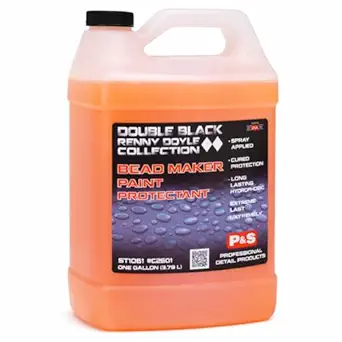 | Best for High-Volume Detailing | Volume: 1 gallon | Application: Spray and wipe | Protection: Hydrophobic and UV | VIEW ON AMAZON | See Our Full Breakdown |
| CERAKOTE® Rapid Ceramic Paint Sealant, 14 oz |  | Best Spray-On Durability | Volume: 14 oz | Claimed Durability: Up to 50 washes | Application: Spray and buff | VIEW ON AMAZON | See Our Full Breakdown |
| Optimum Opti-Seal Polymer Paint Sealant Spray, 8 oz |  | Best Compact Multi-Surface Pick | Product type: Polymer paint sealant | Volume: 8 oz | Application format: Spray-on | VIEW ON AMAZON | See Our Full Breakdown |
| professional paint sealant | Volume | Finish | Application | Vehicle Compatibility |
|---|---|---|---|---|
| Meguiar’s Professional M21 Syn | 16 oz | Deep, reflective and vibrant | Smooth wipe-on, wipe-off | — |
| Wolfgang Deep Gloss Paint Seal | 16 fl. oz. | — | — | — |
| Chemical Guys JetSeal Anti-Cor | — | High gloss | — | Cars, trucks, motorcycles, RVs and boats |
| P&S Bead Maker Paint Sealant | 1 gallon | High-gloss, mirror-like | Spray and wipe | Cars, boats and RVs |
| CERAKOTE® Rapid Ceramic Paint | 14 oz | Glossy, mirror-like and slick | Spray and buff | Cars, trucks, SUVs, RVs, boats and motorcycles |
| Optimum Opti-Seal Polymer Pain | 8 oz | — | — | — |
More Details on Our Top Picks
Meguiar’s Professional M21 Synthetic Sealant 2.0, 16oz
Meguiar’s Professional M21 Synthetic Sealant 2.0 earns its place by combining polymer protection with visual masking of fine swirls, a useful pairing for detailers working on paint that is presentable but not freshly corrected. Wolfgang Deep Gloss Paint Sealant focuses more heavily on extended gloss protection, while M21 makes more sense when the immediate finish needs extra depth and uniformity. Its smooth wipe-on, wipe-off process supports hand or production-detailing workflows, and the hydrophobic layer delivers pronounced water beading. I would not treat the filling effect as genuine paint correction: deeper scratches remain visible, and maximum protection may call for a second coat. Compared with CERAKOTE Rapid Ceramic Paint Sealant, M21 also requires a more traditional sealant routine rather than a fast spray-and-buff application.
Pros:- Visually softens the appearance of fine swirls and light scratches
- Creates a deep, reflective finish with strong water beading
- Synthetic polymer formula suits professional detailing workflows
- Wipes on and removes without an elaborate application process
Cons:- Does not repair or remove deeper paint defects
- A second coat may be needed for the strongest protection
- Less convenient than spray-on options for rapid maintenance jobs
Best for: Professional detailers refreshing lightly swirled daily drivers without performing a full machine-polishing correction
Not ideal for: Correction specialists addressing deep scratches or neglected clear coat, because the formula only masks minor defects visually
- Volume:16 oz
- Formulation:Synthetic polymer
- Water Beading:Excellent
- Application:Smooth wipe-on, wipe-off
- Visual Blemish Removal:Fine scratches and swirls
- Finish:Deep, reflective and vibrant
Our verdict“I recommend M21 for detailers who prioritize rich gloss and light defect masking over ceramic-style application speed.”
Wolfgang Deep Gloss Paint Sealant – 16 fl. oz.
Wolfgang Deep Gloss Paint Sealant takes my top position because it offers the strongest balance of six-month protection, color depth, and professional finish quality in this group. It is a better fit than P&S Bead Maker when durability between scheduled detailing appointments matters more than rapid spray application. The formula repels water, oil, and environmental contamination, which helps preserve a polished surface rather than merely adding short-lived slickness. It can also be applied in hot or humid conditions, giving mobile detailers useful flexibility. That performance depends on careful preparation and adequate curing, however, so this is not the fastest choice for high-turnover wash bays. Meguiar’s M21 does more to disguise minor swirls, while Wolfgang rewards properly corrected paint with clearer, longer-lived gloss.
Pros:- Provides up to six months of protection from one application
- Produces strong gloss and added color depth
- Repels water, oil and environmental contaminants
- Can be applied in hot or humid working conditions
Cons:- Surface preparation strongly affects the final result
- Curing extends the service time before delivery or exposure
- Application is slower than spray-and-wipe sealants
Best for: Professional detailers sealing properly prepared vehicles for clients who expect deep gloss and protection lasting between seasonal appointments
Not ideal for: Express-detailing operations that cannot allocate time for surface preparation and curing
- Brand:WOLFGANG CONCOURS SERIES
- Model:WG-5500
- Volume:16 fl. oz.
- Item Weight:1.05 pounds
- Product Dimensions:2 x 2 x 8 inches
- Manufacturer Part Number:WG-5500
- Claimed Protection:Up to 6 months
- Repels:Water, oil and contaminants
Our verdict“I rank Wolfgang first for professionals willing to trade application speed for durable, polished-looking protection.”
Chemical Guys JetSeal Anti-Corrosion Sealant & Paint Protectant – 16 oz
Chemical Guys JetSeal is the most flexible choice here for studios handling mixed surfaces and vehicle types. Unlike Meguiar’s M21, which is most compelling as a gloss-enhancing paint treatment, JetSeal can protect paint, glass, and metal across cars, motorcycles, RVs, and boats. That range can reduce the number of separate products a professional keeps on the shelf, while the high-gloss finish and resistance to dirt and water spots support a polished handover. Application by hand or machine adds workflow flexibility. The compromise is that technique matters: uneven coverage or rushed removal can diminish the result, and multiple coats may be needed when maximum longevity is the goal. P&S Bead Maker is quicker for broad spray-and-wipe coverage, but JetSeal offers a more deliberate multi-surface treatment.
Pros:- Works across painted, glass and metal surfaces
- Suitable for several vehicle and marine categories
- Can be applied by hand or polishing machine
- Adds high gloss while resisting dirt and water spots
Cons:- Results depend on controlled, even application
- Maximum protection may require multiple coats
- More technique-sensitive than P&S Bead Maker
Best for: Detailing studios that regularly service cars, motorcycles, RVs and boats with a single multi-surface protective product
Not ideal for: High-volume wash teams seeking a forgiving one-pass spray product with minimal technique requirements
- Size:16 oz
- Product Type:Sealant and protectant
- Compatible Surfaces:Paint, glass and metal
- Protection Duration:Months
- Application Methods:Hand or machine
- Vehicle Compatibility:Cars, trucks, motorcycles, RVs and boats
- Finish:High gloss
Our verdict“I would choose JetSeal for a varied professional workload where surface versatility matters more than the fastest possible turnaround.”
P&S Bead Maker Paint Sealant – Spray & Wipe Protectant for Cars, Boats & RVs – Hydrophobic Gloss & UV Protection – 1 Gallon
P&S Bead Maker is my production-oriented pick, pairing a one-gallon format with spray-and-wipe application for shops that process many vehicles. It covers paint, rubber, plastic, metal, and glass, allowing a detailer to move around a car, boat, or RV without repeatedly changing products. Compared with Wolfgang Deep Gloss Paint Sealant, it favors speed, broad coverage, and easy maintenance over a stated six-month protection cycle. The hydrophobic finish, UV protection, and added color depth make it well suited to final-stage gloss enhancement or recurring upkeep. The large container is less practical for occasional users, and every treated area still needs microfiber buffing. Multiple coats may also be required for stronger durability, so CERAKOTE Rapid Ceramic Paint Sealant is the more appealing spray option when longer wash-rated protection is the main goal.
Pros:- Gallon size supports frequent professional use
- Spray-and-wipe application speeds coverage of large vehicles
- Safe for paint, rubber, plastic, metal and glass
- Adds hydrophobic behavior, UV protection and strong gloss
Cons:- Every application requires thorough microfiber buffing
- Multiple coats may be needed for stronger durability
- Bulk size is excessive for occasional personal detailing
Best for: Busy detailing shops and mobile professionals applying sealant across multiple cars, boats or RVs each week
Not ideal for: Low-frequency home users who lack storage for a gallon and want maximum durability from one application
- Volume:1 gallon
- Application:Spray and wipe
- Protection:Hydrophobic and UV
- Suitable Surfaces:Paint, rubber, plastic, metal and glass
- Vehicle Compatibility:Cars, boats and RVs
- Finish:High-gloss, mirror-like
- Removal Method:Buff with a microfiber towel
Our verdict“I recommend Bead Maker for high-throughput detailers who value speed, surface coverage and bulk economy over maximum single-coat longevity.”
CERAKOTE® Rapid Ceramic Paint Sealant, 14 oz
CERAKOTE Rapid Ceramic Paint Sealant targets professionals who want ceramic-style slickness without committing to a full coating service. Its headline advantage is protection rated for up to 50 washes, paired with a spray-and-buff process that is faster than the traditional application and curing routine of Wolfgang Deep Gloss Paint Sealant. Water, dirt, and grime release more readily from the treated surface, helping clients maintain the finish between appointments. The formula also works across cars, trucks, SUVs, RVs, boats, and motorcycles. Still, the word “rapid” does not eliminate preparation: paint must be thoroughly washed and dried, and extra coats may be needed for peak performance. It cannot correct defects either, making Meguiar’s M21 better when light swirl masking is desired. I rank CERAKOTE as the durability-focused quick application choice.
Pros:- Offers protection rated for up to 50 washes
- Spray-and-buff process supports efficient professional application
- Creates a slick, mirror-like hydrophobic finish
- Helps repel water, dirt and grime across several vehicle types
Cons:- Provides no paint correction or defect-masking ability
- Requires thorough washing and drying before application
- Peak protection may require more than one coat
Best for: Mobile and studio detailers wanting durable hydrophobic protection without selling a full ceramic-coating service
Not ideal for: Paint-correction clients expecting scratches or swirls to be removed or concealed during the sealing step
- Volume:14 oz
- Claimed Durability:Up to 50 washes
- Application:Spray and buff
- Water Resistance:Hydrophobic
- Finish:Glossy, mirror-like and slick
- Vehicle Compatibility:Cars, trucks, SUVs, RVs, boats and motorcycles
- Surface Preparation:Wash and dry thoroughly before application
Our verdict“I would pick CERAKOTE for clients who want lasting water repellency and gloss from a faster service than a full ceramic coating.”
Optimum Opti-Seal Polymer Paint Sealant Spray, 8 oz
I rank Optimum Opti-Seal as the best compact choice because its spray-on formula protects paint, trim, wheels, and upholstery without taking up much detailing-cart space. The applicator-pad method offers more placement control than a basic spray-and-wipe product, while the streak-free finish suits professionals who need consistent results across varied surfaces. Compared with the gallon-size P&S Bead Maker, Opti-Seal is easier to store and better matched to mobile detailers, but its 8-ounce bottle is less economical for high-volume shops. It also has broader surface utility than Meguiar’s M21, though neither product corrects existing swirls or oxidation. The meaningful limits are its exclusion of rubber and automotive-only positioning. I would choose it for efficient finishing work, not bulk fleet service or neglected paint that needs polishing first.
Pros:- Compact 8-ounce bottle fits easily in mobile detailing kits
- Works across paint, trim, wheels, and non-rubber upholstery
- Spray-and-applicator method supports controlled, streak-free coverage
- Protects against UV exposure, dirt, moisture, and oil
Cons:- Small bottle can become costly for frequent full-vehicle applications
- Cannot be used on rubber surfaces
- Does not correct scratches, swirls, oxidation, or other paint defects
Best for: Mobile detailers and automotive enthusiasts who want a compact sealant for paint, trim, wheels, and non-rubber upholstery
Not ideal for: High-volume shops needing gallon-level economy, or owners seeking paint correction and protection in one step
- Product type:Polymer paint sealant
- Volume:8 oz
- Application format:Spray-on
- Application tool:Applicator pad
- Compatible surfaces:Paint, trim, wheels, and upholstery
- Excluded surface:Rubber
- Protection:UV rays, dirt, moisture, and oil
- Intended use:Automotive exterior and interior detailing
Our verdict“I recommend Opti-Seal to mobile detailers who value compact storage and broad automotive surface coverage more than bulk-product economy.”

How We Picked
I ranked these products by how well they serve a professional detailing workflow, with the greatest weight placed on protective performance, application predictability, finish quality, and labor demands. I also compared cost per usable application, package size, surface versatility, preparation requirements, and the risk of streaking or wasted product. A sealant moved higher when it offered a convincing balance across several criteria, rather than excelling at one narrow attribute.
The order reflects different shop priorities. Meguiar’s M21 leads on balance, Wolfgang ranks highly for premium appearance, and P&S gains ground through volume economics. Opti-Seal and CERAKOTE favor efficiency, while JetSeal is placed as a more specialized answer for buyers focused on exposure and corrosion-related protection. I also separated marketing-friendly claims from practical buyer outcomes, such as faster vehicle turnover, easier maintenance, and fewer application errors.
| professional paint sealant | Application | Finish | Vehicle Compatibility |
|---|---|---|---|
| Meguiar’s Professional M21 Syn | Smooth wipe-on, wipe-off | Deep, reflective and vibrant | — |
| Wolfgang Deep Gloss Paint Seal | — | — | — |
| Chemical Guys JetSeal Anti-Cor | — | High gloss | Cars, trucks, motorcycles, RVs and boats |
| P&S Bead Maker Paint Sealant | Spray and wipe | High-gloss, mirror-like | Cars, boats and RVs |
| CERAKOTE® Rapid Ceramic Paint | Spray and buff | Glossy, mirror-like and slick | Cars, trucks, SUVs, RVs, boats and motorcycles |
| Optimum Opti-Seal Polymer Pain | — | — | — |
Factors to Consider When Choosing Professional Paint Sealants
I would choose a sealant by matching its chemistry and application method to the work being performed, not by chasing the longest advertised protection period. Paint condition, shop volume, curing conditions, and maintenance habits can change which product represents the better purchase. The following factors explain where paying more helps and where a simpler formula can save both time and money.
Match Durability to the Maintenance Cycle
Advertised longevity is only a starting point because preparation, climate, washing chemicals, and outdoor storage all affect real service life. A detailing business offering scheduled maintenance may benefit more from a fast sealant applied at each visit than from a slower product sold around maximum durability. By contrast, a customer who returns once or twice a year needs a formula with a stronger margin against weather and repeated washing. Applying too much product is a common mistake; excess material can create difficult removal without producing a tougher protective layer. I would compare durability against the intended reapplication interval, not as an isolated number. This approach keeps labor and customer expectations aligned.
Calculate Labor Cost Alongside Bottle Price
A low shelf price does not automatically produce the lowest service cost. Application time, removal effort, and curing delays can outweigh a modest difference in product price when several vehicles move through a shop each day. Spray-and-wipe products favor mobile detailers and maintenance packages, while cream or liquid sealants can make sense when paint correction already creates a longer appointment. Gallon containers lower the material cost per vehicle, but they also tie up cash and storage space if demand is irregular. I would estimate how many complete vehicles a package can cover and add the labor minutes required for each one. That reveals the more useful figure: total cost per completed job.
Plan for Surface Preparation and Product Bonding
Clean, residue-free paint gives most sealants a better chance to spread evenly and remain attached. Waxes, polishing oils, road film, and strong wash residues can interfere with bonding or disguise missed contamination. A clay treatment or paint correction is not mandatory for every vehicle, but sealing over rough contamination preserves the defects beneath the protection. Shops should also check whether a sealant accepts damp application, requires fully dry paint, or calls for a waiting period before water exposure. Skipping those instructions can produce smearing or inconsistent water behavior that resembles product failure. I would build the chosen sealant into a repeatable preparation sequence so results do not depend on guesswork.
Choose Between Show-Car Gloss and Operational Speed
Finish depth and application speed do not always point to the same product. A premium liquid sealant may suit dark paint, corrected vehicles, and higher-priced presentation packages where visual refinement supports the invoice. A quick spray formula is usually the stronger business tool for fleet work, mobile services, and maintenance visits with tight time limits. Layering several products without checking compatibility is a frequent error, since extra steps may add little visible benefit while making streaking harder to diagnose. Buyers should also separate gloss created by paint correction from gloss attributed to the final sealant. I would pay more for appearance-focused chemistry only when the service package and customer can recognize the incremental finish gain.
Account for Climate, Storage, and Vehicle Use
A garage-kept weekend car and a daily-driven work vehicle place very different demands on protection. UV exposure, road salt, industrial fallout, and frequent washing can shift the priority from maximum gloss toward chemical resistance and easy renewal. Boats and RVs add larger panels, mixed materials, and long outdoor storage, making coverage rate and application reach more influential. Temperature and humidity also affect spreading, haze formation, removal, and curing, so a controlled studio can use products that may be inconvenient for a mobile operator. Buyers sometimes choose solely by vehicle type even though storage and maintenance frequency are better predictors of sealant stress. I would select for the vehicle’s actual exposure pattern and the conditions available during application.
Frequently Asked Questions
Should a professional detailer choose a traditional polymer sealant or a ceramic spray sealant?
A traditional polymer sealant often makes sense when the service includes paint correction and a dedicated finishing stage. Ceramic spray sealants prioritize speed, easy renewal, and strong water behavior, which suits mobile detailing and maintenance packages. The ceramic label alone does not establish longer service life, since surface preparation and formula concentration vary widely. Polymer products may offer a more deliberate application experience and a finish that fits premium detailing packages. I would choose according to workflow and customer return frequency, rather than product category language.
Is a gallon of paint sealant actually better value for a small detailing business?
A gallon can cut material cost when the same product is used across many vehicles each month. High turnover makes bulk packaging worthwhile, especially for spray products used on paint, glass, trim, or large recreational vehicles when the label permits those surfaces. A small operation may lose that advantage if the container sits for long periods, is stored poorly, or encourages overapplication. Buying a smaller bottle also makes it easier to change products as service packages develop. I would choose bulk only after tracking real monthly consumption across several jobs.
Can paint sealant be applied immediately after machine polishing?
It can be applied after polishing once the surface meets the sealant manufacturer’s preparation requirements. Residual polishing oils may need removal because they can affect spreading, bonding, or the appearance of the final layer. An inspection wipe also reveals haze and missed defects before protection makes correction less convenient. Some finishing products are designed to work together, while unrelated formulas may have uncertain compatibility. I would follow a controlled panel-wipe process and respect the stated curing conditions before exposing the vehicle to water.
Does a higher-gloss sealant provide better protection?
Gloss and protection describe different outcomes. Visual depth depends heavily on paint condition, polishing quality, color, and lighting, while protection relates more closely to chemical resistance, environmental exposure, and maintenance. A premium appearance-focused sealant may produce the finish wanted for a dark show vehicle without being the most efficient choice for a working fleet. Likewise, a fast spray product can support easier cleaning even if it does not create the same visual richness. I would judge appearance and protective utility separately before paying a premium.
Which paint sealant format is easiest for a beginner to apply without streaking?
A controlled spray format with simple wipe-on directions is usually the most approachable choice. Thin application is the key habit, since oversaturating a panel causes many streaking and removal problems. Beginners should work on cool paint, divide large panels into smaller areas, and use separate towels for spreading and final leveling. Dark paint and humid conditions can expose uneven application more readily, so good lighting helps. Among this lineup, CERAKOTE Rapid Ceramic is the beginner-oriented pick, while Opti-Seal is appealing for users who value a compact, efficient professional format.
Conclusion
Meguiar’s Professional M21 Synthetic Sealant 2.0 is my best overall recommendation because it offers the strongest balance of professional credibility, finish quality, protection, and workflow flexibility. Buyers chasing a richer premium appearance should choose Wolfgang Deep Gloss Paint Sealant, while high-volume shops get better value from the gallon of P&S Bead Maker. CERAKOTE Rapid Ceramic is my pick for beginners who want a direct spray application, and Optimum Opti-Seal makes more sense for mobile detailers or professionals prioritizing compact storage and fast service. Chemical Guys JetSeal is the specialized choice for vehicles facing harsher exposure where its anti-corrosion positioning carries more weight than maximum finish depth. The right purchase depends on whether the job rewards balanced performance, lower cost per vehicle, premium gloss, simple application, or exposure-focused protection.
NFL season / tailgating Picks
team gear
As an affiliate, we earn on qualifying purchases.