Over-conditioning your leather seats with the wrong products or using too much can lead to cracking, fading, and damage. Applying excess conditioner or using harsh chemicals can weaken the leather, trap dirt, and clog pores, causing it to become brittle over time. To avoid cracks, always choose proper, leather-specific products and apply them sparingly. Keep in mind, following best care practices can help maintain leather’s durability—so, learn how to do it right.
Key Takeaways
- Over-conditioning leather seats creates buildup that blocks pores, leading to dryness and increased cracking over time.
- Applying conditioner too frequently or excessively weakens leather’s natural elasticity, causing brittleness and cracks.
- Using harsh chemicals or incorrect products strips natural oils, damaging the leather’s structure and accelerating deterioration.
- Failing to clean seats properly before conditioning traps dirt and debris, which can cause abrasion and cracking when combined with conditioner.
- Neglecting proper application methods and product selection reduces leather’s lifespan and increases the risk of long-term damage.

Leather Honey Leather Conditioner, Since 1968. For All Leather Items Including Auto, Furniture, Shoes, Purses and Tack. Non-Toxic and Made in the USA / 8 Fl Oz (Pack of 1)
- Deeply Penetrates Leather: Protects and rejuvenates all leather types
- Long-Lasting Treatment: One application lasts at least six months
- Universal Leather Use: Suitable for furniture, auto, shoes, and more
As an affiliate, we earn on qualifying purchases.
As an affiliate, we earn on qualifying purchases.
Why Over-Conditioning Leather Seats Causes Cracks
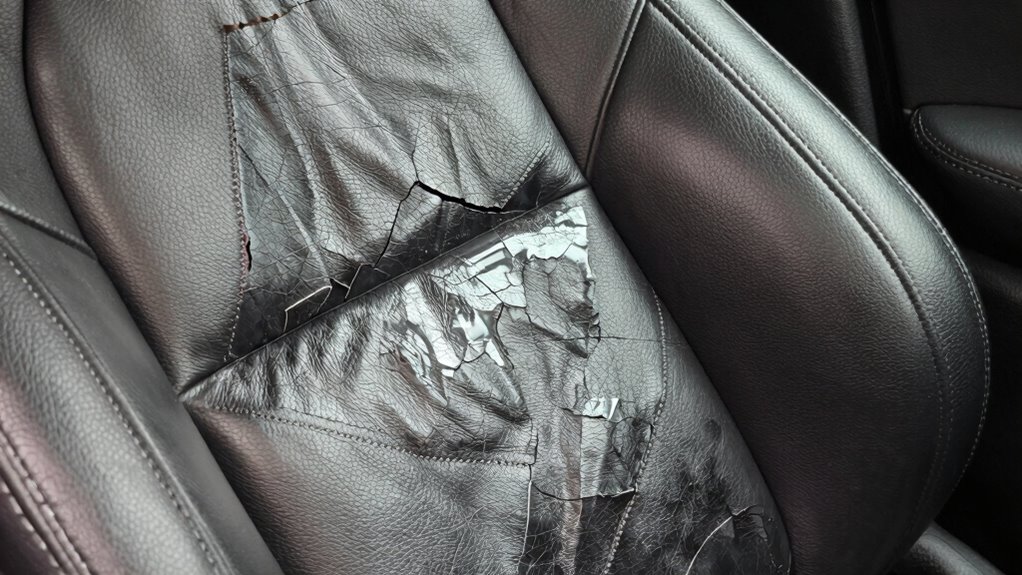
Over-conditioning leather seats can actually do more harm than good, leading to cracks and damage over time. When you apply too much conditioner, it disrupts the natural balance of moisture in the leather. Proper leather preservation depends on maintaining moisture control; overdoing it creates a greasy surface that attracts dirt and debris. Excess conditioner can clog pores, preventing the leather from breathing properly. This trapped moisture and buildup weaken the material, making it prone to cracking as the leather loses its flexibility and becomes brittle. Additionally, using excessive conditioner can interfere with color retention and fade the leather’s appearance. Applying too much conditioner can also cause product buildup, which hampers the leather’s natural properties. To prevent these issues, understanding the moisture balance is essential for long-term leather care. Maintaining the correct conditioning frequency is crucial to avoid over-application. Neglecting proper application techniques may lead to uneven coverage and further damage. Instead of protecting your seats, over-conditioning accelerates deterioration. To keep your leather looking its best, apply conditioner sparingly and focus on maintaining the right moisture levels, ensuring long-term preservation without risking cracks.
Signs You’re Applying Too Much Conditioner
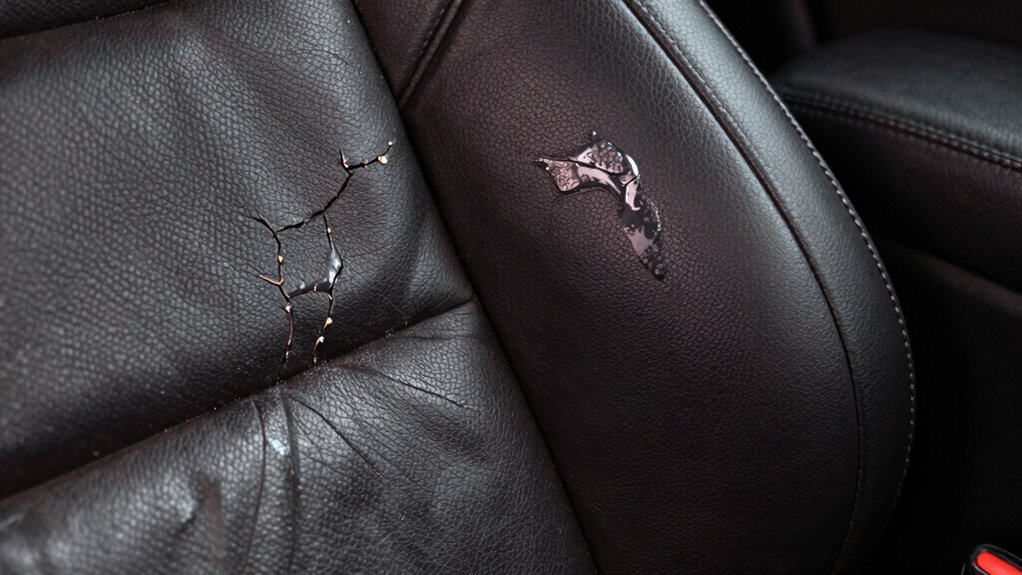
Applying too much conditioner to your leather seats can be easy to spot once you know what to look for. If your seat material begins to look shiny or greasy, you’re likely overdoing it. Excess conditioner can create a slick surface that attracts dirt and dust, making your leather look dull over time. You may also notice uneven coloration, with patches of darker or stained areas, which can interfere with leather dyeing and overall appearance. Too much conditioner can seep into the seat material, causing it to feel sticky or greasy and potentially weakening the leather’s structure. Being mindful of these signs helps prevent damage and keeps your seats looking their best, avoiding the cracking that over-conditioning can cause. Additionally, understanding proper leather care techniques can help maintain the integrity and longevity of your seats, especially when combined with correct cleaning methods to avoid buildup. Incorporating regenerative conditioning can also support the leather’s natural oils and prevent excessive dryness that contributes to cracking. Recognizing these signs early allows for timely intervention, reducing the risk of long-term damage. Paying attention to application frequency ensures you don’t unintentionally harm your leather with overuse.
How Leather Conditioners Work and Why Less Is Better
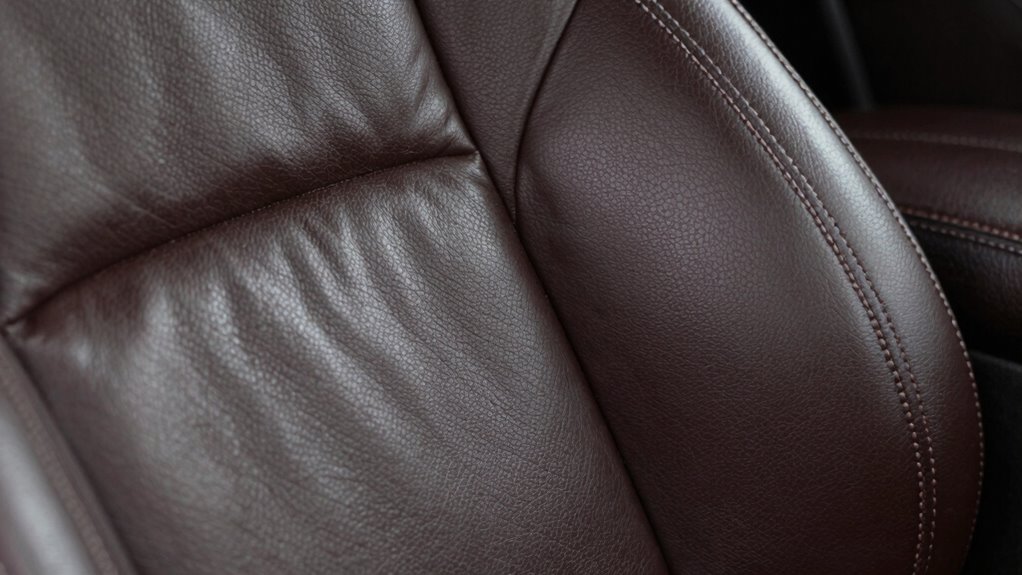
Leather conditioners work by penetrating the leather’s surface to restore moisture, soften the material, and help protect against future damage. When used correctly, they support leather dyeing, keeping colors vibrant and preventing cracking. Applying too much conditioner can clog pores, reducing breathability and seat ventilation, which leads to trapped moisture and accelerated wear. Less is more—over-conditioning can cause the leather to become greasy or stiff over time. By using a small amount, you allow the conditioner to work effectively without compromising the leather’s natural flexibility. Proper application helps maintain the leather’s integrity, preserving its appearance and longevity. When selecting a conditioner, consider the product formulation to ensure it suits your leather type and avoids potential damage. Additionally, understanding the leather’s porosity can help you choose the right amount and application method for optimal results. Focus on gentle, even coverage, and resist the urge to overdo it, ensuring your seats stay soft, supple, and protected.
Choosing the Right Leather Conditioner for Your Seats
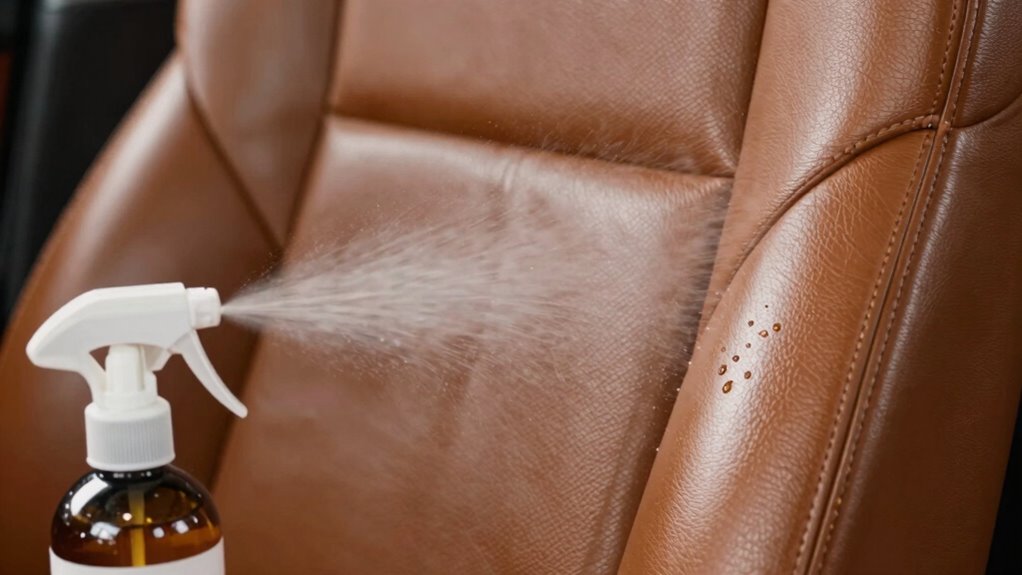
When selecting a leather conditioner, make sure it’s compatible with your seat material to avoid damage. Check the ingredient list to guarantee it’s free from harsh chemicals that could harm your leather. Choosing products with gentle, natural ingredients helps keep your seats looking their best. Additionally, air purifier maintenance tips can help ensure your vehicle’s interior remains clean and free of airborne pollutants that could affect leather longevity. Regularly monitoring and maintaining your vehicle’s interior air quality can further extend the lifespan of your leather seats. Being mindful of wiring best practices in your vehicle can also prevent potential damage caused by mismatched or improper application of conditioners, ensuring your seats stay protected and in good condition.
Material Compatibility Tips
Choosing the right leather conditioner is essential to maintaining your seats’ appearance and longevity. You want a product compatible with your leather type, so check the label for material compatibility. Some conditioners work better on finished leather, while others suit raw or untreated surfaces. Ensuring the conditioner’s pH balance is close to that of natural leather (around 4.5 to 5.5) helps prevent damage and cracking. If your seats need leather repair, choose a conditioner that promotes flexibility without causing stiffness. Always test a small, inconspicuous area first to confirm compatibility. Using an incompatible product can strip the finish or cause uneven aging. Properly matching your conditioner to your leather type and maintaining its pH balance protects your seats from future cracking and extends their lifespan. For example, choosing an appropriate electric dirt bike can further enhance your riding experience by providing reliable performance and durability. Additionally, understanding your leather material helps you select conditioners formulated for specific surfaces, ensuring better protection. Being aware of product ingredients, such as avoiding harsh chemicals, further ensures the longevity of your leather seats. Moreover, selecting conditioners with proper formulation helps prevent damage caused by incorrect chemical compositions. Paying attention to application techniques ensures the conditioner penetrates evenly and effectively without causing harm.
Ingredient Listing Importance
Understanding the ingredient list on leather conditioner labels is essential because it helps you determine the product’s safety and effectiveness. When choosing a conditioner, look for ingredients that support leather dyeing and preserve your seat upholstery’s natural look. Harsh chemicals can strip dyes, fade colors, or cause cracking over time. Opt for conditioners with gentle, nourishing ingredients like natural oils and conditioners that promote flexibility. Reading labels allows you to avoid products that might damage your leather or interfere with the dyeing process. A clear ingredient list also helps you select a conditioner suited for your specific seat upholstery, ensuring it remains soft, supple, and crack-free. Being informed guarantees you make the best choice for maintaining your leather seats long-term. Proper ingredient selection is therefore crucial for preventing damage and extending the lifespan of your leather upholstery.
Avoiding Harsh Chemicals
Reading the ingredient list helps you identify products that could harm your leather seats. Harsh chemicals like alcohol, ammonia, or silicone can cause unwanted chemical reactions, leading to cracking or fading over time. These ingredients can strip away natural oils, weakening the leather’s structure and making it more prone to damage. To prevent this, choose conditioners specifically formulated for leather, avoiding those with aggressive chemicals. Properly caring for your seats supports leather repair and maintains their suppleness. Always opt for gentle, pH-balanced products that nourish without stripping. By avoiding harsh chemicals, you protect your investment and ensure your leather seats stay soft, smooth, and crack-free for years to come.
Best Practices for Cleaning and Conditioning Leather Seats
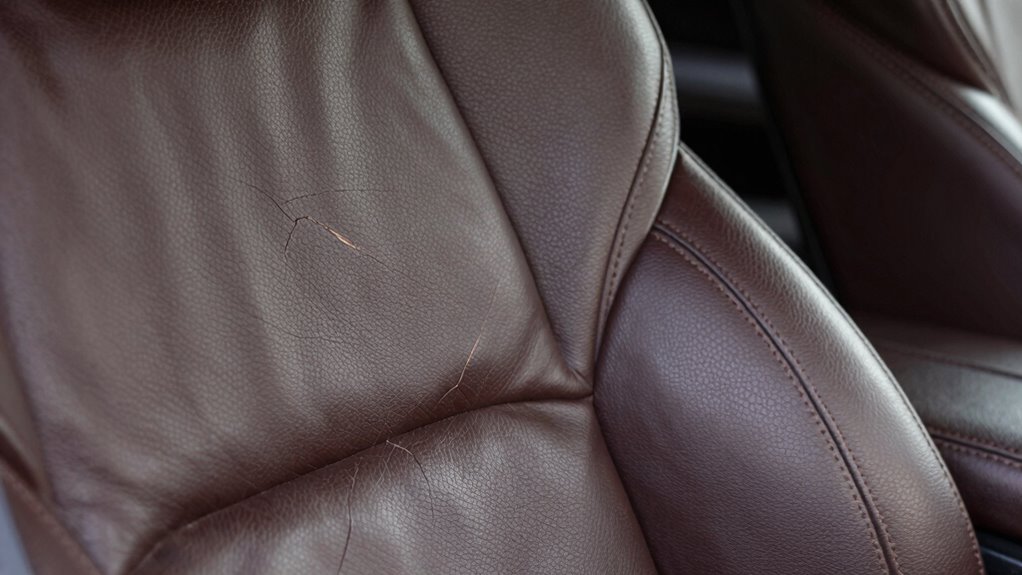
To keep your leather seats looking their best, it’s essential to follow proper cleaning and conditioning routines. Avoid leather care myths that suggest harsh products or over-conditioning, which can damage different leather seat textures. Use gentle cleaners designed for leather, and always test a small area first. Conditioning should be done sparingly with quality products to prevent cracking. Remember, consistent maintenance preserves the leather’s natural beauty and durability.
| Leather Seat Texture | Best Practice | Common Mistake |
|---|---|---|
| Smooth | Use a soft cloth and proper cleaner | Over-wetting the surface |
| Pebbled | Avoid abrasive brushes | Using too much conditioner |
| Corrugated | Clean with gentle motions | Neglecting regular conditioning |
| Suede-like | Use specialized leather care products | Using harsh chemicals |
Step-by-Step: How to Safely Clean and Condition Leather Seats
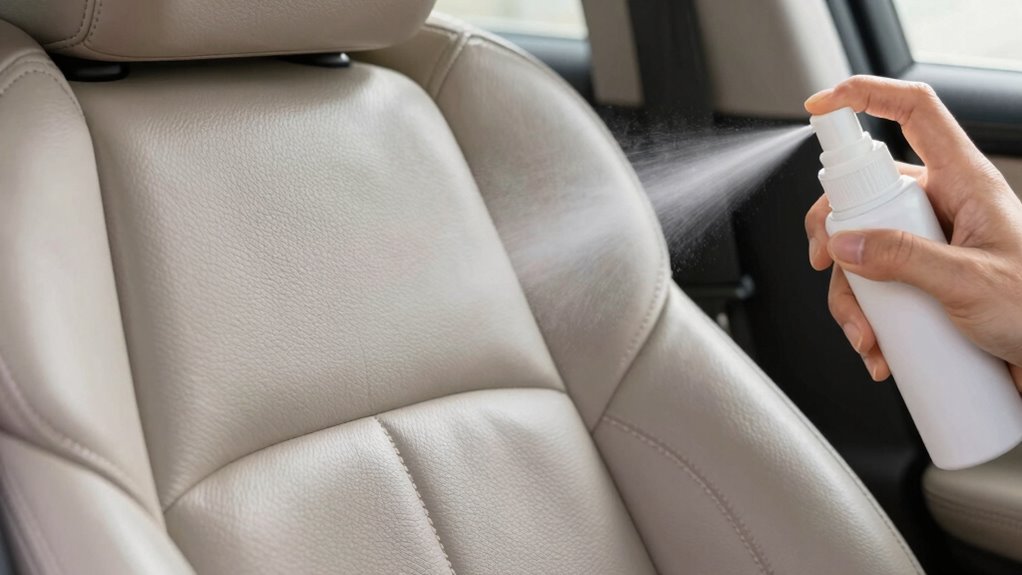
To clean and condition your leather seats safely, start by gathering the right supplies like a gentle cleaner and conditioner designed for leather. Use soft, gentle techniques to avoid damaging the material, paying attention to how you apply the products. Follow the correct conditioning methods to keep your seats looking their best and lasting longer.
Gather Proper Supplies
Before you begin cleaning and conditioning your leather seats, gather all the essential supplies to guarantee a safe and effective process. You’ll need a soft microfiber cloth, a pH-balanced leather cleaner, a leather conditioner, and a small brush for crevices. To prevent cracking, consider applying a leather dye if your seats show signs of fading. Also, make certain your vehicle’s seat ventilation is turned off and well-ventilated during the process. Here’s a quick overview:
| Supplies | Purpose |
|---|---|
| Microfiber cloth | Gentle cleaning and wiping |
| Leather cleaner | Removes dirt without damaging leather |
| Leather conditioner | Keeps leather soft and prevents cracking |
| Small brush | Reaches into seams and textured areas |
| Leather dye | Restores color, avoiding the need for replacement |
Gather these to protect your leather seats effectively.
Gentle Cleaning Techniques
Start by gently vacuuming your leather seats with a soft brush attachment to remove loose dirt and debris. This prevents scratching and preserves the leather’s surface during cleaning. Use a microfiber cloth dampened with a mild, pH-balanced cleaner designed for leather to wipe down the seats. Avoid harsh chemicals that can damage or dry out the leather, jeopardizing your leather restoration efforts. Work in small sections, applying gentle pressure to lift dirt without harming the material. Regular, delicate cleaning helps maintain the leather’s natural oils and prevents cracking over time. Properly cleaning your seats supports leather preservation, keeping them supple and looking new longer. Remember, gentle techniques are key to avoiding damage and ensuring your leather remains in top condition.
Correct Conditioning Methods
After thoroughly cleaning your leather seats, applying a high-quality leather conditioner is essential to keep the material soft and protected. When conditioning, use a product specifically designed for your seat material to preserve its natural leather texture. Begin by applying a small amount of conditioner to a soft, lint-free cloth. Gently work it into the seat surface using circular motions, ensuring even coverage. Avoid oversaturating the leather, as excess conditioner can lead to buildup or damage. Allow the conditioner to penetrate for a few minutes before buffing off any excess with a clean cloth. Proper conditioning helps maintain flexibility, prevents cracking, and enhances the appearance of your seats. Remember, consistent, correct application is key to protecting your leather from future damage.
Can You Fix Cracks Caused by Over-Conditioning?
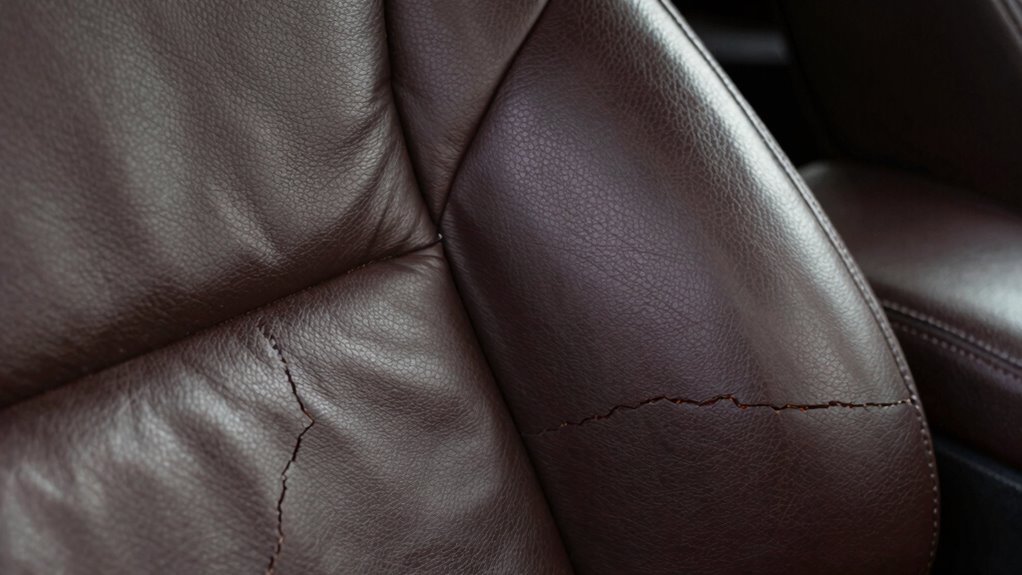
Cracks caused by over-conditioning might seem permanent, but you can often improve their appearance with the right techniques. Start with crack repair by gently cleaning the area to remove excess conditioner. Use a soft cloth or leather cleaner to eliminate buildup, as residual conditioner can worsen cracking. Once the surface is clean, apply a leather conditioner specifically formulated to hydrate and restore flexibility, avoiding products with harsh chemicals. If cracks are deep, consider using a leather filler designed for repair; follow the instructions carefully. Remember, conditioner removal is essential to prevent further damage. While you might not fully reverse deep cracks, proper cleaning and targeted repair can considerably improve the leather’s appearance, helping it look healthier and more resilient.
Tips to Prevent Future Damage and Keep Leather Looking New
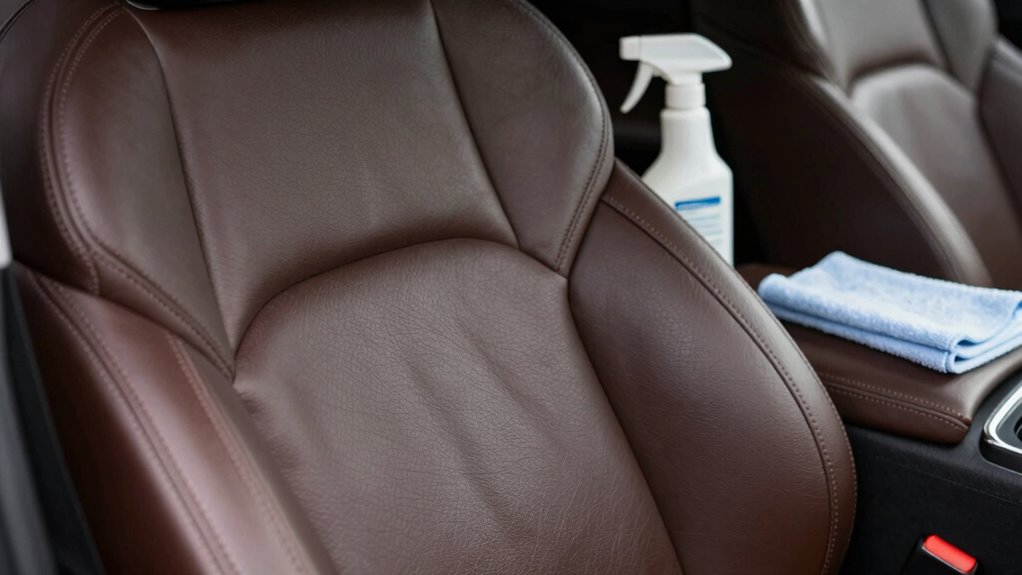
To keep your leather looking new and prevent future damage, it’s essential to establish a regular maintenance routine. Start by debunking common leather care myths, such as over-conditioning or using harsh products, which can accelerate cracking. Instead, focus on leather preservation through gentle cleaning and the right products designed for your seat’s material. Always test any cleaner on a small, hidden area first. Keep your leather moisturized with a high-quality conditioner, but avoid excessive application, which can cause more harm than good. Protect your seats from direct sunlight and extreme temperatures, as UV rays and heat accelerate deterioration. Consistent, careful maintenance helps prolong the life of your leather and keeps it looking fresh and supple for years.
Common Mistakes to Avoid When Caring for Leather Seats
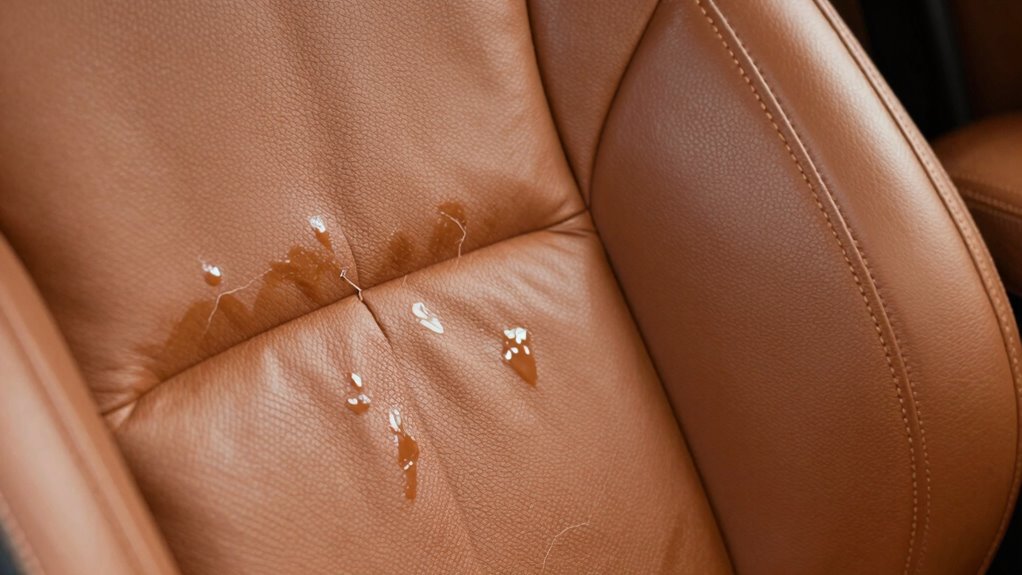
One of the biggest mistakes you can make when caring for leather seats is using harsh cleaning products that aren’t formulated for leather, as these can strip away the natural oils and cause cracking or fading. Many people fall for leather care myths, believing aggressive cleaners will remove dirt faster, but they often do more harm. Avoid common maintenance errors like over-cleaning or applying too much conditioner, which can lead to sticky residue or deterioration. Instead, use gentle, leather-specific products and follow the manufacturer’s instructions. Don’t assume all cleaning methods are safe—what works for fabric doesn’t necessarily work for leather. Proper knowledge and avoiding these mistakes help preserve your leather’s softness, shine, and durability over time.
Frequently Asked Questions
Can Cracked Leather Seats Be Restored Completely?
Yes, cracked leather seats can be restored, but full recovery hinges on the damage. You should consider leather repair techniques like cleaning, conditioning, and filling cracks with proper products. To prevent future cracking, focus on cracking prevention by avoiding harsh conditioners and regularly maintaining your seats. Proper leather repair and prevention methods help ensure your seats stay supple and look great for years to come.
How Often Should I Condition My Leather Seats?
You should condition your leather seats every 3 to 6 months, depending on usage and climate. Many believe more frequent conditioning is better, but over-conditioning can lead to cracking, especially if you use the wrong products. Proper leather maintenance involves regular cleaning and appropriate conditioning frequency to keep the leather soft and supple. Check the manufacturer’s recommendations and avoid harsh conditioners that can damage the leather over time.
Are There Natural Alternatives to Commercial Leather Conditioners?
Yes, you can use natural remedies like leather oils such as coconut or olive oil as alternatives to commercial leather conditioners. These natural remedies nourish your leather without harsh chemicals, helping prevent cracking and prolonging its lifespan. Just apply a small amount with a soft cloth, gently work it into the leather, and wipe off any excess. This method keeps your leather seats soft, supple, and well-maintained naturally.
What Are the Long-Term Effects of Using Harsh Chemicals on Leather?
Using harsh chemicals on leather can cause significant long-term damage, leading to chemical damage and leather deterioration. Over time, these chemicals break down the leather’s natural oils, making it brittle and prone to cracking. You might notice discoloration or a weakened surface. To protect your leather, avoid aggressive cleaners and opt for gentle, natural alternatives. Proper care preserves its softness, flexibility, and overall lifespan, saving you from costly repairs later on.
Does Temperature Affect the Conditioning and Cracking of Leather Seats?
Imagine your leather seats as a flexible, supple river—temperature fluctuations can make the water freeze, then thaw, causing cracks. Yes, temperature affects conditioning and cracking by impacting leather flexibility. Cold temperatures make leather stiff and brittle, while heat dries it out. To keep your seats smooth and resilient, avoid extreme temperatures and use proper conditioners that preserve flexibility, preventing cracks caused by temperature-related stress.
Conclusion
To keep your leather luscious and looking like new, avoid over-application and opt for ideal, minimal maintenance. Remember, gentle cleaning and careful conditioning prevent cracks and calamities. By balancing best practices and avoiding bold blunders, you’ll boost your leather’s longevity and luster. Stay savvy, steer clear of shortcuts, and safeguard your seats from slipping into suffering. With mindful maintenance, your leather will last long, look lovely, and continue to impress.