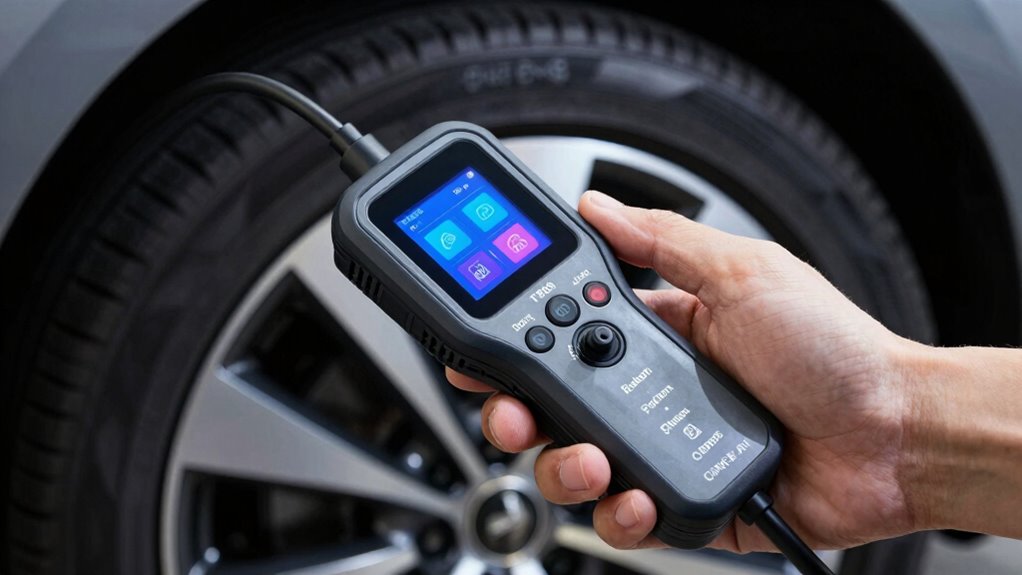
TPMS tools help you manage tire pressure sensors through functions like relearn, program, and clone. Relearn resets sensors so the system recognizes them again, often after tire service or sensor replacements. Programming involves encoding new sensors with specific data for accurate readings, while cloning copies existing sensor info onto new units for quick replacement. Understanding these differences helps guarantee your system works properly, and if you keep exploring, you’ll get even better at choosing the right method for your vehicle.
Listen free for 30 days with Audible
Thousands of audiobooks and originals — cancel anytime.
As an affiliate, we earn on qualifying purchases.
Key Takeaways
- Relearn resets the system to recognize existing sensors after replacement or tire service.
- Programming encodes new sensor data directly into sensors for proper communication with the ECU.
- Cloning duplicates existing sensor data onto new sensors, saving time during replacements.
- Compatibility between sensors and tools is crucial for effective relearn, programming, or cloning.
- Choosing the right function depends on vehicle needs, sensor type, and maintenance goals.
As an affiliate, we earn on qualifying purchases.
What Are TPMS Relearn, Program, and Clone Functions?
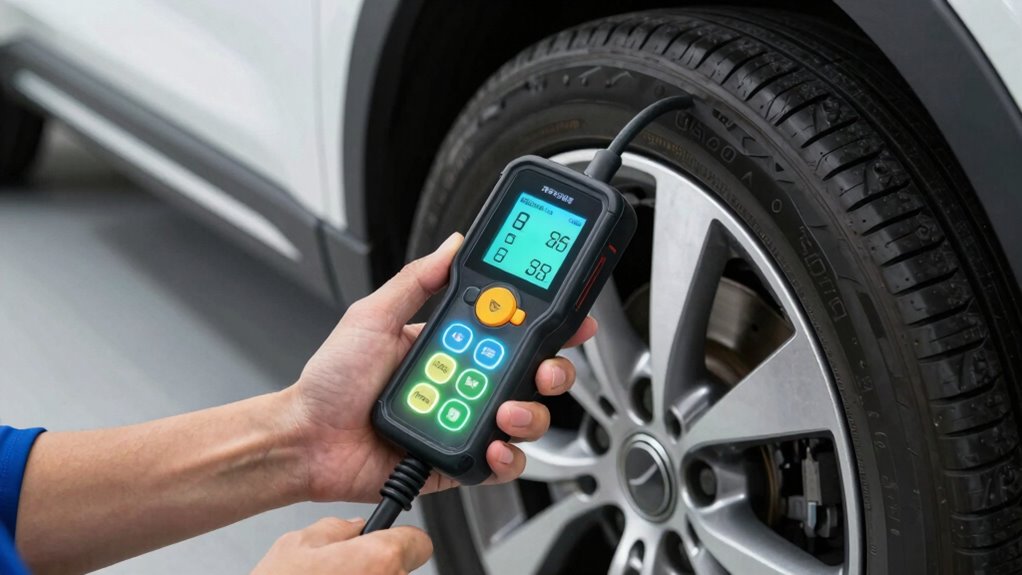
Understanding the functions of TPMS tools is essential for maintaining your vehicle’s tire pressure monitoring system efficiently. Relearn, program, and clone functions each serve a specific purpose in managing TPMS sensors. Relearn involves resetting the system so it recognizes new or replaced sensors, often requiring sensor calibration for accuracy. Programming allows you to encode sensor data directly into new sensors, ensuring proper communication with your vehicle’s ECU. Cloning duplicates existing sensor data onto new sensors, saving time when replacing multiple sensors. Tool compatibility is critical; not all TPMS tools support every function or sensor type. Additionally, selecting the right sensor type and ensuring compatibility with your vehicle is vital for proper system operation. Proper use of these functions can help prevent sensor mismatch issues that may lead to inaccurate tire pressure readings. It is also important to understand software compatibility to ensure your TPMS tool functions correctly with your vehicle model. Being aware of sensor compatibility issues can help you avoid costly mistakes during installation or replacement. By understanding these core functions, you ensure your TPMS system remains accurate and reliable, preventing tire pressure issues and ensuring safety on the road. Ensuring Software Quality and Compliance Through Effective Traceability
When Should You Relearn TPMS Sensors? Key Signs and Scenarios
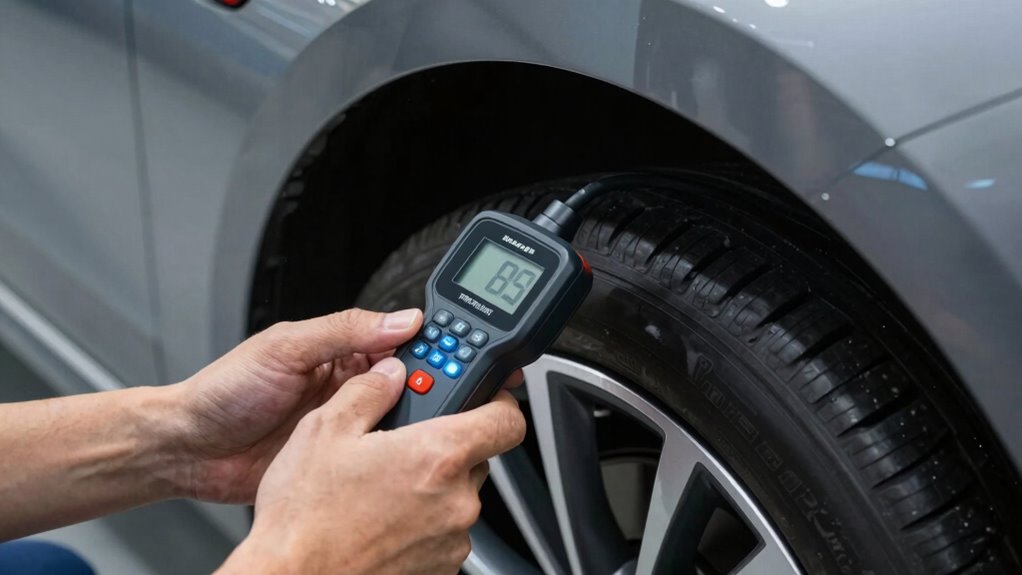
Knowing when to perform a TPMS sensor relearn is essential for keeping your vehicle’s tire pressure system functioning correctly. You should consider relearning when you’ve installed new sensors, changed tires, or if the system isn’t detecting proper tire pressures. You might also need to perform a relearn if the vehicle’s circuitry or sensors have experienced damage or malfunction. Additionally, system calibration ensures the sensor readings are accurate after maintenance or repairs. Proper sensor placement and installation are crucial to avoid false readings and ensure proper system operation. Incorrect installation or positioning can lead to inaccurate pressure readings, which could compromise safety. Key signs include warning lights on your dashboard, inconsistent tire pressure readings, or if sensors aren’t recognized after a tire service. It’s also important to verify sensor compatibility before starting the relearn process. Different vehicle makes may require specific relearn procedures, so consult your owner’s manual or a professional if unsure. Relearning recalibrates the system to recognize existing sensors, ensuring accurate pressure monitoring. Proper system calibration is crucial to prevent false alerts and maintain your safety on the road. Performing a relearn at the right time helps prevent false alerts and maintains your safety on the road.
How Do You Program TPMS Sensors, and How Is It Different From Relearning?
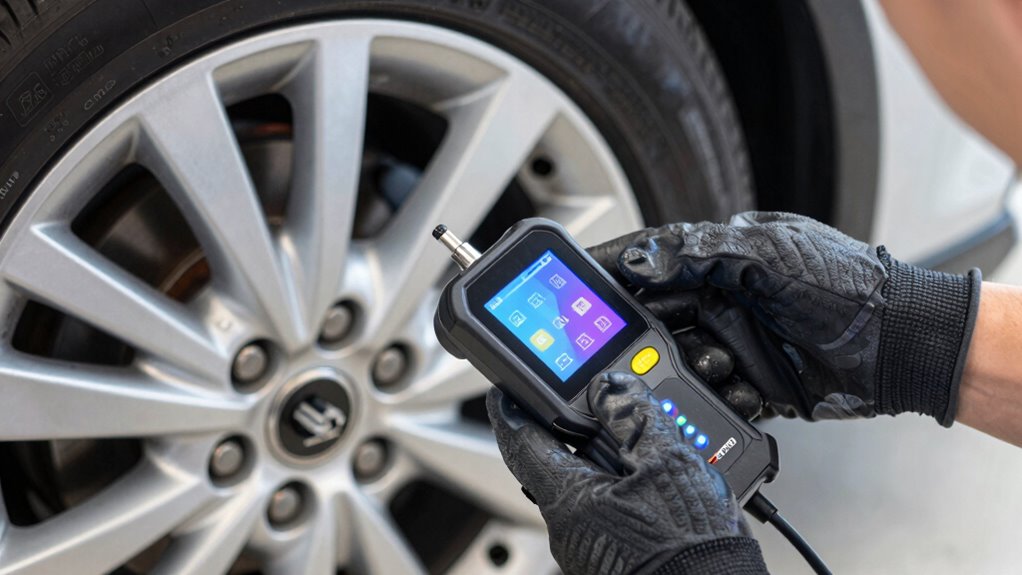
Programming TPMS sensors involves assigning new or replacement sensors to your vehicle’s system, which is different from simply relearning existing sensors. When programming, you’ll typically need to calibrate the sensor and perform tire pressure adjustments to ensure accurate readings. This process often involves specialized tools that communicate directly with the sensors to set proper IDs and parameters. Proper sensor calibration ensures the sensor accurately detects tire pressure, and tire pressure adjustment confirms the system’s accuracy after installation. Additionally, exploring AI trends can enhance the accuracy and efficiency of TPMS programming systems.
Programming TPMS sensors requires calibration and tire pressure adjustments for accurate readings.
- Use a TPMS programming tool to access the vehicle’s system
- Enter the sensor ID manually or automatically
- Calibrate sensors for precise tire pressure readings
- Adjust tire pressure to manufacturer specifications
- Confirm proper sensor communication and system function
What Is Cloning TPMS Sensors, and When Is It a Good Idea?

Cloning TPMS sensors involves copying the data from an existing sensor to a new or replacement unit, allowing it to communicate with the vehicle’s system without reprogramming from scratch. This process is particularly useful when sensor compatibility is confirmed, guaranteeing the clone functions correctly with your vehicle. Cloning benefits include saving time and effort, especially during tire replacements or sensor upgrades. It’s an efficient way to replicate sensor information without needing to manually reprogram each unit. Cloning is ideal if you want a quick, reliable solution that maintains the original sensor’s calibration and communication settings. However, confirm the sensor compatibility before cloning, as incompatible sensors can cause system errors or malfunctions. When used correctly, cloning streamlines sensor replacement and maintains vehicle safety standards. Proper water damage prevention measures can also ensure these sensors stay functional over time. Additionally, understanding sensor compatibility is crucial to avoid issues with your vehicle’s TPMS system. Regularly verifying sensor calibration can further enhance the reliability of cloned sensors and ensure optimal system performance. For added peace of mind, consulting professional assistance can help confirm that cloning procedures are correctly performed. Being aware of local regulations regarding TPMS modifications is also important to stay compliant with safety standards.
How to Choose the Right TPMS Function for Your Vehicle: Tips for Technicians and Enthusiasts

Are you unsure which TPMS function best suits your vehicle’s needs? To make the right choice, consider sensor compatibility and your vehicle’s specific requirements. Relearn is ideal if the sensor IDs need updating, while programming is necessary for cloning or replacing sensors. Cloning works when sensors are compatible, and tool calibration ensures accurate readings.
Choosing the right TPMS function depends on sensor compatibility and vehicle needs for accurate tire pressure monitoring.
- Check your vehicle’s make, model, and year for sensor compatibility
- Confirm if your TPMS tool can perform relearn, program, or clone functions
- Determine if recalibration of the tool is needed for precise results
- Identify whether your sensors require specific ID coding or just a reset
- Consider the complexity of the task to choose the most efficient function for your situation
Frequently Asked Questions
Can TPMS Tools Work With All Vehicle Makes and Models?
TPMS tools can’t work with all vehicle makes and models due to sensor compatibility and tool versatility. Some tools are designed for specific brands or sensor types, limiting their universal use. To guarantee your tool works effectively, check its compatibility with your vehicle’s sensor system. Investing in a versatile TPMS tool with broad compatibility helps you service different makes and models, saving you time and effort.
Are There Any Risks Associated With Cloning TPMS Sensors?
Cloning TPMS sensors can be risky if you’re concerned about sensor compatibility and cloning accuracy. While it’s a quick fix, incorrect cloning may cause sensors to malfunction or not communicate properly with the vehicle’s system. To avoid these issues, guarantee your cloning process is precise and compatible with the specific vehicle make and model. Otherwise, you might face sensor errors, increased repair costs, or safety concerns down the line.
How Long Does Each TPMS Process Typically Take?
The time each TPMS process takes varies based on sensor compatibility and your tool’s accuracy. Relearn procedures usually take a few minutes, as they involve syncing sensors with your vehicle. Programming can take about 10-15 minutes, depending on sensor type, while cloning sensors often takes just a few minutes if your tool is precise. Confirm your tool matches your sensors for quicker, more reliable results.
Do Aftermarket TPMS Sensors Require Different Procedures?
Think of aftermarket TPMS sensors as new players on a team—they often need different plays. You’ll need to check sensor compatibility first, ensuring they fit your vehicle. Then, follow specific aftermarket procedures to program or relearn the sensors. Unlike OEM sensors, aftermarket ones might require unique steps to sync with your car’s system, so always double-check manufacturer instructions to avoid any missteps.
Can TPMS Functions Be Performed Without Special Tools?
You can’t perform TPMS functions without special tools because sensor compatibility varies, and proper tool calibration is vital. These tools ensure you accurately relearn, program, or clone sensors, especially with aftermarket TPMS sensors. Using the right equipment helps prevent errors, ensures compatibility, and keeps your system functioning correctly. Without the proper tools, you risk sensor miscommunication and potential safety issues, so investing in quality TPMS tools is highly recommended.
Conclusion
Now that you know the differences between relearn, program, and clone functions, you can confidently choose the right method for your vehicle. Whether you’re a seasoned tech or a DIY enthusiast, understanding these tools helps keep your TPMS system running smoothly—no need to summon a wizard from Middle-earth. Just remember, a little knowledge goes a long way in keeping your ride safe and your dashboard light-free. Happy troubleshooting!
Fall Picks
fall essentials
As an affiliate, we earn on qualifying purchases.