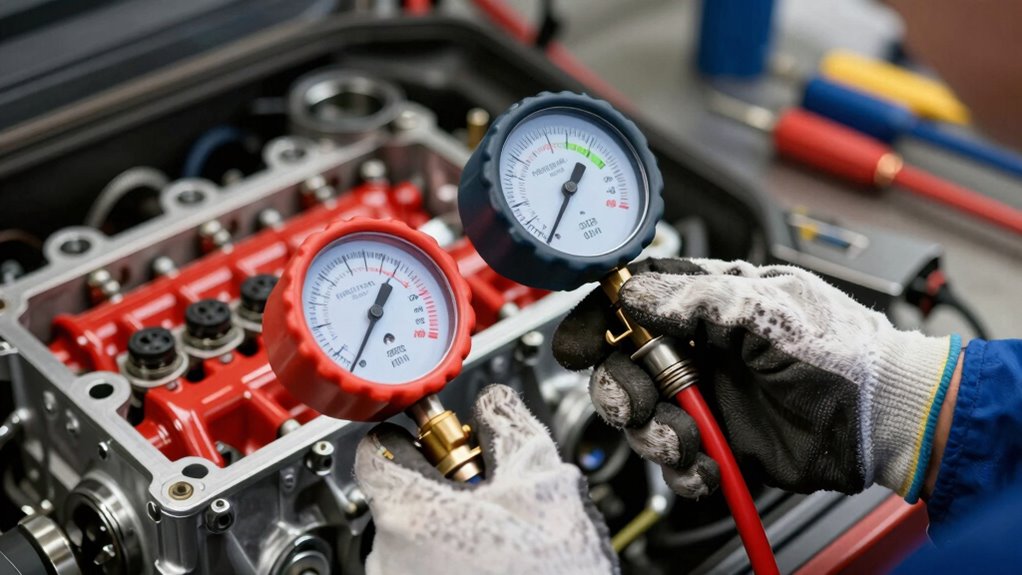

If you want a quick overview, a compression test measures overall cylinder pressure, giving you a broad idea of engine health. A leak-down test offers more precise details by pinpointing leaks through valves, piston rings, or gaskets. Both have their strengths, but leak-down tests are more reliable for diagnosing specific internal issues. Keep reading to discover which is best suited for your engine concerns.
Key Takeaways
- Compression tests provide a quick overall assessment of engine health but don’t specify leak sources.
- Leak-down tests accurately pinpoint internal leaks, offering detailed insight into specific component issues.
- High compression readings indicate good sealing; low readings suggest valve or piston ring problems.
- Leak-down readings reveal the exact location of leaks through listening for escaping air.
- Combining both tests gives the most comprehensive and truthful diagnosis of engine condition.
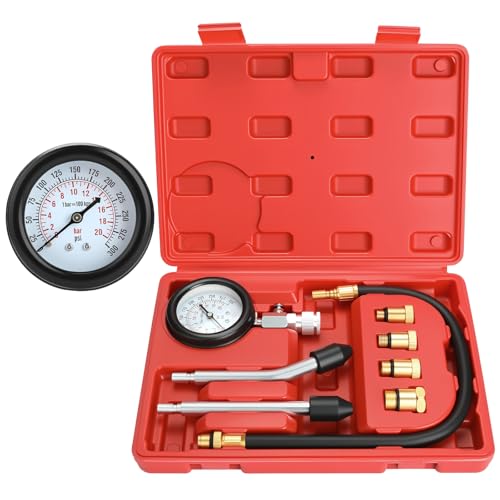
BETOOLL HW0130 8pcs Petrol Engine Cylinder Compression Tester Kit Automotive Tool Gauge
Checking Compression On Petrol Engine Quickly And Accurately
As an affiliate, we earn on qualifying purchases.
As an affiliate, we earn on qualifying purchases.
Why Diagnosing Engine Health Matters and When to Test
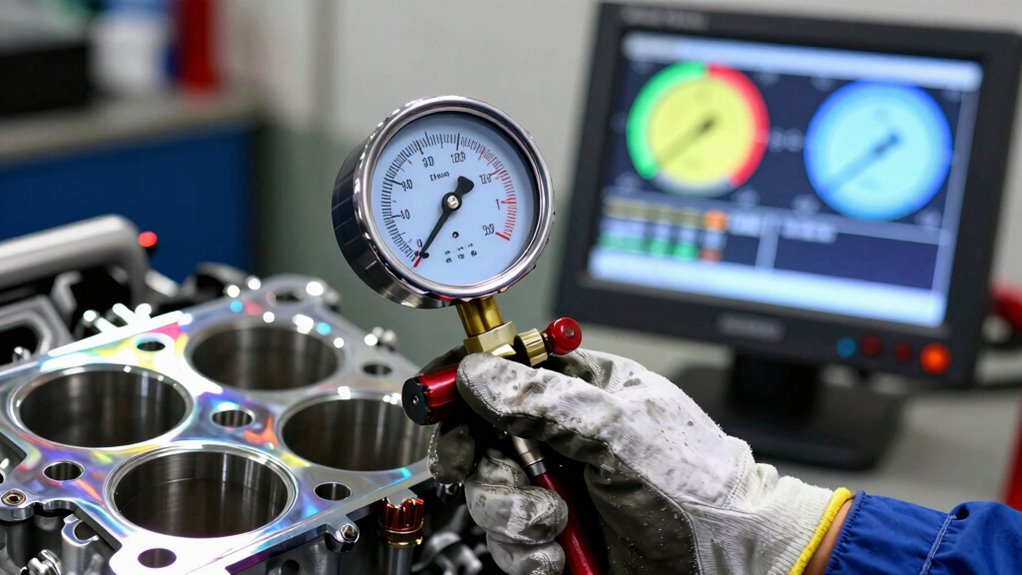
Understanding your engine’s health is essential because it directly affects performance, fuel efficiency, and longevity. When your engine isn’t running smoothly, you might notice increased engine noise or reduced fuel efficiency, signaling underlying issues. Diagnosing problems early helps prevent costly repairs and keeps your vehicle reliable. Testing should be done if you notice unusual noises, a drop in fuel economy, or rough idling. Regular diagnostics also catch wear and tear before they become severe, saving you money and time. Knowing when to test ensures you maintain ideal engine health, avoiding unexpected breakdowns. Using accurate testing methods can provide more reliable insights into your engine’s condition. Additionally, proper diagnostic procedures are crucial for obtaining trustworthy results. By staying proactive, you’ll enjoy better performance, improved fuel economy, and a longer-lasting engine. Regular assessments are a smart investment in your vehicle’s longevity and your peace of mind. Incorporating comprehensive diagnostics can further improve your ability to detect potential problems early.
leak-down engine test tool
As an affiliate, we earn on qualifying purchases.
As an affiliate, we earn on qualifying purchases.
How Compression and Leak-Down Tests Work
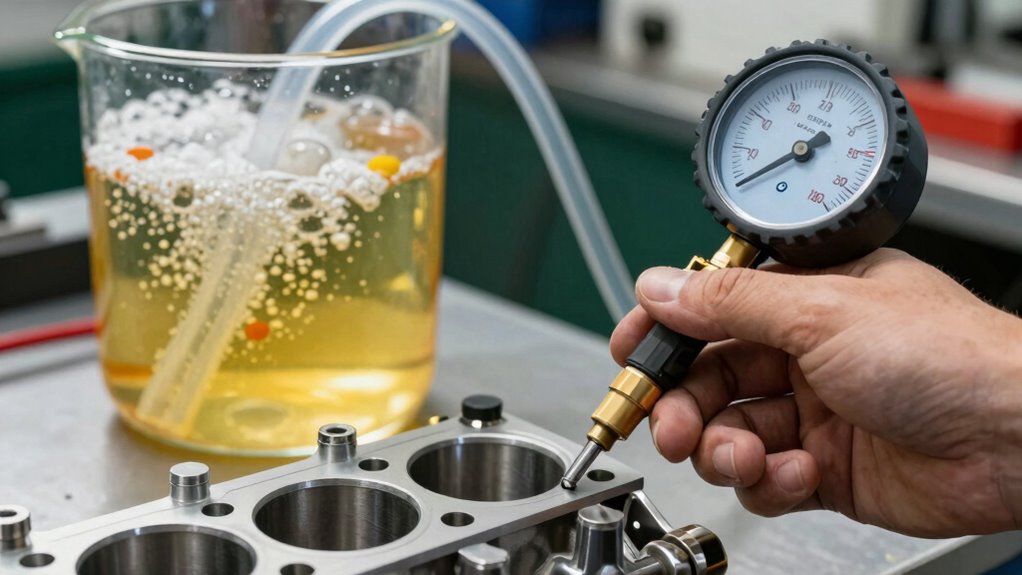
A compression test measures your engine’s cylinder pressure by sealing the spark plug hole and using a gauge to record the force during a quick engine turn. A leak-down test, on the other hand, involves adding compressed air into a cylinder and listening for leaks to identify where pressure escapes. Understanding how these methods work helps you better interpret their results and diagnose engine issues accurately. Additionally, knowing basic car repair techniques can help you perform these tests safely and effectively, especially when considering thermodynamic principles that influence engine performance. Recognizing the importance of proper testing procedures ensures accurate diagnostics and prevents potential damage during testing, as well as understanding how compression ratios impact overall engine health.
Compression Test Mechanics
Compression tests work by measuring the maximum pressure inside each cylinder when the engine’s piston compresses the air-fuel mixture. To get accurate readings, you need proper valve adjustment, ensuring valves aren’t leaking or stuck open. If valves aren’t sealing correctly, your compression reading will be low, even if the piston and cylinder are in good shape. Piston wear can also impact the results; worn pistons or rings won’t create a proper seal, reducing compression. During the test, you disable the ignition and fuel, then crank the engine while a gauge measures the pressure. A consistent, high reading indicates healthy compression, while low or uneven readings suggest issues like valve leaks or piston wear. Proper valve adjustment is essential for reliable test results.
Leak-Down Test Process
To perform a leak-down test, you’ll need a specialized gauge and access to each cylinder’s valves or spark plug. First, bring the engine to top dead center on the cylinder you’re testing. Then, connect the gauge and pressurize the cylinder with compressed air, usually around 100 psi. As the test runs, listen for engine noise and note where air escapes—through the intake, exhaust, or valve seals. If the gauge shows high leakage, it indicates worn piston rings or damaged valves. Regular leak-down testing can help identify issues that reduce fuel efficiency and cause unusual engine noise. This process provides a precise measure of internal sealing, helping you diagnose problems that a compression test might miss, giving you a clearer picture of your engine’s health. Proper testing techniques ensure accurate results and consistency in testing conditions are essential for accurate diagnosis and effective engine maintenance. Additionally, understanding leakage paths can help pinpoint specific engine issues more effectively. Using the correct testing equipment and following manufacturer guidelines are crucial for obtaining reliable and consistent results. Being aware of possible sources of leakage can further improve diagnostic accuracy and assist in targeted repairs.
car cylinder leak-down tester
As an affiliate, we earn on qualifying purchases.
As an affiliate, we earn on qualifying purchases.
When to Use a Compression Test Versus a Leak-Down Test
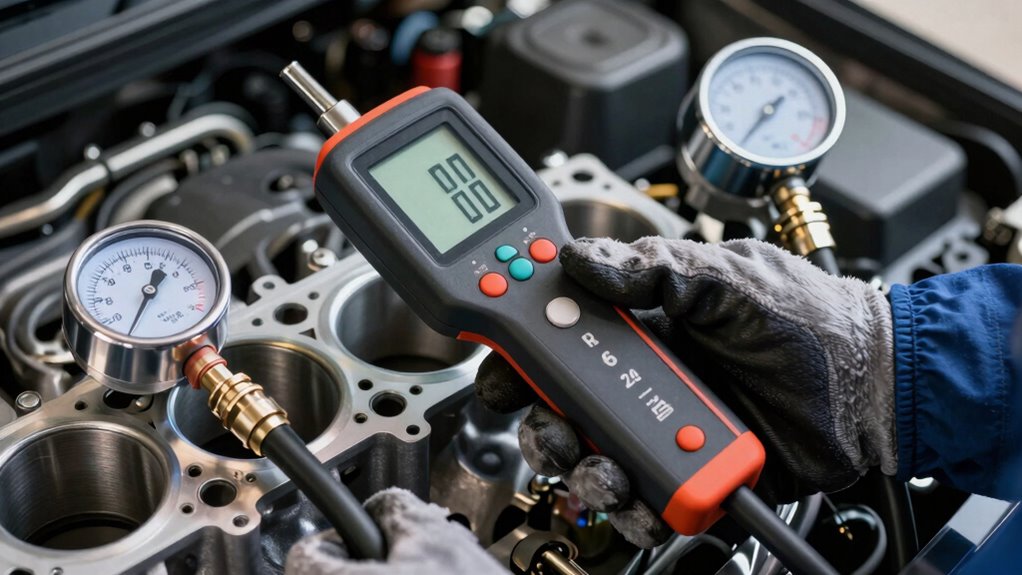
Deciding between a compression test and a leak-down test depends on what you’re trying to diagnose. If you want a quick, overall assessment of engine health, a compression test is ideal. It helps identify issues affecting fuel efficiency and emission control, such as worn piston rings or valves. Use it when you suspect general compression loss affecting engine performance. On the other hand, a leak-down test provides a more detailed view of specific cylinder integrity. It’s better when you need pinpoint accuracy on whether a valve, piston, or head gasket is leaking, which can impact emissions or fuel economy. Choose a compression test for rapid screening, and a leak-down test when you need to diagnose precise internal issues affecting engine efficiency and environmental compliance.

Clatoon 8pcs Petrol Engine Cylinder Compression Tester Kit, Small Engine Compression Tester Automotive Tool Gauge 0-300PSI for Testing Car Motorcycle Outboard Motor Snowmobile Chainsaw
Professional Tester Kit: Our engine cylinder compression tester kit helps you measure pressure on gasoline engine cylinder quickly…
As an affiliate, we earn on qualifying purchases.
As an affiliate, we earn on qualifying purchases.
Pros and Cons of Compression Tests
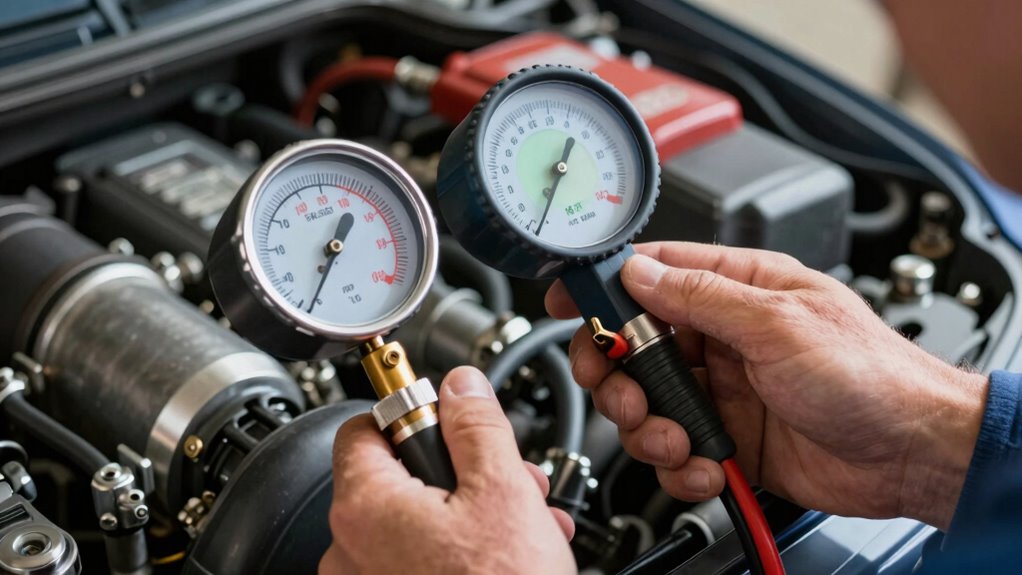
While compression tests are straightforward and quick to perform, they have both advantages and limitations that you should consider. A key benefit is their simplicity, allowing you to quickly assess overall engine health without specialized equipment. Compression benefits include identifying broad issues like worn piston rings or valve problems. However, their limitations can affect leak down accuracy. Since they measure only maximum pressure, they don’t reveal the specific source of a problem or the condition of individual components. Compression tests also can miss subtle leaks or low-level issues that leak-down tests detect more precisely. Additionally, understanding the engine’s internal condition can help determine whether a compression test provides enough information or if a leak-down test is necessary for detailed diagnosis. Furthermore, test precision depends on proper technique and interpretation, which can influence diagnostic results. The accuracy of results can also be impacted by factors such as temperature and the state of the engine at the time of testing. Overall, while they’re useful for initial diagnostics, you’ll want to combine them with other tests for a complete assessment of your engine’s condition.
Benefits and Drawbacks of Leak-Down Testing
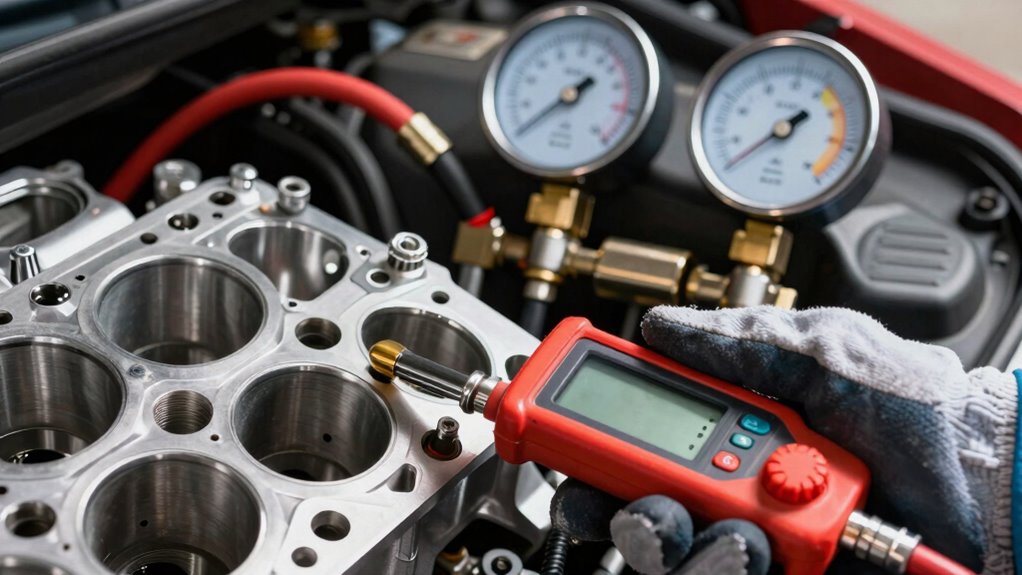
Leak-down testing offers a precise way to pinpoint specific engine issues by measuring how well air escapes from each cylinder. This method helps identify problems like valve leaks, piston ring wear, or head gasket failures that could affect fuel efficiency and emissions. However, it also has drawbacks. It can be more time-consuming than compression tests and requires specialized equipment. Additionally, the test might not reveal issues that only affect overall engine performance rather than individual cylinders. You might also find that it’s less effective for diagnosing problems related to engine timing or combustion quality. Despite these limitations, leak-down testing provides valuable insights into engine health, helping you maintain emission standards and optimize fuel efficiency by addressing leaks early.
How to Read and Interpret Test Results
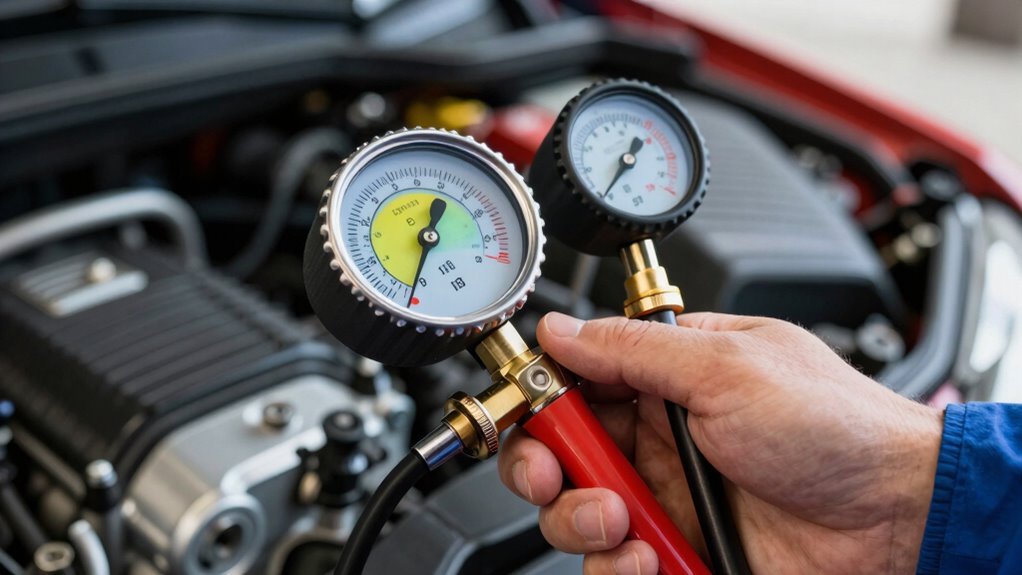
When you review your test results, focus on understanding what the readings reveal about your engine’s condition. Look for patterns or deviations that indicate potential issues, such as low compression or unexpected leak-down percentages. Recognizing these anomalies clearly helps you decide whether repairs are needed or if the engine is performing normally. Additionally, understanding how ADAS sensor calibration can impact your vehicle’s safety systems may influence your decision to proceed with repairs or further diagnostics. Being aware of engine performance metrics can also aid in making more informed maintenance choices.
Understanding Test Readings
Understanding test readings is essential to accurately evaluating your engine’s condition. When reading compression or leak-down test results, consider the following:
- High readings indicate good sealing and compression.
- Low readings suggest worn valves or piston rings.
- Consistent readings across cylinders mean balanced performance.
- Discrepancies between cylinders reveal potential issues.
- Sudden drops in pressure can point to leaks, affecting fuel efficiency and causing engine noise. Properly interpreting these results helps identify underlying issues and guides necessary repairs. Recognizing pressure loss patterns can further refine diagnosis and ensure precise repairs. Additionally, understanding compression ratios can provide deeper insight into engine health and performance. Being familiar with test procedures ensures that you gather accurate data for effective troubleshooting. Moreover, understanding engine specifications can help interpret test results in the context of your specific vehicle model.
Interpreting these results helps you determine if your engine runs smoothly or if repairs are needed. Poor compression may decrease fuel efficiency and increase engine noise, hinting at underlying problems. Correctly understanding test readings ensures you address issues early, maintaining peak performance and longevity.
Identifying Anomalies Clearly
To identify anomalies clearly in your test results, you need to carefully compare readings across cylinders and look for irregular patterns. Consistent differences might indicate issues like worn valves or a blown head gasket. Be sure your sensor calibration is accurate; improperly calibrated sensors can skew results, leading to false conclusions. Watch for unexpected engine noise during tests, which could signal abnormal compression or leak-down issues. Sudden spikes or drops in readings across cylinders are red flags. Look for patterns rather than isolated anomalies, as small variances can be normal. Precise interpretation requires attention to detail, ensuring your measurements reflect true engine performance. Additionally, understanding the differences between compression and leak-down tests can help you better interpret specific anomalies. Recognizing proper testing procedures can further improve diagnostic accuracy. By carefully analyzing these factors, you’ll accurately identify real problems versus false indications, making your diagnostics more reliable.
Which Test Is Better for Your Engine Issue?
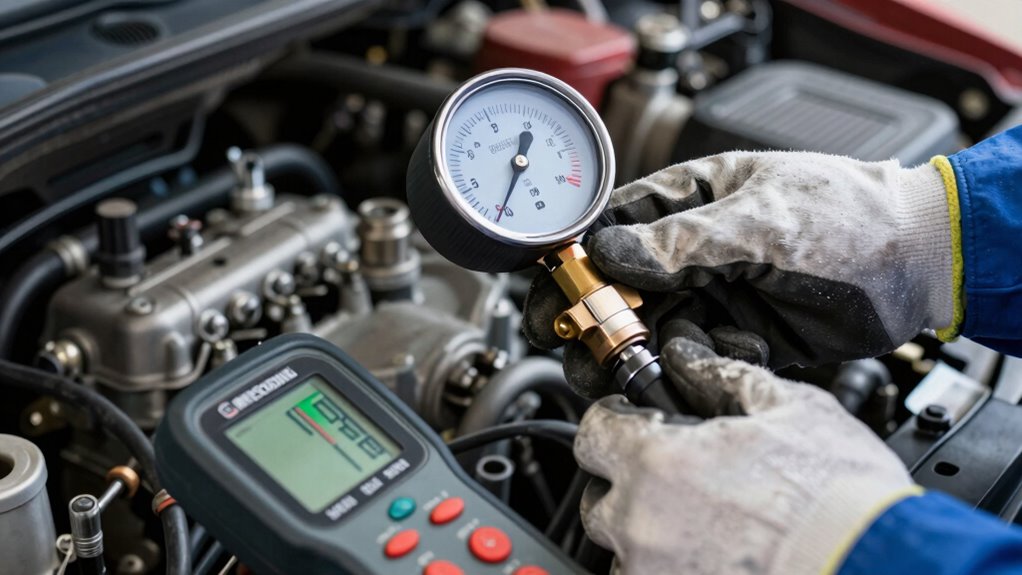
Choosing the right test depends on the specific engine issue you’re facing. If you suspect engine wear or want precise test accuracy, a leak-down test often provides clearer insights into component health. Conversely, if you’re checking for general compression loss or suspect a valve problem, a compression test might be sufficient. Consider these points:
- Leak-down tests reveal pinpointed leaks, showing if valves or piston rings are worn
- Compression tests quickly identify overall compression loss
- Leak-down tests are more accurate for diagnosing internal leaks
- Compression tests are faster and easier to perform
- Both tests help assess engine wear but serve different diagnostic purposes
Your choice depends on whether you need detailed leak information or a quick overview. For engine wear diagnosis, leak-down tests tend to be more reliable, offering better test accuracy.
Frequently Asked Questions
Can Both Tests Be Performed on the Same Engine at Once?
Yes, you can perform both tests on the same engine, but you should prioritize testing safety and guarantee your equipment is properly calibrated. Make sure the engine is off, cool, and secure before starting. Use calibrated gauges to get accurate results. Performing both tests sequentially is safe if you follow proper procedures, which helps you accurately diagnose engine health without risking damage or inaccurate readings.
How Do Ambient Conditions Affect Test Accuracy?
Imagine trying to hit a target with a moving wind. Ambient conditions, like temperature and humidity, create variability that affects your test results. Higher temperatures can cause metal expansion, giving false readings, while colder air might underreport compression. Ambient variability and temperature effects can lead to inaccurate compression or leak-down test results, so always perform tests in stable conditions, or recalibrate to account for environmental changes to guarantee trustworthy data.
Are There Specific Engine Types Better Suited for One Test?
You’ll find that certain engine types, like older or high-compression engines, are better suited for leak-down tests because they can reveal specific issues like valve or piston ring leaks more clearly. Compression tests work well on most engines but have limitations with turbocharged or complex systems. Always consider engine compatibility and test limitations before choosing which test to perform, ensuring accurate diagnostics.
How Long Does Each Test Typically Take to Perform?
Did you know that a compression test typically takes about 15 to 20 minutes, while a leak-down test can be completed in 20 to 30 minutes? You’ll find that the test duration varies based on your vehicle’s complexity and your experience. For accurate diagnostic time, expect to spend a bit more if you’re troubleshooting multiple cylinders or if your engine is hard to access. Both tests are quick but essential for accurate assessment.
What Are the Cost Differences Between Compression and Leak-Down Tests?
The cost comparison between compression and leak-down tests varies, but generally, leak-down tests tend to be more expensive due to specialized equipment required. You’ll find that compression tests are more affordable and straightforward, making them a good choice for quick diagnostics. For an affordability analysis, consider your budget and what information you need; if precision matters, investing in a leak-down test might be worthwhile despite the higher cost.
Conclusion
Choosing between compression and leak-down tests isn’t always straightforward, but understanding their differences helps you make an informed decision. Think of it as hitting two birds with one stone—each test offers unique insights into your engine’s health. By knowing when to use each, you can avoid throwing good money after bad and get to the bottom of the problem faster. In the end, it’s better to be safe than sorry—so trust the process and keep your engine in top shape.