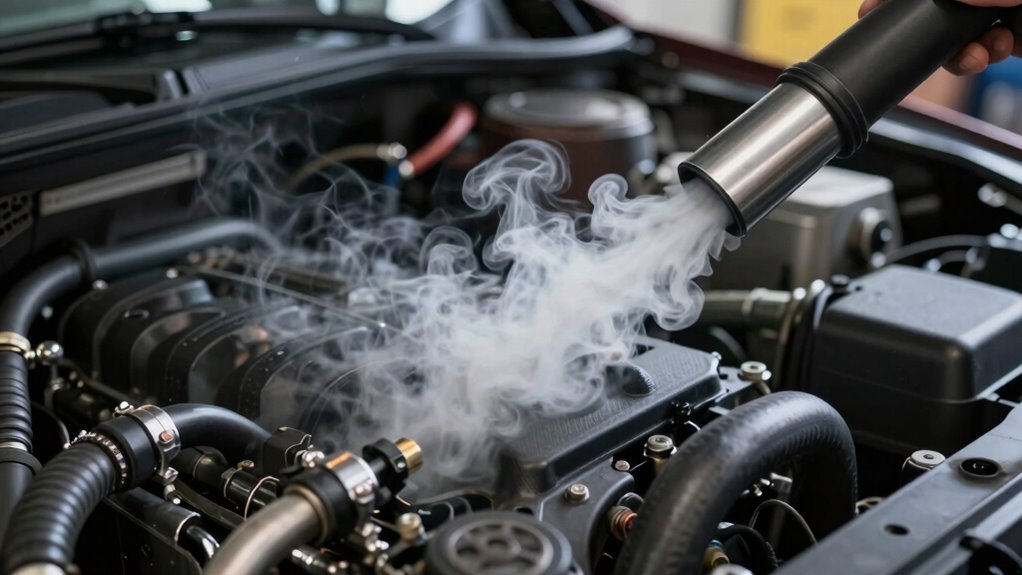
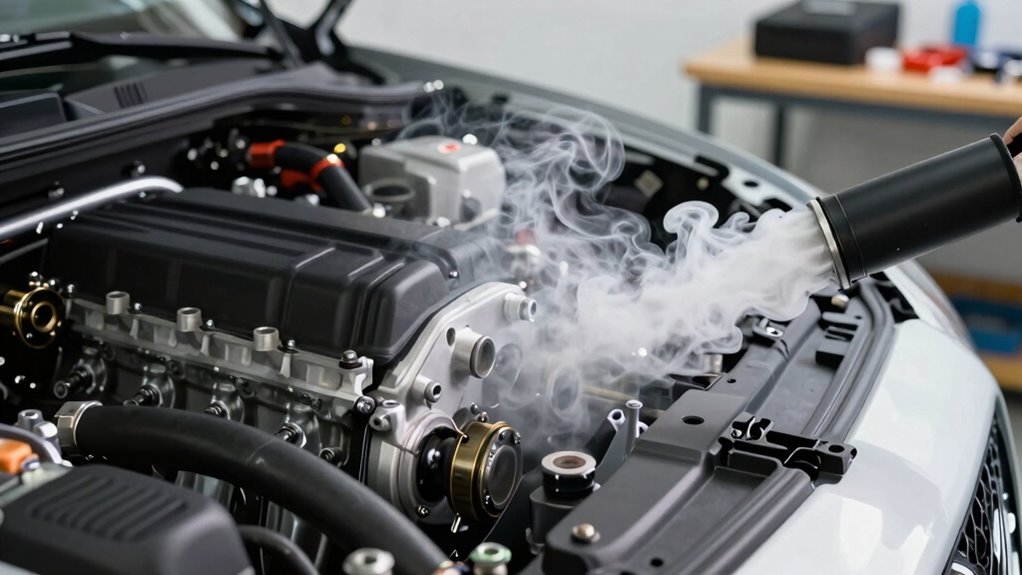
Using a smoke machine is the fastest way to find vacuum leaks because it quickly shows where air escapes in your engine’s intake system with visible smoke. It helps you spot even tiny leaks that are hard to detect with traditional methods. The process is safe, efficient, and gives immediate results. Keep exploring to discover how to make the most of this tool and fix your engine issues effectively.

Get garage and car supplies delivered free — and shop member deals
- Fast, free delivery on millions of items
- Access to Prime Big Deal Days deals on October 6–7
- Prime Video, Amazon Music and more included
Key Takeaways
- Smoke machines quickly identify vacuum leaks by visibly revealing escaping smoke at leak points.
- They provide real-time visual confirmation, making diagnosis faster than traditional pressure testing methods.
- Proper setup and connection ensure accurate detection without damaging engine components.
- Using smoke machines reduces testing time and minimizes guesswork compared to listening or gauge methods.
- Regular maintenance and correct operation of the smoke machine enhance safety, accuracy, and leak detection efficiency.
smoke machine for vacuum leak detection
As an affiliate, we earn on qualifying purchases.
As an affiliate, we earn on qualifying purchases.
Understanding Vacuum Leaks and Why They Hurt Your Car’s Performance
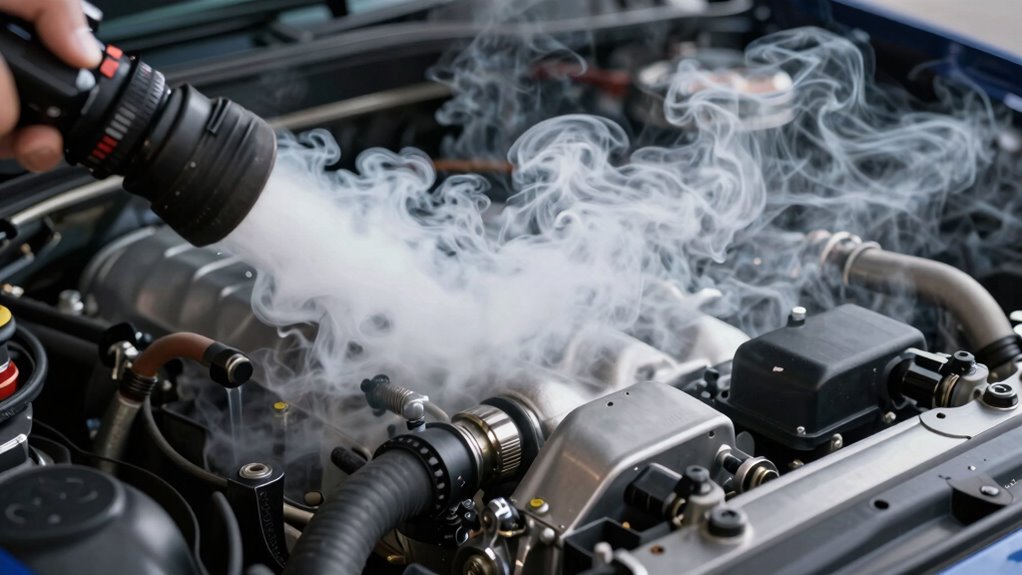
A vacuum leak occurs when unmetered air enters your engine’s intake system, disrupting the proper air-fuel mixture. Your car’s vacuum system maintains a sealed environment to guarantee ideal engine performance, but a leak allows outside air to bypass the sensors. This extra air alters the air intake, causing your engine to run lean, which can lead to rough idling, hesitation, or stalling. When unmetered air gets in, your engine’s computer struggles to balance the fuel injection, affecting power and efficiency. Over time, a faulty vacuum system can cause increased emissions and damage to engine components. Understanding how a vacuum leak impacts the air intake helps you recognize the importance of maintaining a sealed vacuum system for smooth, reliable performance. Properly diagnosing and repairing vacuum leaks is essential to prevent long-term engine problems. Additionally, using smoke machines is one of the fastest and most effective methods to pinpoint these leaks accurately. Ensuring that the vacuum system is properly maintained can help prevent issues caused by leaks and improve overall engine health. Regular inspections of vacuum lines can also help catch leaks early before they cause significant damage.
Signs You Might Have a Vacuum Leak (And When to Test)
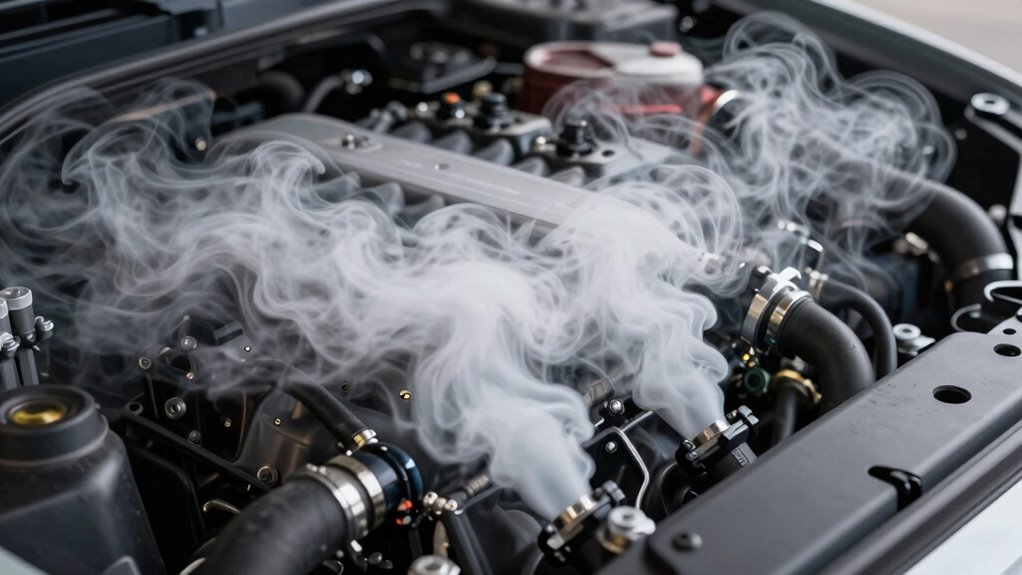
If your engine isn’t running smoothly, you might notice changes in performance or rough idling. Unusual stalls or a high or fluctuating idle can also signal a vacuum leak. Keep an eye out for visible cracks or disconnected hoses, which are clear signs it’s time to test your system. Regularly inspecting your vacuum system components can help prevent minor leaks from escalating into more serious issues. Additionally, understanding the importance of ADAS sensor calibration can ensure your vehicle’s safety systems remain effective after repairs or modifications. Performing these inspections and calibrations can also help identify issues stemming from vacuum leaks, ensuring optimal vehicle operation. Moreover, maintaining proper system documentation can assist in troubleshooting and verifying repairs. Recognizing the signs of twin flame connection can also inspire a deeper understanding of your journey toward emotional harmony.
Engine Performance Changes
Engine performance issues often signal a vacuum leak in your vehicle. You might notice an engine misfire, especially at idle or during acceleration, because the unmetered air disrupts the air-fuel mixture. This can cause rough running and hesitation, making your drive less smooth. Additionally, a vacuum leak can negatively impact your fuel economy, causing you to burn more fuel than necessary. You may also observe a decrease in power or sluggish acceleration as the engine struggles to maintain proper combustion. If these symptoms occur, it’s a sign that your vacuum system might be compromised. Acting quickly with a smoke test can pinpoint the leak, helping you restore ideal engine performance and efficiency. Incorporating inclusive casting practices in vehicle diagnostics can also ensure a more diverse and accurate assessment of your vehicle’s needs. Recognizing the importance of precious metal investments, such as Gold IRAs, can also serve as a strategic financial move during uncertain times. Staying aware of technological advancements in automotive repair can further improve diagnostic accuracy and repair outcomes. Additionally, utilizing advanced diagnostic tools can help detect subtle leaks that might otherwise go unnoticed, ensuring comprehensive repairs and promoting environmentally friendly repair practices that reduce waste and emissions.
Unusual Idling or Stalling
Unusual idling or stalling often signals a vacuum leak in your vehicle. If you notice your engine fluctuates between high and low RPMs or stalls unexpectedly, it’s a sign of potential vacuum issues. Idle issues, such as uneven or rough idling, can be caused by leaks that disrupt the air-fuel mixture. Stalling symptoms, especially during acceleration or after idling, also point to vacuum leaks. These leaks make the engine struggle to maintain proper airflow, leading to performance problems. Using a smoke machine can help pinpoint the leak quickly, saving you time and guesswork. Addressing idle issues and stalling symptoms early prevents further engine damage and improves overall drivability. Proper engine maintenance can also help prevent vacuum leaks from developing in the first place. Additionally, understanding the free floating nature of these leaks can help you better identify their sources and resolve them efficiently.
Visual Vacuum Leak Signs
Vacuum leaks often leave visible clues under the hood that can help you identify the problem early. Look for visual cues like cracked or disconnected hoses, loose clamps, or oily residue around vacuum lines. These signs are part of diagnostic imagery that reveals leaks without needing advanced tools. You might also notice hissing sounds when the engine runs, or look for broken vacuum components that seem out of place. Sometimes, engine components such as the intake manifold or valves show signs of wear or damage. Paying close attention to these visual vacuum leak signs can save you time and money, helping you determine if a smoke test or other diagnostic method is needed to confirm the leak and prevent further engine issues. Additionally, understanding the types of vacuum leaks can assist in pinpointing the exact location and severity of the problem. Recognizing early warning signs can also prevent engine performance problems, making troubleshooting more efficient. Being familiar with common vacuum leak signs can further streamline your diagnostic process and lead to quicker repairs. In some cases, diagnostic imaging techniques such as smoke testing can provide a clear view of hidden leaks that aren’t immediately visible.
Choosing the Best Smoke Machine for Automotive Leak Detection
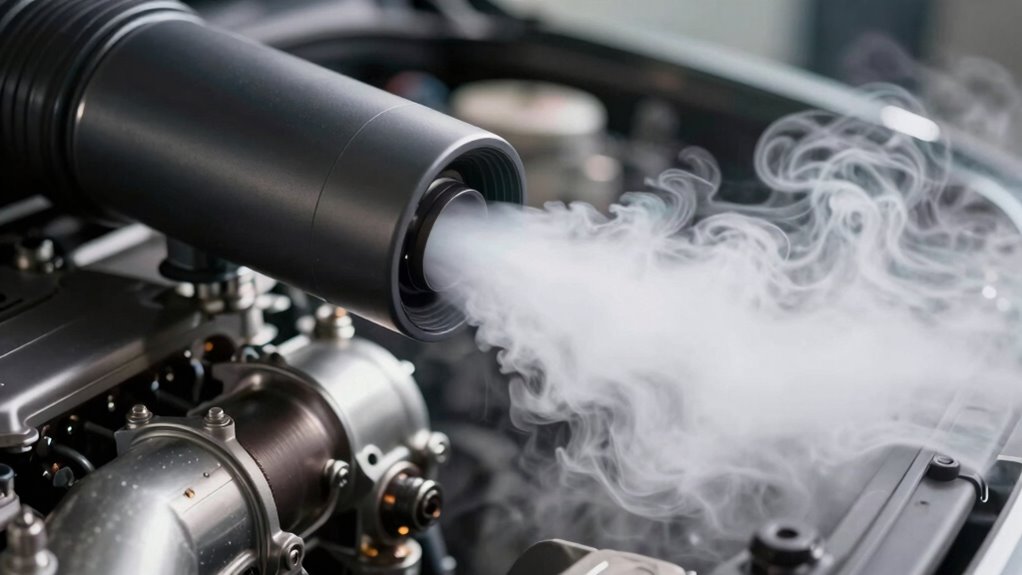
Selecting the right smoke machine for automotive leak detection is essential to accurately identify even the smallest leaks. You want a machine that produces consistent, visible smoke without wasting fuel or compromising emissions testing standards. Look for models with adjustable smoke output, so you can tailor the flow to different vehicle types and leak sizes. Portability and ease of use are also vital, especially if you work in a busy shop. A reliable smoke machine helps you quickly diagnose issues, reducing labor time and improving fuel efficiency diagnostics. Additionally, choose a unit with a proven track record for safety and compliance, ensuring it meets emissions testing regulations. Investing in the right equipment means faster, more accurate leak detection and better service for your customers.
Preparing Your Vehicle for a Smoke Machine Leak Test
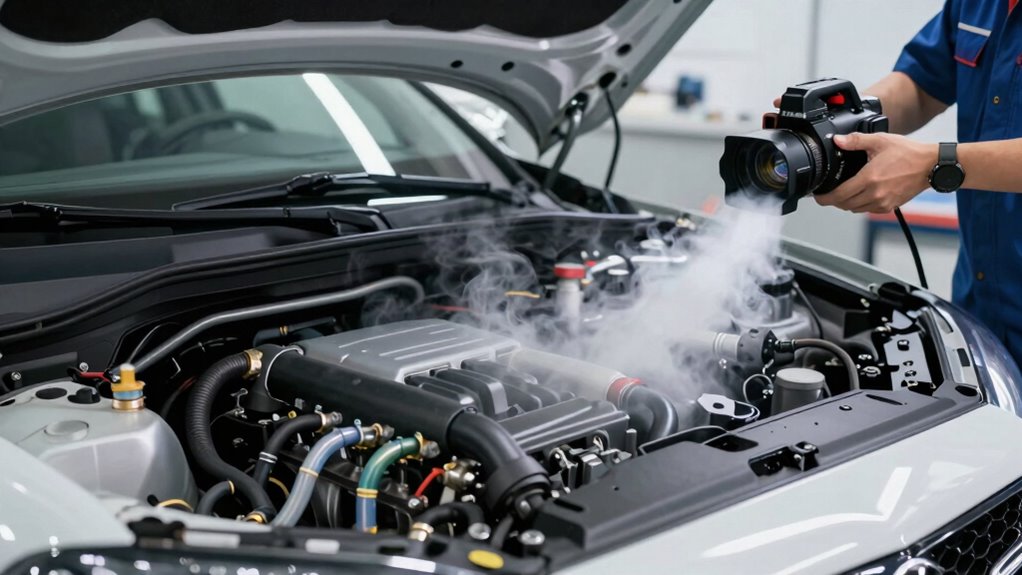
Before applying the smoke test, you need to prepare your vehicle to guarantee accurate results. Start by ensuring the engine is cool to prevent false leak indications and to protect your equipment. Check that your fuel tank is at least half full; this helps maintain proper fuel efficiency during testing. Disconnect any aftermarket accessories that could interfere with the smoke flow or obscure leak points. Make sure the emission control systems, like the PCV valve, are functioning correctly, as faulty components can affect test accuracy. Clean the engine bay to remove dirt and debris, which might block smoke or hide leaks. Additionally, inspecting your emission control systems ensures all components are functioning properly, leading to more reliable leak detection. Regular maintenance of emission control components can prevent issues that cause inaccurate readings. Proper inspection of fuel system components also ensures that the vehicle operates correctly during the test. Finally, confirm all seals and caps are tight, so the test accurately identifies vacuum leaks without interference. Proper inspection of emission control systems ensures reliable results and maintains your vehicle’s emission control standards.
Using a Smoke Machine Safely to Find Vacuum Leaks
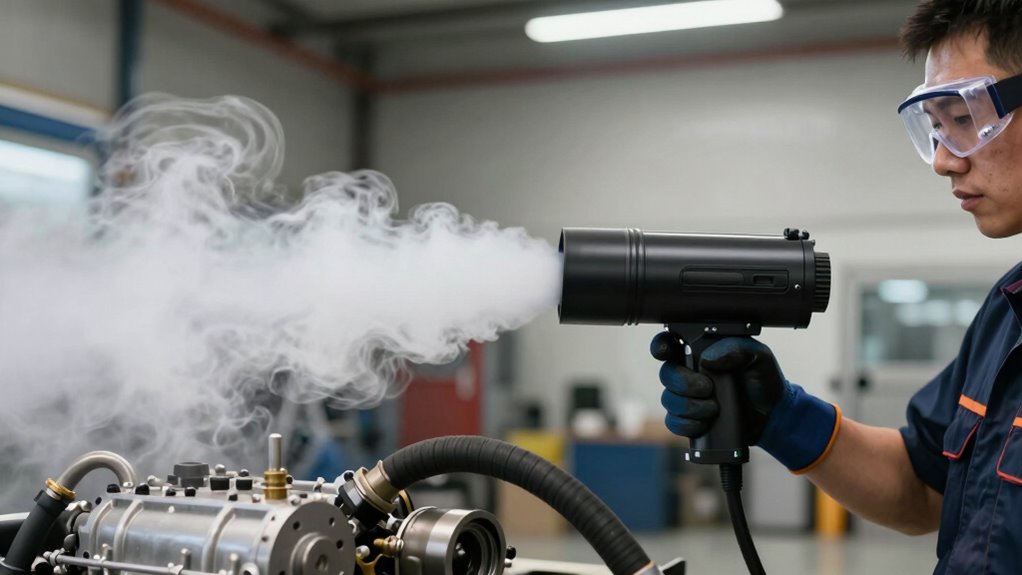
To guarantee your safety and achieve accurate results when using a smoke machine to find vacuum leaks, it’s essential to follow proper procedures carefully. First, ensure your engine is cool and disconnect any unnecessary components to prevent damage during testing. While performing engine diagnostics, avoid exposing yourself to smoke inhalation; use gloves and eye protection. Keep the area well-ventilated, and do not smoke or do car cleaning near the test area. Connect the smoke machine securely to the intake, following the manufacturer’s instructions closely. Constantly monitor the pressure and smoke flow to prevent over-pressurizing the system. Properly handling the equipment minimizes risks and ensures your vacuum leak detection is safe, efficient, and accurate.
Reading Smoke Test Results and Spotting Leak Points
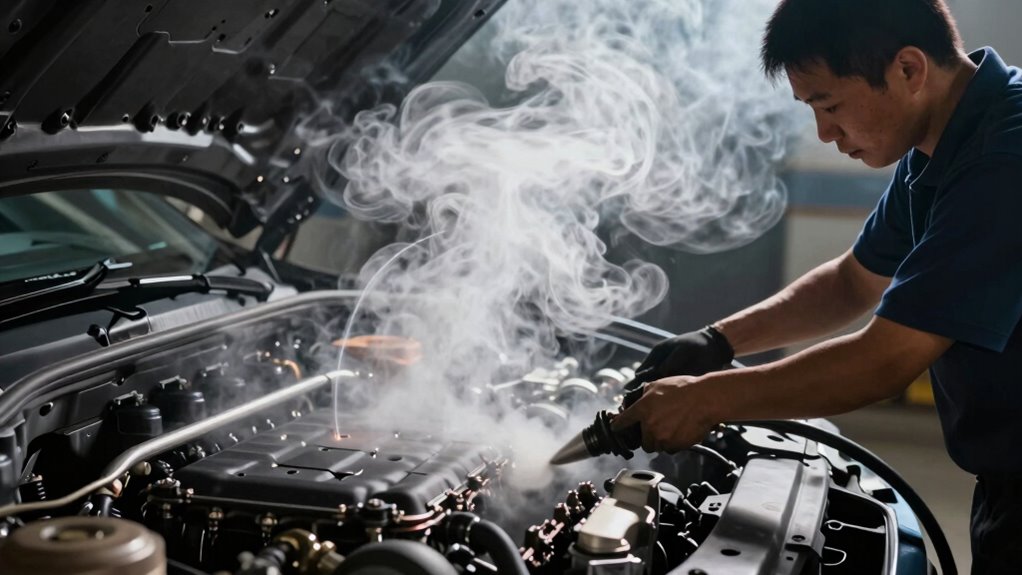
When analyzing smoke test results, you need to carefully observe where the smoke escapes to identify leak points accurately. Look for clear visual clues, such as smoke billowing from specific areas or irregular patterns indicating escaping air. These visual cues are your primary diagnostic tools, helping you pinpoint the exact location of leaks. Pay attention to small wisps or sudden bursts of smoke, as they often mark the most significant leaks. Use a flashlight if necessary to enhance visibility and confirm your findings. Consistent observation allows you to differentiate between minor leaks and critical ones that require immediate attention. Remember, accurate interpretation of smoke patterns streamlines repairs and saves you time and effort in troubleshooting.
What to Do If Your Smoke Test Doesn’t Find the Leak
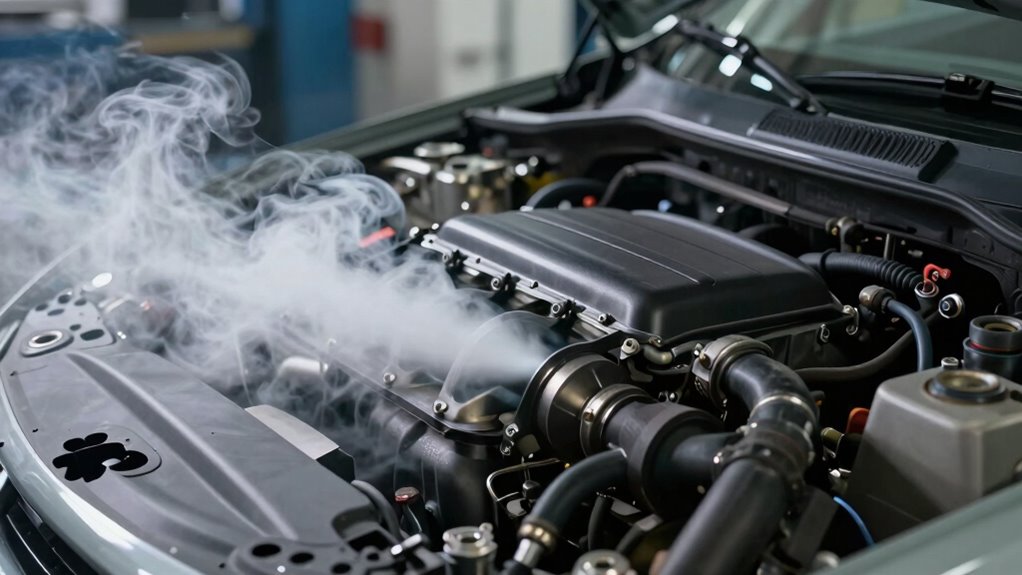
If your smoke test fails to reveal a leak, don’t assume there isn’t one. Sometimes, leaks are too small or hidden, requiring you to take additional steps. Start by carefully inspecting all tested areas again, ensuring there are no overlooked cracks or loose connections. Consider repeating the test with a higher-quality smoke machine or adjusting the pressure to increase detection sensitivity. If you’re doing DIY maintenance, check your equipment for proper operation and seals. Keep cost considerations in mind—sometimes, investing in professional-grade tools pays off by saving time and effort. If you still can’t find the leak, it might be time to consult a professional. They can use more advanced techniques, preventing unnecessary damage or costly repairs down the line.
Why Smoke Machines Are Better Than Traditional Leak Detection Methods
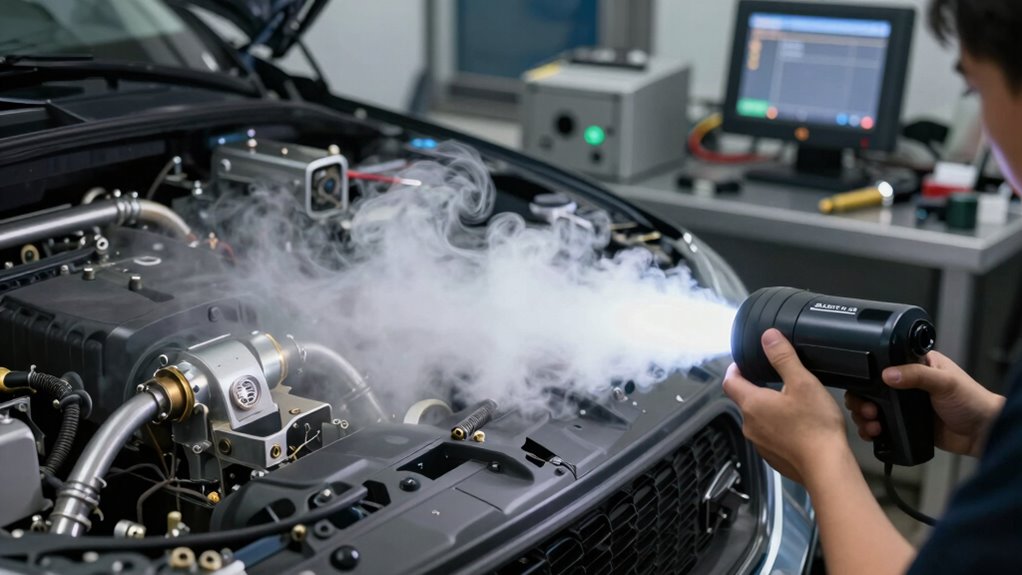
Smoke machines allow you to find leaks quickly, saving you time and effort. They create visible plumes that make even tiny leaks easy to spot. Overall, they provide faster detection and clearer leak visibility compared to traditional methods.
Faster Detection Time
Thanks to their design, smoke machines can identify leaks much faster than traditional methods. Unlike diagnostic tools that require extensive setup or disassembly, smoke machines quickly pinpoint the exact location of a leak by producing visible smoke. This speeds up emission testing since you don’t have to wait for lengthy pressure tests or listen for hissing sounds. With smoke, you simply introduce it into the system and watch for escaping vapor. This rapid identification process minimizes downtime and allows you to address issues promptly. Traditional methods often involve multiple steps and delays, but smoke machines streamline the process, saving you valuable time. As a result, you get faster, more accurate leak detection, making them an efficient choice for diagnosing vacuum leaks swiftly.
Greater Leak Visibility
Traditional leak detection methods often rely on listening for hissing sounds or using pressure gauges, which can make leaks difficult to spot visually. Smoke machines, on the other hand, provide greater leak visibility by producing a visible smoke that easily escapes through even small leaks. When testing the air intake or engine vacuum system, the smoke highlights the exact leak location, making it instantly apparent. This visual confirmation helps you quickly identify leaks that might be missed with auditory or gauge methods. Unlike pressure tests that require interpretation of readings, smoke clearly shows where the vacuum is escaping. This direct visual evidence saves time and reduces guesswork, ensuring you pinpoint leaks accurately and efficiently. Smoke machines make leak detection straightforward for anyone working on vehicle engines.
Tips for Maintaining and Storing Your Smoke Machine for Long-Term Use
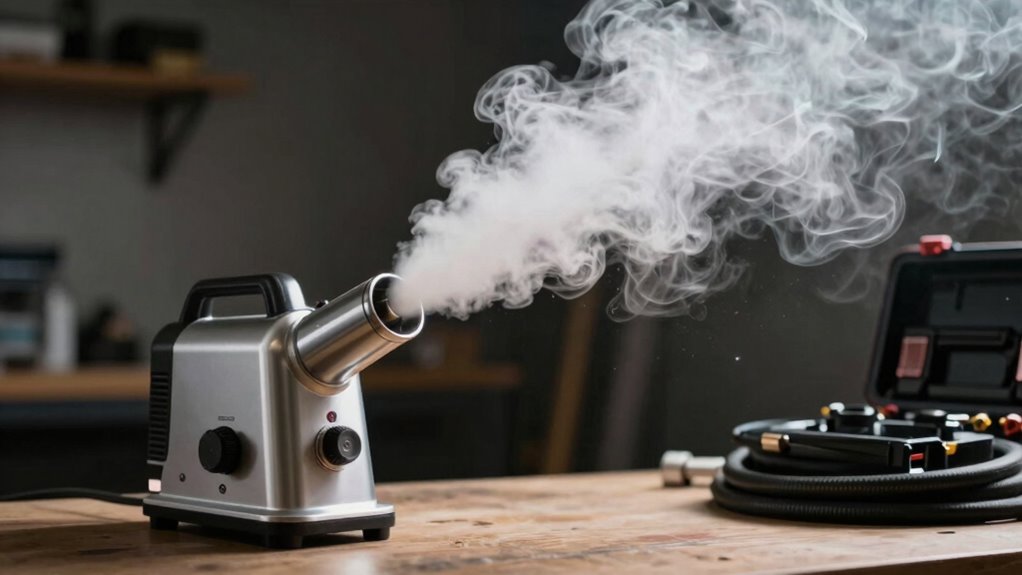
Proper maintenance and storage are essential to keep your smoke machine functioning reliably over time. Regularly clean the nozzles and check for clogs to prevent airflow issues. Use quality maintenance tips like replacing worn parts and inspecting hoses for damage. When storing, ensure the machine is completely dry to prevent mold or corrosion. Choose appropriate storage solutions such as a cool, dry container away from direct sunlight. Proper storage also involves disconnecting power and securing all components to avoid damage. Here’s a quick overview:
| Maintenance tips | Storage solutions | Important considerations |
|---|---|---|
| Clean nozzles after use | Store in a sealed container | Keep away from extreme heat |
| Check for leaks regularly | Store indoors in a dry place | Avoid crushing or bending |
| Replace worn parts | Keep upright during storage | Ensure machine is off and cooled |
Following these guidelines helps extend your smoke machine’s lifespan.
Frequently Asked Questions About Using Smoke Machines for Car Leaks
You might wonder about the safety of using smoke machines on your car, but following proper instructions guarantees risks minimal. It’s also important to understand how smoke helps detect leaks effectively without causing damage. Let’s answer your most common questions to ensure you get accurate results safely.
Smoke Machine Safety
Using a smoke machine to detect leaks in your car can be safe if proper precautions are followed. First, always verify you understand and implement safety precautions, such as working in a well-ventilated area and wearing protective gear. Before starting, check that the equipment is properly calibrated; accurate calibration ensures the smoke’s pressure and flow are correct, reducing risks of damage or false readings. Avoid placing the smoke machine near open flames or heat sources, as smoke machines involve some electrical components and fluids that could pose fire hazards if mishandled. Regularly inspect hoses, connections, and the machine itself for leaks or damage. Following these safety precautions and maintaining equipment calibration helps ensure a safe, effective leak detection process.
Effective Leak Detection
Many car owners turn to smoke machines for leak detection because they provide clear, visual evidence of where leaks are occurring. This method helps you quickly identify vacuum leaks that can affect your vehicle’s fuel efficiency and emission control. When using a smoke machine effectively, keep these tips in mind:
- Make certain the engine is off and the system is properly sealed before introducing smoke.
- Look for visible smoke escaping from hoses, gaskets, or connections to pinpoint leaks precisely.
- Use the findings to repair leaks promptly, improving fuel economy and reducing emissions.
Frequently Asked Questions
How Often Should I Perform a Smoke Test on My Vehicle?
You should perform a smoke test whenever you notice engine performance issues or as part of your regular maintenance schedule, typically every 12 to 24 months. This helps catch vacuum leaks early. Use smoke testing as a troubleshooting tip to quickly identify leaks. Regular testing keeps your vehicle running efficiently and prevents costly repairs, ensuring you stay ahead of potential problems.
Can Smoke Machines Detect Leaks in Diesel Engines?
Ever wonder if smoke machines can find leaks in your diesel engine? Absolutely, they can! Smoke machines excel at leak detection in diesel engines by highlighting even tiny leaks in hoses, gaskets, or intake systems. Using smoke helps you visually identify where the air escapes, ensuring your diesel runs smoothly. So, next time you suspect a leak, trust a smoke machine for quick and effective diagnosis in your diesel engine.
Are There Any Vehicle Models That Are Incompatible With Smoke Testing?
Some vehicle models may be incompatible with smoke testing due to unique engine designs or sealed systems. You should verify vehicle compatibility before using a smoke machine, as limitations can vary. Certain modern or high-tech vehicles might have smoke machine limitations that prevent effective testing. Always consult the manufacturer’s guidelines or a professional mechanic to guarantee safe and accurate testing, avoiding potential damage or inaccurate results.
What Is the Typical Cost Range for Professional Smoke Leak Detection?
A professional smoke leak detection typically costs between $100 and $300, depending on several pricing factors. Your cost estimate varies based on the vehicle’s make and model, the complexity of the leak, and the technician’s experience. Keep in mind, some shops may charge extra for specific services or diagnostic time. To get an accurate price, it’s best to contact local specialists and ask for detailed quotes.
How Long Does a Smoke Test Usually Take to Complete?
Imagine a quick, steady stream of smoke filling your engine’s vacuum lines, revealing hidden leaks. A smoke test typically takes about 30 to 60 minutes, depending on the complexity of the system. During this leak detection time, technicians carefully watch for escaping smoke, ensuring accurate results. You can expect a swift process that efficiently pinpoints issues without long delays, giving you peace of mind and a well-running vehicle.
Conclusion
Using a smoke machine makes finding vacuum leaks quick, easy, and accurate. It saves you time, saves you frustration, and saves your engine from ongoing damage. It’s safe, simple, and effective—giving you confidence, clarity, and peace of mind. So, whether you’re troubleshooting or maintaining, a smoke machine is your best friend. Trust it to detect leaks swiftly, keep your car running smoothly, and get you back on the road faster than ever.
Halloween Picks
halloween
As an affiliate, we earn on qualifying purchases.