TL;DR

Get garage and car supplies delivered free — and shop member deals
- Fast, free delivery on millions of items
- Access to Prime Big Deal Days deals on October 6–7
- Prime Video, Amazon Music and more included
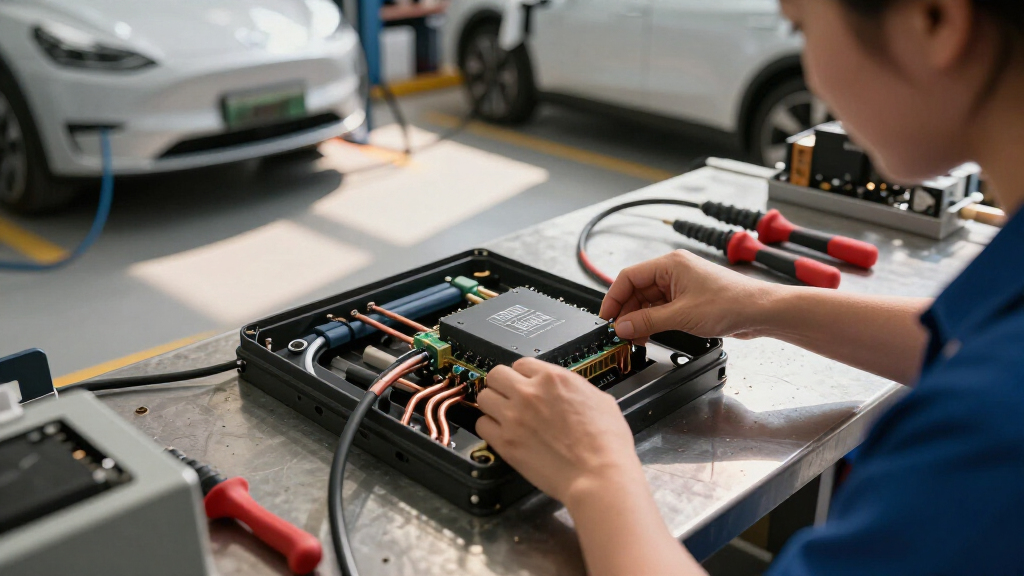
L&T Semiconductor Technologies has unveiled a 1,200 V silicon carbide MOSFET platform aimed at EV fast chargers, traction inverters and other power systems. The announcement also includes the company’s first in-house SiC power modules and devices, plus products in motor control and connectivity; performance figures, availability and pricing were not provided in the source report.
L&T Semiconductor Technologies has unveiled a 1,200 V silicon carbide (SiC) MOSFET platform designed for electric vehicle fast chargers, traction inverters and other high-voltage power systems. The announcement marks the Larsen & Toubro subsidiary’s introduction of its first in-house SiC power modules and devices, though the company has not provided performance specifications or a commercial launch timeline in the source material.
The company said the new platform is intended for EV fast chargers, vehicle traction inverters, microgrids and solid-state transformers. A 1,200 V rating is commonly used in power stages for 800 V vehicle architectures and DC fast chargers, according to the company. The voltage rating indicates the devices’ intended operating class; it does not by itself establish the efficiency, charging speed or vehicle compatibility of a finished system.
L&T Semiconductor Technologies also announced a wider group of products, including SiC MOSFETs, diodes and bridge rectifiers, as well as its first in-house SiC power modules and devices. Separately, it unveiled a brushless DC motor controller that it described as designed entirely in India and four connectivity modules intended for smart metering, automotive applications and digital payments.
The company says SiC MOSFETs at these voltages switch faster and with lower losses than silicon insulated-gate bipolar transistors, or IGBTs. It says those characteristics can let system designers reduce the size of magnetic components and cooling hardware. The source report does not include test results, device-level loss figures, module details or comparisons under specified operating conditions, so the claimed design benefits cannot be quantified from the announcement.
Potential Gains in High-Voltage Systems
The announcement concerns components used in the power-conversion stages of fast chargers and electric drivetrains. If the platform meets its intended performance targets, faster switching and lower losses could give equipment designers more flexibility in managing heat and the size of supporting components. Those design choices can affect the footprint and thermal requirements of a charger or inverter, but the source material provides no measurements to show the size of any potential change.
The announcement also expands L&T Semiconductor Technologies’ disclosed product range into SiC power devices and modules. For prospective customers, the practical significance will depend on product availability, specifications, qualification results and supply arrangements. None of those details is given in the source report, and an announced platform does not establish that particular vehicles or charger products will use it.
Top picks for "semiconductor technology unveil"
As an affiliate, we earn on qualifying purchases.
Where 1,200 V SiC Fits
Silicon carbide is a semiconductor material used in power electronics. The source report says SiC MOSFETs can switch faster and with lower losses than silicon IGBTs at the voltages discussed. Such characteristics are relevant in systems that convert and control electrical power, including DC fast chargers and traction inverters.
The company’s stated applications span both transport and energy infrastructure: EV charging, vehicle propulsion, microgrids and solid-state transformers. The same announcement covers products outside the SiC platform, including the motor controller and connectivity modules. No customer, deployment or production program is identified in the supplied report.
“The new 1,200 V SiC MOSFET platform is designed for EV fast chargers, traction inverters, microgrids and solid-state transformers.”
— L&T Semiconductor Technologies, as reported by Charged EVs
Specifications and Launch Timing Pending
The supplied report does not state when the 1,200 V devices or modules will be available, how they will be priced, or whether they are already in production. It also provides no electrical performance data, package options, reliability results, manufacturing details or customer commitments. The company’s statements about lower losses and smaller cooling hardware are not accompanied by test conditions or figures in the report.
It is also unclear which specific products are included in the first in-house SiC module and device range, and whether the announced platform is intended for particular charger or vehicle programs. The announcement identifies target uses, but does not confirm adoption in any commercial system.
Product Details and Customer Qualification
The next useful milestones would be publication of device and module specifications, operating and reliability data, and details on sampling or production availability. Information about pricing, manufacturing capacity and customer qualification would clarify how soon equipment makers could evaluate the platform for chargers or vehicle powertrains. The source report does not give a date for any of those disclosures.
Until those details emerge, the announcement establishes L&T Semiconductor Technologies’ stated product direction and target applications, while commercial readiness and real-world performance remain undetermined.
Key Questions
What did L&T Semiconductor Technologies announce?
It unveiled a 1,200 V SiC MOSFET platform for EV fast chargers, traction inverters, microgrids and solid-state transformers, alongside other semiconductor, motor-control and connectivity products.
What is the platform designed to do?
The company says it is intended for high-voltage power stages. It says SiC MOSFETs can switch faster and with lower losses than silicon IGBTs at these voltages, potentially allowing smaller magnetic and cooling components. The report gives no measurements for this platform.
Does the announcement confirm that a vehicle or charger will use the devices?
No. The report names target applications but identifies no customer or confirmed deployment.
When will the products be available?
The source report does not give a release date, pricing or production schedule.
Source: rss
Halloween Picks
halloween
As an affiliate, we earn on qualifying purchases.