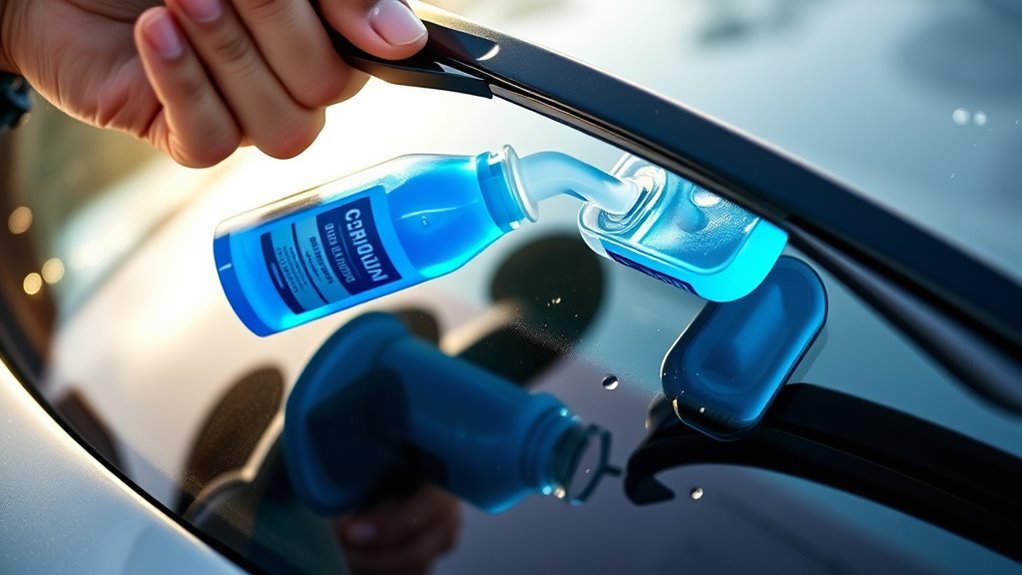

Before the rainy season starts, it’s important to check your windshield wipers and fluids. Inspect your wipers for streaks, chattering, or missed spots, and replace them if they’re worn out to guarantee clear visibility. Also, check your washer fluid reservoir and top it off with a quality fluid that resists freezing. Make sure your washer system works properly, and keep your windshield clean to avoid accidents. Keep these tips in mind to stay safe during heavy rains.

Get business pricing on garage and car supplies
- Business-only prices and quantity discounts
- Tax-exempt purchasing
- Multiple users, one account, clear invoices
Key Takeaways
- Inspect windshield wipers for streaks, chatter, or damage, and replace if worn out.
- Check windshield washer fluid levels and top up with high-quality, freeze-resistant fluid.
- Test the washer system’s spray pattern and clean nozzles to ensure proper water flow.
- Clean the windshield thoroughly inside and out to remove dirt and grime.
- Examine the windshield for cracks or chips and repair any damages promptly before heavy rain begins.
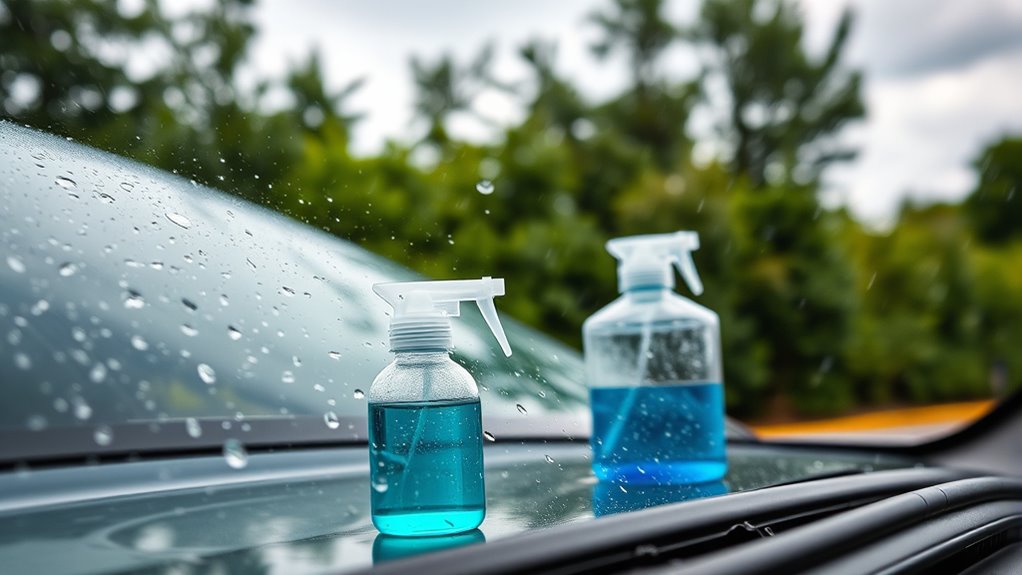
As the rainy season approaches, it’s essential to verify your vehicle’s wipers and fluids are in top condition. Proper rainy season maintenance ensures you can see clearly through heavy rain, reducing the risk of accidents. Start by inspecting your windshield wipers; if they leave streaks, miss areas, or make chattering noises, it’s time to replace them. Worn wipers can’t effectively clear water from your windshield, which diminishes visibility and compromises your safety. When replacing wipers, choose the right size and type for your vehicle. Remember, even the best wipers won’t perform well without adequate windshield washer fluid, so check the reservoir regularly. Keep it filled with a good-quality fluid that resists freezing and contains cleaning agents to cut through grime, mud, and bugs that tend to accumulate during rainy weather. Maintaining these essentials is a simple yet indispensable part of your rainy season maintenance routine.
Next, make sure your windshield washer system functions properly. Test the spray pattern and ensure the nozzles are not clogged. Clean the nozzles with a pin or needle if water doesn’t spray evenly, and check that the washer pump is working without noise or delay. A reliable washer system is key to windshield safety tips, especially during heavy downpours when visibility drops drastically. If your windshield is dirty or streaked, even the best wipers won’t be enough. So, spend a few minutes cleaning your windshield thoroughly inside and out. Use a good glass cleaner and microfiber cloth to remove dirt, oil, and fingerprints that can impair visibility, particularly in the rain. Clear, spotless glass is essential for safe driving and can prevent accidents caused by obscured views. Additionally, consider the condition of your windshield itself. Look for cracks or chips and get them repaired before the rain worsens them. Water can seep into small damages, causing them to expand and leading to more costly repairs later. This is part of thorough rainy season maintenance that prioritizes your safety. Keeping your windshield in prime condition, along with functioning wipers and proper washer fluids, forms the foundation of good driving habits in rainy weather. Remember, good visibility isn’t just about comfort; it’s about safety. By taking these simple steps, you equip yourself to handle sudden storms and heavy rains confidently. Don’t wait until the first heavy shower to realize your wipers or fluids are inadequate. Regular checks and timely replacements could be the difference between a safe journey and a dangerous situation. Preparing your vehicle now ensures you’re ready for whatever the rainy season throws your way. Recognizing the importance of projector contrast ratio in visual clarity can help you better understand how to optimize your viewing experience.
windshield wiper blades replacement
As an affiliate, we earn on qualifying purchases.
As an affiliate, we earn on qualifying purchases.
Frequently Asked Questions
How Often Should I Replace My Windshield Wipers?
You should replace your windshield wipers every 6 to 12 months, especially if you notice streaks, squeaking, or missed spots. Different wiper blade types, like silicone or rubber, wear out at different rates, so check them regularly. Also, guarantee your windshield washer system is working properly, as it complements your wipers. Regularly inspecting and replacing wipers keeps your windshield clear and your driving safe during heavy rain.
Can Using the Wrong Windshield Washer Fluid Damage My Vehicle?
Using the wrong windshield washer fluid can be like pouring the wrong potion into a magic elixir, causing washer fluid hazards for your vehicle. Some wiper fluid types contain harsh chemicals that can damage your windshield or paint, and incompatible fluids might clog your system. Always choose the right wiper fluid for your climate and vehicle to avoid damage—think of it as giving your car the perfect potion for clear, safe vision.
What Signs Indicate My Wipers Need Immediate Replacement?
If you notice wiper blade wear or windshield streaks that don’t clear smoothly, it’s time to substitute your wipers. You might also see cracked or torn blades, or hear squeaking when you use them. These signs indicate your wipers can’t effectively clean your windshield, reducing visibility and safety. Don’t wait until heavy rain; replace worn blades promptly to ensure clear vision during the rainy season.
How Do I Properly Clean and Maintain My Windshield Washer Nozzle?
Cleaning your windshield washer nozzle is like clearing a tiny garden hose. First, gently poke a pin or needle into the nozzle to loosen any clogging debris. Then, spray the washer fluid and observe the spray pattern; it should be even and wide. If it’s uneven or weak, repeat the process. Regularly check for nozzle clogging to make certain your fluid spray pattern stays clear and effective during rainy days.
Are There Eco-Friendly Options for Windshield Washer Fluids?
Yes, there are eco-friendly options for windshield washer fluids. You can choose products with biodegradable formulas that break down quickly and reduce environmental impact. Look for labels indicating eco-friendly or biodegradable ingredients, and avoid harsh chemicals. These alternatives work just as well for cleaning your windshield while helping protect the environment. Switching to eco-friendly washer fluids is a simple step toward more sustainable driving habits without sacrificing safety.
Conclusion
By taking the time to check your wipers and fluids before the rainy season, you’re setting yourself up for safer driving. Don’t wait until the skies open up—your car’s visibility depends on it. Remember, a stitch in time saves nine, so addressing these simple maintenance tasks now can prevent bigger headaches later. Stay prepared, stay safe, and enjoy the rainy days without worry. Your proactive approach keeps you one step ahead on the road.
Fall Picks
fall essentials
As an affiliate, we earn on qualifying purchases.