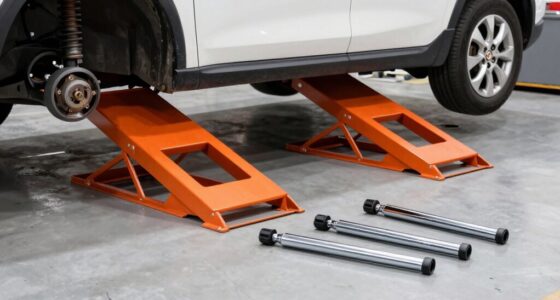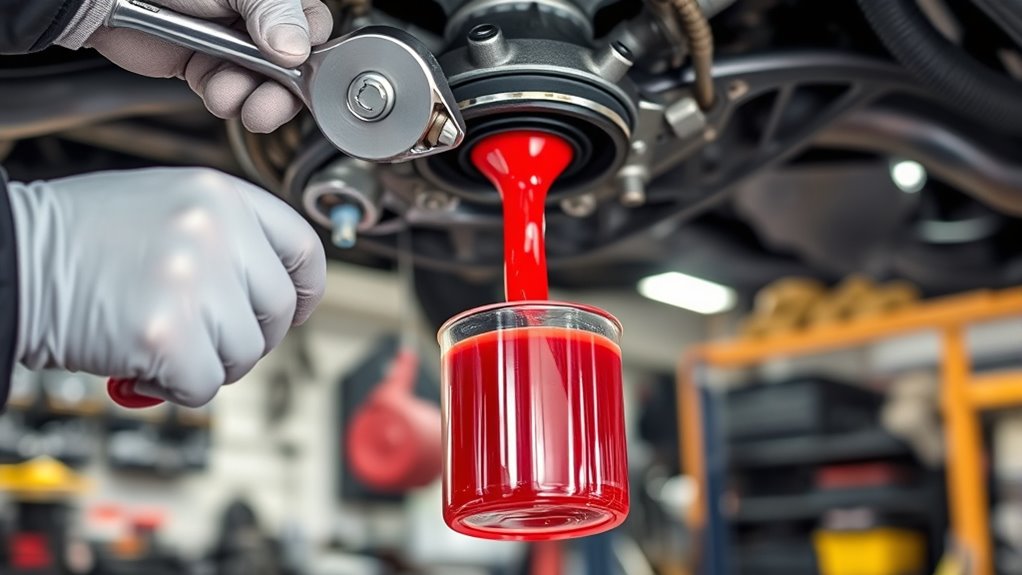

To change your power steering fluid, first park on a level surface, turn off the engine, and locate the reservoir. Use a turkey baster or pump to remove old fluid, then disconnect the return line if needed and drain any remaining fluid. Refill with the correct type, turn the steering wheel to circulate, then bleed air by turning the wheel lock-to-lock. For detailed steps, continue exploring how to do this safely and effectively.
Key Takeaways
- Park vehicle on level ground, turn off engine, and locate the power steering fluid reservoir.
- Use a turkey baster or pump to remove old fluid from the reservoir and drain residual fluid.
- Disconnect the return line if needed; flush the system by turning the steering wheel lock-to-lock with fresh fluid.
- Refill the reservoir with the specified new fluid to the recommended level.
- Start the engine, turn the steering wheel side-to-side to bleed air, then check and top off fluid.
Changing your power steering fluid is an essential maintenance task that helps guarantee smooth steering performance and prevents costly repairs. Over time, fluid can become contaminated with dirt, debris, or moisture, which hampers the system’s efficiency. Fluid contamination is a common culprit behind sluggish steering, noisy operation, and increased wear on components like the power steering pump. Regularly replacing the fluid ensures the system stays clean and functions properly, saving you money and extending the lifespan of your vehicle’s steering components.
Regular power steering fluid changes keep your system smooth and prevent costly repairs.
To begin, park your vehicle on a level surface and turn off the engine. Engage the parking brake for added safety. Locate the power steering fluid reservoir, which is usually marked and situated near the engine bay. Before opening the reservoir, consult your owner’s manual to identify the correct fluid type and check the current fluid level. Wearing gloves and eye protection is advisable, as fluids can be messy and irritating to the skin.
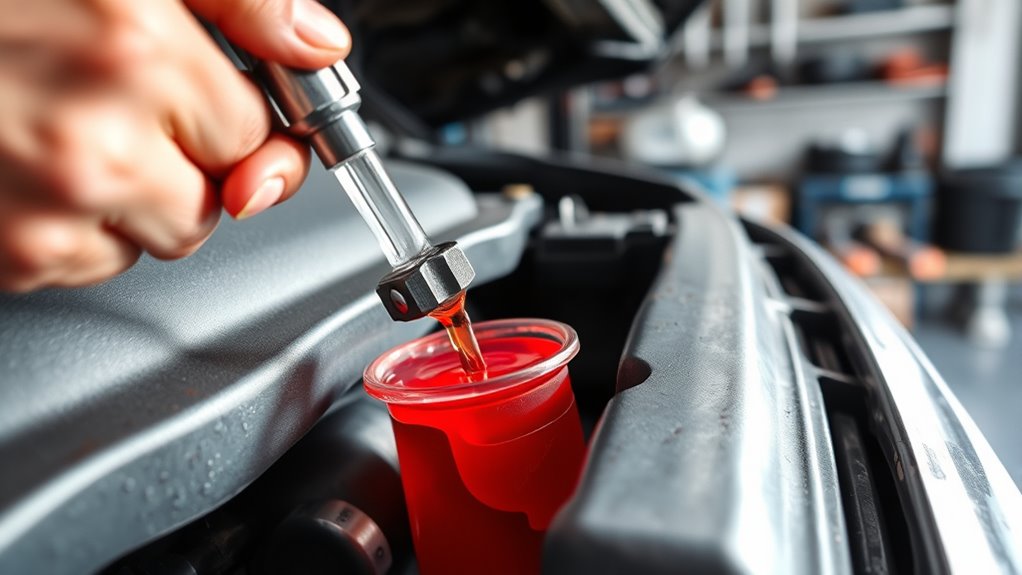
Next, prepare a container to catch the old fluid. Using a turkey baster or a fluid pump, extract as much contaminated fluid as possible from the reservoir. This step minimizes the amount of old, dirty fluid remaining in the system. Once you’ve removed the old fluid, carefully loosen the reservoir cap and drain any residual fluid into your container. Be cautious not to spill onto other engine components.
If your vehicle’s design allows, you may need to disconnect the return line from the power steering pump to fully flush the system. Place a drain pan underneath the connection to catch any remaining fluid. For a thorough flush, you might add fresh fluid into the reservoir and start the engine briefly, turning the steering wheel from lock to lock to circulate the new fluid through the system. Then, turn off the engine and repeat the fluid removal process to eliminate any remaining contaminated fluid.
Finally, refill the reservoir with the specified type of clean power steering fluid, filling it to the recommended level. Start the engine again and turn the steering wheel gently from side to side to bleed air from the system. Check the fluid level once more, topping off if necessary. Inspect for leaks around hoses and connections to ensure everything is secure.
Maintaining a clean and uncontaminated fluid is crucial for optimal performance and longevity of your steering system. Regularly changing your power steering fluid is a simple yet effective way to prevent fluid contamination from damaging your power steering pump. Clean fluid keeps the system operating smoothly, reduces wear, and helps you avoid the expense of replacing costly components. By following these steps, you maintain excellent steering performance and prolong the life of your vehicle’s steering system.

Thorstone 200cc Automotive Fluid Extractor Pump, Manual Oil Change Syringe with 2pcs 22cm PVC Suction Tubes
TRANSFER FLUID SMOOTHLY – Thorstone syringe style fluid evacuator comes with 0.24" OD and 0.32" OD extension tubes,…
As an affiliate, we earn on qualifying purchases.
As an affiliate, we earn on qualifying purchases.
Frequently Asked Questions
How Often Should I Change My Power Steering Fluid?
You should change your power steering fluid every 30,000 to 50,000 miles for recommended fluid maintenance. Regular changes help prevent system issues and maintain smooth steering. Always follow safety precautions, like wearing gloves and eye protection, when working on your vehicle. Check your owner’s manual for specific recommendations. Staying proactive with fluid maintenance keeps your steering system functioning properly and reduces costly repairs down the line.
Can I Use Any Type of Power Steering Fluid?
You can’t just use any power steering fluid; fluid compatibility is vital. Different vehicles require specific types, like mineral-based or synthetic fluids, so using an alternative fluid might cause damage or reduce performance. Always check your vehicle’s manual or consult with a professional to make certain you’re choosing the right fluid. Skipping this step could lead to costly repairs or steering issues, so prioritize using the correct, compatible fluid for your car.
What Are Signs of Power Steering Fluid Leaks?
You’ll notice power steering fluid leaks if you see fluid pooling under your vehicle or smell a burning odor. Leak detection is easier when you check the fluid color; it should be clear or slightly reddish. If it’s dark or has debris, it’s a sign of contamination. Also, watch for difficulty turning the wheel, which indicates low fluid levels caused by leaks. Regular inspection helps catch leaks early.
Is It Necessary to Flush the Entire System?
You don’t always need to flush the entire system unless there’s significant contamination or degraded fluid. Flushing guarantees system cleanliness and maintains fluid compatibility, preventing damage. If your power steering fluid looks dark, gritty, or contaminated, a full flush is a good idea. Otherwise, just topping off or replacing the fluid might suffice. Always follow manufacturer recommendations to keep your steering system in ideal condition.
What Tools Are Required for Changing the Fluid?
Imagine your toolbox as a painter’s palette, ready to refresh your car’s engine. You’ll need basic tools like a wrench, a fluid container, and possibly a funnel. The wrench loosens fittings, while the fluid container captures the old fluid. Keep everything organized; a clean container makes disposal easier. With these tools, you’re set to replace the power steering fluid smoothly, ensuring your steering remains responsive and precise.

Orion Motor Tech 200mL Manual Fluid Extractor and Filler, Syringe Style Pump for Power Steering Transmission Gear Oil & Brake Fluid Changes, Hand Vacuum Pump for ATV Boat Automotive Fluid Extraction
Manual Fluid Transfer Made Easy: This 200 mL fluid extractor by Orion Motor Tech easily extracts, stores, and…
As an affiliate, we earn on qualifying purchases.
As an affiliate, we earn on qualifying purchases.
Conclusion
Now that you’ve learned how to change your power steering fluid, you’re better equipped to keep your car running smoothly. Regular maintenance can prevent costly repairs and ensure safer driving. Isn’t it satisfying to know you can handle simple car care tasks yourself? With just a little effort, you’re extending your vehicle’s life and saving money. So, why wait? Take charge of your car’s health and enjoy the peace of mind that comes with it.

FOUR UNCLES Fluid Extractor & Filling Pump for Easy Oil Change
LONGER TUBES: The fluid transfer pump includes two extension hoses that can be connected for a reach of…
As an affiliate, we earn on qualifying purchases.
As an affiliate, we earn on qualifying purchases.

Lesurey Power Steering Reservoir Cap 3L3Z3A697AA 8L2Z3A006A Compatible with Ford F-150 F-250 F-350 F-450 F-550 E-150 E-250 250 Super Duty Lincoln Econoline Mercury Cougar Grand Marquis F23Z3A006A
【Part Number】3L3Z3A697AA 8L2Z3A006A F23Z3A006A YL8Z3A697BA F23Z-3A006-A
As an affiliate, we earn on qualifying purchases.
As an affiliate, we earn on qualifying purchases.