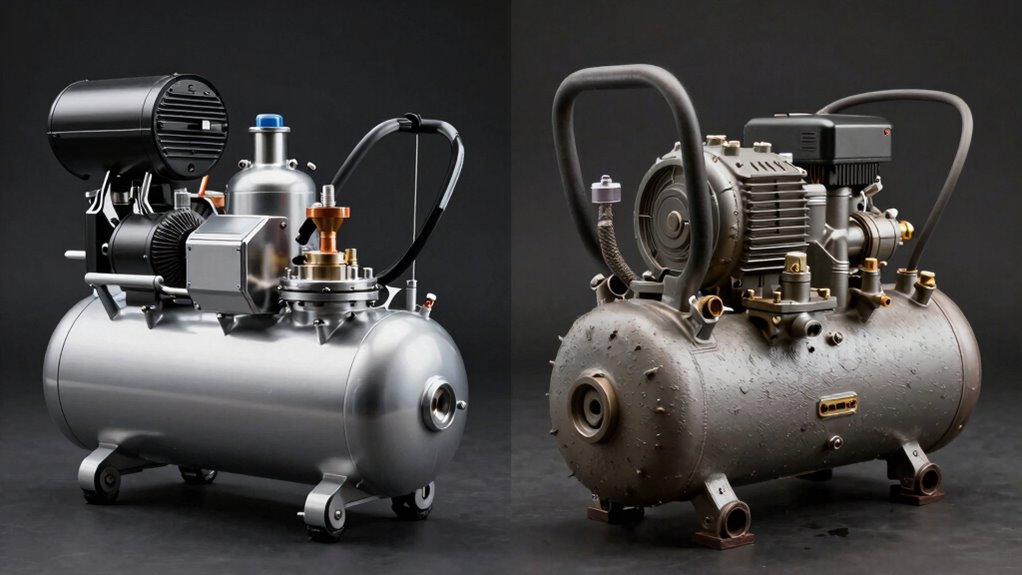

Oil-lubed compressors typically last longer because their oil reduces friction and helps manage heat, making them suitable for heavy-duty, continuous use. However, proper maintenance like regular oil changes can extend their life even further. Oil-free compressors are easier to maintain but may wear out more quickly due to contact and temperature. To discover which option suits your needs and how to maximize lifespan, explore more about their differences and care tips.
Key Takeaways
- Oil-lubed compressors generally last longer due to better lubrication, reducing wear and overheating during heavy-duty use.
- Oil-free compressors require less maintenance but may experience more wear over time, potentially reducing lifespan.
- Proper maintenance—regular oil changes for oil-lubed and filter cleaning for oil-free—significantly extends compressor durability.
- Operating conditions influence longevity: harsh environments accelerate wear, impacting both types differently.
- Continuous heavy-duty operation favors oil-lubed models, which are designed for prolonged, demanding use.
As an affiliate, we earn on qualifying purchases.
What Are Oil-Free and Oil-Lubed Compressors?
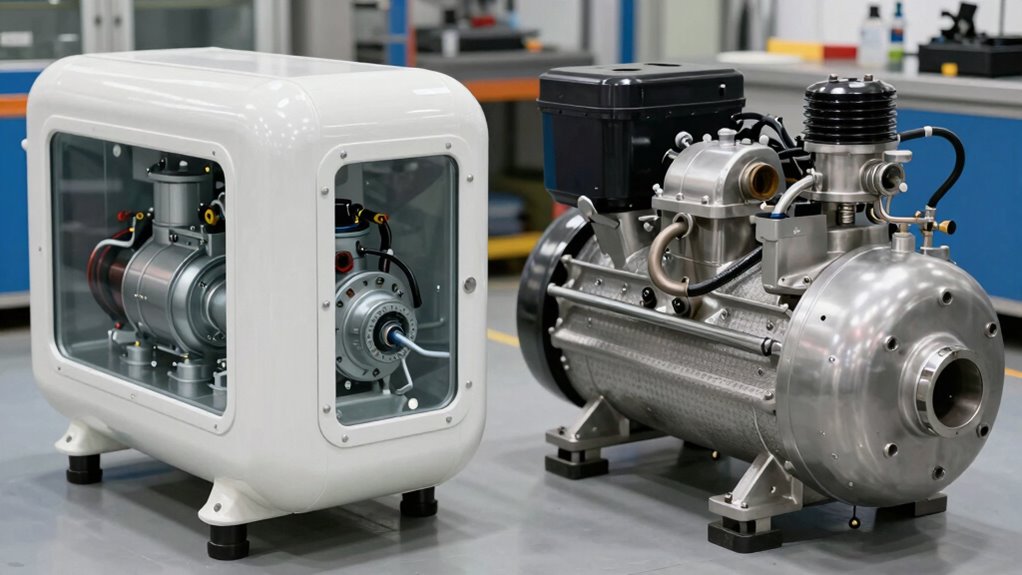
If you’re choosing between different types of compressors, understanding the difference between oil-free and oil-lubed models is essential. Oil-free compressors use advanced lubrication technology that eliminates the need for oil, making them cleaner and lower maintenance. They rely on special coatings or self-lubricating components to reduce friction and wear, which can enhance component longevity. In contrast, oil-lubed compressors incorporate oil to lubricate moving parts, reducing friction and heat during operation. This traditional lubrication method often results in smoother operation and longer-lasting components, especially under high-demand use. Knowing these differences helps you select a compressor suited to your needs, whether you prioritize cleaner air or longer-lasting components. Additionally, exploring digital concepts related to compressor technology can provide insights into innovative maintenance methods and performance optimization.
How Do These Compressors Differ in Design and Operation?

Oil-free and oil-lubed compressors differ markedly in their design and how they operate. The design differences are clear: oil-free models use sealed, non-lubricated components, while oil-lubed compressors rely on oil to lubricate moving parts. This affects their operational mechanisms considerably. Oil-lubed compressors distribute oil to reduce friction and heat, allowing continuous operation and longer lifespan under heavy use. Conversely, oil-free compressors utilize advanced materials and coatings to minimize friction without oil, making them more compact and easier to maintain. Their operational mechanisms are simpler, with fewer parts needing lubrication, which reduces contamination risks. Additionally, research into sound healing science suggests that the reduced vibration and noise levels of oil-free compressors can contribute to a more peaceful work environment, especially in noise-sensitive settings. Understanding these fundamental design differences helps you choose the right compressor based on your needs and the environment in which it will operate.
Which Type Lasts Longer: Oil-Free or Oil-Lubed?
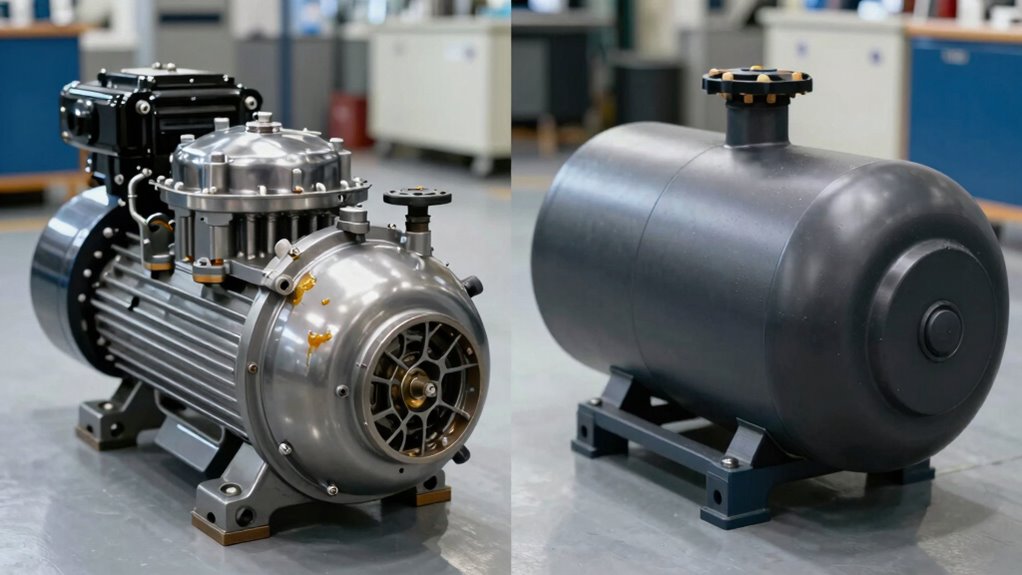
Your compressor’s lifespan depends heavily on maintenance and wear factors. Oil-lubed models typically require regular oil changes to reduce wear, while oil-free units need less upkeep but may experience more wear over time. Understanding these differences helps you choose the type that’ll last longer for your needs. Additionally, considering the free floating design can influence durability, as it minimizes direct contact between moving parts and reduces friction-related wear. Proper lubrication and maintenance practices are essential in prolonging the life of your compressor regardless of the type. Regular inspections and adjustments further help prevent unexpected failures, ensuring long-term performance and reliability. Implementing preventative maintenance strategies can significantly extend the operational lifespan of your compressor. Moreover, choosing the right type based on your application environment can further enhance compressor durability and performance.
Maintenance Requirements Differences
When comparing the maintenance requirements of oil-free and oil-lubed compressors, it becomes clear that oil-lubed models generally demand more ongoing care to maintain ideal performance and longevity. Oil-lubed compressors rely on lubrication methods that require regular oil changes and checks to prevent wear and overheating, which can extend their lifespan. In contrast, oil-free compressors need less frequent maintenance, primarily focusing on cleaning routines to remove dust and debris from air filters and other components. These cleaning routines help guarantee maximum operation without the need for oil adjustments or replacements. Overall, oil-lubed models require more attention to their lubrication systems, while oil-free models offer simpler maintenance, making them more convenient for users seeking minimal upkeep. Additionally, understanding the lubrication process involved in oil-lubed compressors can help users better appreciate the maintenance efforts required for optimal performance.
Wear and Tear Factors
Because oil-lubed compressors require regular oil changes and maintenance to prevent wear, they often experience more component degradation over time. The lubricant degradation process can lead to increased friction and heat, accelerating component wear. If maintenance lapses, contaminated or old oil can cause parts to deteriorate faster, reducing lifespan. Regular oil changes and inspections are crucial to maintaining optimal performance. Conversely, oil-free compressors have fewer moving parts and don’t depend on lubricants, minimizing issues related to lubricant degradation. However, their components may still wear due to constant contact and higher operating temperatures. Overall, while oil-lubed units can last longer with proper upkeep, neglecting maintenance speeds up wear and tear. Proper maintenance practices are essential to maximize longevity. Your choice depends on how well you can maintain the equipment and the operating conditions, which directly influence the wear and tear factors affecting longevity.
What Factors Affect Compressor Durability?
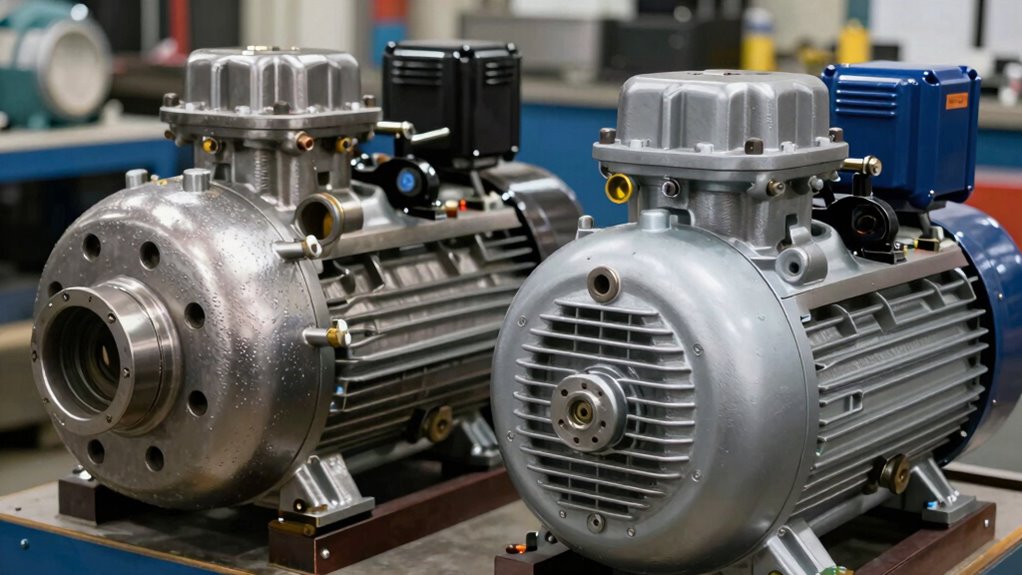
Your compressor’s durability depends on the quality of its parts, how well you maintain it, and the conditions under which you operate it. Poor components or neglecting regular upkeep can shorten its lifespan. Additionally, harsh operating environments and heavy usage put extra stress on the machine, affecting how long it lasts. Properly selecting the right type of compressor, such as oil-free or oil-lubed, based on your needs can also influence its longevity performance factors. Understanding the specific type of compressor and its unique maintenance requirements can help extend its operational life even further. For example, choosing an electric dirt bike with appropriate specifications for your intended use can help prevent premature wear and tear, ensuring longer-lasting performance. Moreover, utilizing AI-powered maintenance tools can predict potential failures and optimize upkeep schedules, further prolonging compressor life. Regular inspections and adaptive maintenance strategies based on operating conditions are essential for maximizing durability.
Quality of Components
The durability of a compressor largely depends on the quality of its components, as these parts must withstand constant wear and operational stress. High component durability comes from using quality materials that resist corrosion, heat, and fatigue. When manufacturing, choosing superior material quality ensures that critical parts like pistons, valves, and seals hold up over time. Poor material quality can lead to quicker wear, frequent repairs, and shorter lifespan. Additionally, well-made components are less prone to failure under heavy use, which means your compressor will run more reliably for longer periods. Investing in components with high durability and quality materials ultimately extends your compressor’s lifespan, reduces downtime, and saves you money on repairs or replacements. Durable components play a crucial role in ensuring long-term compressor performance. Factors such as material selection and precise manufacturing processes significantly influence component longevity and overall durability. Moreover, implementing rigorous quality control during production can further enhance the reliability and lifespan of the compressor components.
Maintenance Practices Followed
Proper maintenance practices substantially influence a compressor’s durability by ensuring its components remain in ideal condition. Your choice of lubrication methods plays a critical role—regularly checking and replacing oil in oil-lubed compressors prevents wear, while oil-free units require inspection of seals and filters. Adhering to strict maintenance schedules helps catch issues early, reducing the risk of breakdowns. Consistently cleaning air filters, draining moisture, and inspecting belts or hoses extend the compressor’s lifespan. Proper lubrication minimizes friction and heat buildup, preventing premature failure. Skipping scheduled maintenance or neglecting lubrication can lead to costly repairs or early replacement. Additionally, understanding battery care and proper settings can help maintain auxiliary equipment more effectively. Regularly monitoring air quality, including dust and microplastics, can also prevent contaminants from damaging internal components. Implementing monitoring protocols ensures that any emerging issues are promptly addressed, further extending the life of your compressor. Paying attention to filter effectiveness and replacing filters as needed can significantly improve overall system reliability. By following recommended maintenance routines, you sustain optimal performance, ensuring your compressor lasts longer regardless of type.
Operating Conditions and Usage
Operating conditions and usage patterns substantially impact the lifespan of a compressor. If you operate it in harsh environments with high temperatures, dust, or humidity, both oil-free and oil-lubed models may wear out faster. Regularly overloading the compressor increases mechanical stress, reducing durability. Environmental impact also plays a role; oil-free units are often preferred in clean environments because they produce no oil emissions, lowering environmental harm. Conversely, oil-lubed compressors handle heavier workloads better in challenging conditions, potentially extending their lifespan but at a higher cost comparison due to maintenance needs. Proper usage, such as consistent lubrication and avoiding excessive run times, can markedly prolong your compressor’s life, regardless of type. Ultimately, understanding your operating environment ensures you choose the right model for longevity and cost efficiency.
How Does Maintenance Impact How Long Your Compressor Lasts?
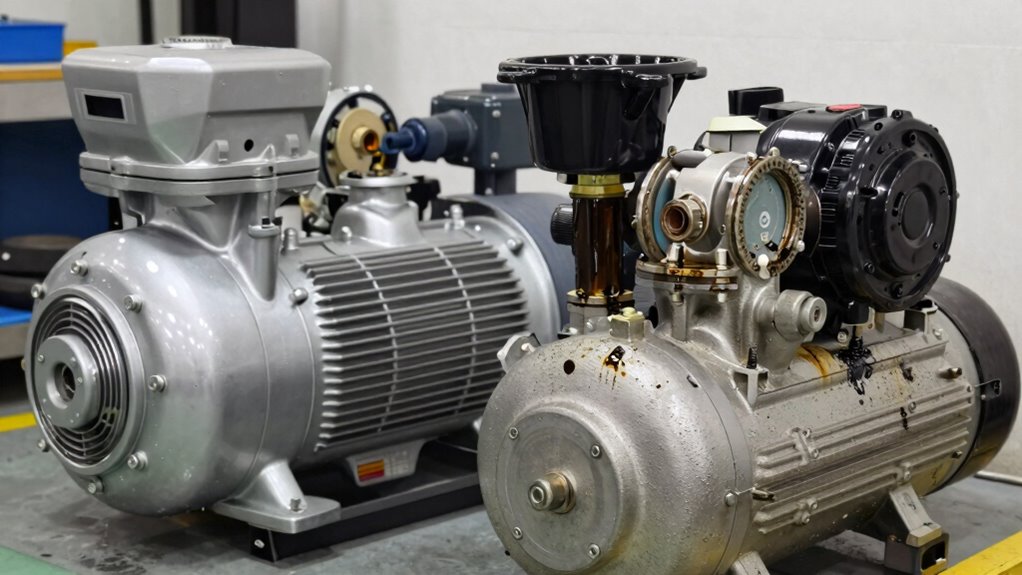
Regular maintenance plays a crucial role in extending the lifespan of your compressor. Consistently checking lubrication requirements ensures moving parts stay well-lubricated, reducing wear and preventing material corrosion. Neglecting maintenance can lead to increased friction, overheating, and early failure. Keep an eye on filters, drain moisture, and inspect belts regularly. Proper upkeep minimizes downtime and preserves performance. Here’s a quick overview:
| Maintenance Task | Frequency | Impact |
|---|---|---|
| Check lubrication levels | Weekly | Prevents material corrosion |
| Replace filters | Monthly | Ensures clean operation |
| Inspect belts | Quarterly | Avoids breakdowns |
| Clean cooling fins | Annually | Maintains ideal temperature |
Sticking to a maintenance schedule helps your compressor last longer and operate efficiently.
Do Longer-Lasting Compressors Sacrifice Performance?
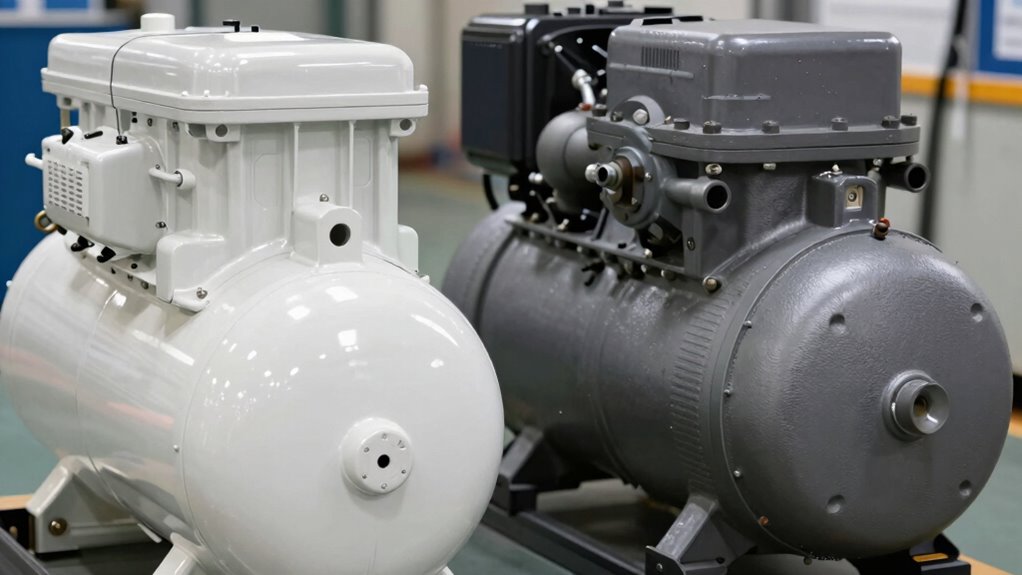
You might wonder if longer-lasting compressors compromise on efficiency, noise levels, or power. Generally, increasing durability can affect performance in some areas, but it’s not always the case. Let’s explore whether these longer-lasting options truly require trade-offs.
Efficiency Versus Durability
While longer-lasting compressors are often praised for their durability, there’s a common concern that this longevity might come at the expense of performance. However, oil-free compressors often excel in efficiency because their design simplicity reduces energy loss and maintenance needs. The lack of lubrication benefits means fewer parts to wear down, which can enhance reliability without sacrificing output quality. Conversely, oil-lubed models rely on lubrication benefits to protect components, potentially offering smoother operation and better performance under heavy use. Ultimately, durability doesn’t have to compromise efficiency; well-designed compressors can deliver both. Your choice depends on balancing long-term operational costs with the performance demands of your applications. Longer-lasting doesn’t necessarily mean less efficient—it’s about the right design for your needs.
Noise Levels and Power
Longer-lasting compressors are often thought to sacrifice power or generate more noise, but that’s not necessarily true. Modern designs focus on noise reduction, making these units quieter without losing performance. Oil-free models, for example, tend to operate more quietly because they lack oil-related components that can cause additional noise. When it comes to power efficiency, durable compressors are built to optimize energy use, ensuring you get the most output with less waste. This means you won’t have to choose between longevity and performance; well-designed compressors can deliver strong power while maintaining lower noise levels. Ultimately, durability doesn’t mean sacrificing noise reduction or power efficiency—advances in technology allow these features to go hand in hand.
Which Compressor Offers Better Longevity for Your Investment?
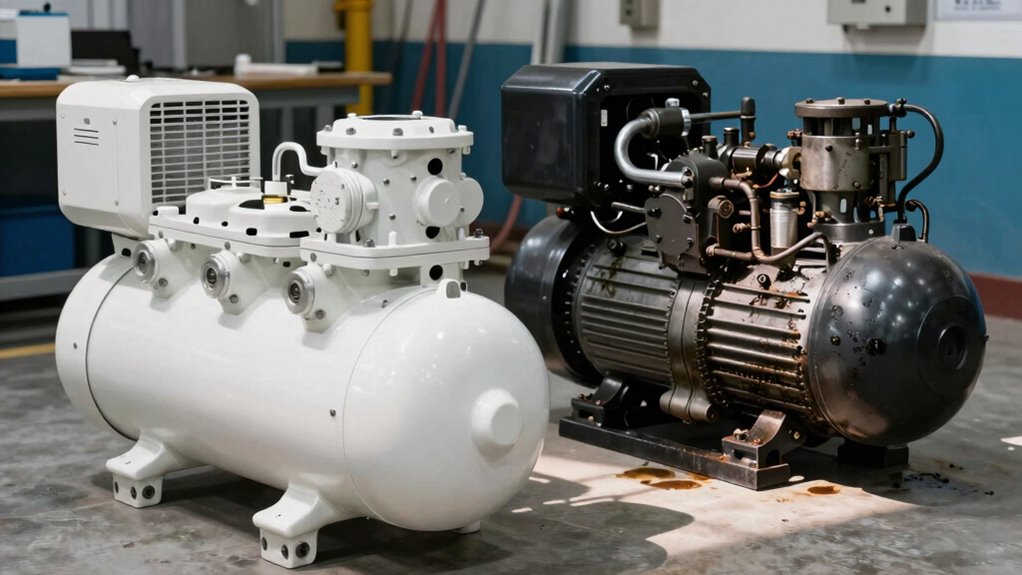
When choosing between oil-free and oil-lubed compressors, durability becomes a key factor in determining which offers better long-term value. Oil-lubed models generally last longer because their lubrication necessity reduces wear on internal parts, extending the compressor’s lifespan. They tend to have a heavier compressor weight, which can contribute to stability and durability over time. Conversely, oil-free compressors are lighter and require less maintenance, but their design often results in more wear and potentially shorter longevity. Your choice depends on balancing initial costs with long-term durability. Consider these points:
- Oil-lubed compressors typically last longer due to better lubrication.
- Heavier compressor weight adds to stability and durability.
- Oil-free units may need replacement sooner despite lower initial investment.
Best Uses for Oil-Free and Oil-Lubed Compressors and Their Effect on Durability

Choosing the right compressor depends on your specific application and durability needs. Oil-free compressors excel in environments requiring clean air, like medical or food processing, thanks to advanced lubrication technology that minimizes contamination. They’re ideal for light to medium tasks where constant use isn’t critical, but their compressor lifespan may be shorter due to less effective lubrication. Oil-lubed compressors are better suited for heavy-duty, continuous operations such as manufacturing, because their lubrication technology reduces wear and extends durability. This results in a longer compressor lifespan, making them more cost-effective over time for demanding workloads. By understanding these best uses, you can select a compressor that aligns with your durability expectations and application requirements, ensuring longevity and consistent performance.
How to Tell When Your Compressor Is Near the End of Its Lifespan?
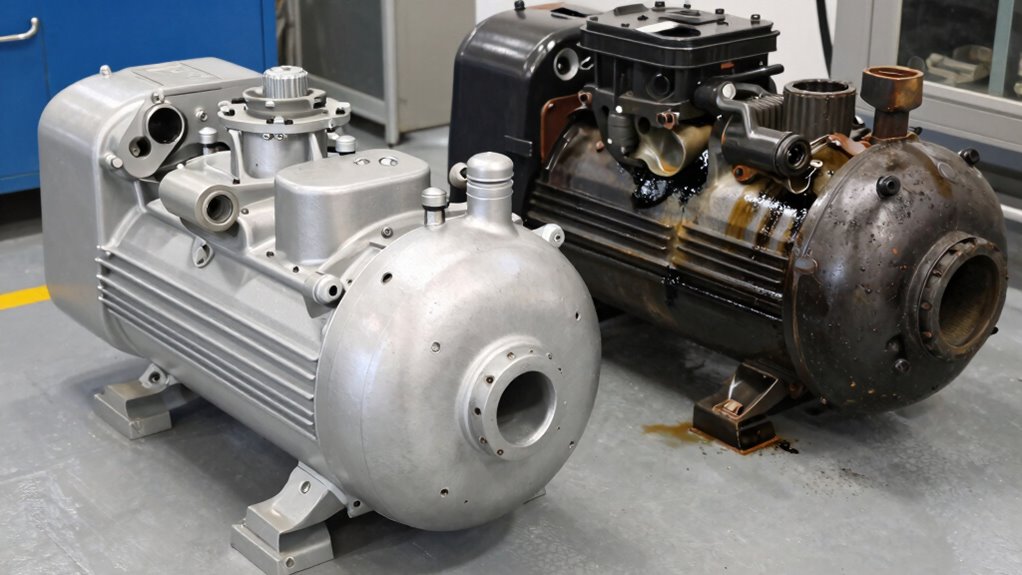
Over time, signs of declining performance can indicate that your compressor is nearing the end of its lifespan. Pay attention to changes that suggest issues with lubrication technology or increased maintenance frequency. You might notice:
- Unusual noises or vibrations during operation, hinting at worn components
- Reduced airflow or pressure, indicating internal wear
- Longer startup times or frequent need for repairs
These signs often mean your compressor is working harder than it should, and parts may be nearing failure. Regularly monitoring performance helps you catch problems early. If these symptoms persist despite routine maintenance, it’s a sign that your compressor’s lifespan is coming to an end. Staying alert to these indicators ensures you can plan for replacements before costly breakdowns occur.
Tips to Extend Your Compressor’s Lifespan
Regular maintenance and proactive care can substantially extend the lifespan of your compressor. Prioritize proper lubrication technology; using the right lubricants reduces wear and prevents overheating. Keep filters clean to guarantee optimal airflow, and regularly inspect hoses and connections for damage. Embrace compressor innovation by upgrading to models with advanced features like smart sensors and automatic shut-offs, which help prevent failures.
Here’s a quick overview:
| Maintenance Task | Frequency | Benefit |
|---|---|---|
| Check lubrication levels | Weekly | Reduces friction and wear |
| Clean intake filters | Monthly | Maintains efficiency |
| Inspect for leaks | Bi-monthly | Prevents pressure drops |
| Update software/controls | Annually | Enhances compressor innovation |
| Replace worn parts | As needed | Extends overall lifespan |
Frequently Asked Questions
Are Oil-Free Compressors Better for Indoor Use?
Yes, oil-free compressors are better for indoor use because they produce cleaner air quality, reducing the risk of oil contamination. They also tend to operate more quietly, making them suitable for indoor environments where noise levels matter. Plus, without oil, there’s less maintenance required. You’ll enjoy a safer, quieter workspace, especially if you work in medical, dental, or food-related industries where air purity and low noise are essential.
How Often Should Each Type of Compressor Be Serviced?
You should service oil-free compressors every 100 to 200 hours of use or at least annually, whichever comes first, due to their simpler design. Oil-lubed compressors require more frequent maintenance—roughly every 500 hours or every 6 to 12 months—because of their internal oil systems. Always follow the manufacturer’s recommended service intervals to guarantee peak performance and longevity for both types.
Can Oil-Lubed Compressors Operate in Contaminated Environments?
Think of oil-lubed compressors as delicate dancers—they thrive in clean environments but stumble in contaminated ones. Yes, they can operate in contaminated settings, but contamination concerns arise, risking damage and reducing lifespan. Additionally, oil-lubed compressors have a greater environmental impact due to oil emissions. If you’re working in a dirty environment, consider oil-free models to prevent these issues and ensure longer, more reliable operation.
What Is the Typical Lifespan Difference Between the Two Types?
You’ll find oil-lubed compressors typically last longer than oil-free ones, often due to their durability comparison. They require less frequent maintenance because oil lubrication reduces wear and tear, extending lifespan. Oil-free compressors, while easier to maintain, tend to have a shorter lifespan because they lack the protective lubrication. Overall, if longevity is your priority, oil-lubed models generally outperform oil-free options, especially with proper maintenance.
Do Oil-Free Compressors Require Less Maintenance Overall?
Imagine a sleek, streamlined boat gliding effortlessly through calm waters—that’s your oil-free compressor. It requires less maintenance, simplifying your routine, since it has no oil changes or filters to worry about. This reduction in upkeep translates to lower operational costs over time. You’ll appreciate how its simplicity keeps your work efficient, letting you focus on your tasks rather than constant repairs or service interruptions.
Conclusion
Choosing between oil-free and oil-lubed compressors is like selecting a trusty steed—each has its strengths, but your choice determines how long it’ll carry you. By understanding their differences and caring for your compressor, you guarantee it’s a loyal companion on your projects. Think of it as tending a garden; with the right attention, your compressor will flourish and serve you well for years to come. Keep it maintained, and it’ll be your steadfast partner in every task.