TL;DR
Ford says the first lithium iron phosphate cells from BlueOval Battery Park Michigan are headed to Louisville Assembly Plant for Fathom electric pickup prototypes. The shipments mark a step in development of Ford’s lower-cost Universal Electric Vehicle Platform; volume production at the Michigan battery pack plant is scheduled for 2027.
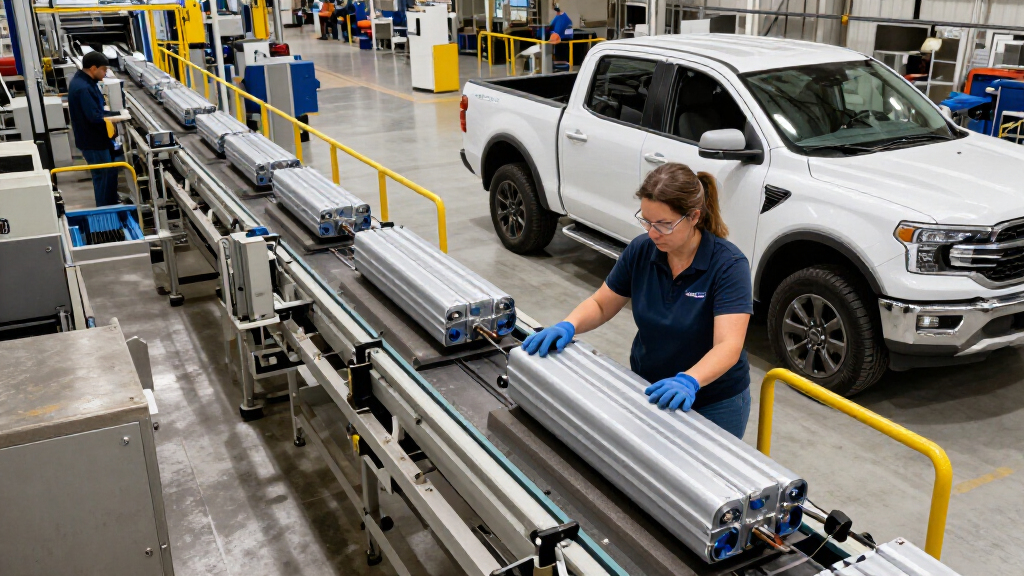
Ford says its first lithium iron phosphate (LFP) battery cells have left BlueOval Battery Park Michigan for the company’s Louisville Assembly Plant, where they will power prototypes of the Fathom electric pickup. The shipment is an early manufacturing milestone for Ford’s planned Universal Electric Vehicle Platform, but does not mean the truck is entering production. Ford’s LFP battery production in Michigan is part of that broader effort.

Get business pricing on garage and car supplies
- Business-only prices and quantity discounts
- Tax-exempt purchasing
- Multiple users, one account, clear invoices
The cells are prismatic, or rectangular, LFP cells. Ford says the Louisville-bound shipments will be used in Fathom prototypes and to inform ongoing development. The company’s account describes cells rolling off the line at the Michigan facility; it does not provide shipment quantities or a delivery schedule for the prototype program.
Ford vice president of hardware engineering Charles Poon said the company selected the chemistry after evaluating battery suppliers and manufacturing readiness. In a blog post cited by Charged EVs, Poon said Ford wanted a technology that was “proven in the field, ready to manufacture at scale” and suited to its vehicle program. He identified China-based CATL as the battery manufacturer Ford chose, saying its batteries power 30 million vehicles around the world.
Ford’s stated engineering approach is to reduce cost and weight through pack and vehicle design, rather than simply adding cells. The company says it has right-sized the battery, made the pack a structural part of the vehicle, and selected prismatic cells that fit into the chassis. Ford also says its engineers combined electrical and sensing connections in a flexible circuit board and integrated compact power electronics into the pack, informed by its battery testing and failure analysis.
How the Cells Shape Fathom’s Design
The initial shipment matters as a test of whether Ford can connect battery manufacturing in Michigan with development and vehicle assembly in Louisville. Prototype packs let engineers evaluate the battery and vehicle together before production decisions are finalized. Ford says the cells will support that work, but has not disclosed test results, pack capacity, driving range, or vehicle pricing.
LFP chemistry can reduce reliance on costly materials: Ford says these cells use no nickel or cobalt and offer long cycle life. Those characteristics are relevant to the company’s stated aim of making EVs more affordable. They do not, by themselves, establish the eventual price or performance of the Fathom; those depend on the full vehicle, battery pack, manufacturing process, and other costs.
The pack’s planned structural role and integrated components also show why the announcement is about more than cell output. Ford is trying to make the battery contribute to the vehicle structure while reducing separate parts. If the approach works at scale, it could affect vehicle weight, assembly complexity, and cost. The company has not yet reported production-scale results.
Products Worth Considering

Autel MaxiCheck MX808S Bidirectional OBD2 Diagnostic Scanner

Chemical Guys Arsenal Builder Car Wash Kit with Foam Cannon and Carry Bag

Autel MaxiCOM MK808S Bidirectional Automotive Diagnostic Scanner
As an affiliate, we earn on qualifying purchases.
Ford’s Platform and Michigan Plant
The Fathom is being developed around Ford’s Universal Electric Vehicle Platform, which the company describes as incorporating technologies intended to make electric vehicles more affordable. The cell shipment is an early step in that program: the cells are headed to Louisville for prototypes, while the battery facility is expected to support later production activity.
Ford says BlueOval Battery Park Michigan’s assembly lines can produce 40 cells per minute. That is the company’s stated line rate, not a reported total shipment volume, operating average, or confirmation that the facility is already producing at that rate continuously. Ford says volume production at the Michigan battery pack plant is scheduled to begin in 2027, ahead of the Fathom launch.
Ford’s choice of CATL is part of its supplier strategy for this battery program. Poon’s explanation, as quoted in the company blog post, points to field experience and capacity for manufacturing at scale as selection criteria. The available source does not give details about the commercial terms, the supply arrangement, or how much of the eventual battery supply will come from this facility.
“We wanted a technology that was proven in the field, ready to manufacture at scale and suited to what we were building.”
— Charles Poon, Ford vice president of hardware engineering, in a company blog post
Production Details Still Pending
Ford has not disclosed how many cells are in the first shipment, how many Fathom prototypes will be built, or when prototype testing will be completed. The company also has not announced a production launch date beyond saying volume production is scheduled for 2027 ahead of the Fathom launch.
Key product details remain unavailable, including the pickup’s battery capacity, range, charging performance, price, and final specifications. The stated rate of 40 cells per minute describes the Michigan lines’ capability as reported by Ford; the source does not clarify current utilization, output over a longer period, or how many cells will go into each pack.
Ford’s explanation of LFP benefits and the design choices reflects the company’s account of its program. No independent performance data for the Fathom battery pack or production-cost figures were provided with the announcement. It is also unclear whether supplier or production plans could change before volume manufacturing begins.
Prototype Work Before 2027
The next stated step is for the cells to be assembled into packs and used in Fathom prototypes at Louisville Assembly Plant. Ford says the prototype work will inform ongoing development. The company has not announced a public testing timetable or identified when it will release further vehicle specifications.
Ford’s current schedule calls for volume production at the Michigan battery pack plant in 2027, ahead of the Fathom launch. That remains a planned milestone, not confirmation that production has begun or that the pickup has a firm on-sale date. Further updates on prototype testing, manufacturing readiness, and vehicle details will show how the program develops.
Key Questions
What has Ford announced?
Ford says its first LFP prismatic battery cells from BlueOval Battery Park Michigan have shipped to Louisville Assembly Plant for Fathom electric pickup prototypes.
Are the cells for production trucks?
Not at this stage. Ford says the cells are intended for prototypes and ongoing development. The announcement does not say customer trucks are being built.
When is volume production scheduled to begin?
Ford says volume production at the Michigan battery pack plant is scheduled for 2027, ahead of the Fathom launch. It has not provided a specific launch date for the pickup.
Why is Ford using LFP cells?
Ford says LFP chemistry uses no nickel or cobalt and offers long cycle life. The company is also designing the pack to serve a structural role and to use fewer separate components. Final cost and vehicle performance have not been announced.
What details about the Fathom remain unknown?
Ford has not released the pickup’s range, battery capacity, price, charging performance, or final specifications. It also has not disclosed the size of the initial cell shipment or the number of prototypes planned.
Source: chargedevs.com