TL;DR

Get business pricing on garage and car supplies
- Business-only prices and quantity discounts
- Tax-exempt purchasing
- Multiple users, one account, clear invoices
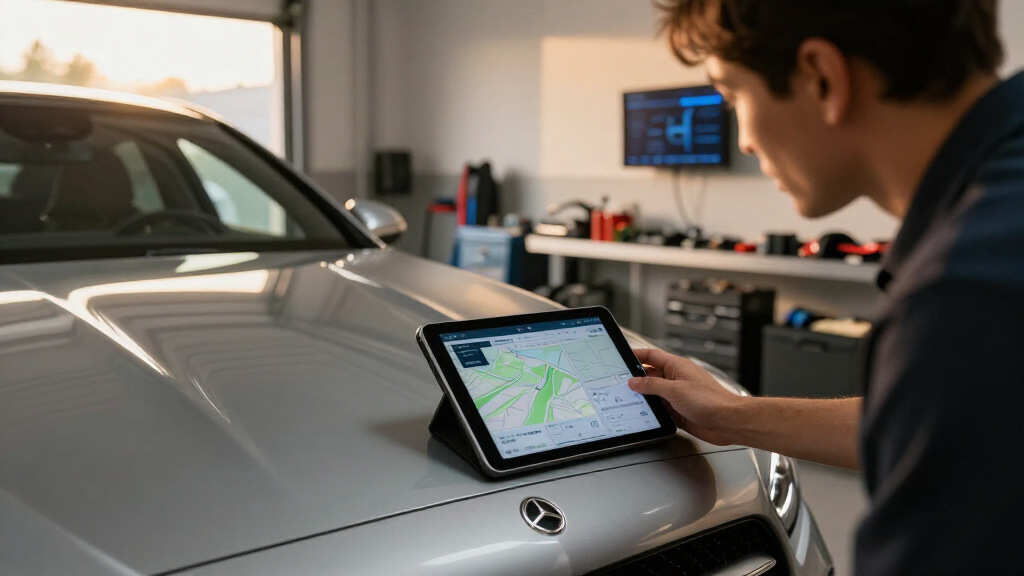
Mercedes plans to work with Wayve to develop an advanced autonomous driving system similar to Tesla’s FSD, targeting a launch within two years. The collaboration signals a shift in automaker strategies, but specifics are still emerging.
Mercedes-Benz is collaborating with UK-based autonomous vehicle startup Wayve to develop a Tesla FSD-like system, with a target deployment within two years. This partnership signals Mercedes’ intent to accelerate its autonomous driving capabilities, potentially reshaping its future vehicle lineup and competing more directly with Tesla’s market-leading system.
According to industry sources, Mercedes has entered into a strategic partnership with Wayve, a startup known for its deep learning and reinforcement learning approach to autonomous driving. The collaboration aims to deliver a fully autonomous driving system comparable to Tesla’s Full Self-Driving (FSD) suite, with a rollout planned within approximately two years.
While Mercedes has not officially confirmed the partnership or the timeline, multiple reports indicate that the automaker is investing heavily in this project, seeking to leapfrog traditional ADAS (Advanced Driver Assistance Systems) and compete with Tesla’s autonomous vehicle technology. The initiative is believed to involve integrating Wayve’s AI-driven approach with Mercedes’ existing vehicle platforms, potentially leading to a new generation of highly autonomous models.
Sources close to the matter suggest that Mercedes views this collaboration as a strategic move to catch up with or surpass Tesla’s autonomous driving capabilities, which have been a key differentiator for Tesla vehicles in recent years. The development aligns with broader industry trends toward full autonomy, although regulatory and safety hurdles remain significant.
Implications for Mercedes and the Autonomous Market
This collaboration could significantly alter the competitive landscape of autonomous driving technology. Mercedes’ move to partner with Wayve highlights a shift toward AI-centric solutions that leverage deep learning, potentially offering more adaptable and robust autonomous systems. If successful, this could give Mercedes a critical edge in the premium EV and autonomous vehicle markets, challenging Tesla’s dominance and encouraging other automakers to pursue similar AI-driven approaches.
Moreover, the partnership underscores the increasing importance of startups like Wayve in shaping the future of automotive autonomy. Their innovative AI techniques could accelerate development timelines and improve system safety and reliability, which are crucial for regulatory approval and consumer acceptance.
Tesla FSD compatible car accessories
As an affiliate, we earn on qualifying purchases.
As an affiliate, we earn on qualifying purchases.
Industry Trends and Mercedes’ Autonomous Strategy
Over recent years, automakers have invested heavily in autonomous vehicle technology, with Tesla’s FSD system serving as a prominent example of a consumer-facing self-driving suite. Tesla’s approach combines cameras, radar, and AI software to enable semi-autonomous driving features, with some capabilities marketed as full self-driving in certain conditions.
Mercedes, traditionally more cautious, has focused on advanced driver-assistance systems (ADAS) and partially autonomous features, but has lagged behind Tesla in full autonomy. The reported partnership with Wayve indicates a strategic pivot toward adopting AI-first solutions, possibly inspired by the success and market attention Tesla’s FSD has garnered.
Wayve, founded in the UK, specializes in reinforcement learning and end-to-end deep learning models, which many industry analysts see as a promising approach to achieving safe and reliable full autonomy. The startup has been gaining interest from automakers and investors, with its innovative methods seen as a potential game-changer.
Unconfirmed Details and Development Timeline
While reports indicate a partnership and a two-year timeline, neither Mercedes nor Wayve has officially confirmed the collaboration or specific deployment dates. It is unclear whether the project is in early development, testing, or nearing production readiness. Details about the system’s features, safety protocols, or regulatory approval processes remain undisclosed, and the scope of the partnership has not been publicly clarified.
Additionally, the effectiveness and safety of AI-based autonomous systems like Wayve’s approach are still under evaluation, and regulatory hurdles could influence the project’s timeline and deployment strategy.
Next Steps and Industry Impact Expectations
Mercedes is expected to formally announce details of the partnership and development milestones within the coming months. The automaker may begin testing prototypes equipped with Wayve’s AI systems, possibly in limited markets or pilot programs, before a broader rollout.
Industry analysts will be closely watching for regulatory filings, safety testing results, and consumer adoption signals. The success or failure of this initiative could influence future collaborations between traditional automakers and AI startups, as well as shape the competitive dynamics in autonomous vehicle technology.
Furthermore, other automakers may accelerate their own AI and autonomy programs in response, intensifying the race toward fully autonomous vehicles in the premium segment and beyond.
Key Questions
Will Mercedes vehicles become fully autonomous within two years?
It is not yet confirmed whether Mercedes will achieve full autonomy within two years. The timeline is based on industry reports and unconfirmed sources, and regulatory approvals will also influence deployment.
What is Wayve’s approach to autonomous driving?
Wayve specializes in deep learning and reinforcement learning techniques, focusing on end-to-end AI systems that adapt to complex driving environments. Their approach is considered innovative and potentially more flexible than traditional rule-based systems.
How does this partnership compare to Tesla’s FSD system?
While Tesla’s FSD relies on a combination of sensors and AI to enable semi-autonomous features, the reported Mercedes-Wayve system aims to deliver a comparable or superior level of full autonomy, though details remain undisclosed.
Could this development influence regulatory policies?
Yes, advancements in AI-driven autonomous systems like this could prompt regulators to update safety standards and approval processes, shaping the future landscape of autonomous vehicle deployment.
What are the safety concerns associated with this AI approach?
AI-based autonomous systems face challenges related to reliability, interpretability, and safety validation. Ensuring these systems operate safely in all conditions remains a key hurdle before widespread deployment.
Source: rss
Fall Picks
fall essentials
As an affiliate, we earn on qualifying purchases.