
TL;DR
Geely has announced a new EV charger with a maximum power output of 2.2 megawatts, making it one of the most powerful chargers globally. The development could accelerate EV charging speeds but remains in early stages of deployment and validation.
Chinese automaker Geely has unveiled a new electric vehicle charger capable of delivering a maximum power output of 2.2 megawatts, positioning it as one of the most powerful chargers available globally. This development could dramatically reduce charging times for EVs, potentially transforming charging infrastructure and user experience. The announcement underscores Geely’s focus on advancing EV technology and infrastructure, with implications for automakers, charging networks, and consumers.

Get business pricing on garage and car supplies
- Business-only prices and quantity discounts
- Tax-exempt purchasing
- Multiple users, one account, clear invoices
Geely’s new charger is designed to deliver up to 2.2 MW of power, significantly surpassing typical commercial fast chargers, which usually range between 150 kW and 350 kW. The company claims this high power level can enable near-instantaneous charging for compatible electric vehicles, potentially adding hundreds of kilometers of range in just a few minutes. The charger uses advanced cooling and power management systems to handle the immense energy transfer, according to Geely officials.
While the announcement has generated excitement within the EV industry, it is important to note that the charger’s deployment is still in the early stages. Geely has not yet disclosed specific plans for commercial rollout, nor have independent tests or third-party validations been published. Industry experts caution that integrating such high-power chargers into existing infrastructure and vehicle systems will require further development, standardization, and safety assessments.
Potential Impact on EV Charging Speed and Infrastructure
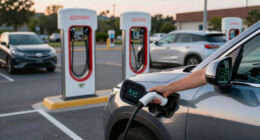
The introduction of a 2.2 MW charger could significantly cut charging times, addressing one of the main barriers to widespread EV adoption. Faster charging capabilities may encourage more consumers to switch to electric vehicles by reducing downtime and enhancing convenience. For charging networks and automakers, this development signals a push toward higher-capacity infrastructure, which could lead to new standards and greater investment in fast-charging technology. However, the actual impact depends on vehicle compatibility, safety standards, and the readiness of the existing grid to support such high power levels.
Products Worth Considering

Autel MaxiCharger AC Home 50A Level 2 EV Charger (Hardwired, J1772, 25ft Cable)

Autel 50A Level 2 Hardwired EV Charger with 25 ft J1772 Cable

Chemical Guys 14-Piece Arsenal Builder Car Wash Kit with Foam Blaster
As an affiliate, we earn on qualifying purchases.
High-Power Charging Trends and Industry Development
The EV charging industry has seen steady progress toward higher power levels, with current commercial chargers typically maxing out at 350 kW. Companies like Tesla, Ionity, and Electrify America have invested heavily in ultra-fast chargers, but 2.2 MW exceeds most current offerings by a significant margin. Historically, high-power chargers have been limited by technical challenges related to heat dissipation, safety, and grid stability. Geely’s announcement aligns with broader industry trends aiming to push charging speeds beyond existing limits, although widespread adoption remains a work in progress.
Interest in ultra-fast charging has increased with rising EV sales and infrastructure investments. Industry and consumer interest continues to grow as technology advances and standards evolve, though widespread deployment will require further validation and regulatory approval.
Uncertainties About Deployment and Industry Readiness
It is not yet clear when or if Geely plans to deploy this 2.2 MW charger commercially. Details about safety testing, vehicle compatibility, grid integration, and regulatory approval are still undisclosed. Industry experts caution that scaling this technology for mass use may face significant technical and standardization challenges, and the impact on existing charging networks remains uncertain.
Next Steps for Validation and Industry Adoption
Geely is expected to conduct further testing and pilot deployments in the coming months to validate the safety, efficiency, and reliability of the 2.2 MW charger. Industry stakeholders will monitor these developments closely, especially regarding vehicle compatibility and grid support. If successful, the technology could influence future standards and accelerate the rollout of ultra-fast charging stations across key markets.
Key Questions
How does the 2.2 MW charger compare to existing fast chargers?
The 2.2 MW charger significantly exceeds current commercial chargers, which typically deliver up to 350 kW, enabling much faster charging times for compatible vehicles.
What vehicles can currently support such high charging power?
Most existing EVs are not designed for such high power levels. Vehicle compatibility will depend on future models equipped with advanced battery and thermal management systems.
Will this technology be widely available soon?
It is uncertain. Geely has not announced specific deployment timelines, and technical, safety, and regulatory hurdles must be addressed first.
What are the technical challenges of high-power charging?
Challenges include managing heat dissipation, ensuring safety, supporting grid stability, and developing compatible vehicle systems.
Could this development reduce EV charging times significantly?
Yes, if successfully deployed and supported by compatible vehicles, it could reduce charging times from 30 minutes or more to just a few minutes, depending on vehicle capacity.
Source: rss