TL;DR

Get business pricing on garage and car supplies
- Business-only prices and quantity discounts
- Tax-exempt purchasing
- Multiple users, one account, clear invoices
Powerdot has integrated with Hubject’s Plug & Charge ecosystem, making more than 7,000 of its charging points in France, Spain, Belgium and Poland compatible with automatic vehicle authentication. The service is intended to let drivers start a session by plugging in, without using a charging app or RFID card for authentication; the companies have not specified a timetable for adding the feature to Powerdot’s remaining points.
Powerdot and Hubject have brought Plug & Charge compatibility to more than 7,000 Powerdot charge points in France, Spain, Belgium and Poland, allowing compatible electric vehicles to authenticate automatically when plugged in. The rollout covers more than half of Powerdot’s network, the companies said, reducing the need for drivers to start a session with an app or RFID card at supported locations.
The integration connects Powerdot’s charging network to Hubject’s Plug & Charge ecosystem. The technology uses the ISO 15118 standard to let an EV and a charger exchange authentication information automatically. Hubject’s public key infrastructure is used to authenticate digital certificates exchanged among vehicles, charging equipment and mobility service providers, according to the report.
Powerdot operates about 13,000 charging points at 2,400 locations in Europe. More than 7,000 points in the four named countries are now compatible. The announcement does not say that every charger at those locations supports the feature, or identify individual sites, vehicle models or service providers that can use it.
Powerdot focuses on destination charging, placing chargers at locations where drivers may already spend time, including supermarkets, shopping centers, restaurants and other commercial destinations. The company says its network is designed to work with an open ecosystem of mobility platforms, e-mobility service providers and vehicle manufacturers, rather than requiring use of a Powerdot-branded app.
Fewer Steps at Supported Chargers
For drivers with a Plug & Charge-compatible vehicle and a supported charging setup, automatic authentication can remove steps at the start of a charging session. Instead of opening an app or presenting an RFID card to identify an account, the vehicle and charger handle the exchange in the background. That could make charging simpler at the locations covered by the rollout, particularly during routine stops at retail and other destination sites.
The expansion also adds a sizeable set of charge points to a system that depends on cooperation among vehicle makers, charging operators and mobility service providers. Compatibility is not guaranteed solely by the charger: a driver’s vehicle and charging service must also support the relevant arrangements. The announcement does not claim that Plug & Charge is available to every EV driver or that it changes charging prices, speed or availability.
Powerdot’s stated preference for an open charging ecosystem is relevant because drivers may use different mobility services across networks. Hubject CEO Christian Hahn described the operator’s European reach as a step toward broader adoption, but that is his assessment of the rollout’s industry significance, not a measured finding about customer uptake.
Products Worth Considering

Innova SD35 OBD2 Scanner for All-System Vehicle Diagnostics

DEWALT 20V MAX 1/4-Inch Impact Driver Kit with Battery and Charger (DCF787D1)
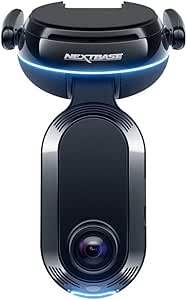
Nextbase iQ 4K Smart HD Dash Cam Pro with 64GB microSD Card – Front and Rear View, 1440p, Smart Sense Parking, Emergency SOS, Roadwatch AI
As an affiliate, we earn on qualifying purchases.
How the Network Integration Works
Plug & Charge is based on ISO 15118, a standard for communication between electric vehicles and charging infrastructure. In the setup described by the companies, certificates are exchanged and authenticated through Hubject’s public key infrastructure. This process is intended to identify an eligible vehicle and charging account securely without requiring a driver to manually authenticate at the charger.
Hubject operates a roaming and interoperability platform used to connect charging networks and mobility services. Powerdot’s integration adds its compatible points to Hubject’s Plug & Charge ecosystem. The reported rollout is limited to France, Spain, Belgium and Poland; the source does not establish coverage in other countries where Powerdot may operate.
Powerdot says it does not require drivers to use a proprietary app and integrates with external platforms and services. That does not mean no app or account is needed in every case: drivers may still need an eligible vehicle, a compatible mobility service and an active agreement for billing. The announcement describes automatic authentication, not the full account setup or payment process.
“Every operator that brings Plug & Charge to its network moves the industry closer to mass EV adoption, and Powerdot’s reach across Europe is a meaningful step in that direction.”
— Christian Hahn, Hubject CEO
Coverage and Driver Eligibility
The announcement does not provide a charger-by-charger coverage list, a schedule for bringing Plug & Charge to Powerdot’s remaining network, or details on whether further countries are planned. It also does not specify which vehicle models and mobility service providers can use the new compatibility, or whether drivers must complete a particular setup before their first session.
It remains unclear how many customers are currently using Plug & Charge at Powerdot locations, whether the rollout is already active at all eligible points, and what proportion of the network’s 13,000 points lies outside the four countries named. The companies have not provided uptake, reliability or customer-satisfaction figures in the supplied report. Drivers should check with their vehicle maker and charging service for compatibility and account requirements.
More Details on Availability Needed
Powerdot and Hubject have announced the integration, but the supplied information does not set out a next rollout milestone or expansion date. Further details from the companies could clarify which specific chargers are enabled, which vehicles and service providers are eligible, and whether additional countries or Powerdot locations will be added.
For now, drivers can confirm availability through their vehicle manufacturer or mobility service provider and check whether a particular Powerdot point supports Plug & Charge before relying on automatic authentication. The technology is intended to start charging after a compatible vehicle is plugged in, but the announcement gives no changes to payment terms or charging rates.
Key Questions
What did Powerdot and Hubject announce?
They announced that more than 7,000 Powerdot charging points in France, Spain, Belgium and Poland are compatible with Hubject’s Plug & Charge system.
How does Plug & Charge work?
At a compatible charger, a supported EV and charging system exchange authentication information automatically, using technology based on ISO 15118. The process is intended to start a session without manual app or RFID-card authentication.
Can every EV use the Powerdot rollout?
Not necessarily. The vehicle, charger and mobility service must support the relevant arrangements. The announcement does not list eligible models or providers, so drivers should check with their vehicle maker and charging service.
Which countries are included?
The announcement names France, Spain, Belgium and Poland. It does not give a site-by-site list or confirm support in other countries.
Does Plug & Charge mean no account or app is ever needed?
No. It removes manual authentication at the charger when the required systems are compatible, but drivers may still need an eligible charging account or service. The announcement does not spell out setup or billing requirements.
Source: chargedevs.com