TL;DR

Get garage and car supplies delivered free — and shop member deals
- Fast, free delivery on millions of items
- Access to Prime Big Deal Days deals on October 6–7
- Prime Video, Amazon Music and more included
Tesla is rolling out Emergency Drive Away, a software feature that lets some vehicles shift into Drive and leave a U.S. Supercharger while still plugged in. The feature is intended for emergencies and can damage both the vehicle and charging equipment; older Model S and Model X vehicles are excluded.
Tesla is rolling out Emergency Drive Away, a software feature that lets eligible vehicles leave a Supercharger while still connected to its cable. Announced by Tesla Charging on X, the feature is intended for emergencies and comes after a fatal shooting at an Idaho Supercharger this summer, according to The Drive’s report.
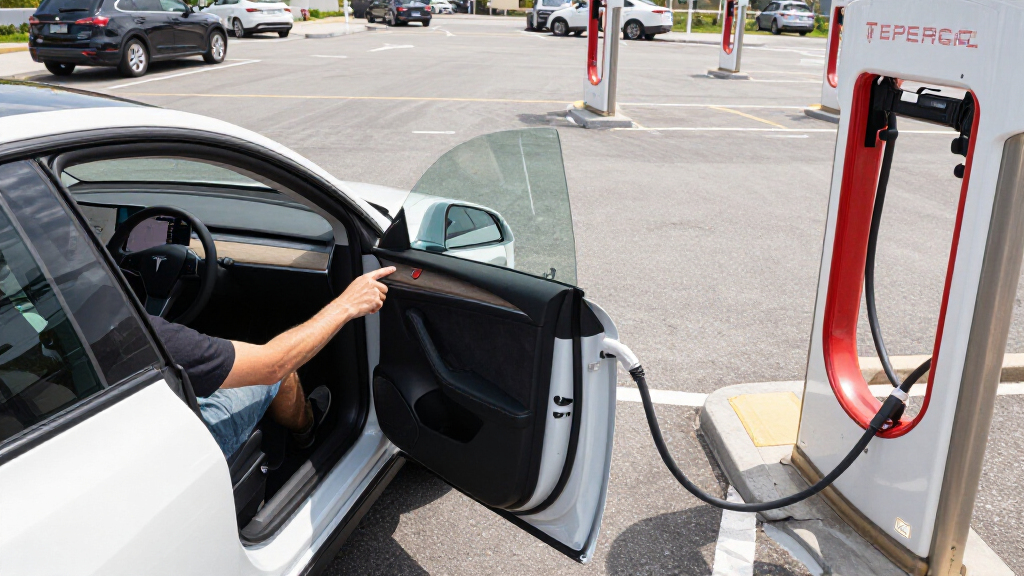
With the update installed, a driver can shift the vehicle into Drive while the connector is attached. The car displays an alert on its touchscreen; after confirming, the driver can pull away. Tesla’s demonstration shows the cable connector separating from the vehicle rather than pulling the charging station along with it.
Tesla says the feature is for emergency use only. The company warned that activating it will damage the vehicle and the Supercharger, and that deliberate misuse could result in additional penalties. The demonstration also shows a component dropping to the ground, underscoring that this is not a routine way to end a charging session.
The rollout is an over-the-air software update and requires version 2026.38.3. The feature is limited to U.S. Superchargers and does not support pre-2021 Model S sedans or Model X crossovers, according to the report. Tesla has not described it as a way to disconnect cleanly or prevent equipment damage.
An Emergency Exit From Charging
The update changes a safety constraint that normally keeps a Tesla from being driven away while its charging cable is connected. In a situation where a driver believes they need to leave immediately, the option may provide a way to move the car without first stopping to unplug. The announcement follows a lethal incident at an Idaho charging site, though the available report does not establish details about the shooting or say that the new feature would have changed its outcome.
The trade-off is substantial: Tesla says using the feature damages both the car and charging equipment. It should not be read as a general-purpose convenience feature or a substitute for disconnecting normally when it is safe to do so. For drivers, the main practical point is knowing the option exists while understanding that it may leave the vehicle and charger needing repair.
Tesla Supercharger charging cable lock
As an affiliate, we earn on qualifying purchases.
As an affiliate, we earn on qualifying purchases.
How Tesla’s Cable Lockout Works
Tesla vehicles ordinarily prevent drivers from shifting into Drive while connected to a Supercharger. That lockout is intended to keep a car from moving while tethered to high-power charging equipment. Emergency Drive Away provides an override rather than a standard release: the driver confirms an on-screen warning, then pulls away while the connector separates.
Tesla has previously delivered software features over the air, but this update addresses a specific emergency scenario rather than adding a conventional charging function. The Drive report also notes that a robotic charging arm developed by Tesla did not enter production. That background does not change the current feature’s stated limitations: it requires a particular software version, applies at U.S. Superchargers and excludes older Model S and Model X vehicles.
“Emergency Drive Away”
— Tesla Charging, in a post on X
Damage, Penalties and Eligibility
The report does not specify what components are damaged, the likely repair costs, or how Tesla will determine whether a use was deliberate misuse. It also does not describe what happens if a connector fails to separate as shown, or whether the feature will become available at other charging networks or outside the United States.
The announcement is tied in the report to a fatal shooting in Idaho, but the available material does not give the victim’s identity, the circumstances of the shooting, or any official findings. It also does not establish that Emergency Drive Away would have prevented harm. Tesla’s stated rollout and compatibility details are reported, but further information about the timing for individual vehicles was not provided.
Software Rollout and Driver Guidance
Owners who want to use the option will need to check whether their vehicle has received software version 2026.38.3 and whether their model and charging location meet Tesla’s stated limits. Tesla has not announced a completion date for the rollout or shared additional operating guidance in the source material.
For now, the company’s warning is the clearest guidance: Emergency Drive Away is for emergencies, and using it can damage both the vehicle and the Supercharger. Any later clarification on penalties, repairs, or expanded availability remains to be announced.
Key Questions
What does Tesla Emergency Drive Away do?
It lets an eligible Tesla shift into Drive and leave a Supercharger while the charging cable is still connected. The driver must confirm an alert on the vehicle’s touchscreen.
Does the feature prevent damage?
No. Tesla says using Emergency Drive Away will damage the vehicle and the Supercharger. It is intended for emergencies, not normal charging sessions.
Which Tesla vehicles and charging locations are covered?
The feature requires software version 2026.38.3, is limited to U.S. Superchargers and does not work with pre-2021 Model S sedans or Model X crossovers, according to The Drive’s report.
Why did Tesla add the feature?
The announcement followed a lethal shooting at a Tesla Supercharger in Idaho this summer, according to The Drive. The available information does not establish whether the feature would have changed what happened.
Can Tesla impose penalties for using it?
Tesla warned that deliberate misuse could lead to additional penalties. The source report does not specify what those penalties would be or how the company would assess misuse.
Source: rss
Halloween Picks
halloween
As an affiliate, we earn on qualifying purchases.