TL;DR

Get business pricing on garage and car supplies
- Business-only prices and quantity discounts
- Tax-exempt purchasing
- Multiple users, one account, clear invoices
Some San Diego EV drivers say they have waited as long as an hour or gone elsewhere because Waymo robotaxis were using public fast-charging stalls. Waymo says it prioritizes its own charging hubs and tries to avoid crowding stations; the charging provider EVgo says its chargers are open to both private drivers and robotaxis.
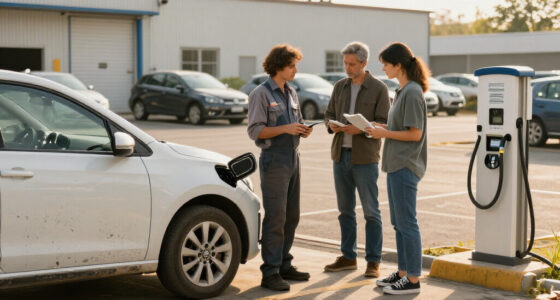
Some electric-vehicle drivers in San Diego say they have waited up to an hour or driven to another location after finding Waymo robotaxis occupying public fast-charging stalls, according to an InsideEVs report citing the Los Angeles Times. Waymo says it prioritizes its own charging hubs and tries to prevent vehicles from crowding a single station, while charger operator EVgo says its San Diego stations are available to both robotaxis and private drivers.
The reported disputes concern public charging locations used by people charging their own EVs as well as vehicles in Waymo’s ride-hailing fleet. One driver told the Los Angeles Times, as quoted by InsideEVs, that the robotaxis “come in droves.” Other drivers described waiting as long as an hour or seeking another charging site. Those accounts are complaints reported by the outlets, not a published count of affected drivers or stations.
Waymo told the newspaper that it has staff at some public charging locations to assist robotaxis and tries to avoid having its vehicles crowd one station. The company said it prioritizes its own charging hubs. A spokesperson also said that Waymo vehicles, including Jaguar I-Paces and Zeekr vans sometimes driven by humans, may use public chargers during breaks.
EVgo told the Los Angeles Times that its San Diego chargers are available to private EV drivers and robotaxis. The source report does not say that Waymo violated station rules; it describes competition for stalls that are open to both groups. The result, according to driver accounts, is that a vehicle operating commercially can take a spot that a local driver may need.
Public Chargers Face Fleet Demand
Fast-charging stalls are shared infrastructure: when a station is busy, each vehicle occupying a plug can affect how long others wait. The San Diego complaints point to a practical tension as robotaxi services expand: fleet operators need reliable charging, while individual drivers depend on public sites for trips, daily use or when home charging is unavailable.
Waymo’s use of public stations is not described as prohibited, and the available information does not quantify how often its vehicles take stalls or how much they contribute to waiting times. Still, the accounts raise questions for drivers and charging providers about capacity and how stations can serve both commercial fleets and the public during busy periods.
Products Worth Considering

DEWALT 20V MAX XR Hammer Drill and Impact Driver Combo Kit with Two 4Ah Batteries and Charger

Chemical Guys Carbon Force Ceramic Paint Coating Kit, 1 fl oz, 3 Applicators

NOCO Boost GB50 1500A UltraSafe Jump Starter, 12V Lithium Battery Booster
As an affiliate, we earn on qualifying purchases.
Depot Growth Takes Time
Waymo operates dedicated facilities for charging and maintaining its vehicles, but the company said establishing those sites can take time when it enters a new market. Until private charging capacity is available or sufficient, public fast chargers can serve as another option. The source material does not give the number or capacity of Waymo’s San Diego depots.
The complaints are not limited to San Diego. InsideEVs said social media users in Nashville and St. Louis had also accused Waymo vehicles of occupying public chargers; it did not provide details that independently establish the scale of those reports. The article also cited earlier neighborhood complaints in Santa Monica and San Francisco about noise or vehicle behavior, separate issues from public charging access.
“They come in droves.”
— An EV driver quoted by the Los Angeles Times, as reported by InsideEVs
Wait Times and Fleet Use Uncounted
The source material does not identify the specific charging stations, how many Waymo vehicles used them, how frequently they arrived, or how many drivers experienced delays. The reported wait of up to an hour comes from driver accounts; no station-level usage data or independent measurement is provided. It is also unclear whether the reported pattern is temporary or persists across San Diego.
Waymo’s comments do not specify how many public charging sites have staff on hand or how often the company redirects vehicles to avoid crowding. The report also does not detail EVgo’s station rules, whether any sites impose limits on commercial vehicles, or whether the providers are planning changes.
More Depot Capacity Could Ease Pressure
Waymo says its own charging hubs are its priority, and the source report indicates that building dedicated facilities can take time as the company enters markets. No timeline for additional San Diego depot capacity, public charging changes or measures to address the driver complaints is given.
For now, the reported stations remain open to both robotaxis and private EVs, according to EVgo. Whether the conflict eases will depend in part on how much charging demand Waymo shifts to its own facilities and whether public charging capacity keeps pace with demand. The available reporting does not establish what steps, if any, Waymo or EVgo will take next.
Key Questions
What are San Diego EV drivers reporting?
Some drivers say Waymo robotaxis were occupying public fast-charging stalls and that they waited up to an hour or went to another location. The report does not provide an independent tally of incidents.
Is Waymo barred from using the public chargers?
The source report says EVgo told the Los Angeles Times that its San Diego chargers are available to both private drivers and robotaxis. It does not report that Waymo violated station rules.
What has Waymo said about charging?
Waymo said it prioritizes its own charging hubs, tries to avoid crowding a single station and has staff at some public charging locations to assist vehicles.
How many chargers or drivers are affected?
The reporting does not specify the number of affected stations or drivers, or quantify Waymo’s use of public chargers. The reported hour-long waits are based on driver accounts.
Source: insideevs.com