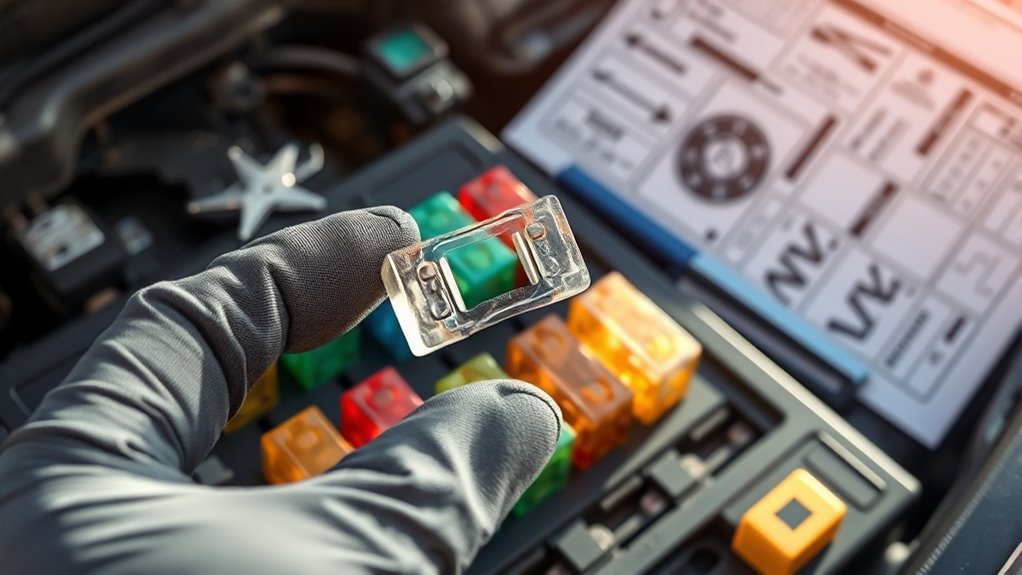

Understanding car fuses is key to keeping your vehicle’s electrical system safe. Fuses protect circuits from overloads by disconnecting power if something goes wrong. To replace a blown fuse safely, turn off the engine, locate the fuse box usually under the dashboard or in the engine compartment, and use a fuse puller to remove the faulty fuse. Be sure to match the correct amperage when installing a new one. Keep these tips in mind to stay safe and keep your car running smoothly.
Key Takeaways
- Locate the fuse box, usually under the dashboard or in the engine compartment, to access the faulty fuse quickly.
- Identify the correct fuse by consulting the owner’s manual and recognize fuse types and color codes for proper replacement.
- Turn off the vehicle and disconnect the battery before removing or replacing a fuse to ensure safety.
- Use a fuse puller or needle-nose pliers to carefully remove the blown fuse and replace it with one of the same amperage rating.
- Regularly inspect fuses for damage and handle electrical components carefully to prevent injury and ensure proper circuit protection.
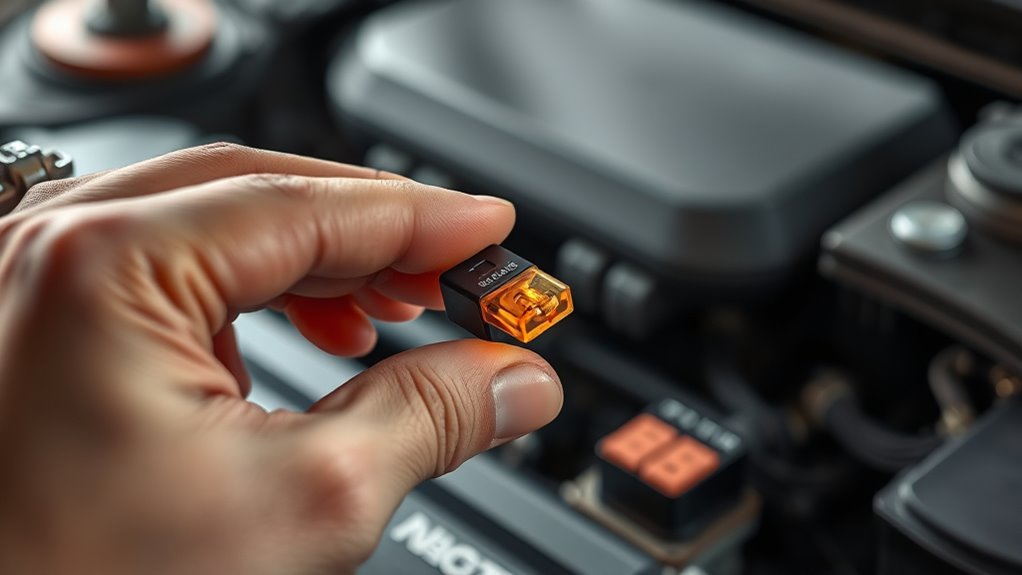
Have you ever wondered what keeps your car’s electrical system safe from overloads? It’s your car’s fuse box that plays a vital role in protecting your vehicle’s electrical components. The fuse box location varies depending on your make and model, but it’s typically found under the dashboard on the driver’s side or in the engine compartment. Knowing where it is can save you time and frustration when you need to troubleshoot an electrical issue. Inside, you’ll find a series of fuses, each designed to safeguard different circuits such as the headlights, radio, or power windows. These fuses act as a fail-safe, disconnecting power when there’s a short circuit or overload, preventing damage to sensitive components and reducing the risk of electrical fires.
Your car’s fuse box protects electrical components; location varies but is often under the dashboard or in the engine compartment.
When it comes to common fuse types, you’ll mostly encounter blade fuses, which are rectangular with two metal prongs, and sometimes glass tube fuses. Blade fuses are easier to identify and replace because they come in various amperages, marked on the fuse itself, and are color-coded for quick recognition. For example, a 10-amp fuse might be yellow, while a 20-amp fuse could be blue. Glass tube fuses, although less common today, are cylindrical with metal end caps and are typically found in older vehicles. Understanding these common fuse types helps you select the right replacement if a fuse blows, ensuring your car’s electrical system remains protected.
Replacing a blown fuse is straightforward, but it requires caution. Always turn off your vehicle and disconnect the battery before handling any electrical components. Locate the fuse box and consult your owner’s manual to identify the specific fuse related to the malfunctioning component. Carefully remove the blown fuse using a fuse puller or a pair of needle-nose pliers, making sure not to damage the fuse box or surrounding fuses. When selecting a replacement, match the amperage rating exactly—using a fuse with a higher rating can cause serious damage or fires. Insert the new fuse firmly into its slot, ensuring it sits snugly. Once replaced, you can reconnect the battery and test the circuit to confirm everything works properly.
Understanding the fuse box location and common fuse types empowers you to handle minor electrical issues confidently. Regularly inspecting your fuses and replacing any blown ones can prevent more significant problems down the road. Just remember to always prioritize safety by turning off your vehicle and handling electrical parts carefully. Additionally, being aware of electrical safety precautions when working with your car’s electrical system can help prevent accidents. With a little knowledge and the right tools, replacing a fuse becomes a simple, quick task that keeps your car’s electrical system running smoothly.

KUBOJSDLZ Relay Puller Pliers, Fuse Puller Pliers, 4-Pack Automotive Relay Fuse Puller Tool, FMM Fuses Puller Tool, Vehicles Battery Terminal Remover
Innovative Design: Our innovative full line of automotive and appliance fuse and relay solutions, choosing our sets of…
As an affiliate, we earn on qualifying purchases.
As an affiliate, we earn on qualifying purchases.
Frequently Asked Questions
Can I Upgrade My Car Fuse to a Higher Amperage?
You shouldn’t upgrade your car fuse to a higher amperage because it can cause electrical problems or fires. Fuse ratings are designed to protect your car’s wiring and components. Upgrading fuses might seem like a quick fix, but it risks damage and voids your warranty. Always stick to the recommended fuse ratings for your vehicle, and if you need more power, consult a professional to find a safer solution.
How Often Should I Check My Car Fuses?
You should check your car fuses at least once a month—think of it as your car’s heartbeat check! Regular fuse inspection helps prevent sudden electrical failures and keeps your battery safety in mind. If you notice flickering lights or electrical issues, inspect your fuses immediately. Staying proactive ensures your vehicle runs smoothly and avoids costly repairs, making your drive safer and more reliable every time you hit the road.
Are There Different Types of Fuses for Specific Car Models?
Yes, there are different fuse types designed for specific vehicle compatibility. You should check your car’s manual to identify the correct fuse type, such as blade, cartridge, or glass fuses, matching your model’s requirements. Using the right fuse types guarantees proper protection and function. Always verify vehicle compatibility before replacing fuses to avoid electrical issues or damage, and replace them with exact matches for safety and peak performance.
What Tools Are Needed to Replace a Car Fuse?
Think of fuse removal like unlocking a treasure chest—you need the right tools to open it safely. You’ll typically need a fuse puller or needle-nose pliers, which are compatible with most fuses. These tools help you grasp and remove the fuse without damage. Always guarantee your tools are suited for your specific fuse type, preventing accidental breakage or injury, and making the replacement smoother and safer.
Can a Blown Fuse Cause Electrical System Damage?
A blown fuse can damage your electrical system if you ignore it, as it indicates a problem in the electrical circuit. While fuses are designed to protect the circuit, repeatedly replacing a fuse without addressing the underlying issue may reduce the fuse lifespan and risk further damage. Always check and fix the root cause before replacing the fuse, ensuring your electrical system stays safe and functional.

JOREST 300Pcs Car Fuse Assortment Kit, 160 Mini Blade Fuses Automotive + 90 Standard Auto Fuses + 50 Micro + Puller – Replacement for RV Camper Boat Truck (2Amp 3A 5A 7.5A 10A 15A 20A 25A 30A 35A 40A)
【Meet all your needed size】– The fuse kit includes micro size 50pcs, mini size 160pcs and standard size…
As an affiliate, we earn on qualifying purchases.
As an affiliate, we earn on qualifying purchases.
Conclusion
Now that you understand how car fuses work, think of them as the guardians of your vehicle’s electrical world—tiny yet mighty. When one blows, it’s like a dam breaking, but with a simple swap, you can restore the flow of power and keep your journey smooth. Handling fuses safely is like tending a delicate garden; with care and knowledge, you protect your ride from unexpected storms. Stay vigilant, and your car will keep humming along like a well-oiled symphony.
JOREST 300Pcs Car Fuse Assortment Kit, 160 Mini Blade Fuses Automotive + 90 Standard Auto Fuses + 50 Micro + Puller – Replacement for RV Camper Boat Truck (2Amp 3A 5A 7.5A 10A 15A 20A 25A 30A 35A 40A)
【Meet all your needed size】– The fuse kit includes micro size 50pcs, mini size 160pcs and standard size…
As an affiliate, we earn on qualifying purchases.
As an affiliate, we earn on qualifying purchases.

WINAMOO Automotive Test Light with 3-48V LED Digital Voltage Display, Auto Circuit Tester with Voltmeter & Dual Color Polarity Indicate, Electric Test Pen w/Stainless Probe for Car/Truck/SUV Checker
【PRECISE READOUTS & CLEAR DIGITAL DISPLAY】Bright LED display shows highly clear readings in any lighting condition, 0.1V resolution…
As an affiliate, we earn on qualifying purchases.
As an affiliate, we earn on qualifying purchases.