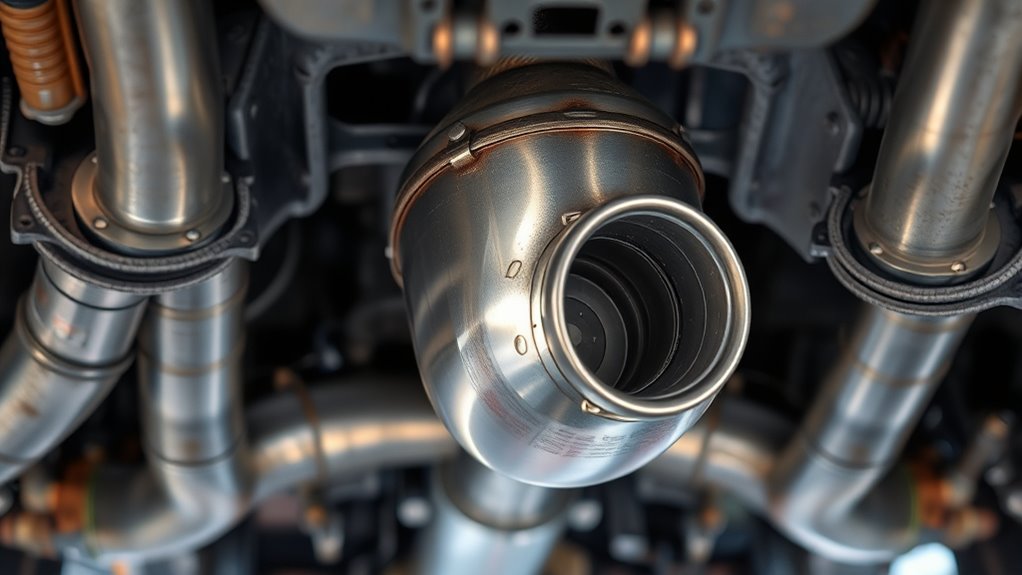

A catalytic converter helps your vehicle meet environmental standards by transforming harmful emissions into less toxic substances. It contains precious metals like platinum, palladium, and rhodium that act as catalysts for chemical reactions. This process converts carbon monoxide, nitrogen oxides, and unburned hydrocarbons into carbon dioxide, nitrogen, and water vapor. Properly functioning, it guarantees your engine runs efficiently while reducing pollution. To discover how it works and why maintenance matters, keep exploring this essential component.
Key Takeaways
- Converts harmful emissions like carbon monoxide, nitrogen oxides, and unburned hydrocarbons into less harmful substances.
- Contains catalysts made of precious metals that facilitate chemical reactions during exhaust processing.
- Reduces pollutants released into the environment, helping vehicles meet emissions regulations.
- Ensures smoother engine performance by preventing backpressure and supporting efficient exhaust flow.
- Plays a vital role in environmental protection and vehicle longevity through regular maintenance.

Have you ever wondered how your vehicle reduces harmful emissions? The answer lies in a essential component called the catalytic converter. This device is designed to transform dangerous pollutants produced during combustion into less harmful substances before they exit your exhaust system. When your engine runs, it generates emissions like carbon monoxide, nitrogen oxides, and unburned hydrocarbons. Without a catalytic converter, these pollutants would be released directly into the environment, contributing to smog, acid rain, and health problems. Its primary role is emission reduction, helping your car meet environmental standards while also guaranteeing it runs smoothly.
The catalytic converter works by using a combination of precious metals, mainly platinum, palladium, and rhodium, embedded within a ceramic or metallic substrate. As exhaust gases pass through, these metals act as catalysts, facilitating chemical reactions that convert harmful substances into less toxic ones. For example, carbon monoxide is transformed into carbon dioxide, nitrogen oxides are split into nitrogen and oxygen, and unburned hydrocarbons are turned into carbon dioxide and water vapor. This process not only benefits the environment but also helps your engine perform better. Cleaner emissions mean less strain on your engine’s components, leading to improved engine performance and potentially longer lifespan.
You might notice that your vehicle runs more efficiently after a properly functioning catalytic converter is in place. When the converter does its job effectively, it guarantees exhaust gases are processed quickly and thoroughly, preventing backpressure that could hinder engine performance. If your catalytic converter becomes clogged or damaged, you could experience decreased power, sluggish acceleration, or increased fuel consumption. These issues highlight how integral the converter is to maintaining top engine performance. By guaranteeing your catalytic converter functions correctly, you keep your vehicle running smoothly, efficiently, and in compliance with emissions regulations.
Additionally, a healthy catalytic converter minimizes harmful emissions, helping you do your part for the environment. It guarantees that pollutants are minimized before they leave your vehicle’s exhaust system, reducing your carbon footprint. Proper maintenance, including regular inspections and addressing any warning signs like reduced performance or increased emissions, can keep your catalytic converter in top shape. Ultimately, this component plays a crucial role in balancing emission reduction efforts with engine performance, making your driving experience cleaner, more efficient, and environmentally friendly.

FOMIUZY High Flow Front Catalytic Converter Kit Direct-Fit Chevy Traverse 2009 2010 2011 2012 2013 2014 2015 2016 2017 GMC Acadia 2007-2017 Buick Enclave 2008-2017 Saturn Outlook 2007-2010 3.6L
【Standards】: Our catalytic converters have strict production procedures and comply with Obd3 standards. However, due to the increased…
As an affiliate, we earn on qualifying purchases.
As an affiliate, we earn on qualifying purchases.
Frequently Asked Questions
How Long Does a Catalytic Converter Typically Last?
Your catalytic converter typically lasts around 100,000 to 150,000 miles, but it can vary based on emissions control and engine performance. If your vehicle’s emissions control system works efficiently and your engine runs smoothly, the converter tends to last longer. Regular maintenance and addressing issues early can extend its lifespan. Keep an eye on warning lights and odd engine behavior, as these could indicate it’s time for a check or replacement.
Can a Faulty Catalytic Converter Cause Engine Damage?
Think of your catalytic converter as the gatekeeper for your engine’s health. If it’s faulty, it can cause your engine to struggle, like a clogged artery, risking damage over time. A compromised converter hampers emission control and reduces engine performance, leading to increased stress on engine components. Ignoring a faulty converter can result in costly repairs, so keep it in good shape to protect your engine’s longevity.
Is It Legal to Replace a Catalytic Converter With a Different Model?
Replacing your catalytic converter with a different model is legal only if it meets legal compliance standards in your area. You can choose from aftermarket options, but guarantee they comply with emissions regulations and are approved by relevant authorities. Non-compliant replacements can lead to fines or failed inspection. Always verify that the new converter adheres to local laws to avoid legal issues and keep your vehicle running smoothly.
What Are the Signs of a Failing Catalytic Converter?
You’ll notice a failing catalytic converter through signs like reduced engine performance and increased emissions. Your vehicle might struggle to accelerate, stall, or have trouble starting. You may also smell rotten eggs or see your check engine light come on. These issues happen because the converter isn’t effectively reducing emissions. If you ignore these signs, your car’s emissions reduction drops, and your engine performance suffers, making repairs more urgent.
How Much Does It Cost to Replace a Catalytic Converter?
Replacing your catalytic converter typically costs between $1,000 and $2,500, depending on your vehicle and location. You can choose from aftermarket options, which are usually less expensive than OEM parts. Replacement costs vary based on the converter’s make and model, as well as labor charges. Shop around for the best deal, and consider both original equipment manufacturer parts and aftermarket options to find a solution that fits your budget.

Cataclean Fuel & Exhaust System Cleaner – Pass Emissions Tests – Clear Check Engine Lights – Restores Catalytic Converters, DPF Filters and Cleans Fuel Systems, 16oz – Pack of 2 (120019)
Pass Emissions Tests with Confidence: Cataclean is specifically formulated to reduce carbon build-up and clean vital components like…
As an affiliate, we earn on qualifying purchases.
As an affiliate, we earn on qualifying purchases.
Conclusion
In the end, your catalytic converter acts as the silent guardian of your car’s emissions, transforming harmful gases into harmless substances. Think of it as the heart of your vehicle’s eco-friendly mission—pumping life into cleaner air with every drive. Without it, you’re not just risking your engine’s health but also contributing to pollution’s silent spread. So, cherish this small but mighty component, for it’s the unsung hero in your journey toward a greener future.

4" x 8" High-Flow Catalytic Converter – 200 Cell/cpsi Metallic Substrate – 2.5" In/Out – EPA Compliant
Compact & Durable Design Featuring a compact 4.00-inch diameter x 8.00-inch long spun stainless steel outer casing, this…
As an affiliate, we earn on qualifying purchases.
As an affiliate, we earn on qualifying purchases.

Liqui Moly Catalytic System Clean 300 ml 7110. Cleans The Injection System and The Combustion Chamber.
Protects the catalytic converter from clogging with soot.
As an affiliate, we earn on qualifying purchases.
As an affiliate, we earn on qualifying purchases.