

Lithium-ion EV batteries power your vehicle’s performance and need proper care to last longer. To keep them in top shape, avoid letting charge levels drop below 20% or go above 80%, and use Level 2 chargers when possible. Keep the battery cool and minimize rapid charging, especially in hot weather. Recycling old batteries and adopting good charging habits help protect the environment. Keep going to discover more tips for excellent battery care and sustainability.
Key Takeaways
- Lithium-ion EV batteries power vehicles efficiently but require proper maintenance to maximize lifespan and performance.
- Avoid fully depleting batteries; keep charge levels between 20% and 80% for optimal health.
- Use Level 2 chargers and limit rapid charging to reduce heat and stress on the battery.
- Protect batteries from high heat exposure and overcharging to prevent degradation.
- Recycle used batteries responsibly to recover valuable materials and support environmental sustainability.
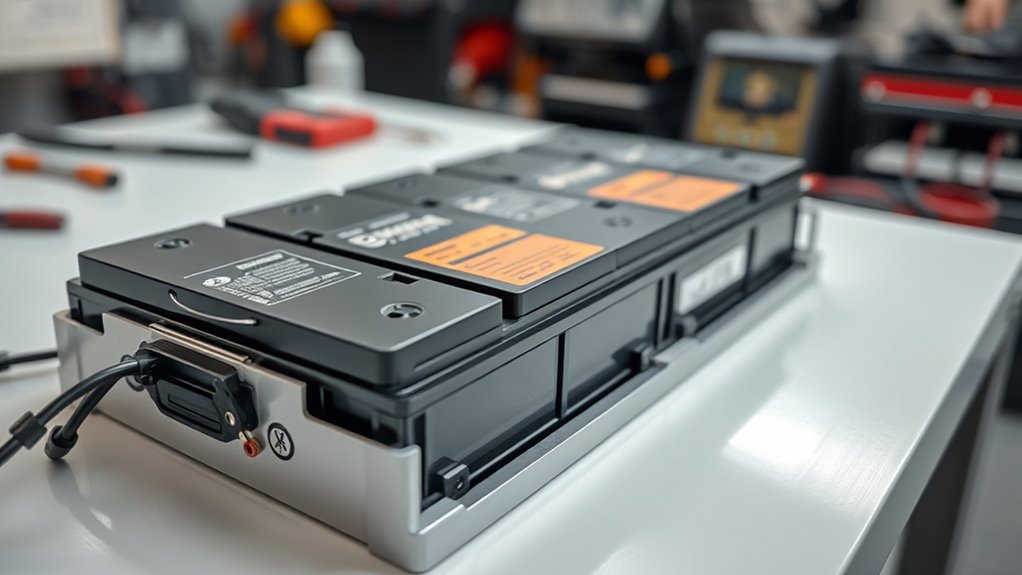
Have you ever wondered what powers electric vehicles? It’s the lithium-ion batteries under the hood that make everything run smoothly. These batteries are marvels of modern engineering, providing the energy needed to keep you moving efficiently. But like any technology, they require proper care to maximize their lifespan and minimize environmental impact. Understanding how to care for your EV’s battery starts with knowing about battery recycling and adopting charging best practices.
Battery recycling is a vital aspect of responsible EV ownership. Over time, batteries degrade, losing their ability to hold a charge effectively. When the time comes for replacement, properly recycling the old batteries helps prevent hazardous materials from harming the environment. Recycling centers recover valuable materials like lithium, cobalt, and nickel, which can then be reused in manufacturing new batteries. This process reduces the need for mining raw materials, lowering the environmental footprint of EVs and supporting sustainable practices. You can contribute to this effort by choosing manufacturers and service providers that prioritize battery recycling and ensure proper disposal of used batteries. It’s a small step that makes a big difference in reducing waste and supporting a circular economy.
Recycling old EV batteries prevents environmental harm and supports a sustainable circular economy.
Charging best practices are equally essential in maintaining your lithium-ion battery’s health. Avoid letting your battery fully deplete before recharging, as deep discharges can accelerate wear. Instead, aim to keep your charge levels between 20% and 80%, which helps prolong the battery’s overall lifespan. Using a Level 2 charger at home or public charging stations is typically faster and more gentle on the battery than rapid charging, which, if overused, can cause additional stress and heat buildup. Always try to charge your EV in a cool environment, especially during hot weather, since high temperatures can degrade battery cells. Additionally, avoid frequent rapid charging and overnight charging sessions if possible, since consistent high heat and high voltage can accelerate aging. Proper battery care, including maintaining optimal charge levels and minimizing heat exposure, greatly enhances your EV’s battery longevity. By following these charging best practices, you help ensure your battery remains efficient and reliable for years to come.
Ultimately, caring for your lithium-ion EV battery isn’t just about convenience—it’s about doing your part for the environment and preserving your vehicle’s performance. Proper battery recycling ensures that old batteries are handled responsibly, while smart charging habits extend their useful life. When you combine these practices, you not only enjoy a longer-lasting, more efficient battery but also contribute to a cleaner, more sustainable world. Small habits, like choosing recycling options and mindful charging, make a meaningful difference in the long run, helping you get the most out of your electric vehicle.
Frequently Asked Questions
How Long Do Lithium-Ion EV Batteries Typically Last?
Your lithium-ion EV battery typically lasts between 8 to 15 years or about 100,000 to 200,000 miles. Most come with a battery warranty of 8 years or 100,000 miles, which covers replacement costs if needed. Proper care, like avoiding extreme temperatures and frequent fast charging, can extend its lifespan. When replacement is necessary, it can be costly, but regular maintenance can help delay those expenses.
Can I Upgrade My EV Battery to a Higher Capacity?
Yes, you can upgrade your EV battery to a higher capacity, but it depends on your vehicle’s make and model. Check the upgrade feasibility with your manufacturer or a trusted technician, as not all EVs support battery capacity upgrades. Keep in mind, a larger battery can improve range, but installation costs and compatibility are key factors. Always verify the upgrade aligns with your vehicle’s specifications for safety and performance.
What Are the Signs of Battery Degradation?
You notice your EV’s battery health declining when your range shortens, charging takes longer, or the power feels weaker. You may also see the dashboard warning lights or experience inconsistent acceleration. Poor charging habits, like frequent fast charging or letting the battery drain completely, accelerate degradation. Keep an eye on these signs to understand your battery’s condition and adjust your charging habits to prolong its lifespan.
How Do Extreme Temperatures Affect Battery Performance?
Extreme temperatures, especially heat and cold, cause thermal effects that can harm your battery’s performance. High heat accelerates degradation, reducing capacity over time, while cold temperatures slow down chemical reactions, leading to cold charging challenges. You might notice reduced range or longer charging times in extreme weather. To protect your battery, avoid exposing your EV to extreme temperatures when possible, and consider preconditioning your vehicle for ideal performance.
Are There Eco-Friendly Disposal Options for Old Batteries?
You can choose eco-friendly disposal options for old batteries through recycling programs that safely break down lithium-ion cells. These programs guarantee valuable materials like lithium and cobalt are recovered and reused, reducing environmental impact. Always look for authorized recycling centers or manufacturer take-back schemes, as they promote eco-friendly disposal and prevent harmful chemicals from contaminating the environment. Proper recycling helps protect ecosystems and supports sustainable battery use.
Conclusion
Just as Prometheus brought fire to humans, your care fuels your EV’s longevity. By understanding how lithium-ion batteries work and following simple maintenance tips, you guarantee they perform at their best for years to come. Remember, neglecting these steps is like Pandora opening her box—unintended consequences await. Treat your battery with respect, and it’ll reward you with reliable, efficient driving, echoing the timeless truth that knowledge and care are the keys to enduring power.