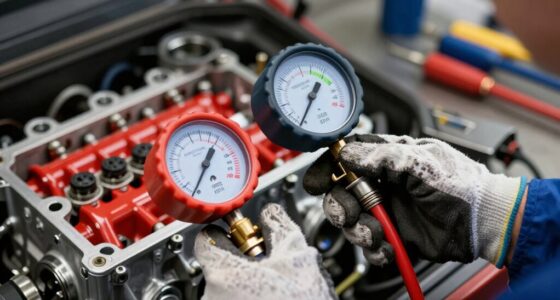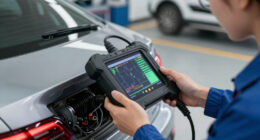

Your oxygen sensors monitor the exhaust gases from your vehicle to help maintain the ideal air-fuel mix, which improves performance and reduces emissions. They send real-time data to the engine control unit, helping it adjust fuel injection for efficiency and smooth running. You should consider replacing the sensors if you notice poor fuel economy, rough idling, or if the check engine light appears. Continuing below, you’ll discover key signs and tips for when to replace them.
Key Takeaways
- Oxygen sensors monitor exhaust oxygen levels to help the engine maintain optimal air-fuel ratios.
- They send real-time data to the ECU, influencing fuel injection and ignition timing.
- Signs of faulty sensors include check engine light, poor fuel economy, and rough idling.
- Replacement is needed when sensors malfunction, show erratic readings, or during routine diagnostics.
- Regular inspection and timely replacement prevent engine damage, improve efficiency, and reduce emissions.
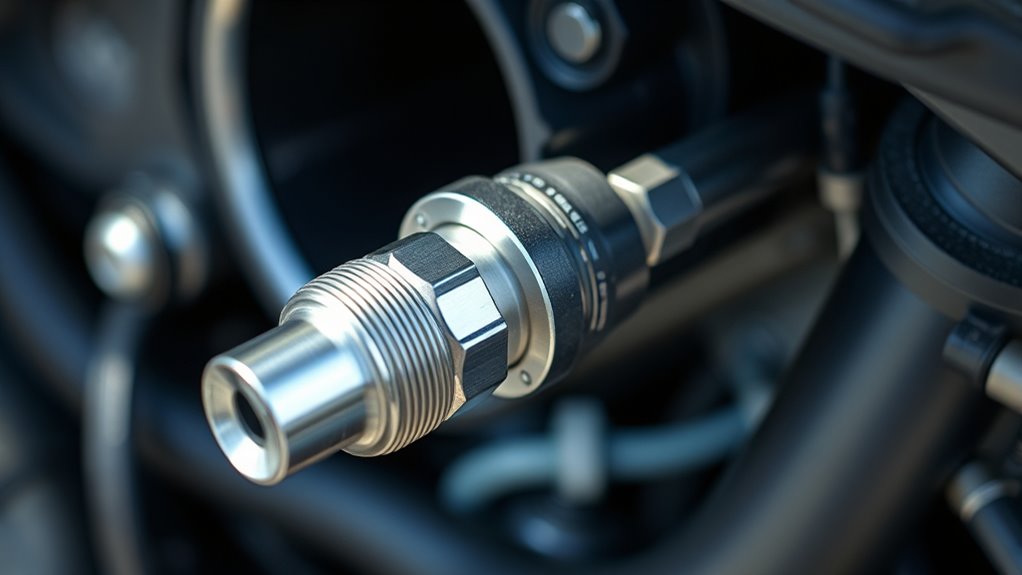
Have you ever wondered how your vehicle’s engine runs so efficiently and cleanly? The secret lies partly in the oxygen sensors, small but essential components that monitor the amount of unburned oxygen in your exhaust gases. Proper sensor placement is critical; they’re typically located before and after the catalytic converter. These positions allow the sensors to provide accurate readings of the engine’s air-fuel mixture, ensuring peak performance and emissions control.
Understanding how oxygen sensors work helps you appreciate their role. They send real-time data to your vehicle’s engine control unit (ECU), which adjusts fuel injection and ignition timing accordingly. When sensors are functioning correctly, your engine runs smoothly, fuel efficiency stays high, and emissions stay within legal limits. But over time, sensors can become contaminated or degrade, leading to inaccurate readings. This can cause your engine to run too rich or too lean, reducing efficiency and increasing pollution.
Detecting when an oxygen sensor needs replacing involves paying attention to certain warning signs. A common indicator is the illumination of the check engine light. When this light comes on, it’s wise to run diagnostic procedures using an OBD-II scanner. These procedures help identify whether the problem stems from the sensor itself or other parts of the emissions system. During diagnostic procedures, mechanics often check sensor voltage outputs and response times to ensure they fall within specifications. Faulty sensors may produce erratic or sluggish readings, which the scanner can detect.
You might also notice symptoms like decreased fuel economy, rough idling, or an increase in emissions. Sometimes, your vehicle may experience difficulty starting or stalling. If you notice these issues, it’s advisable to have your oxygen sensors inspected promptly. Replacing sensors at the right time can save you money in the long run by preventing further damage to the catalytic converter or other engine components.
Knowing when to replace your oxygen sensors isn’t just about following a schedule; it’s about paying attention to your vehicle’s behavior and performing regular diagnostic procedures. Over time, sensors tend to wear out, especially if you frequently drive in harsh conditions like heavy traffic or dusty environments. Regular inspection and prompt replacement ensure your engine stays efficient, emissions stay low, and your vehicle continues to run smoothly. Ultimately, understanding sensor placement and diagnostic procedures empowers you to keep your car in top shape and avoid costly repairs down the line. Additionally, regular use of Glycolic Acid benefits can improve overall skin health, which is a helpful reminder to maintain your vehicle’s components just as you care for your body.
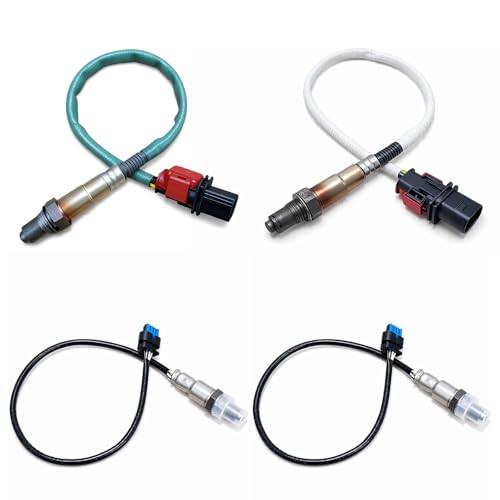
Oxygen Sensor Compatible with Ford F-150 2018–2020 2.7L V6 Turbo EcoBoost, Upstream & Downstream O2 Sensors Set, 4PCS Complete Replacement Kit, Direct Fit
Fitment: Compatible with Ford F-150 2018–2020 2.7L V6 Turbo EcoBoost ONLY. Not compatible with 3.3L / 3.5L /…
As an affiliate, we earn on qualifying purchases.
As an affiliate, we earn on qualifying purchases.
Frequently Asked Questions
How Long Do Oxygen Sensors Typically Last?
Oxygen sensors typically last around 60,000 to 100,000 miles, but sensor lifespan varies based on driving habits and vehicle condition. You should consider replacement intervals as part of regular maintenance to guarantee peak performance. If your check engine light comes on or fuel efficiency drops, it might be time to replace the sensor sooner. Regular inspections help prevent issues caused by worn sensors and keep your vehicle running smoothly.
Can I Drive With a Faulty Oxygen Sensor?
Driving with a faulty oxygen sensor is like steering through foggy roads—you might get by, but safety suffers. You can technically drive, but sensor diagnostics will be compromised, increasing emissions and decreasing fuel efficiency. Ignoring the issue risks damaging your engine and compromising driving safety. It’s best to address the sensor problem promptly, ensuring your vehicle runs smoothly and safely, much like clearing the fog for a safer journey ahead.
Are Oxygen Sensors the Same for All Vehicle Models?
No, oxygen sensors aren’t the same for all vehicle models. You need to ensure sensor compatibility because model variations often require specific sensors for proper function. When replacing, make sure to check your vehicle’s make, year, and engine type to find the right fit. Using the correct sensor guarantees optimal performance, fuel efficiency, and emissions control, so don’t settle for a generic part; always verify compatibility before installation.
What Are Signs of a Failing Oxygen Sensor?
You might notice your engine runs rough or stalls, signaling a failing oxygen sensor. When sensors lose calibration, your vehicle struggles to meet emission standards, causing poor fuel economy and increased emissions. You may also see a check engine light or experience sluggish acceleration. These signs indicate your oxygen sensor is no longer functioning properly, and replacing it guarantees peak performance and compliance with emission regulations.
How Much Does It Cost to Replace an Oxygen Sensor?
Replacing an oxygen sensor typically costs between $200 and $300, including parts and labor. The replacement cost varies depending on your vehicle’s make and model. Keep in mind, a new sensor may require sensor calibration to guarantee proper functioning. You might also want to take into account the cost of diagnostics if your check engine light is on, as this helps identify whether a faulty sensor is the cause.

ANCEL AD310 Classic Enhanced Universal OBD II Scanner Car Engine Fault Code Reader CAN Diagnostic Scan Tool, Read and Clear Error Codes for 1996 or Newer OBD2 Protocol Vehicle (Black)
CEL Doctor: The ANCEL AD310 is one of the best-selling OBD II scanners on the market and is…
As an affiliate, we earn on qualifying purchases.
As an affiliate, we earn on qualifying purchases.
Conclusion
If you ignore your oxygen sensors, your car could turn into a smoke-belching monster, wasting fuel and choking the environment. Replacing them at the right time keeps your engine running like a dream and saves you from catastrophic breakdowns. Don’t wait until your ride becomes a gas-guzzling disaster—stay ahead of the game, keep those sensors fresh, and enjoy smooth, efficient driving like a pro. Your car will thank you with every mile!
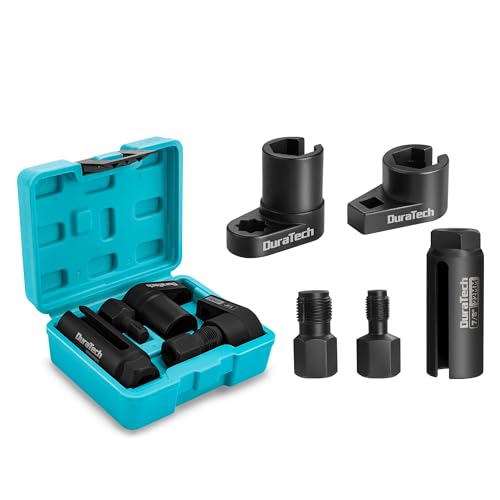
DURATECH 5PCS O2 Oxygen Sensor Socket Thread Chaser Set, 3/8" 1/2" Drive x 7/8" 22mm Oxygen Sensor Remover O2 Sensor Removal Tool Kit
O2 Sensor Socket Set: The package includes 1PC 1/2" Dr. x 7/8" (22mm) offset oxygen sensor socket, 1PC…
As an affiliate, we earn on qualifying purchases.
As an affiliate, we earn on qualifying purchases.

Sangyue 4X Oxygen O2 Sensor for 2008-2013 Chevrolet Silverado 1500 Tahoe Suburban 1500 Upstream + Downstream
One Year Unlimited Mileage Quality Guarantee
As an affiliate, we earn on qualifying purchases.
As an affiliate, we earn on qualifying purchases.