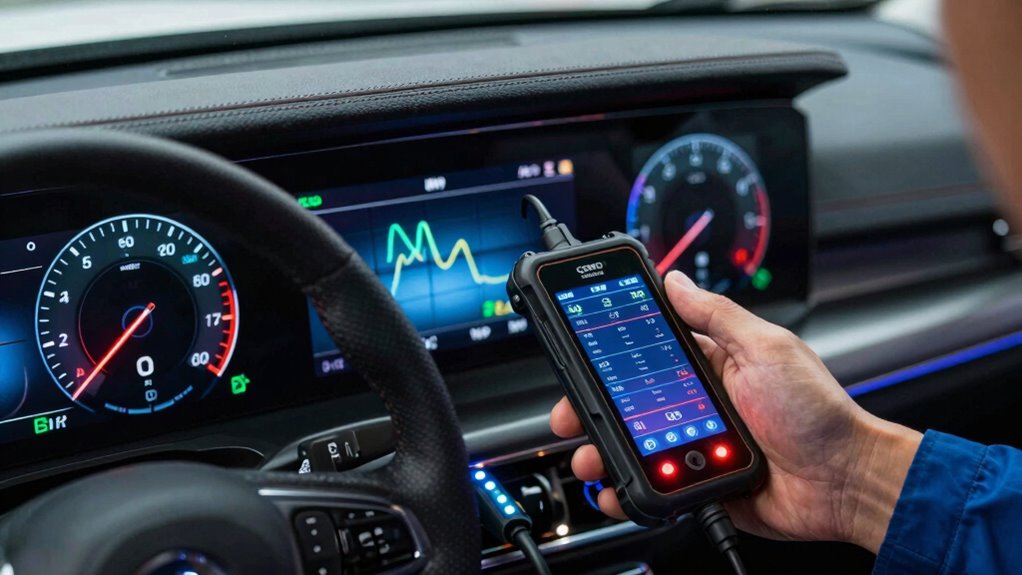

Live data from an OBD‑II scanner shows real-time sensor information that trouble codes often miss, helping you spot issues like intermittent faults, sensor calibration drift, or performance trends early. It reveals how components are functioning beneath the surface, even when no warning lights appear. Watching these live values allows you to catch problems before they worsen, and if you keep exploring, you’ll discover how to interpret this data to keep your vehicle running smoothly.

Get business pricing on garage and car supplies
- Business-only prices and quantity discounts
- Tax-exempt purchasing
- Multiple users, one account, clear invoices
Key Takeaways
- Live data reveals real-time sensor behavior and fluctuations that trouble codes may miss, highlighting intermittent or evolving issues.
- It helps identify sensor calibration drift and subtle performance changes before they trigger fault codes.
- Monitoring trends over time allows detection of gradual declines in engine efficiency or sensor accuracy.
- Live data visualizations enable proactive diagnosis by showing patterns and anomalies not captured by static codes.
- It provides immediate insights into engine performance, assisting early troubleshooting without relying solely on trouble code alerts.
As an affiliate, we earn on qualifying purchases.
What Is Live Data in OBD‑II and Why Should You Care?
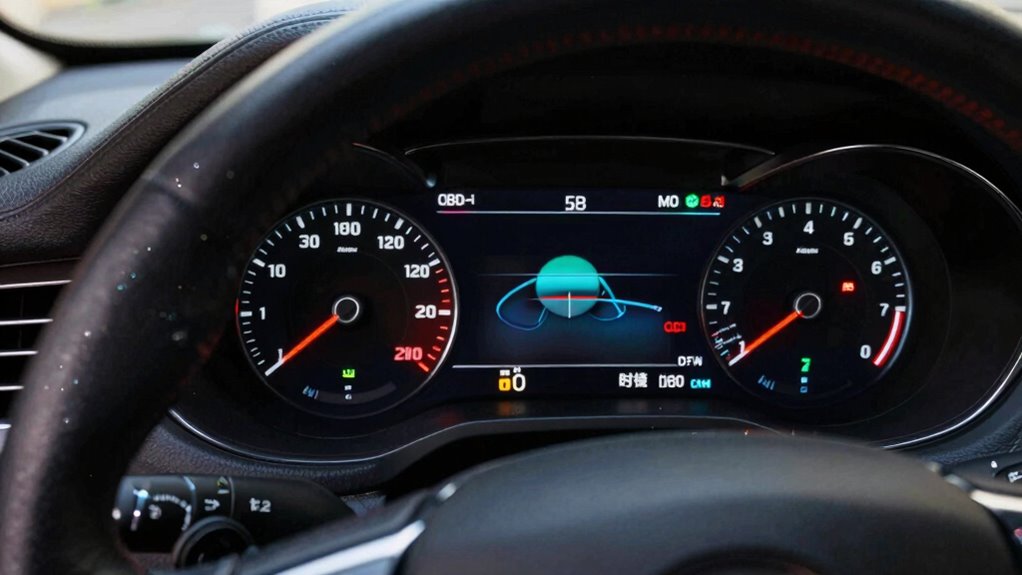
Have you ever wondered what your car’s engine is really doing behind the scenes? That’s where live data in OBD‑II comes in. It provides real-time information directly from sensors, showing you how different engine components perform. Sensor calibration is essential here because it guarantees the data logged is accurate, reflecting the true state of your vehicle’s systems. This real-time data helps you understand issues before they turn into major problems. Data logging allows you to record this information over time, making it easier to spot patterns or recurring issues. Understanding sensor calibration is crucial for interpreting live data accurately. By paying attention to live data, you gain a deeper insight into your car’s health, empowering you to make informed decisions and maintain peak performance.
How to Access and Read Live Data in Your OBD‑II Scanner
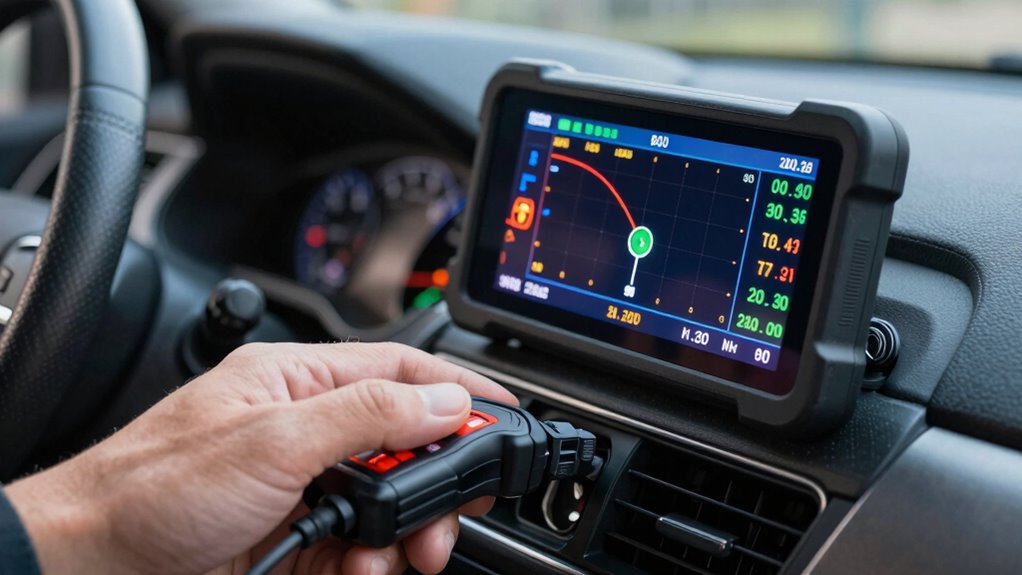
To access and read live data with your OBD‑II scanner, start by connecting the device to your vehicle’s diagnostic port, usually located under the dashboard. Turn on the ignition without starting the engine. Launch your scanner’s app or interface and select the option to view live data. This allows you to monitor sensor readings in real-time, providing insight into sensor calibration and performance. You can also initiate data logging, which records live data over time for detailed analysis. Pay attention to parameters like engine temperature, RPM, and airflow. Reading this data helps you identify issues that may not trigger a fault code but still affect your vehicle’s performance. Properly accessing and interpreting live data empowers you to diagnose problems more accurately. Additionally, understanding real-time data can reveal subtle issues that static codes might miss, enhancing your diagnostic capabilities.
What Are the Main Types of Live Data You Can Monitor?
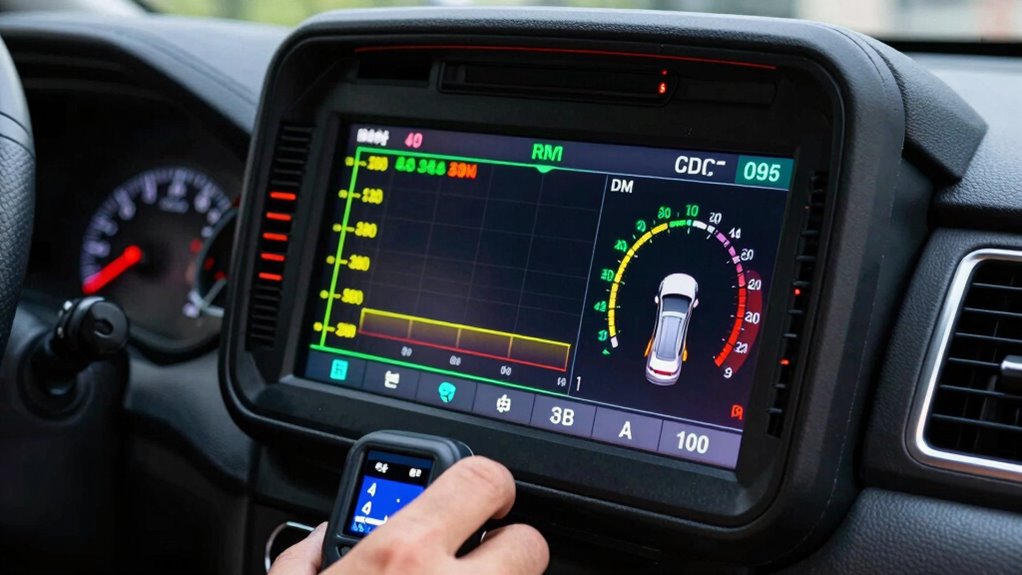
When monitoring live data, you’ll mainly look at engine RPM readings, fuel system status, and oxygen sensor data. These parameters give you real-time insights into your vehicle’s performance and health. Understanding these types of data helps you diagnose issues quickly and keep your car running smoothly. Being familiar with system monitoring techniques allows for more proactive maintenance and troubleshooting. Additionally, recognizing patterns in live data trends can help prevent more serious problems before they develop. Developing a good understanding of diagnostic procedures enables you to interpret data more effectively and take appropriate action when needed.
Engine RPM Readings
Engine RPM readings are a vital part of live data that you can monitor with an OBD-II scanner, providing immediate insight into your vehicle’s engine performance. By checking engine rpm, you can see how fast your engine’s crankshaft is spinning in real-time, helping you identify issues like rough idling or misfires. Live data for engine rpm is especially useful during diagnostics or when tuning your vehicle. Typically, the rpm value fluctuates based on your driving conditions, such as accelerating, decelerating, or idling. Monitoring engine rpm allows you to verify that the engine is operating within its ideal range and can help detect irregularities early. This real-time data is a valuable tool for understanding your vehicle’s health beyond what trouble codes alone can reveal. Engine performance data like rpm can also assist in diagnosing underlying mechanical issues that may not trigger a warning light, especially when combined with other live data metrics.
Fuel System Status
Monitoring the fuel system status with an OBD-II scanner provides critical insights into how your vehicle manages fuel delivery and combustion. You’ll see whether the fuel mixture is rich, lean, or balanced, which directly impacts performance and emissions. The status can indicate if the system is operating normally or if there’s a problem affecting emission control. For example, a “Closed Loop” status means your engine is fine-tuning the fuel mixture based on sensor data. An “Open Loop” suggests the system isn’t using feedback, possibly due to a malfunction. Understanding these readings helps you determine if your vehicle is running efficiently or if repairs are needed to optimize fuel use and reduce harmful emissions. It’s an essential live data point for diagnosing fuel and emission issues. Monitoring fuel efficiency can help you keep your vehicle running smoothly and save money on fuel costs. Recognizing the difference between these statuses is crucial for understanding your vehicle’s fuel system operation.
Oxygen Sensor Data
Oxygen sensor data provides crucial insights into your vehicle’s combustion efficiency and emission control. By monitoring the oxygen sensor, you can see real-time data that indicates whether your engine is running too rich or too lean. The oxygen sensor’s readings, expressed as voltage or air-fuel ratio, help determine if your engine management system is functioning properly. Ensuring data accuracy is essential because inaccurate readings can lead to misdiagnoses or improper adjustments. Live oxygen sensor data allows you to identify issues like faulty sensors or exhaust leaks before they trigger more serious problems or codes. Keeping an eye on this data helps you maintain optimal engine performance, improve fuel economy, and reduce emissions. It’s a vital piece of the puzzle for effective vehicle diagnostics. Understanding essential oils for sensor-related issues can also help in maintaining cleaner components and better overall performance.
How Live Data Helps Detect Vehicle Issues That Trouble Codes Miss
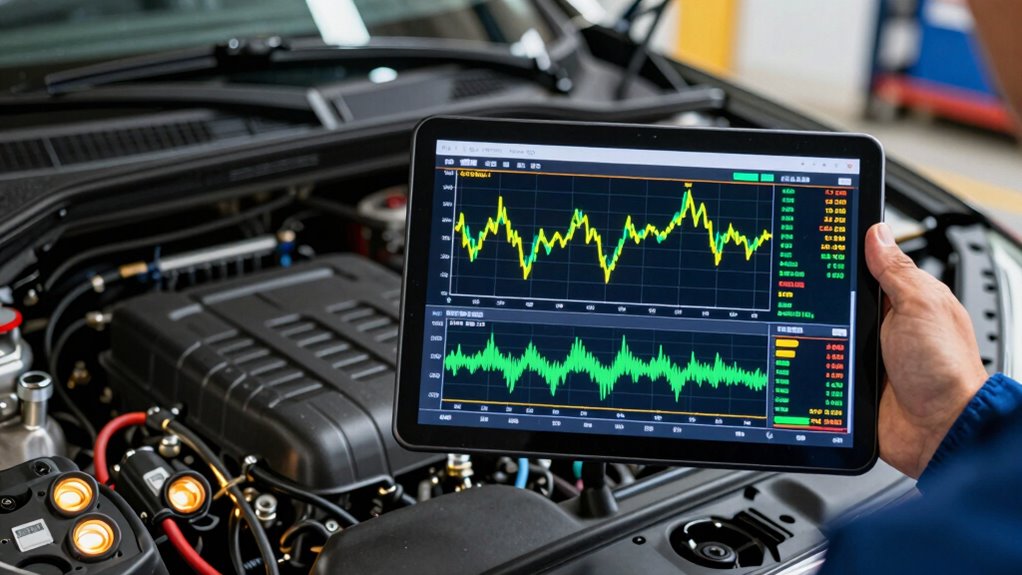
Live data gives you real-time sensor insights that can reveal issues trouble codes might overlook. It helps you spot intermittent faults that aren’t always active during diagnostics. By monitoring vehicle trends, you can catch hidden problems before they become major repairs. Additionally, understanding diagnostic tools can enhance your ability to interpret live data effectively. Recognizing sensor behavior patterns can further improve diagnostic accuracy and vehicle troubleshooting. Using live data analysis techniques allows technicians to identify subtle irregularities that static codes may miss. Incorporating spirituality insights can also foster a more holistic approach to vehicle care and diagnostics. Developing a thorough understanding of vehicle dynamics can provide deeper context during troubleshooting and improve overall diagnostic confidence.
Real-Time Sensor Insights
While trouble codes provide valuable clues, they don’t always catch every issue your vehicle faces. Live data offers real-time sensor insights that can reveal problems before codes are triggered. By monitoring sensor calibration and readings as you drive, you can identify irregularities like fluctuating coolant temperature or inconsistent oxygen sensor signals. Data logging allows you to track these changes over time, revealing patterns that might indicate an impending failure. This proactive approach helps you catch issues early, long before they set off a trouble code. With real-time sensor insights, you gain a deeper understanding of your vehicle’s health, enabling you to address problems promptly and avoid costly repairs down the line.
Detecting Intermittent Faults
Trouble codes often fail to catch intermittent faults that occur sporadically or under specific conditions. Live data analysis allows you to observe real-time sensor readings, giving you a better chance to spot these elusive issues. Using diagnostic techniques like monitoring sensor calibration drift, you can identify subtle fluctuations that trigger intermittent problems. For example, a sensor may momentarily send incorrect signals, causing the vehicle to run poorly without setting a trouble code. By continuously watching live data, you can pinpoint when and under what conditions the fault occurs, even if it’s not stored as a code. Additionally, understanding sensor calibration drift can help you recognize when sensors are losing accuracy over time, further aiding in diagnosing intermittent faults. This proactive approach helps you diagnose problems more accurately, ensuring you don’t miss intermittent faults that can cause drivability issues or damage over time.
Monitoring Vehicle Trends
Monitoring vehicle trends through live data provides a powerful way to identify issues that trouble codes often miss. By tracking real-time sensor values, you can spot anomalies early, even if no specific trouble code appears. This is especially useful for monitoring sensor calibration and understanding vehicle telematics data. Consistent trends, such as fluctuating fuel trims or inconsistent oxygen sensor readings, can signal underlying problems before they trigger codes. Use charts or logs to visualize these patterns over time. For example, a gradual decline in fuel efficiency might indicate an evolving issue. Keeping an eye on trend shifts allows you to anticipate repairs, improve vehicle performance, and prevent breakdowns. Here’s a quick overview:
| Trend Indicator | What It Means | Action Needed |
|---|---|---|
| Rising fuel trims | Possible fuel system issue | Check sensors, calibrate if needed |
| Fluctuating temps | Cooling system or sensor problems | Inspect cooling components |
| Inconsistent sensor data | Sensor calibration drift or failure | Test sensors, recalibrate |
Why Monitoring Live Data Can Prevent Costly Repairs
Keeping an eye on live data from your vehicle’s OBD-II system lets you catch potential problems early before they turn into expensive repairs. By monitoring real-time information, you can identify issues that may not trigger a check engine light but could impact your vehicle’s performance or emissions. This proactive approach helps you stay within emission standards and simplifies diagnosis, reducing diagnostic complexity. Additionally, being aware of subtle changes in engine behavior can improve your understanding of your vehicle’s astrological influences, allowing for better maintenance planning. Monitoring live data also provides insights into the timing and synchronization of engine components, which can be crucial for optimizing performance. For example, tracking sensor data can reveal irregularities in fuel trim, helping prevent engine misfires or inefficient combustion. Regularly reviewing live data can also alert you to sensor malfunctions that might not yet have set off warning lights. Moreover, understanding sensor calibration can enhance your ability to maintain engine health and efficiency.
Troubleshooting Live Data: Common Problems and How to Fix Them
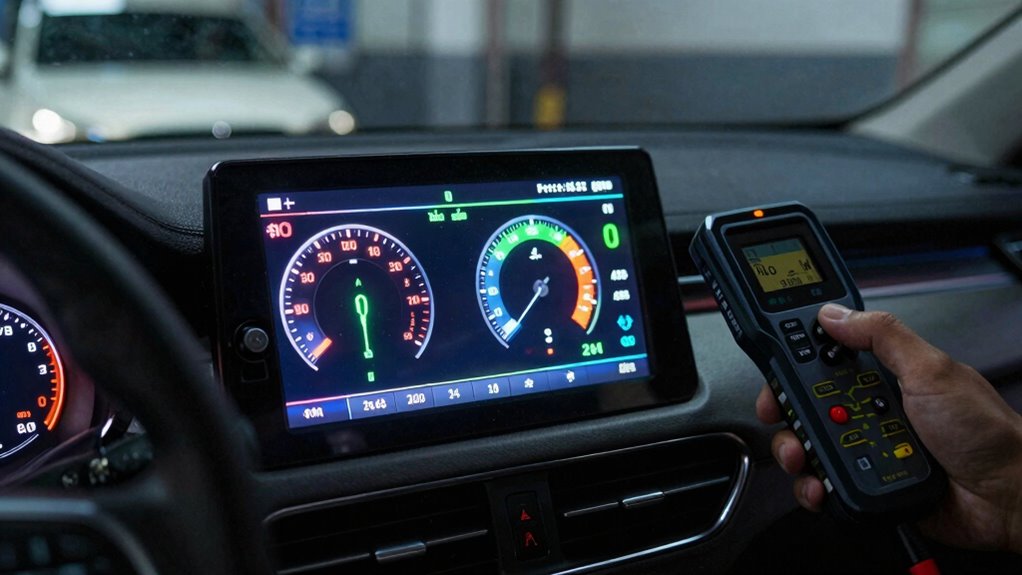
When analyzing live data from your vehicle’s OBD-II system, you might encounter common issues that can hinder accurate diagnosis or lead to incorrect conclusions. One problem is sensor calibration errors, which can cause misleading readings and obscure the true condition of components. To fix this, verify sensors are properly calibrated according to manufacturer specifications, or consider recalibrating if necessary. Another frequent issue involves battery health; a weak or failing battery can produce fluctuating or inaccurate data, affecting live readings. Check your battery’s voltage and replace it if it’s below recommended levels. Additionally, poor connections or damaged wiring can create inconsistent signals. Regularly inspect your vehicle’s wiring and connections to maintain accurate data and improve diagnostic reliability. Ensuring proper system calibration is essential for precise live data analysis and reliable vehicle diagnostics. Furthermore, keeping the vehicle’s electrical system in good condition can prevent many common data inaccuracies. Maintaining clean and secure connections helps ensure consistent signal transmission and accurate readings.
Frequently Asked Questions
Can Live Data Readings Indicate Future Vehicle Problems Before Codes Appear?
Yes, live data readings can indicate future vehicle problems through predictive diagnostics, allowing you to spot issues before codes appear. Monitoring sensor reliability helps you identify subtle changes in engine performance or other systems, giving you an early warning. This proactive approach can prevent costly repairs by catching potential problems early, making live data an essential tool for maintaining your vehicle’s health and avoiding unexpected breakdowns.
How Accurate Is Live Data Compared to Diagnostic Trouble Codes?
Like a modern-day oracle, live data often provides more accurate insights than trouble codes. It shows real-time sensor calibration and reveals issues before codes trigger, but beware of data latency that can cause delays. While live data is precise, codes are reliable for pinpointing specific problems. Combining both gives you a clearer picture, ensuring you catch issues early and avoid surprises on the road.
What Are the Limitations of Using Live Data for Diagnostics?
Live data can be invaluable, but its limitations include sensor accuracy and data interpretation challenges. You might get misleading readings if sensors are faulty or if you don’t understand the data context. Relying solely on live data can cause you to overlook issues that diagnostic trouble codes reveal. Always verify sensor accuracy and cross-check data to guarantee accurate diagnostics, rather than depending entirely on live data alone.
How Often Should I Monitor Live Data for Optimal Maintenance?
You should monitor live data regularly, ideally during each maintenance cycle, to catch issues early. Investigate the theory that consistent frequency tracking improves vehicle health; it does. Set data logging schedules based on your driving habits and vehicle age. For high-mileage or complex systems, more frequent checks—every few weeks—help identify problems before they escalate. Consistent monitoring keeps your vehicle running smoothly and prevents unexpected breakdowns.
Are There Specific Vehicle Models That Provide Better Live Data Insights?
Certain vehicle models, especially newer ones, offer better live data insights due to advanced vehicle compatibility and higher data detail. Brands like BMW, Mercedes-Benz, and Toyota typically provide more thorough live data, making diagnostics more precise. You’ll benefit from detailed information on engine performance, sensors, and systems, which helps you identify issues early. Always check your vehicle’s compatibility with your OBD-II scanner to make certain you get the most accurate, detailed insights.
Conclusion
Understanding live data is like having a real-time map of your vehicle’s health, revealing issues that codes alone can’t spot. While trouble codes give you a snapshot, live data offers the full picture—helping you catch problems early and save money. Think of it as the difference between reading a summary and experiencing the story firsthand. Embrace live data, and you’ll troubleshoot smarter, preventing costly surprises on the road.
Fall Picks
fall essentials
As an affiliate, we earn on qualifying purchases.