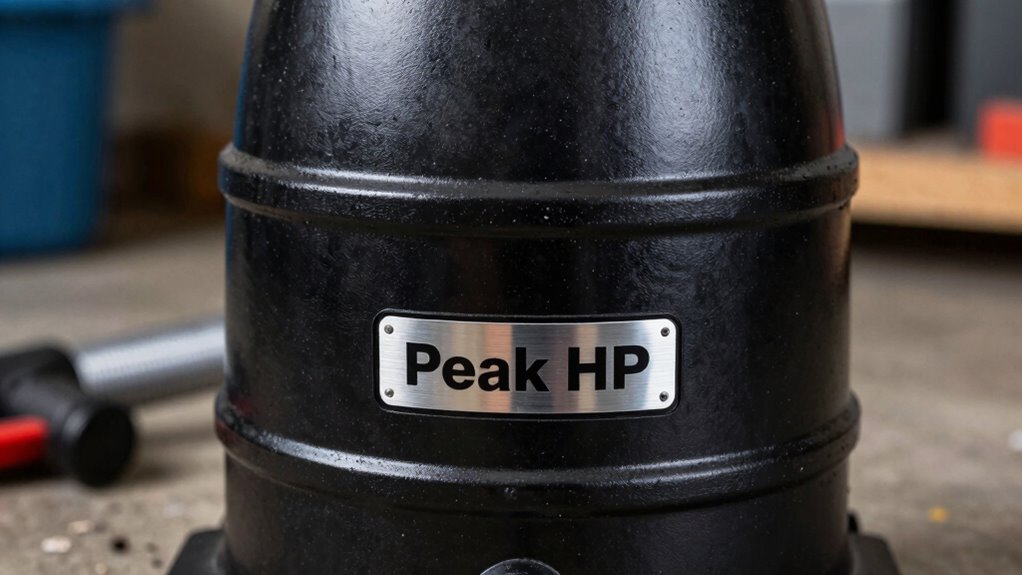
Peak horsepower on a shop vac sounds impressive, but it’s often misleading. It measures only the maximum power the motor can produce in short bursts, not the consistent suction power you’ll experience during use. Many manufacturers focus on this number to make their vacuums seem more powerful, even though data like CFM and water lift tell the real story. To get a better idea of performance, you need to understand what truly matters—so there’s more to uncover.
Key Takeaways
- Peak HP measures short bursts of motor power, not consistent or real-world vacuum performance.
- Manufacturers often exaggerate Peak HP to mislead consumers about a vacuum’s true strength.
- Actual suction efficiency depends more on airflow (CFM) and water lift than peak horsepower ratings.
- Relying solely on Peak HP can cause overestimating a vacuum’s cleaning ability.
- Focus on real performance metrics like CFM and static pressure for accurate vacuum power assessment.

Shop-Vac 5801611 Wet Dry Vac with SVX2 Motor Technology, 16 Gallon, 2-1/2 Inch x 8 Foot Lock-On Hose, 150 CFM, (1-Pack) , Black
Powerful Performance: The Shop-Vac 16 Gallon 6.5 Peak HP Wet / Dry Vacuum features the SVX2 Motor Technology,…
As an affiliate, we earn on qualifying purchases.
As an affiliate, we earn on qualifying purchases.
What Does “Peak Horsepower” Mean on a Shop Vac?
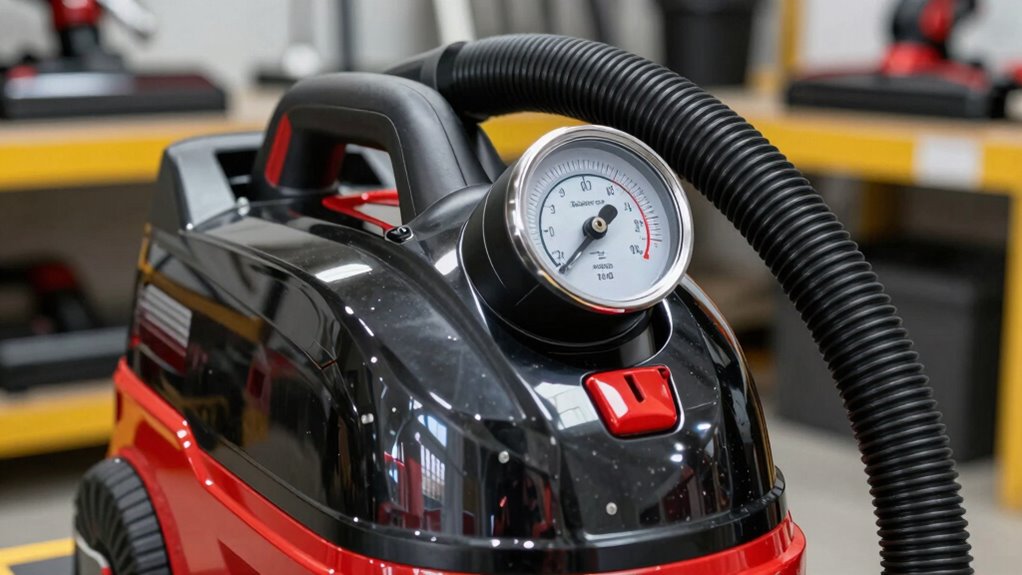
What does “peak horsepower” really mean on a Shop Vac? It’s often misunderstood as the vacuum’s overall power, but it actually measures the maximum power the motor can produce in short bursts. This figure doesn’t reflect motor efficiency or consistent performance during use. Because peak HP focuses on a momentary spike, it can be misleading about real cleaning strength. Additionally, higher peak horsepower doesn’t necessarily mean quieter operation; noise levels depend more on motor design and insulation. Relying solely on peak HP can lead you to overestimate a vacuum’s capabilities. Instead, consider other factors like motor efficiency and noise levels to get a clearer picture of how a Shop Vac will perform in everyday tasks. Recognizing how power ratings are calculated ensures you’re comparing models based on meaningful performance data. It’s important to understand that performance metrics like airflow and suction hold more practical significance for effective cleaning.

Shark Upright Vacuum, Navigator Lift-Away Deluxe with Large Dust Cup Capacity, HEPA Filter, Swivel Steering, Upholstery Tool & Crevice Tool, Blue, NV360
POWERFUL SUCTION: Deep-clean carpets and tackle bare floors with multi-surface powerful suction.
As an affiliate, we earn on qualifying purchases.
As an affiliate, we earn on qualifying purchases.
Why Do Manufacturers Focus on Peak HP, and What Are They Not Telling You?
Why Do Manufacturers Focus on Peak HP, and What Are They Not Telling You? Have you ever wondered why manufacturers emphasize peak horsepower on Shop Vacs? They focus on it because it makes their product seem more powerful, even if it doesn’t reflect real-world performance. Peak HP suggests a higher vacuum filtration capacity and better suction, but it often ignores noise levels and actual efficiency. Additionally, understanding how high refresh rates influence performance metrics can help you better evaluate product capabilities. Recognizing the difference between peak horsepower and continuous performance can prevent misconceptions about a vacuum’s true power. Moreover, many consumers overlook performance durability, which is crucial for long-term reliability. Being aware of these performance factors can help you make a more informed purchasing decision. Understanding how specification claims are often optimized to highlight strengths while downplaying weaknesses can further improve your ability to choose a truly effective vacuum.
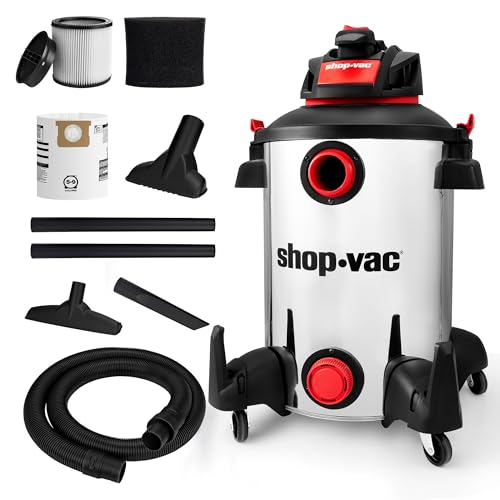
Shop-Vac 5761311 12-Gallon Wet/Dry Shop Vacuum, 6 Peak HP, 1.5 Inch Diameter x 7 Foot Hose, 20 Foot Cord, Ideal for Home, Garage, and Workshop Cleaning
3-in-1 Multi-Function: Peak 6 HP for strong wet/dry suction and 100 CFM blower. Cleans dust, debris, wood chips,…
As an affiliate, we earn on qualifying purchases.
As an affiliate, we earn on qualifying purchases.
How Is Peak HP Different From CFM and Suction Power?
Peak HP often gets most of the attention, but it doesn’t tell you everything about a vacuum’s performance. CFM measures the airflow, which shows how much air the vacuum moves, while suction power indicates how well it pulls in debris. Understanding these differences helps you choose a vac that actually works for your needs. Additionally, focusing on content quality and authority can help consumers make more informed decisions beyond just peak HP ratings. Recognizing performance metrics like CFM and suction power provides a clearer picture of a vacuum’s effectiveness. This comprehensive understanding can also prevent buyers from being misled by marketing claims that emphasize peak HP over more meaningful measurements. Paying attention to these performance indicators ensures you select a vacuum suited to your specific cleaning tasks. Being aware of industry standards can further clarify how these measurements relate to real-world use.
Peak HP Versus CFM
Understanding the difference between Peak HP and CFM is essential when evaluating shop vacs, as they measure different aspects of performance. Peak HP indicates the maximum power the motor can produce, but it doesn’t directly translate to dust collection efficiency or suction power. CFM, or cubic feet per minute, measures the volume of air moved, which is more relevant for dust collection and overall suction strength. A higher CFM typically means better debris pickup and less clogging. However, Peak HP doesn’t account for noise levels or how well the vac maintains consistent suction under load. Relying solely on Peak HP can mislead you into expecting better performance than what you’ll actually experience. For effective dust collection and manageable noise, prioritize CFM and real-world suction tests over Peak HP ratings.
Measuring Suction Power
Measuring suction power goes beyond just looking at Peak HP or CFM figures. To get an accurate idea of a shop vac’s performance, consider these factors:
- Suction Power: Indicates how well the vacuum pulls in debris, directly affecting tool durability and cleaning efficiency.
- CFM (Cubic Feet per Minute): Measures airflow, which influences how quickly debris is moved, not just how strong the suction feels.
- Noise Levels: Higher power often means louder operation, impacting comfort and noise pollution.
- Peak HP: Can be misleading if it’s not backed by real airflow and suction tests, so don’t rely solely on this figure.
- Proper Testing Methods: Reliable performance assessments involve actual performance testing, which accounts for all factors influencing a vacuum’s effectiveness.
Balancing these metrics helps you choose a vac that’s powerful, durable, and quieter during use.

Decibel Meter Sound Level Reader 30-130dB(A), Hand-held Sound Noise Meter with Backlight Alarm, Digital Noise Meter Decibel Monitoring Tester Calibrated Audio Noise Volume Measuring Instrument
Sound db meter calibrated at factory, noise measurement range from 30 – 130dBA, accuracy: ±1.5dB, resolution: 0.1dB. Disable…
As an affiliate, we earn on qualifying purchases.
As an affiliate, we earn on qualifying purchases.
How Can You Measure True Shop Vac Power?

To accurately determine the true power of your shop vac, you need to look beyond basic specifications and perform specific measurements. Focus on factors like dust collection performance and motor efficiency, which reveal real capabilities. Use a manometer to measure airflow and static pressure, giving you insight into suction effectiveness. Additionally, test the vacuum’s ability to handle dust collection tasks over time, observing how motor efficiency impacts sustained power. Recognizing how motor efficiency influences long-term performance can help prevent overestimating a vacuum’s capabilities. Understanding how suction performance varies under different conditions allows for better selection and use of your equipment. Incorporating system resistance measurements can also help identify potential issues that reduce overall efficiency and safety.
What Are the Common Myths About Shop Vac Power Ratings?
Many people assume that a higher horsepower or wattage rating directly means better performance, but this isn’t always the case. Common myths about shop vac power include:
- Believing peak HP indicates continuous suction power, which isn’t true. Understanding industry trends can help you better interpret these ratings.
- Thinking wattage relates to dust collection efficiency, when airflow matters more.
- Assuming louder vacuums have more power, ignoring noise levels and design.
- Believing higher power units always reduce dust buildup, but proper filtration is key.
- Overlooking proper airflow, which is crucial for effective dust and debris removal. Proper airflow ensures consistent suction and cleaning performance.
Additionally, understanding the performance factors beyond just power ratings can help you choose a more efficient shop vac for your needs. Focusing solely on power ratings can mislead you about actual performance. Instead, consider airflow, filtration, and noise levels. A quieter shop vac with good airflow often handles dust collection better than a loud, high-HP model. Don’t fall for myths—look beyond the numbers for real performance. Recognizing airflow efficiency helps ensure you select a shop vac that meets your specific cleaning demands effectively. Moreover, inspecting appliance testing and compatibility can prevent safety issues when choosing your equipment.
Which Specs Matter Most When Choosing a Shop Vac?

When choosing a shop vac, focusing on the right specs guarantees you get a model that meets your cleaning needs. Prioritize dust collection capabilities, ensuring the vac has a strong filter system to trap fine particles and keep the air clean. Look for suction power and airflow ratings that match your tasks, but don’t rely solely on peak horsepower figures. Noise levels are also important—select a model with lower decibel ratings to reduce disturbance during use. A quieter shop vac improves your work environment and allows longer operation without fatigue. Ultimately, the most critical specs are those that align with your specific cleaning demands, balancing dust collection efficiency and noise levels to find a model that performs effectively without unnecessary noise.
What Factors Affect Real-World Shop Vac Performance?

Several factors beyond specs influence how well a shop vac performs in real-world situations. First, dust collection efficiency depends on filter quality and design, affecting how much debris you can handle before clogs. Second, noise levels can impact your comfort—some models are louder, making long jobs more tiring. Third, hose diameter and length influence airflow, so a wider, shorter hose improves suction. Fourth, the design of the intake port and wand can boost dust pickup and ease maneuverability. Keep in mind that even a high peak HP rating won’t matter if noise levels are unbearable or dust collection is poor. To get the best performance, focus on these practical factors, not just the specs on paper.
Tips for Finding a Reliable, Powerful Shop Vac Without Being Fooled by Peak HP
When shopping for a powerful shop vac, it’s essential to look beyond peak horsepower, which can be misleading. Focus on true power metrics like CFM and water lift to gauge actual performance. Knowing how to spot deception helps you find a reliable vac that meets your needs.
Understand True Power Metrics
To accurately gauge a shop vac’s true power, it’s essential to look beyond peak horsepower ratings, which often exaggerate its capabilities. Instead, focus on metrics like motor efficiency and noise levels, which provide a clearer picture of performance. Consider these factors:
- Airflow (CFM) – Higher CFM indicates better suction power for most cleaning tasks.
- Water Lift (inches) – Reflects the vacuum’s ability to lift debris from surfaces.
- Motor efficiency – A more efficient motor delivers consistent power without excessive energy use or heat.
- Noise levels (dB) – Lower noise levels suggest a quieter, more comfortable operation.
Recognize Peak HP Deceptions
Peak horsepower ratings often appear as a quick way to compare shop vacs, but they can be misleading. Many manufacturers use inflated power ratings to attract buyers, relying on marketing tactics that emphasize peak HP instead of real performance. These marketing tricks can make a less effective vacuum seem more powerful than it truly is. Instead of focusing solely on peak HP, look for the manufacturer’s stated operational power ratings, such as CFM and water lift, which better reflect actual cleaning ability. Be cautious of vague or exaggerated figures that emphasize peak power but don’t translate into real-world performance. Recognizing these deceptions helps you avoid falling for marketing tactics and ensures you select a shop vac with consistent, reliable power suited for your needs.
Prioritize CFM and Water Lift
Instead of relying solely on peak horsepower, focus on key performance metrics like CFM (cubic feet per minute) and water lift, which directly impact a shop vac’s cleaning power. Higher CFM means better airflow for picking up larger debris, while strong water lift handles wet messes effectively. To guarantee reliability, consider these factors:
- Motor durability: A sturdy motor withstands frequent use without burning out.
- CFM rating: Look for a high CFM for efficient cleaning.
- Water lift: Ensure it’s sufficient to handle wet spills.
- Noise levels: Quiet models improve your comfort during long cleaning sessions.
Prioritizing these metrics helps you avoid models with weak motors or excessive noise, giving you a dependable, powerful shop vac that performs consistently.
Frequently Asked Questions
Can Peak Horsepower Indicate Overall Vacuum Efficiency?
Peak horsepower doesn’t accurately indicate overall vacuum efficiency. While higher peak HP might suggest more power, it doesn’t reflect how well your shop vac actually cleans or maintains suction. Vacuum efficiency depends on factors like airflow, motor design, and seal integrity. So, don’t rely solely on peak horsepower; instead, look at airflow ratings and real-world performance to gauge your vacuum’s true efficiency.
Are There Industry Standards for Measuring Shop Vac Power?
You’ll find that there are no strict industry regulations for measuring shop vac power, which often leads to inconsistent measurements across brands. Manufacturers may tout peak horsepower or airflow differently, making comparison tricky. To get a clear picture, look for standardized testing methods or consistent measurement standards from reputable sources. This helps make certain you’re comparing vacuums based on reliable, industry-regulated data rather than marketing claims.
How Does Motor Size Relate to Actual Suction Performance?
A bigger motor doesn’t always mean better suction. While a larger motor can generate more power, motor efficiency and design play essential roles in actual performance. You might see a high motor size, but if the vacuum lacks ideal airflow and suction consistency, it won’t clean effectively. Focus on how well the motor converts power into steady suction, rather than just motor size, to get the best results.
What Role Do Filters and Attachments Play in Power Ratings?
Filters and attachments substantially influence a shop vac’s power ratings. The filter influence can reduce airflow if it’s clogged or not suited for the task, lowering suction. Attachments impact the overall performance by affecting airflow and ease of use; for example, a narrow nozzle concentrates suction but may restrict airflow if too tight. Always choose compatible filters and attachments to optimize your vacuum’s power and efficiency.
Is It Better to Focus on Airflow or Horsepower When Choosing a Shop Vac?
You should focus more on airflow than horsepower when choosing a shop vac because airflow directly impacts suction power and cleaning efficiency. Horsepower limitations can be misleading, as higher HP doesn’t always mean better performance. A vac with strong airflow ensures you pick up debris effectively, especially with the right filters and attachments. Prioritize airflow specifications to get the most out of your vacuum and avoid falling for false horsepower claims.
Conclusion
Don’t let flashy peak HP numbers distract you like a shiny new tool in a cluttered garage. Instead, focus on real performance factors like CFM and suction power—the steady, reliable workhorses. Just as a sturdy ladder offers safety over a flimsy one, choosing a shop vac with honest specs guarantees you get consistent results. Remember, true power isn’t in the peak—it’s in the consistent, real-world performance that gets the job done.