
A timing belt is a vital part of your engine that synchronizes the movement of the valves and pistons, ensuring everything runs smoothly. Over time, it can wear out, crack, or become frayed due to heat and oil exposure. To keep your engine in top condition, it’s important to replace it every 60,000 to 100,000 miles, depending on your car’s guidelines. Knowing when and how to replace it can prevent serious engine damage—continue to see how to keep your engine running perfectly.
Key Takeaways
- A timing belt synchronizes engine valves and pistons, ensuring proper engine timing and performance.
- Made from durable rubber reinforced with fibers like fiberglass or Kevlar for longevity.
- Signs of wear include cracks, fraying, squealing, or difficulty starting; regular inspections are essential.
- Replacement is recommended every 60,000 to 100,000 miles, depending on driving conditions and belt material quality.
- Timely replacement prevents engine damage, misfires, and costly repairs caused by belt failure.
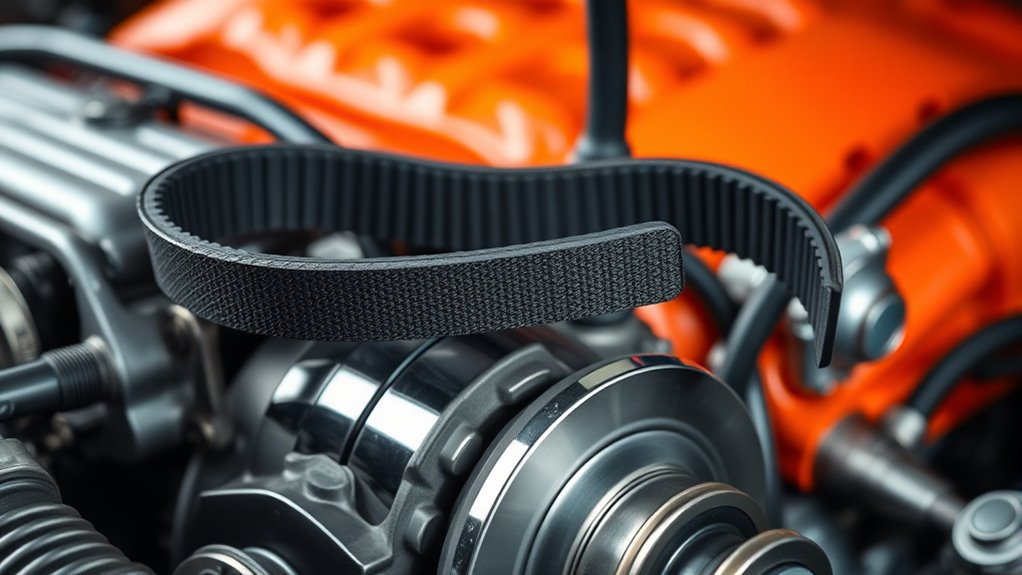
Replacing your timing belt is a critical maintenance task that keeps your engine running smoothly. This indispensable component synchronizes the movement of your engine’s valves and pistons, guaranteeing ideal engine performance. When the timing belt functions properly, your vehicle operates efficiently, with smooth acceleration and consistent power delivery. However, if it wears out or slips, it can lead to serious engine problems, including misfires, reduced fuel efficiency, or even catastrophic engine damage. Knowing what a timing belt is and when to replace it can save you time, money, and unexpected breakdowns.
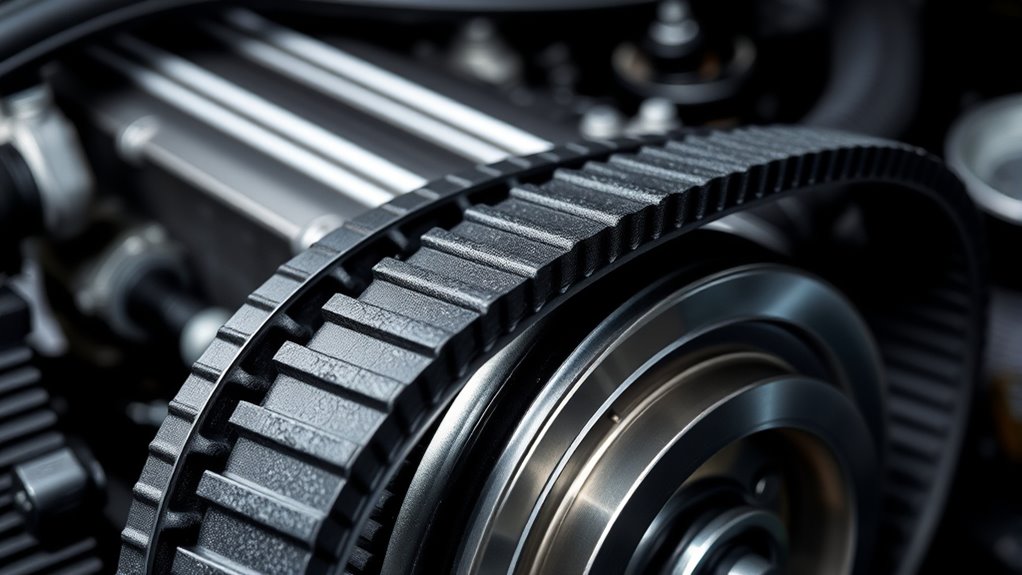
A timing belt is typically made from a durable rubber composite reinforced with high-strength fibers like fiberglass or Kevlar. The belt material is designed to withstand extreme conditions—heat, oil, and constant movement—while maintaining flexibility and strength. Over time, exposure to heat cycles, oil leaks, and general wear causes the belt material to degrade. This deterioration can result in cracks, fraying, or stretching, which compromises the belt’s ability to maintain proper engine timing. Because of this, regular inspection and timely replacement are crucial to prevent failure.
The timing belt’s material plays a significant role in engine performance. A high-quality belt made from resilient material ensures precise synchronization of engine components, translating into ideal power output and fuel efficiency. Conversely, a belt made from inferior materials may wear prematurely, causing timing issues that lead to poor engine performance, rough idling, or increased emissions. Modern belts often incorporate reinforced fibers to extend their lifespan and improve durability. When selecting a replacement, it’s essential to consider the belt material’s quality and compatibility with your vehicle model to guarantee long-lasting performance.
Understanding the importance of the timing belt’s material also helps you recognize the signs of wear. If you notice squealing noises from the engine, difficulty starting, or if the belt shows visible cracks or fraying, it’s time for a replacement. Manufacturers typically recommend replacing the timing belt every 60,000 to 100,000 miles, but this can vary based on the belt material and driving conditions. Regular maintenance checks, especially if your vehicle operates in harsh environments or under heavy loads, will help you catch issues early. Additionally, considering the quality of belt materials can extend the lifespan of your timing belt and protect your engine investment.

A-Premium Timing Belt Kit with Water Pump Compatible with 03-18 Honda Accord Crosstour Pilot Odyssey Ridgeline Acura MDX RDX RL TL TSX ZDX Saturn Vue 3.0L 3.2L 3.5L 3.7L V6 19200RDVJ01 TKH002 TCKWP329
[Vehicle Fitment]: ①Compatible with Honda Accord 2003-2007 3.0L | 2008-2017 3.5L, Accord Crosstour 3.5L, Crosstour 3.5L, Odyssey 2005-2017…
As an affiliate, we earn on qualifying purchases.
As an affiliate, we earn on qualifying purchases.
Frequently Asked Questions
How Do I Check if My Timing Belt Needs Replacing?
You can check if your timing belt needs replacing by listening for unusual engine noise, like rattling or squeaking, which often signals wear. Also, look for oil leaks near the timing belt cover, as oil can cause the belt to deteriorate faster. If you notice these signs or your vehicle has reached the recommended mileage, it’s best to have a mechanic inspect and replace the belt to avoid engine damage.
Can I Replace a Timing Belt Myself?
Yes, you can replace a timing belt yourself if you have DIY maintenance skills and the right tools. However, it’s essential to follow a detailed guide and guarantee proper timing alignment. Before starting, get a professional inspection to confirm the belt needs replacing and to check for additional issues. If you’re unsure about any step, consider consulting a mechanic to avoid engine damage and guarantee safety during the process.
What Are the Signs of a Failing Timing Belt?
A failing timing belt can be like a ticking time bomb, and you’ll notice belt tension loosening or squealing sounds that signal trouble. You might also see misaligned timing marks or engine misfires, which indicate alignment issues. If the belt shows cracks, fraying, or missing teeth, it’s time to act fast. Ignoring these signs risks severe engine damage, so stay alert and catch problems early before disaster strikes.
How Long Does a Timing Belt Replacement Take?
Replacing your timing belt typically takes about 2 to 4 hours, depending on your car’s make and model. During this time, mechanics follow the maintenance schedule to guarantee proper engine timing. You should plan for this service during scheduled maintenance to avoid unexpected breakdowns. It’s a crucial step to keep your engine timing precise, preventing more costly repairs down the line. Regular replacement helps maintain ideal engine performance.
What Are the Risks of Ignoring a Worn Timing Belt?
Ignoring a worn timing belt can lead to serious engine timing issues, risking costly repairs. When the belt material weakens, it may slip or break, causing the engine’s internal components to collide. This can result in bent valves or damaged pistons, leaving you stranded and facing hefty bills. To keep your engine running smoothly, it’s best to replace it before wear progresses, ensuring your vehicle’s longevity and performance.
A-Premium Timing Belt Kit with Water Pump Compatible with 03-18 Honda Accord Crosstour Pilot Odyssey Ridgeline Acura MDX RDX RL TL TSX ZDX Saturn Vue 3.0L 3.2L 3.5L 3.7L V6 19200RDVJ01 TKH002 TCKWP329
[Vehicle Fitment]: ①Compatible with Honda Accord 2003-2007 3.0L | 2008-2017 3.5L, Accord Crosstour 3.5L, Crosstour 3.5L, Odyssey 2005-2017…
As an affiliate, we earn on qualifying purchases.
As an affiliate, we earn on qualifying purchases.
Conclusion
Remember, your timing belt keeps everything running smoothly, just like life’s little coincidences that remind us timing matters. When you replace it on schedule, you prevent unexpected breakdowns and keep your journey hassle-free. Sometimes, a simple change can save you from bigger problems down the road—like a missed opportunity or a surprise delay. Stay proactive, trust your maintenance routine, and let those small moments of coincidence remind you that timing truly is everything.

ACDelco Gold TCKWP329 (19253929) Timing Belt Kit with Water Pump, Idler Pulley, and 2 Tensioners
Includes water pumps that are designed and built for long lasting, efficient cooling
As an affiliate, we earn on qualifying purchases.
As an affiliate, we earn on qualifying purchases.

Orion Motor Tech Engine Camshaft Tensioning Locking Alignment Timing Belt Tool Kit Compatible with Chevy Cruze Aveo Alfa Romeo Fiat 16V 1.4 1.6 1.8 en6340 km6340
ENGINE TIMING TOOL KIT: Does your Chevrolet, Fiats or Alfa Romeo engine feel unstable or have weak acceleration?…
As an affiliate, we earn on qualifying purchases.
As an affiliate, we earn on qualifying purchases.