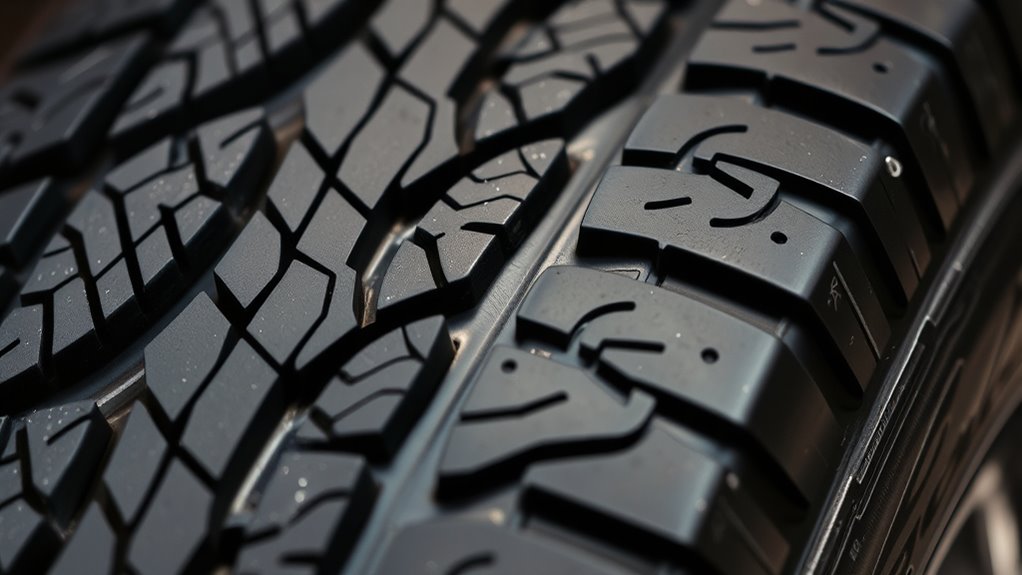

The science of tire rubber compounds involves combining natural and synthetic rubbers with fillers, oils, and additives to create materials that balance durability, flexibility, and grip. Engineers carefully formulate these mixtures through advanced chemical processes, including vulcanization, to optimize performance under different driving conditions. Adjustments in ingredients and techniques improve aging resistance and safety. To understand how these complex combinations work together, you’ll discover more about the precise science behind tire performance.
Key Takeaways
- Tire rubber compounds are formulated by blending natural and synthetic rubbers with fillers, oils, and additives for specific performance traits.
- Vulcanization chemically crosslinks rubber molecules, enhancing elasticity, strength, and durability of tire compounds.
- Material selection and precise formulation optimize properties like grip, wear resistance, heat stability, and environmental resistance.
- Advanced testing and iterative adjustments refine rubber compositions for reliable performance under diverse driving conditions.
- Additives such as UV stabilizers and anti-ozonants extend tire lifespan by protecting against environmental degradation.

Have you ever wondered what makes your tires durable, flexible, and grip the road effectively? The secret lies in the complex science behind tire rubber compounds, especially the rubber formulation and compound enhancement processes. These elements work together to create the perfect balance between performance, safety, and longevity. When manufacturers develop tire rubber, they start with rubber formulation—carefully selecting and blending various raw materials to achieve specific properties. This involves choosing the right types of natural and synthetic rubbers, along with fillers, oils, and other additives. Each ingredient has a precise role: some improve flexibility, others boost durability or enhance grip under different conditions. The formulation process is a meticulous balancing act, ensuring that the final compound can withstand the stresses of driving while maintaining ideal performance.
The science of rubber formulation and enhancement creates durable, flexible tires that grip the road effectively.
Compound enhancement takes this a step further. Once the initial formulation is designed, engineers test and tweak the blend to optimize its characteristics. They adjust the proportions of each component, experimenting with different fillers or crosslinking agents, to refine attributes like traction, wear resistance, and heat dissipation. This iterative process involves rigorous testing—looking at how the compound performs under various temperatures, loads, and driving conditions. The goal is to develop a rubber compound that performs reliably over a broad range of environments, from hot summer roads to cold winter surfaces. During this stage, advanced techniques such as vulcanization are used to strengthen the rubber, creating a network that enhances elasticity and durability.
Compound enhancement also involves addressing potential issues like aging and environmental stress cracking. Engineers aim to produce a rubber compound that resists degradation over time, ensuring your tires stay safe and effective for thousands of miles. Modern innovations incorporate special additives that improve resistance to UV rays, ozone, and other corrosive elements, further extending the lifespan of your tires. Throughout this process, the focus remains on fine-tuning the rubber formulation to meet specific performance goals—whether it’s for racing tires that need maximum grip or all-season tires that prioritize comfort and longevity. The result is a carefully engineered rubber compound that balances conflicting demands, providing you with a tire that performs confidently in all conditions.
In essence, the science behind tire rubber compounds is a sophisticated blend of chemistry, engineering, and testing. By understanding how rubber formulation and compound enhancement work together, you gain a deeper appreciation for the technology that keeps you safe on the road. Each tire you see or drive on is the culmination of countless hours of research and precise adjustments, ensuring that you get a smooth, reliable ride every time.
Frequently Asked Questions
How Do Different Rubber Types Affect Tire Performance?
Different rubber types considerably influence your tire’s performance. Synthetic blends offer durability and improved fuel efficiency, while natural variations provide better grip and flexibility. You’ll notice that synthetic rubber resists wear and harsh conditions, making your ride smoother and safer. Natural rubber enhances traction, especially in wet conditions, but can wear faster. Combining these materials optimizes tire performance, balancing durability, grip, and comfort to match your driving needs perfectly.
What Environmental Factors Influence Rubber Compound Aging?
You’ll notice environmental factors like UV degradation and ozone resistance markedly accelerate rubber compound aging. Sunlight’s UV rays break down polymer chains, weakening the rubber’s integrity, while ozone in the air causes cracking and deterioration. To prolong tire life, you need to protect rubber from harsh sunlight and ozone exposure, which can be achieved through specialized additives and protective coatings, ensuring your tires stay tougher longer despite tough environmental conditions.
Can Tire Rubber Be Recycled Into New Compounds?
Yes, you can recycle tire rubber into new compounds using various recycling methods like cryogenic grinding and devulcanization. These techniques break down old tires, allowing you to incorporate recycled rubber into new products. By adopting sustainable practices, you reduce waste and environmental impact, making tire recycling an eco-friendly solution. This process supports a circular economy, helping you create high-quality rubber compounds while contributing to environmental conservation.
How Does Rubber Viscosity Impact Tire Manufacturing?
Rubber viscosity directly impacts tire manufacturing by influencing how easily the compound flows and fills molds. By controlling viscosity, you guarantee smoother processing, reduce defects, and improve manufacturing efficiency. Proper viscosity control helps you achieve consistent tire quality, optimize mixing and shaping, and cut down production time. When viscosity is just right, your manufacturing process becomes more streamlined, resulting in durable, high-quality tires that meet performance standards.
What Innovations Are Emerging in Rubber Compound Technology?
Imagine a tire that lasts longer and performs better; that’s what emerging rubber compound technology aims for. You’ll see nanomaterial enhancements, which strengthen rubber at a microscopic level, and bio-based polymers, reducing environmental impact. These innovations enable manufacturers to create lighter, more durable tires with better grip and sustainability. By adopting these advances, you get safer, eco-friendly tires that meet future demands and improve vehicle performance.
Conclusion
Think of tire rubber compounds as the secret recipe for a race car’s victory. Just like a skilled chef blends ingredients for the perfect dish, scientists mix rubber to create a formula that grips the road and endures the journey. Every tweak is like adding a pinch of spice or a dash of flavor, shaping your ride’s performance. Mastering these compounds turns your vehicle into a champion, ready to conquer every twist and turn with confidence.