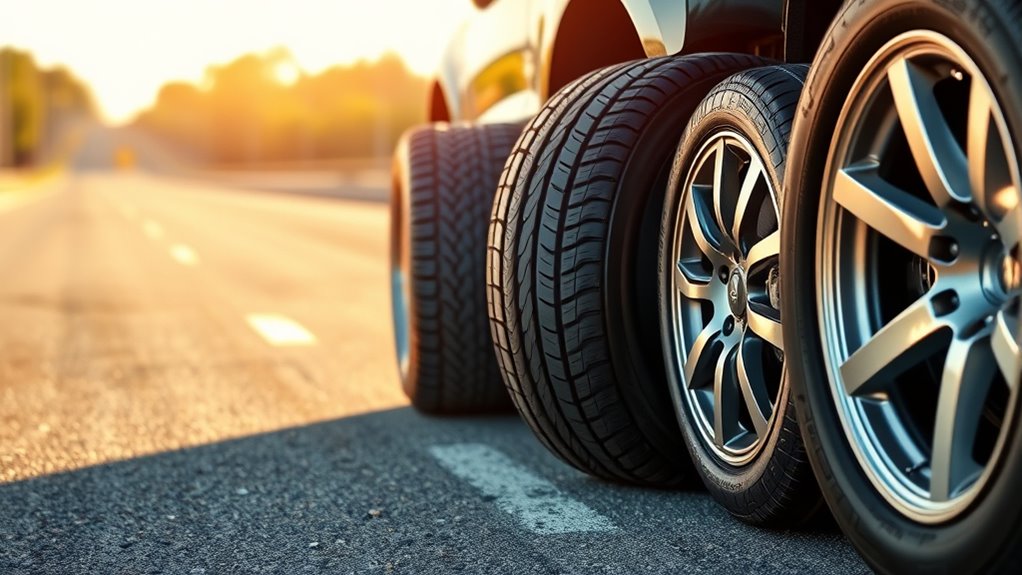

Different types of tires impact your fuel economy by affecting rolling resistance, traction, and overall efficiency. Low-rolling-resistance tires are designed to reduce energy loss, helping you save fuel. Summer tires offer better grip and lower resistance on dry roads, while all-season tires provide versatility but may not optimize fuel savings as much. Choosing the right tires and maintaining them properly can make a noticeable difference, and understanding how each type influences performance can help you maximize fuel efficiency.
Key Takeaways
- Low-rolling-resistance tires are designed to reduce energy loss, improving miles per gallon.
- Summer tires typically offer lower resistance on dry roads, enhancing fuel efficiency.
- All-season tires may have higher resistance than specialized tires, slightly decreasing fuel economy.
- Tire quality and manufacturing standards influence rolling resistance and overall fuel savings.
- Proper tire selection based on driving conditions and regular maintenance optimize fuel economy.
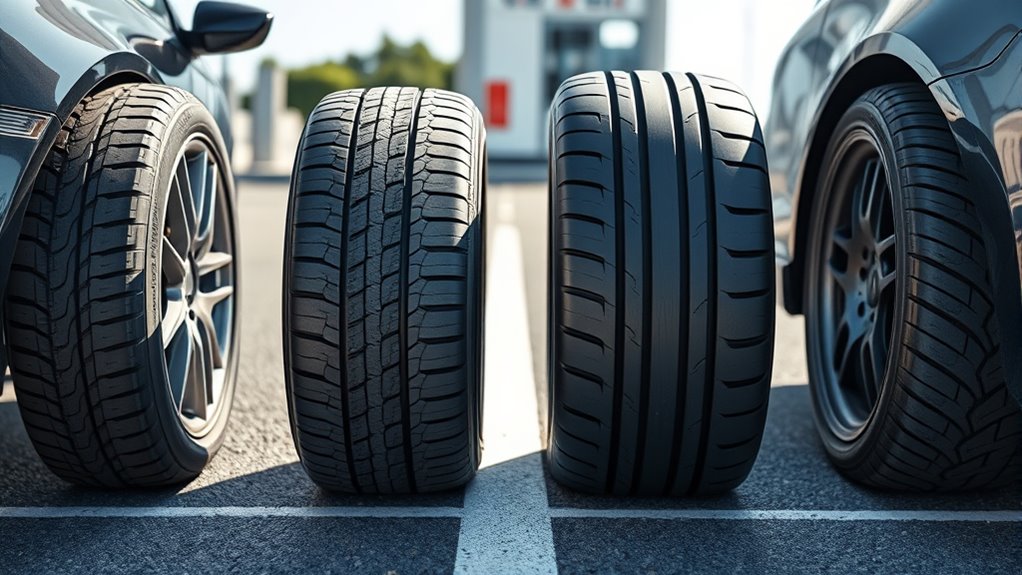
Have you ever wondered how your choice of tires can impact your vehicle’s fuel economy? It’s a common question, and the answer lies in several factors, including tire pressure maintenance and tread wear patterns. Your tires aren’t just about grip and durability; they play a crucial role in how efficiently your vehicle runs. Proper tire pressure is fundamental. When your tires are underinflated, they create more rolling resistance. This means your engine has to work harder to move the vehicle forward, consuming more fuel. Regularly checking and maintaining ideal tire pressure ensures your tires roll smoothly, reducing unnecessary energy expenditure. It’s a simple habit that can save you money over time and extend your tire’s lifespan.
Proper tire pressure reduces resistance, saving fuel and extending tire life.
Tread wear patterns also influence fuel economy, often in subtle ways. Tires with uneven or excessive tread wear can increase rolling resistance, making your engine work harder than it needs to. For example, if your tires develop cupping or uneven wear, they may not make proper contact with the road surface, leading to increased drag. Conversely, well-maintained tires with even tread wear patterns help minimize resistance. That’s why rotations and alignments are essential, as they promote even wear across all tires. When your tires wear evenly, they maintain consistent traction and rolling efficiency, directly impacting your fuel consumption.
Different types of tires are designed with specific purposes, and choosing the right ones can influence your vehicle’s fuel economy. Low-rolling-resistance tires, for example, are engineered to minimize energy loss while rolling, which can greatly improve miles per gallon. Summer tires typically provide better grip and lower resistance on dry roads, boosting efficiency in appropriate conditions. All-season tires offer versatility but may not deliver the same fuel-saving benefits as specialized tires. The key is selecting the right type of tire for your driving habits and maintaining it properly. Regularly inspecting for tire pressure issues and monitoring tread wear patterns will ensure your tires perform effectively.
Additionally, the manufacturing quality of tires impacts their rolling resistance and overall performance, which in turn affects fuel economy. Regular maintenance, including tire pressure checks and wear pattern monitoring, can make a noticeable difference in how efficiently your car runs. When your tires are properly inflated and evenly worn, you’ll experience better fuel mileage, smoother rides, and longer-lasting tires. So, take a moment to check your tire condition regularly—your wallet and the environment will thank you for it.
Frequently Asked Questions
How Does Tire Tread Pattern Influence Fuel Efficiency?
Your tire tread pattern design considerably influences fuel efficiency. A low-rolling-resistance tread pattern prioritizes efficiency by reducing friction with the road, helping you save fuel. While aggressive tread designs enhance traction, they often increase rolling resistance, decreasing fuel economy. Striking a balance between traction and efficiency means choosing a tread pattern optimized for your driving needs, so you get better mileage without sacrificing too much grip.
Do All-Season Tires Impact Fuel Economy Equally?
All-season tires don’t impact fuel economy equally; some are like tiny fuel-sipping ninjas, while others guzzle gas like a thirsty beast. Typically, well-designed all-season tires optimize rolling resistance, boosting your fuel savings. But cheap or poorly made options can drag down efficiency. So, choose wisely, and you’ll enjoy smoother drives and more money kept in your wallet, proving that smart tire choices really can make a difference in your fuel economy.
Can Tire Pressure Differences Significantly Affect Fuel Consumption?
Yes, tire pressure differences can markedly affect your fuel consumption. When you don’t maintain proper tire pressure, your tires may be underinflated or overinflated, increasing rolling resistance and decreasing fuel efficiency. Follow your vehicle’s tire inflation guidelines and regularly check tire pressure to guarantee ideal performance. Proper tire pressure maintenance not only improves fuel economy but also extends tire life and enhances safety on the road.
How Do Tire Aging and Wear Affect Fuel Economy?
As your tires age and wear, fuel economy drops because worn tires have less tread and may develop uneven wear patterns, affecting rolling resistance. Tire rubber composition also changes, becoming harder and less flexible, which increases drag. Additionally, wear can affect wheel alignment, causing uneven contact with the road and reducing efficiency. To maintain ideal fuel economy, regularly check tire condition, replace worn tires, and keep your wheel alignment in check.
Are There Specific Tire Brands Known for Better Fuel Efficiency?
You might wonder if any tire brands can boost your fuel economy. While specific brands like Eco-friendly tire brands are known for reducing rolling resistance, some high-performance tire options also offer better efficiency. Brands such as Michelin, Bridgestone, and Continental often lead the way with innovative designs that maximize fuel savings. Choosing the right tires can quietly transform your driving experience, saving you money and helping the environment—perhaps even more than you realize.
Conclusion
Choosing the right tires subtly guides your vehicle’s efficiency without making a fuss. While no tire type promises miracles, opting wisely can gently enhance your fuel economy over time. Think of it as giving your car a quiet nudge toward better performance, all without sacrificing comfort or safety. Small, thoughtful choices in tires can lead to smoother rides and a more economical journey—your subtle secret to smarter driving.