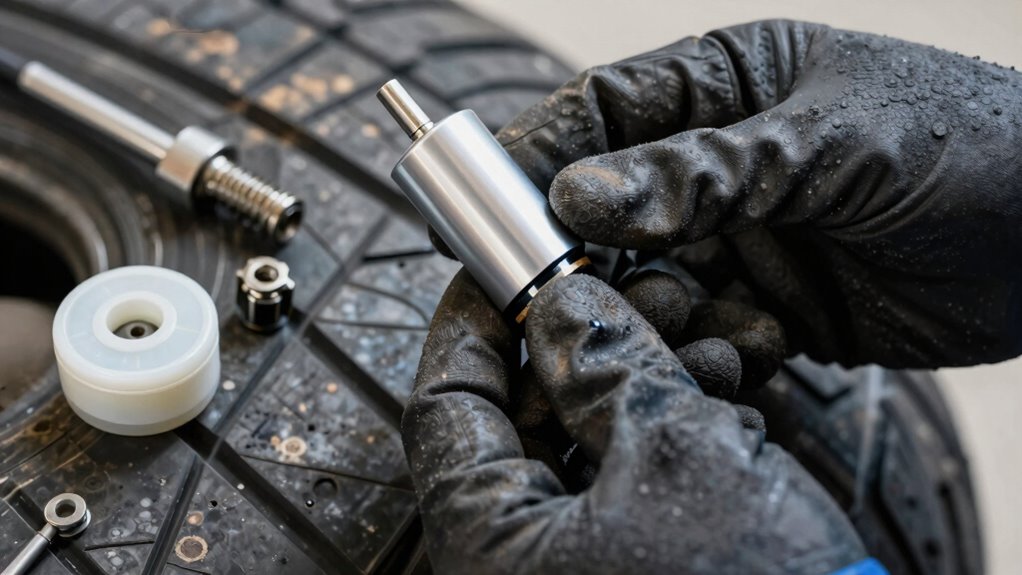

When swapping TPMS sensors, you can often reuse the sensor body if it’s undamaged, but batteries typically need replacement as they aren’t rechargeable. The valve stem and core are delicate and prone to cracks or breaks if mishandled or over-tightened. Damage often occurs from improper removal or installation tools. Recognizing signs of sensor failure helps prevent surprises. For tips on avoiding damage and extending sensor life, keep exploring the key factors involved.

Get garage and car supplies delivered free — and shop member deals
- Fast, free delivery on millions of items
- Access to Prime Big Deal Days deals on October 6–7
- Prime Video, Amazon Music and more included
Key Takeaways
- Valve stems are delicate and prone to cracking or breaking if mishandled or over-tightened during removal or installation.
- Sensor bodies are generally reusable if undamaged, but internal batteries often need replacement after their lifespan ends.
- Improper removal techniques, excessive force, or tools can damage sensors or internal components, leading to failure.
- Calibration is crucial after swapping sensors; uncalibrated sensors may provide inaccurate readings or trigger warning lights.
- Regular inspection and gentle handling extend sensor lifespan and prevent damage during replacements.
As an affiliate, we earn on qualifying purchases.
Can You Reuse Your TPMS Sensor, or Is Replacement Necessary?
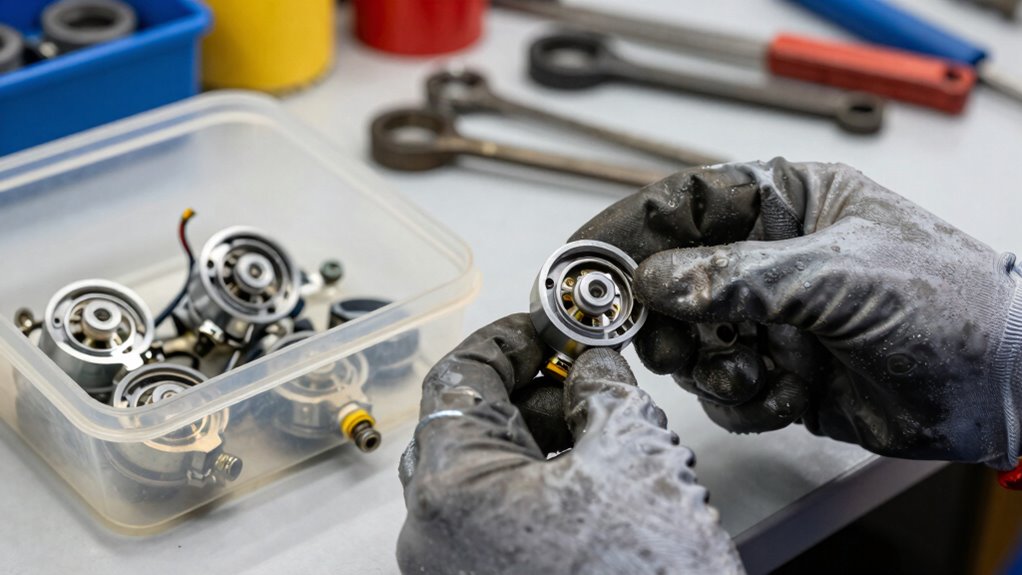
Many car owners wonder if they can simply reuse their TPMS sensors after a tire change or repair. The answer depends on whether the sensor maintains proper sensor calibration. If the sensor was undamaged and functions correctly, you might be able to reuse it, but you should always verify its tire pressure accuracy. Reusing a sensor without recalibration can lead to inaccurate readings, which compromise safety and vehicle diagnostics. Some sensors are designed for reuse, but others may require reprogramming or replacement to ensure reliable performance. Always check with your vehicle’s manual or a professional before reusing a TPMS sensor. Proper calibration ensures your TPMS provides precise tire pressure readings, helping you maintain optimal safety and fuel efficiency. Additionally, understanding sensor calibration and the specific type of TPMS system in your vehicle can help determine if reuse is feasible. If you’re unsure about the sensor condition, seek advice from an automotive technician to avoid potential issues. Knowing how to assess sensor durability can also assist in making an informed decision. Moreover, considering sensor lifespan can help you decide whether replacement might be more reliable in the long run. Regularly inspecting the sensor integrity can prevent unexpected failures and ensure consistent performance.
Which Parts of a TPMS Sensor Are Usually Reusable?
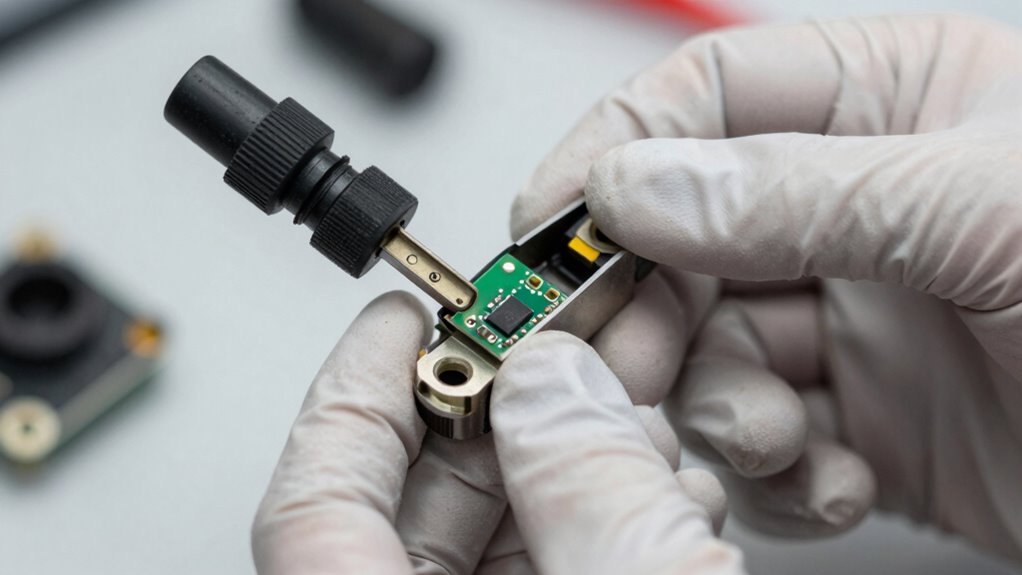
When considering reusing parts of a TPMS sensor, it’s important to identify which components are built for durability and which may need replacing. The sensor material itself is often reusable because it’s designed to withstand harsh conditions like extreme temperatures and exposure to elements. The sensor’s body, typically made from durable plastics and metals, can last through multiple cycles if handled carefully. However, the battery life is a different story; most batteries in TPMS sensors are not rechargeable and tend to fail after several years or when the sensor is removed. Reusing the sensor material while replacing the battery can extend the sensor’s usability, but you should always verify the battery’s condition before reinstallation to ensure reliable performance. Additionally, understanding the sensor lifespan can help determine the best time for reuse or replacement, especially considering sensor durability under various driving conditions. Being aware of sensor degradation factors can further assist in making informed decisions about reuse, including how environmental exposure impacts the sensor integrity over time.
What Common Causes Lead to TPMS Sensor Failures During Replacement?

Incorrect handling during replacement can easily cause TPMS sensor failures. If you don’t properly calibrate the sensor afterward, it can lead to inaccurate tire pressure readings, affecting safety and performance. Damage from improper removal, such as twisting or applying excessive force, can break internal components or the sensor’s seal, causing failure. Using incorrect tools or not following the manufacturer’s procedures might also damage the sensor or disrupt its function. Failing to reset or reprogram the sensor after installation can prevent it from communicating correctly with your vehicle’s system, impacting tire pressure accuracy. Always handle sensors carefully, ensure proper calibration, and follow proper procedures to avoid these common causes of failure during replacement. Additionally, understanding regional sensor calibration and how they influence sensor calibration can help maintain optimal performance in different driving conditions. Proper handling techniques are crucial to prevent damage and ensure longevity of the sensors, especially considering the delicate internal components that can be easily compromised. Paying attention to manufacturer guidelines can further reduce the risk of damage during replacement.
Which Parts Are Most Likely to Break When Removing or Installing TPMS Sensors?
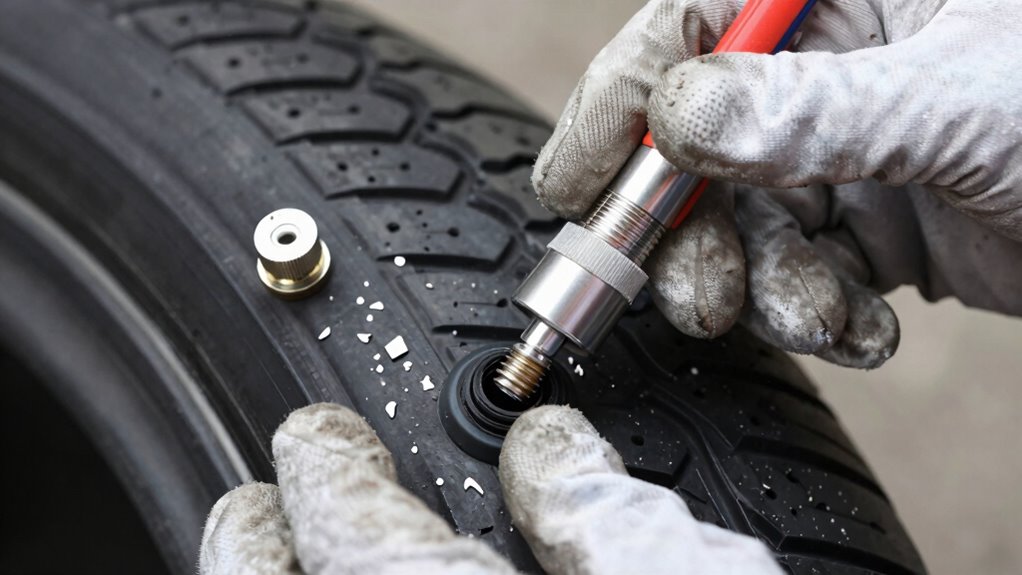
When removing or installing TPMS sensors, the valve stem is at risk of damage if you’re not careful. You could also accidentally break the sensor body if too much force is used. Knowing these common weak points helps you avoid costly mistakes during the process. Additionally, understanding how to handle sensor components properly can extend the lifespan of your TPMS system. Proper technique and the use of specialized tools can minimize damage and ensure a successful installation or removal. Being aware of cycling gear maintenance practices can also help prevent unnecessary wear on sensitive components. Incorporating proper handling techniques and precise adjustments can further reduce the risk of damage during sensor servicing.
Valve Stem Damage Risks
Removing or installing TPMS sensors can put your valve stem at risk of damage, especially if you’re not careful. The valve stem is delicate and prone to damage from improper handling or excessive force. Over time, corrosion risk increases, weakening the stem and making it more susceptible to cracks or breaks during removal or installation. To understand common risks, consider this:
| Part | Damage Risk | Prevention Tip |
|---|---|---|
| Valve stem | Cracks, breaks | Use gentle tools, avoid excessive torque |
| Valve core | Cross-threading | Properly align before tightening |
| Sealant or corrosion | Leaks, failure | Clean thoroughly before reinstallation |
| Stem base | Cracking, deformation | Avoid over-tightening |
Keeping these risks in mind helps prevent damage during TPMS sensor swaps. Regular inspection and proper handling of the body jewelry measurements can also help prevent unnecessary stress or damage to the valve stem. Additionally, understanding how water-related damage affects components can inform better maintenance practices. Recognizing that corrosion can significantly weaken the valve stem over time underscores the importance of routine checks and maintenance. Being aware of natural degradation processes can guide timely replacements to avoid unexpected failures.
Sensor Body Breakage
During TPMS sensor swaps, the sensor body itself can be vulnerable to breakage if you’re not careful. The most common point of failure is the sensor housing, which can crack or split if excessive force is applied during removal or installation. The mounting bracket, often attached to the sensor body, is also prone to damage, especially if it’s bent or forced out of place. When working with the sensor, avoid using metal tools that may gouge or stress the housing. Instead, use proper plastic tools or gentle prying techniques. If the sensor body feels resistant, don’t force it; forcing can cause cracks that compromise the sensor’s integrity and function. Proper handling and careful technique help prevent breakage and ensure the sensor remains reusable.
How Can You Tell If Your TPMS Sensor Is Still Good or Needs Replacing?
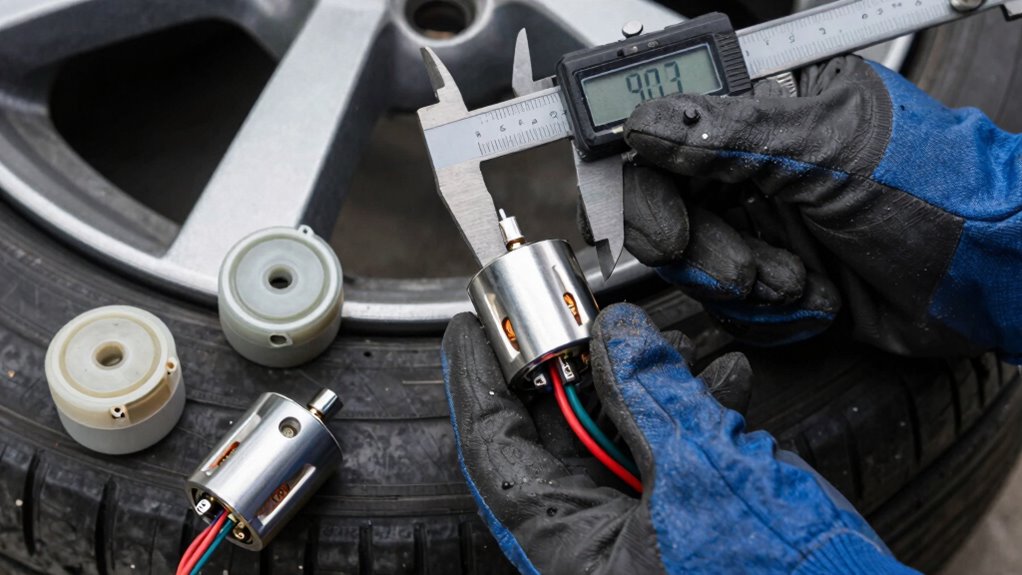
If your TPMS warning light appears or your tire pressure readings become inconsistent, it’s a good idea to check whether your sensors are still functioning properly. Start by verifying the tire pressure with a reliable gauge; if the pressure matches your sensor readings, the sensor is likely okay. If readings are off or fluctuate, the sensor may be failing. Sensor calibration is also essential—if your sensors aren’t properly calibrated, they won’t provide accurate data. Many vehicles allow you to recalibrate sensors through the vehicle’s settings or a scan tool. Persistent issues with tire pressure data or difficulty in recalibrating typically indicate that your TPMS sensor needs replacing. Regular checks and proper calibration help ensure your sensors stay reliable.
Tips for Replacing Your TPMS Sensor Without Damage and Extending Its Life
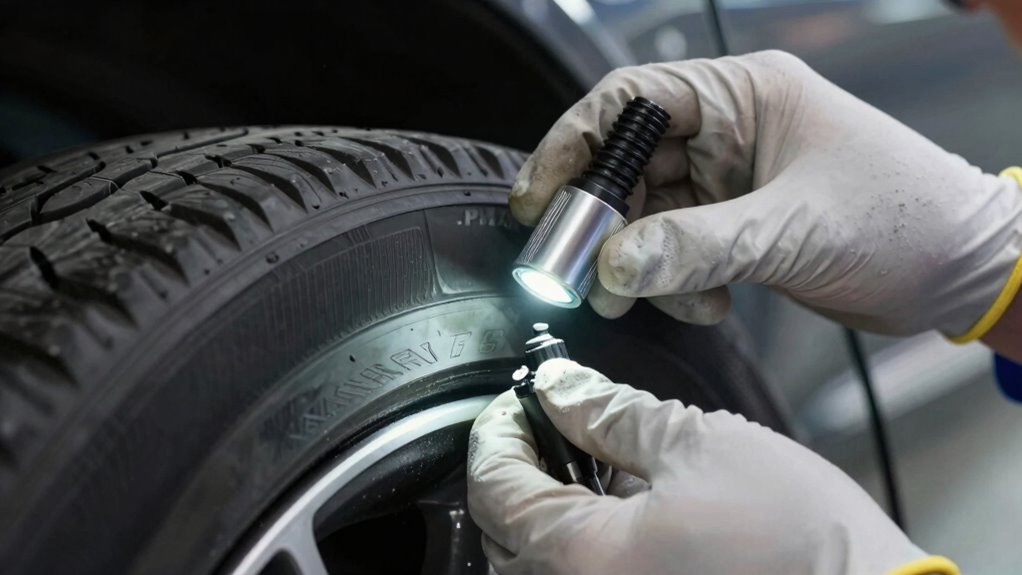
To replace your TPMS sensor without causing damage or shortening its lifespan, start by carefully loosening the valve stem core with the proper tool. This prevents unnecessary stress on the sensor and maintains its integrity. When installing the new sensor, verify proper sensor calibration to avoid false readings and ensure accurate tire pressure monitoring. Be gentle during installation to avoid damaging the sensor’s delicate components. Also, consider the battery lifespan; replacing the sensor with a new unit ensures consistent performance and reduces the risk of failure due to battery drain. Regularly check for proper sensor operation after installation, and follow manufacturer guidelines for calibration and maintenance. Proper handling and installation extend the sensor’s life and ensure reliable tire pressure readings. Proper handling techniques are essential for preventing damage during installation and maximizing the sensor’s reliability.
Frequently Asked Questions
Are Aftermarket TPMS Sensors as Reliable as OEM Parts?
You might find that aftermarket TPMS sensors aren’t as reliable as OEM parts. While they can be cheaper and easier to install, OEM sensors are designed specifically for your vehicle, ensuring better compatibility and longevity. If you want consistent performance and fewer issues, sticking with OEM reliability is your best choice. Aftermarket sensors may work, but they often lack the same durability and precise calibration, leading to potential problems down the road.
How Does Temperature Affect TPMS Sensor Durability During Replacement?
Imagine your TPMS sensor as a fragile heartbeat, vulnerable to temperature fluctuations. You should know that extreme heat or cold can weaken sensor material, reducing durability during replacement. High temperatures may cause internal components to expand or crack, while cold can make materials brittle. To guarantee longevity, handle sensors carefully and avoid exposing them to harsh temperature swings, giving your system a resilient, lasting pulse.
Can a Damaged Valve Stem Cause TPMS Sensor Failure?
A damaged valve stem can cause TPMS sensor failure because it may prevent proper sensor calibration and secure attachment. When replacing a valve stem, verify it’s in good condition to avoid leaks or inaccurate readings. If you suspect damage, replace the valve stem during sensor swaps. This helps maintain sensor functionality and ensures accurate tire pressure readings, preventing potential sensor failure caused by compromised valve components.
What Tools Are Best for Avoiding Damage During Sensor Installation?
For sensor installation and damage prevention, use specialized tools like a TPMS sensor installation tool or a plastic pry tool to avoid harming delicate components. Always handle sensors gently, applying even pressure, and avoid using metal tools directly on the sensor. Wearing gloves can also help prevent accidental drops. Carefully follow manufacturer instructions to make certain of proper installation, reducing the risk of damage and ensuring the sensor functions correctly.
How Often Should TPMS Sensors Be Tested for Performance?
You should test your TPMS sensors for performance every 6 to 12 months to guarantee they’re functioning properly. Regular testing helps you monitor sensor calibration and gauge their lifespan, preventing unexpected failures. By staying proactive, you can address issues early, maintain accurate tire pressure readings, and extend the sensors’ durability. Consistent checks keep your vehicle’s safety and performance ideal, saving you time and money in the long run.
Conclusion
When replacing your TPMS sensor, think of it as tending a delicate garden—handle each part with care, avoid harsh tools, and give your tire a gentle touch. Reuse what you can, but don’t force what’s fragile. With patience, your sensor can keep working smoothly, like a well-tuned melody. Trust your instincts, stay attentive, and you’ll keep your ride safe and responsive, ready to hit the road with confidence and peace of mind.
Fall Picks
fall essentials
As an affiliate, we earn on qualifying purchases.