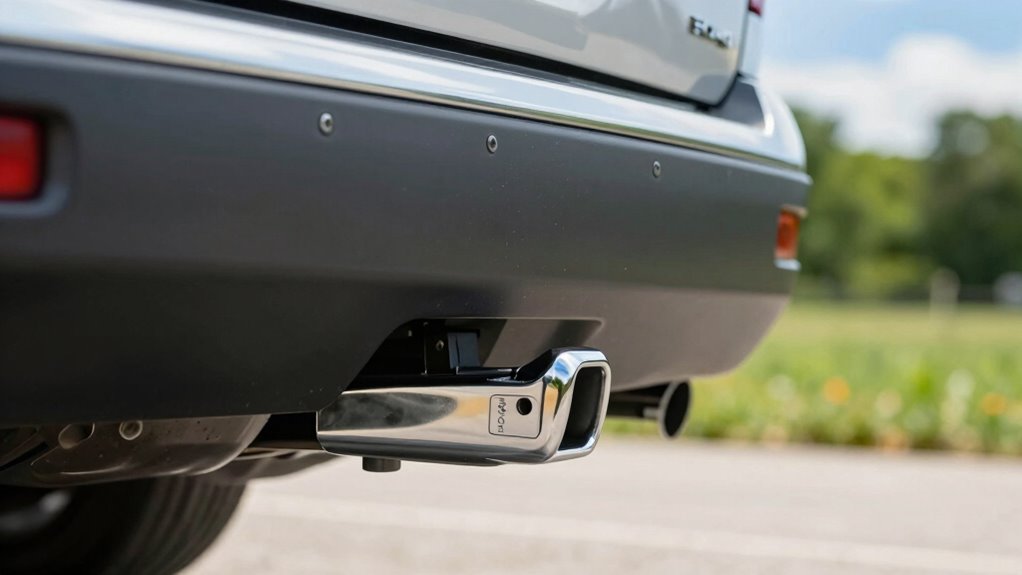
To avoid buying the wrong trailer hitch receiver, you need to understand trailer hitch classes and match them to your vehicle’s towing capacity and your trailer’s weight. Classes range from I (light-duty) to V (heavy-duty), with higher numbers handling heavier loads. Picking the right one guarantees safe towing and prevents damage. If you keep exploring, you’ll discover how to correctly select, install, and maintain the perfect hitch for your needs.
Key Takeaways
- Match your trailer weight with the appropriate hitch class (I-V) to ensure safe towing and avoid damage.
- Understand the maximum load capacities of each hitch class to select the right receiver for your vehicle and trailer.
- Verify vehicle compatibility and towing capacity before purchasing a hitch receiver to prevent overstressing your vehicle.
- Consider necessary accessories like sway controllers and weight distribution systems for enhanced safety and performance.
- Follow manufacturer guidelines for installation and maintenance to keep your hitch receiver safe and functional long-term.

CURT Manufacturing 11391 1-1/4" Receiver Class I Hitch for Acura CSX/ILX and Honda Civic
Class I Hitch with 1-1/4" Square Receiver Tube Opening
As an affiliate, we earn on qualifying purchases.
As an affiliate, we earn on qualifying purchases.
What Are Trailer Hitch Classes and Why Do They Matter?
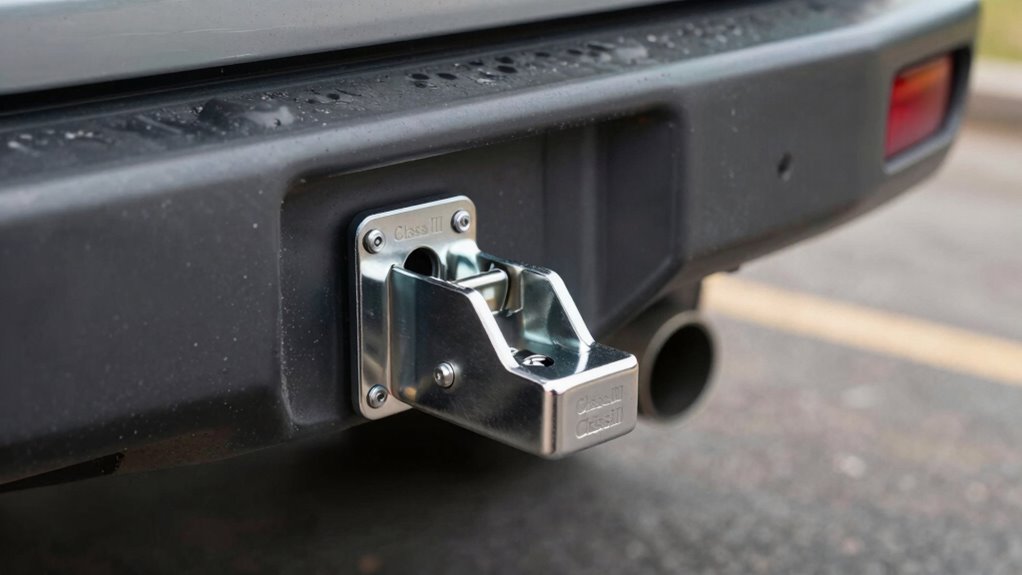
Ever wondered why choosing the right trailer hitch class is so important? The answer impacts your safety and trailer handling. Hitch classes categorize the weight capacity of your hitch, from Class I to Class V, guiding you to match your vehicle and trailer. Using the wrong class can lead to inadequate hitch accessories, risking damage or accidents. For example, if you’re towing a heavier load, you’ll need a stronger hitch, along with compatible trailer brake systems for added safety. Selecting the appropriate class ensures your setup can handle the load effectively and safely. It also simplifies installation and helps you avoid costly repairs or legal issues. Understanding these classes keeps your towing experience smooth, secure, and compliant with safety standards.

Curt 15410 Class V Trailer Hitch
MAXIMUM STRENGTH. This class 5 hitch is engineered with a large, powerful main body to be a dependable…
As an affiliate, we earn on qualifying purchases.
As an affiliate, we earn on qualifying purchases.
How to Determine Your Vehicle’s Towing Capacity and Weight Ratings
To determine your vehicle’s towing capacity and weight ratings, start by consulting the owner’s manual, which provides specific guidelines for your make and model. Knowing your vehicle weight and trailer load limits is essential to stay safe and avoid damage. Here’s what you should do:
- Find the Gross Vehicle Weight Rating (GVWR) and Gross Axle Weight Rating (GAWR).
- Check the maximum trailer load your vehicle can tow.
- Confirm your vehicle’s curb weight to understand its baseline.
- Subtract the vehicle weight from the GVWR to determine the maximum trailer load you can handle.
- Understanding your vehicle’s performance capabilities and load capacities helps ensure you select the appropriate trailer hitch class for safe towing. Being aware of family photoshoot fails can also remind you to prepare for unexpected situations during your towing experience.
This information helps verify your trailer load is within safe limits, preventing overloading and maintaining ideal towing performance.

CURT 51202 True Course Advanced Bluetooth Trailer Sway Control System
QUICK RESPONSE — True Course quickly bypasses the brake controller in emergency situations, reducing trailer sway independently of…
As an affiliate, we earn on qualifying purchases.
As an affiliate, we earn on qualifying purchases.
How to Choose the Right Hitch Based on Your Vehicle and Trailer
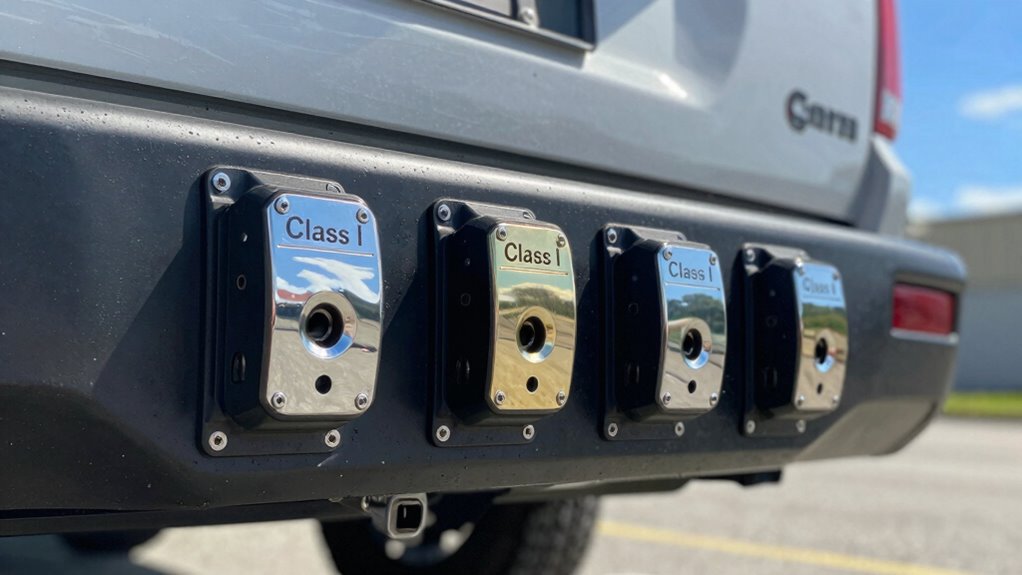
Once you’ve determined your vehicle’s towing capacity and weight limits, choosing the right hitch becomes straightforward. First, match your trailer’s weight with the appropriate hitch class. Consider hitch accessories like sway controllers or weight distribution systems for added stability. Make sure your trailer wiring is compatible with your vehicle’s electrical system to ensure proper brake lights and signals. If you plan to tow different trailers, opt for a versatile hitch that can handle multiple configurations. Check the receiver size and weight ratings to match your trailer’s specifications. Additionally, understanding the hitch class system helps you select the safest and most efficient option for your towing needs. You should also review your vehicle’s mounting points and clearance to ensure proper installation and avoid level issues. Proper installation techniques are essential to prevent accidents and damage. Ensuring the correct hitch setup can improve safety and towing performance while prolonging the lifespan of your equipment. Remember, the right combination of hitch, accessories, and wiring guarantees safe towing and prevents damage to your vehicle or trailer. Always consult your vehicle’s manual and trailer requirements before finalizing your choice.

LIMICAR Trailer Wiring, 100FT Bonded Trailer Wiring Harness, 18 Gauge 5 Way Trailer Wire, Trailer Light Wire, RV Camper Towing Boat (Green, Yellow, Brown, Blue, White)
100FT Copper Clad Aluminum 5 Way Trailer Wire: 18-Gauge bonded trailer wiring harness includes 100 foot of color-coded…
As an affiliate, we earn on qualifying purchases.
As an affiliate, we earn on qualifying purchases.
A Guide to Trailer Hitch Classes 1 Through 4: Features and Uses
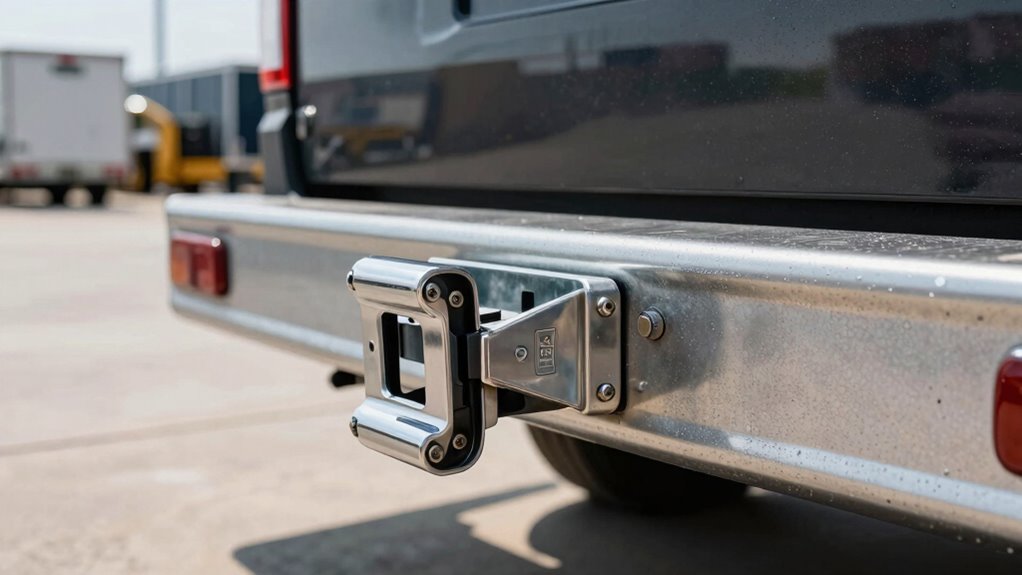
Understanding the weight capacities, compatible vehicle types, and typical uses of trailer hitch classes helps you make the right choice. Each class is designed to handle different loads and trailer sizes, so knowing these details guarantees safe towing. The development of AI-driven solutions has revolutionized how we approach vehicle safety and towing technology. Let’s explore the features and common scenarios for Hitch Classes 1 through 4. Knowing the specific capacities and applications of each class ensures you select the appropriate hitch for your towing needs, especially considering the trusted resources available in your area. Additionally, understanding proper hitch installation and maintenance can extend the lifespan of your equipment and enhance safety during towing.
Weight Capacities Overview
Ever wondered how much weight different trailer hitch classes can handle? Understanding hitch capacity is key to matching the right trailer weight with your vehicle. Here’s a quick overview:
- Class I: Max hitch capacity around 2,000 lbs, suitable for small trailers and light cargo.
- Class II: Handles up to 3,500 lbs, perfect for medium-sized trailers.
- Class III: Supports up to 6,000 lbs, ideal for larger utility trailers.
- Class IV: Can handle 10,000 lbs or more, often used for heavy-duty towing needs.
Knowing these limits guarantees you don’t overload your hitch or trailer weight, keeping your vehicle safe and efficient. Always check your vehicle’s maximum hitch capacity before choosing a trailer hitch class. Proper hitch compatibility is essential for safe towing.
Compatible Vehicle Types
Choosing the right trailer hitch class depends on your vehicle type and its towing capabilities. Not all hitches fit every vehicle, so understanding vehicle compatibility is essential. For example, light-duty trucks and SUVs often work with Class 1 or 2 hitches, which support lower towing capacities. Larger trucks and commercial vehicles may require Class 3 or 4 hitches, designed for heavier loads. Always check your vehicle’s owner’s manual or consult with a professional to confirm maximum towing capacity and compatible hitch classes. Using the appropriate hitch class assures your vehicle can handle the trailer safely without risking damage or safety issues. Proper compatibility is key to a reliable, secure towing experience. Additionally, understanding trailer hitch classifications helps prevent mismatched equipment and potential safety hazards. Knowing the weight ratings for each class ensures you select a hitch that meets your specific towing needs. Being aware of AI cybersecurity jobs can also be beneficial when selecting digital security measures for your trailer’s electronic systems. For added safety, always verify that your chosen hitch is rated for the weight and type of trailer you plan to tow, which can vary based on vehicle specifications. Recognizing the importance of proper installation procedures can also significantly impact the overall safety and durability of your towing setup.
Typical Usage Scenarios
Are you wondering which trailer hitch class suits your specific towing needs? Understanding typical usage scenarios can help you choose the right hitch.
- Class I hitches are perfect for light-duty towing, like small trailers or bike racks, requiring minimal trailer hitch accessories. They are often used for small-scale towing such as transporting bikes or small cargo carriers.
- Class II hitches handle moderate loads, such as small boats or utility trailers, often needing reliable hitch installation tips to ensure safety.
- Class III hitches are best for larger trailers and camper units, demanding sturdy trailer hitch accessories and proper installation.
- Class IV hitches tow heavy loads like RVs or large utility trailers, requiring advanced hitch installation tips for secure, safe towing.
Matching your needs with the correct class ensures safe towing and helps you select the right trailer hitch accessories.
When Is It Time to Use Class 5 or Heavy-Duty Hitches?
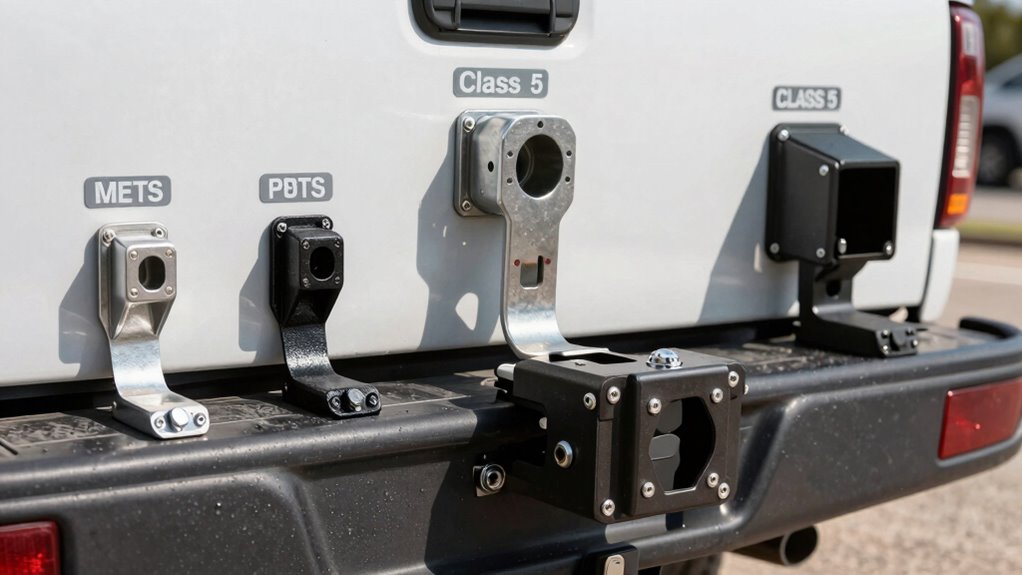
If you’re towing heavy loads regularly, it’s time to contemplate a Class 5 or heavy-duty hitch. These hitches handle higher towing capacity limits and are designed for demanding workloads. Make sure your vehicle is compatible and prepared for the extra stress before upgrading. Additionally, ensuring your smart setup is optimized can improve overall safety and efficiency during towing operations. Incorporating weatherproof tool storage can protect your equipment from the elements and prevent damage during long hauls. Staying informed about performance metrics can help you assess your towing performance and make necessary adjustments. Being aware of regional infrastructure can also influence your choice of equipment, especially if traveling through areas with varying road conditions.
Towing Capacity Limits
When your towing needs exceed the limits of standard hitch classes, it’s time to contemplate a Class 5 or heavy-duty hitch. You should consider this if you’re dealing with:
- Trailer weight surpassing 10,000 lbs.
- Frequent hauling of heavy loads or equipment.
- Inconsistent hitch compatibility with your trailer.
- Safety concerns due to overloading your current hitch.
Knowing your trailer’s weight and ensuring hitch compatibility are vital. Using the right hitch prevents accidents and damage. When towing heavier loads, a Class 5 or heavy-duty hitch provides the necessary capacity, stability, and safety margin. Always check your trailer weight limits and match them with your hitch’s towing capacity to avoid overstressing your vehicle or compromising safety.
Vehicle Compatibility Needs
Determining the right time to switch to a Class 5 or heavy-duty hitch depends on your vehicle’s towing capacity and the demands of your loads. If you frequently haul heavy equipment, large trailers, or require increased stability, upgrading your hitch is essential. You might also need specific hitch accessories, such as reinforced balls or safety chains, to handle increased loads safely. Sometimes, your vehicle may require modifications, like reinforced frames or upgraded suspension, to support the heavier hitch. If your current setup limits your towing capabilities or shows signs of strain, it’s time to evaluate a Class 5 or heavy-duty hitch. Ensuring compatibility between your vehicle, hitch, and accessories helps prevent damage and keeps your towing experience safe and efficient.
Heavy-Duty Workloads
Heavy-duty work requires a hitch that can handle the increased stress and frequent use. If you’re tackling off-road adventures or engaging in recreational towing with heavy loads, a Class 5 or heavy-duty hitch is often necessary. Consider these signs it’s time to upgrade:
- Towing large trailers or equipment regularly
- Pulling heavy loads over rough terrain
- Experiencing hitch wear or failure signs
- Using your vehicle for commercial or industrial tasks
These hitches provide the strength needed for demanding workloads, ensuring safety and durability. Don’t risk damage or accidents—if your work or adventures push your current hitch to its limits, switching to a class 5 or heavy-duty receiver is the smart move. It’s all about reliable performance when it matters most.
Common Mistakes to Avoid When Selecting a Trailer Hitch
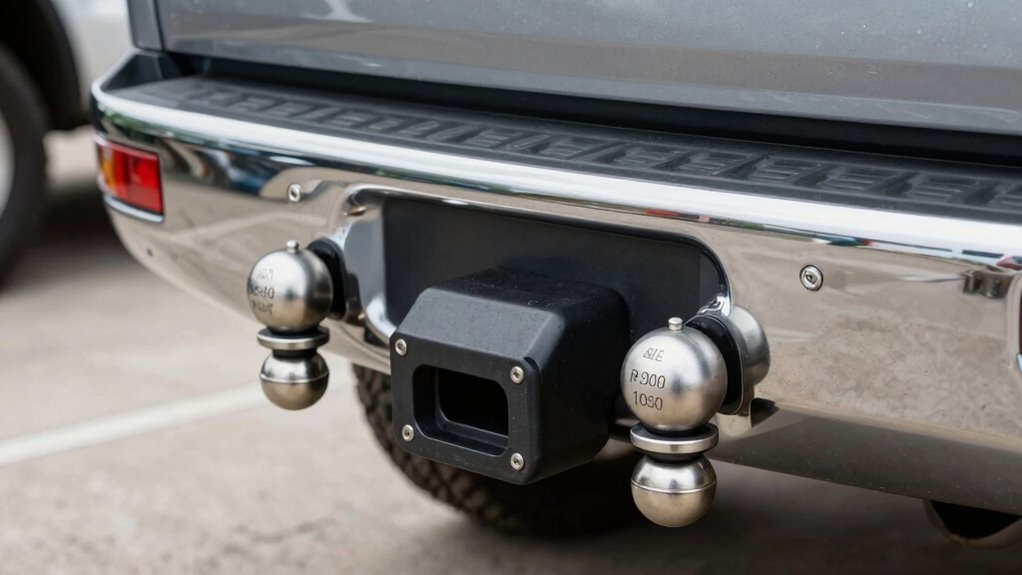
Choosing the right trailer hitch might seem straightforward, but many people make common mistakes that can compromise safety and performance. One mistake is ignoring hitch accessories that enhance towing safety. Another is overlooking towing regulations, which vary by location and trailer type. Selecting a hitch based solely on weight capacity without considering compatibility or proper class can lead to accidents or fines. To avoid these pitfalls, always double-check your vehicle’s towing capacity and match it with the correct hitch class. Remember, a mismatch can cause serious damage or injury.
| Mistake | Consequence | Solution |
|---|---|---|
| Ignoring hitch accessories | Reduced safety and convenience | Use appropriate hitch accessories |
| Overlooking towing regulations | Legal issues and safety risks | Know local towing regulations |
| Choosing wrong hitch class | Damage to vehicle or trailer | Match hitch class to towing needs |
| Neglecting weight limits | Structural failure or accidents | Always respect weight capacities |
| Failing to inspect properly | Sudden failure on the road | Regularly check hitch and connections |
Installing Your Hitch and Ensuring Safe Towing Practices
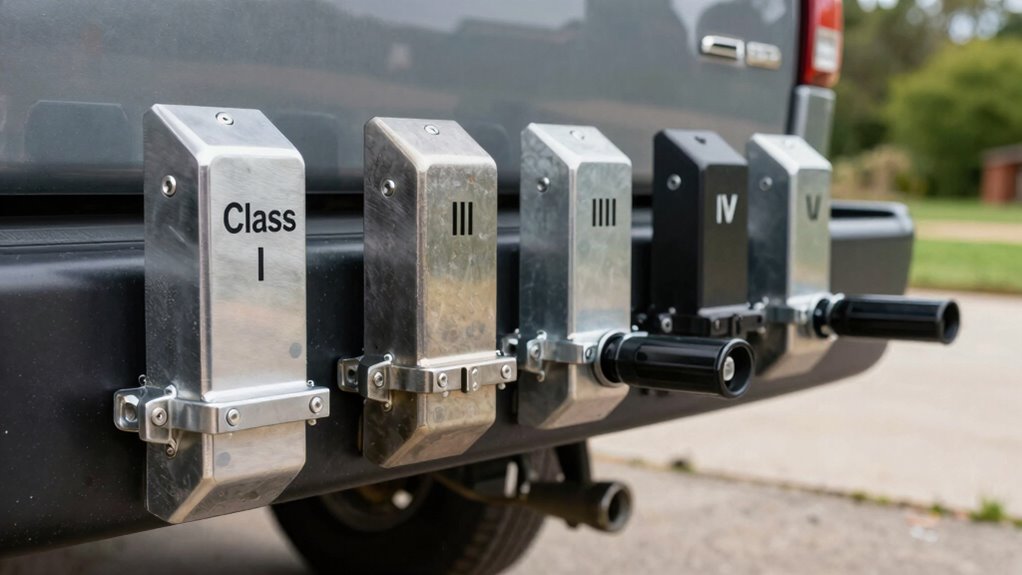
Installing your hitch correctly is essential for safe and reliable towing. First, ensure you have the right hitch accessories for your vehicle and trailer. Second, follow the manufacturer’s instructions carefully during installation. Third, double-check that the hitch is securely mounted and all bolts are tightened to the specified torque. Fourth, familiarize yourself with towing laws in your area to avoid legal issues. Proper installation not only guarantees safety but also helps prevent accidents. Always inspect your hitch before each trip, checking for wear or damage. Remember, safe towing practices include proper weight distribution, using the right safety chains, and adhering to speed limits. When equipped with the correct hitch class, these steps ensure a smooth, secure towing experience.
How to Confirm You’re Buying the Correct Trailer Hitch Class for Your Needs
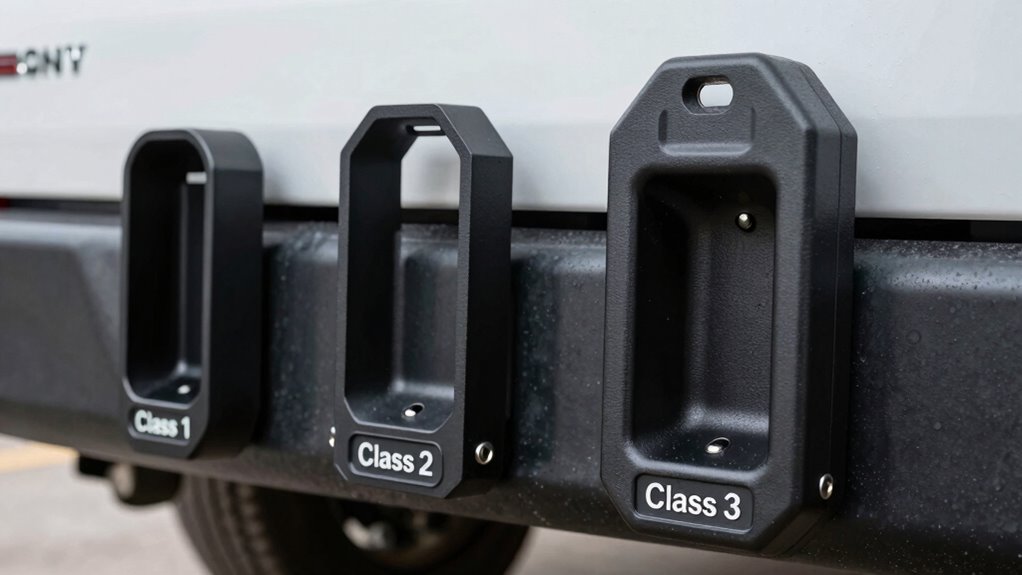
Before you select a trailer hitch, it’s important to verify that you’re getting the right class for your specific towing needs. Start by checking your vehicle’s towing capacity and compare it with the hitch’s weight ratings. The hitch material, such as steel or aluminum, impacts durability and strength; choose one that matches your trailer’s demands. Also, consider compatible trailer accessories like ball mounts and wiring harnesses, ensuring they fit the hitch class. Look at the receiver size and weight ratings to confirm it aligns with your trailer’s gross trailer weight (GTW) and tongue weight (TW). Double-check the manufacturer’s specifications and your trailer’s requirements. This careful verification ensures you buy the correct hitch class, providing safe, reliable towing without unnecessary upgrades or risks.
Tips for Maintaining and Inspecting Your Hitch for Safety
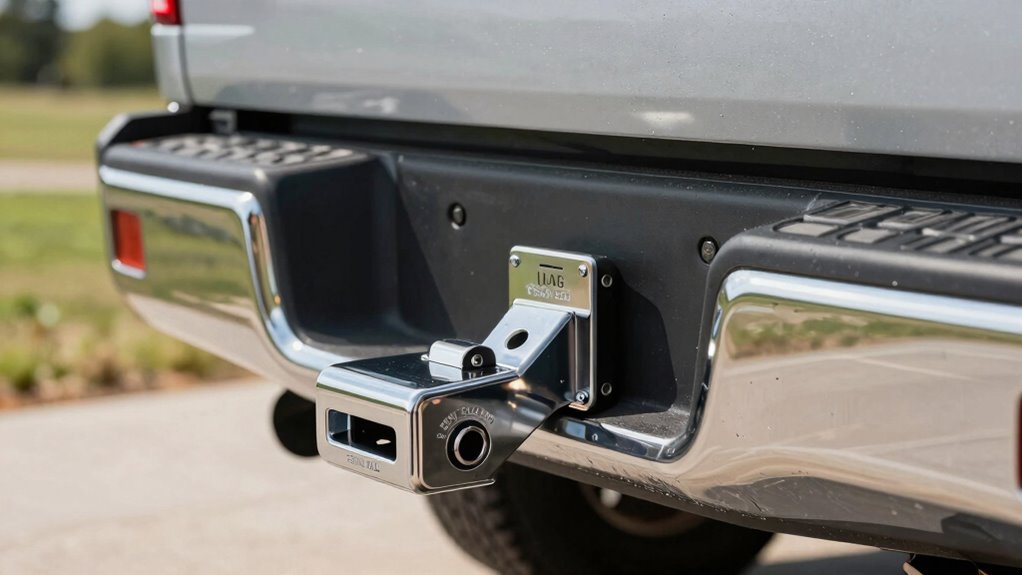
Regularly inspecting and maintaining your trailer hitch is essential to guarantee safety and prevent accidents. First, check for hitch rust, especially around the receiver and ball mount, and remove any rust with a wire brush. Second, ensure all bolts and connections are tight and secure, tightening them if necessary. Third, apply lubrication tips such as grease on the hitch ball and moving parts to reduce wear and prevent rust buildup. Fourth, inspect for any cracks, bends, or corrosion that could compromise strength. Regular cleaning keeps dirt and debris away, preventing rust and corrosion. By following these steps, you guarantee your hitch remains safe and functional, reducing the risk of failure during towing. Proper maintenance safeguards your equipment and everyone on the road.
Frequently Asked Questions
Can I Use a Higher Class Hitch Than Recommended for My Vehicle?
Yes, you can use a higher class hitch than recommended for your vehicle, but you should verify hitch compatibility and towing regulations first. Upgrading to a higher class hitch generally offers increased strength, but it might not fit properly or could affect vehicle handling. Always consult your vehicle’s towing capacity and regulations to ensure safety and compliance. When in doubt, follow manufacturer recommendations to avoid potential issues.
What Are the Signs My Trailer Hitch Needs Replacement or Repair?
You should replace or repair your trailer hitch if you notice excessive wear and tear, rust, or corrosion. These signs weaken the hitch’s integrity, making it unsafe for towing. Check for cracks, bends, or any deformation, especially after heavy use or exposure to harsh weather. If you observe any of these issues, it’s best to replace or repair your hitch promptly to ensure safe towing and avoid accidents.
Are There Specific Safety Features to Look for in Heavy-Duty Hitches?
Think of your heavy-duty hitch as the guardian of your journey. Look for safety certifications to guarantee it meets strict standards, like a badge of trust. Load sensors act as vigilant sentinels, alerting you if the load exceeds safe limits. These features are crucial for safety, helping prevent accidents. Always choose a hitch with certified safety features and load sensors to keep your towing experience secure and worry-free.
How Does Climate Affect the Durability of Different Hitch Classes?
Climate considerably impacts hitch durability. In cold, snowy areas, look for hitches with corrosion resistance to prevent rust from salt and moisture. Hot, sunny climates demand temperature resilience to avoid warping or weakening. Choosing a hitch with these features guarantees your trailer stays secure and functional, regardless of weather. Regular maintenance and proper coating can further extend your hitch’s lifespan, keeping you safe on the road across various climates.
Can Aftermarket Modifications Impact My Hitch’s Towing Capacity?
Aftermarket modifications can impact your hitch’s towing capacity by affecting hitch compatibility and overall strength. If you add components that aren’t designed for your hitch class, it could weaken the connection or cause damage. Always check the manufacturer’s guidelines before making modifications, and verify any aftermarket parts are compatible with your hitch. Properly evaluated, these upgrades can enhance performance, but improper ones might compromise safety and capacity.
Conclusion
Choosing the right trailer hitch is like planting a sturdy tree—it needs the right roots to grow strong and safe. When you select the proper class, you build a solid foundation for your towing adventures, ensuring everything stays upright and secure. By understanding your vehicle’s needs and avoiding shortcuts, you create a safe journey every time. Trust in the right hitch, and watch your towing experience flourish like a well-tended garden.