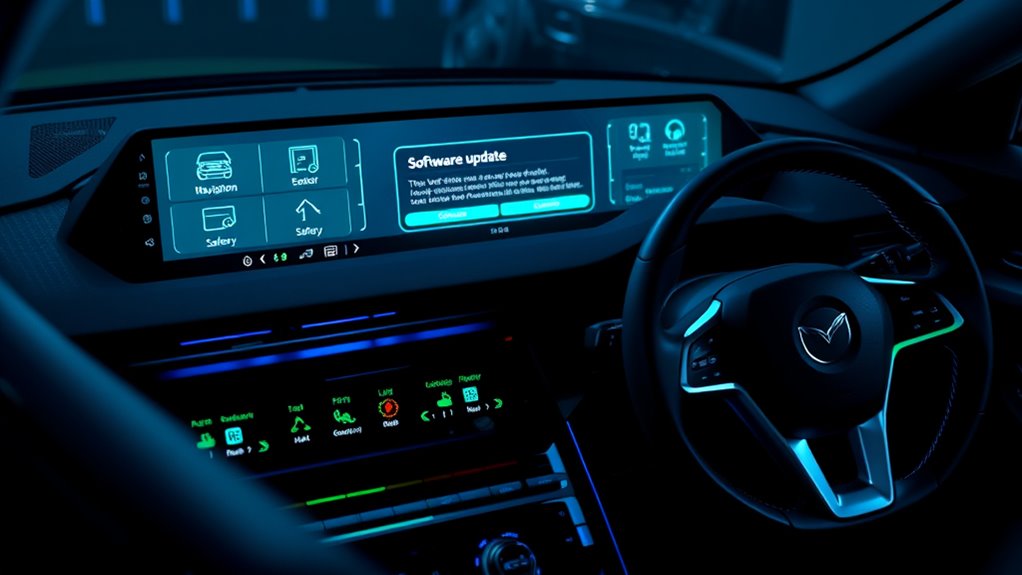

Understanding vehicle software updates in modern cars is vital because they keep your vehicle safe, reliable, and up-to-date. These updates improve features like infotainment, navigation, and autonomous driving by fixing bugs, addressing security vulnerabilities, and adding new functions. They’re usually delivered over-the-air or through dealerships. Staying current not only enhances performance but also protects your car against cyber threats. If you want to learn how these updates work and why they matter, keep exploring these essential details.

Get business pricing on garage and car supplies
- Business-only prices and quantity discounts
- Tax-exempt purchasing
- Multiple users, one account, clear invoices
Key Takeaways
- Software updates improve vehicle performance, safety, and add new features, ensuring modern cars operate efficiently and securely.
- Updates are essential for autonomous driving systems to recognize hazards and adapt to changing road conditions.
- Over-the-air (OTA) updates provide quick, convenient software enhancements without dealership visits.
- Regular updates address cybersecurity vulnerabilities, protecting vehicles from cyber threats and malicious attacks.
- Staying current with updates ensures ongoing compatibility with digital technologies and maintains optimal vehicle safety.
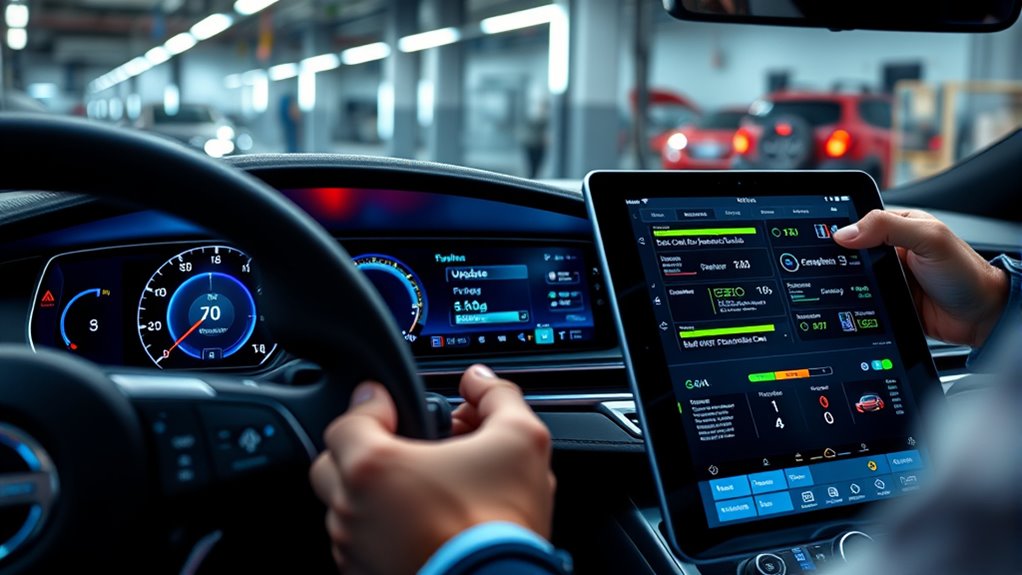
In today’s modern cars, software updates have become an essential part of maintaining your vehicle’s performance, safety, and features. As vehicles increasingly rely on complex software systems, staying current with updates is necessary for ideal operation. These updates often enhance functionalities like infotainment, navigation, and even advanced safety features, but they also play a critical role in guaranteeing that cutting-edge systems such as autonomous driving continue to operate safely and efficiently. Autonomous driving, which depends heavily on real-time data processing and sophisticated algorithms, requires regular software updates to refine performance, improve decision-making, and adapt to evolving road conditions. Without these updates, the system might become less reliable or fail to recognize new hazards, compromising safety and the vehicle’s autonomous capabilities. Regular updates also help prevent software obsolescence, ensuring your vehicle remains compatible with the latest digital standards and technologies.
Regular software updates are vital for autonomous driving safety and vehicle performance.
However, embracing regular software updates also introduces cybersecurity vulnerabilities that you need to be aware of. As cars become more connected—integrating features like internet access, cloud services, and vehicle-to-everything communication—hackers can exploit vulnerabilities to gain unauthorized access. Cybersecurity breaches could lead to malicious manipulation of vehicle controls, theft of personal data, or even remote hijacking of autonomous driving systems. Manufacturers continually work to patch these vulnerabilities through updates, but if you delay or ignore them, your vehicle remains exposed to potential cyber threats. It’s essential that you install updates promptly and guarantee they come from legitimate sources to maintain the integrity of your vehicle’s cybersecurity defenses.
You might wonder how often these updates are released or how they work. Typically, automakers push updates either over-the-air (OTA) or through dealership visits. Over-the-air updates are convenient because they can be downloaded and installed quickly without visiting a service center. These updates often include bug fixes, security patches, and feature enhancements, making your vehicle more reliable and secure over time. It’s important to follow manufacturer instructions carefully during the update process and verify that the updates are genuine to prevent installing malicious software. Keeping your vehicle’s software current is a proactive way to guard against cybersecurity vulnerabilities and guarantee your autonomous driving features function as intended.
Ultimately, understanding the importance of vehicle software updates helps you better appreciate the ongoing efforts to improve your car’s safety, security, and technology. Regular updates are not just about adding new features—they are essential for protecting your vehicle against cyber threats and maintaining the integrity of autonomous driving systems. Staying informed and proactive about these updates means you’re helping keep yourself, your passengers, and your vehicle safer on the road.
As an affiliate, we earn on qualifying purchases.
Frequently Asked Questions
How Often Do Vehicle Software Updates Occur?
You typically receive vehicle software updates every few months, but the update frequency varies depending on the manufacturer and model. Manufacturers schedule updates based on security needs, feature improvements, or bug fixes, so update scheduling can be irregular. It’s best to stay alert for notifications from your car’s system or app, as timely updates enhance your vehicle’s performance, safety, and functionality. Regularly checking for updates keeps your car running smoothly and securely.
Can I Update My Car’s Software Myself?
Like a locksmith opening a door, you can sometimes DIY install your car’s software updates. However, it’s vital to check software compatibility first. Most modern vehicles require specialized tools and knowledge, making DIY installation risky. If you’re confident, follow manufacturer instructions carefully. Otherwise, it’s best to visit a dealership or authorized service center to guarantee your update goes smoothly and safely, preserving your car’s performance and warranty.
Are There Risks Involved in Updating Vehicle Software?
Yes, there are risks involved in updating your vehicle’s software. If the software isn’t compatible with your car’s model or version, it could cause malfunctions or system failures. To reduce this risk, always verify the update’s compatibility and perform update verification through official sources. Carefully follow instructions, and consider professional assistance if you’re unsure, ensuring your vehicle runs smoothly after the update.
Do All Car Models Receive the Same Updates?
Not all car models get the same updates. For example, a Tesla Model 3 receives frequent software updates tailored to its features, while a similar-year Honda might get fewer, less frequent upgrades. Your vehicle’s model compatibility influences update frequency and content, ensuring they suit specific hardware and systems. Manufacturers prioritize updates based on model capabilities, so the latest features and fixes aren’t universally available across all vehicles.
How Do Software Updates Impact Vehicle Warranty?
Software updates can impact your vehicle warranty by affecting warranty implications and update coverage. If you install updates from authorized sources, your warranty remains intact, ensuring coverage for repairs. However, if you use unofficial updates or tamper with the software, you risk voiding parts of your warranty. Always verify that updates are supported by your car manufacturer to protect your warranty and keep your vehicle running smoothly.
Conclusion
Now that you know how vehicle software updates work, you’re better equipped to keep your car running smoothly and safely. Think of it like giving your trusty steed a modern upgrade—no longer just a horse but a smart, connected companion. Just like in the days of the Model T, staying current guarantees you’re riding into the future with confidence. Embrace these updates as your car’s way of saying, “I’ve got your back.”
Fall Picks
fall essentials
As an affiliate, we earn on qualifying purchases.