
A weight distribution hitch is a game-changer for towing stability, effectively reducing trailer sway and fishtailing. It works by evenly spreading the load across your vehicle’s axles using spring bars, chains, and tension adjustments. Proper setup and regular maintenance are key to maximizing its benefits. If you want a safer, more controlled towing experience and want to learn how to implement this essential fix, keep exploring this guide.

Get business pricing on garage and car supplies
- Business-only prices and quantity discounts
- Tax-exempt purchasing
- Multiple users, one account, clear invoices
Key Takeaways
- Weight distribution hitches evenly spread trailer tongue weight across vehicle axles, reducing sway and enhancing towing stability.
- Proper setup and regular maintenance are essential to maximize sway control and ensure safe, smooth towing.
- Key components like spring bars, chains, and torsion bars work together to absorb shocks and minimize trailer fishtailing.
- Indicators of sway issues include unsteady handling, excessive sway, and poor trailer control, signaling the need for a weight distribution hitch.
- Using a weight distribution hitch significantly improves safety, vehicle handling, and trailer lifespan during heavy or uneven loads.
weight distribution hitch for trailers
As an affiliate, we earn on qualifying purchases.
As an affiliate, we earn on qualifying purchases.
What Is a Weight Distribution Hitch, and How Does It Work?
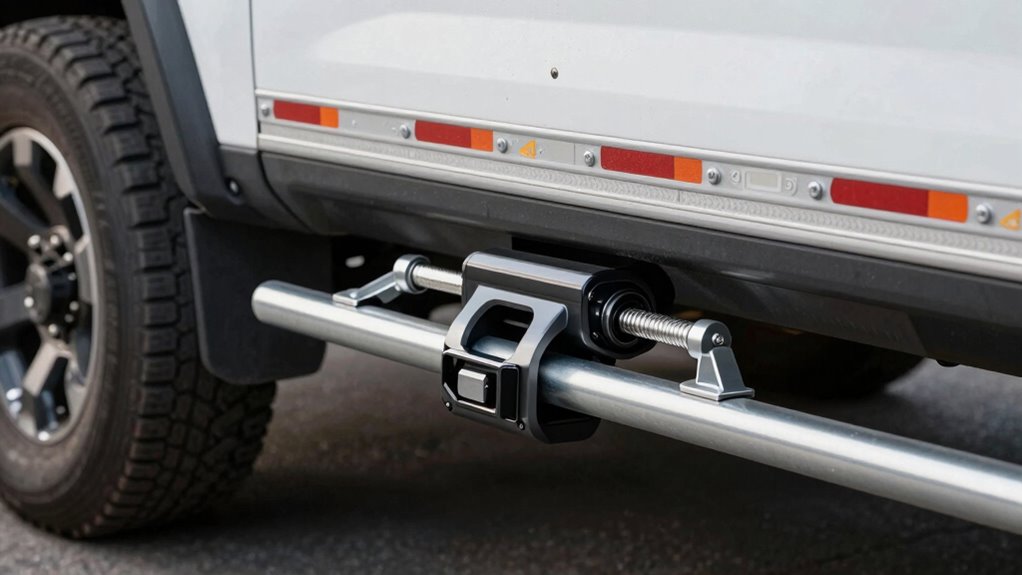
A weight distribution hitch is a device that helps evenly spread the tongue weight of a trailer across your vehicle’s axles. This improves hitch compatibility by ensuring your vehicle and trailer work together as a balanced unit. When properly installed, it uses spring bars to distribute the load more evenly, preventing excessive stress on your vehicle’s rear axle. This trailer balancing reduces squat and sway, providing a smoother, safer towing experience. By sharing the weight more evenly, you decrease the risk of uneven tire wear and drivetrain strain. A well-matched weight distribution hitch makes towing more stable and comfortable, especially for heavier trailers. Ensuring proper trailer balancing with the right hitch setup is vital for safe, efficient towing. Additionally, understanding the importance of proper trailer etiquette can enhance safety and coordination during towing. Proper installation and adjustment are crucial to maximize the benefits of a weight distribution hitch and maintain trailer safety. Regularly checking your setup aligns with best practices for trailer maintenance to prevent issues during trips and ensure continued safety and performance. Incorporating regular maintenance and inspection can also help sustain optimal performance and safety during your towing adventures. Performing correct load distribution is essential for achieving the full benefits of a weight distribution system and ensuring a safe towing experience.
Why Trailer Sway Is a Major Towing Concern and How to Fix It
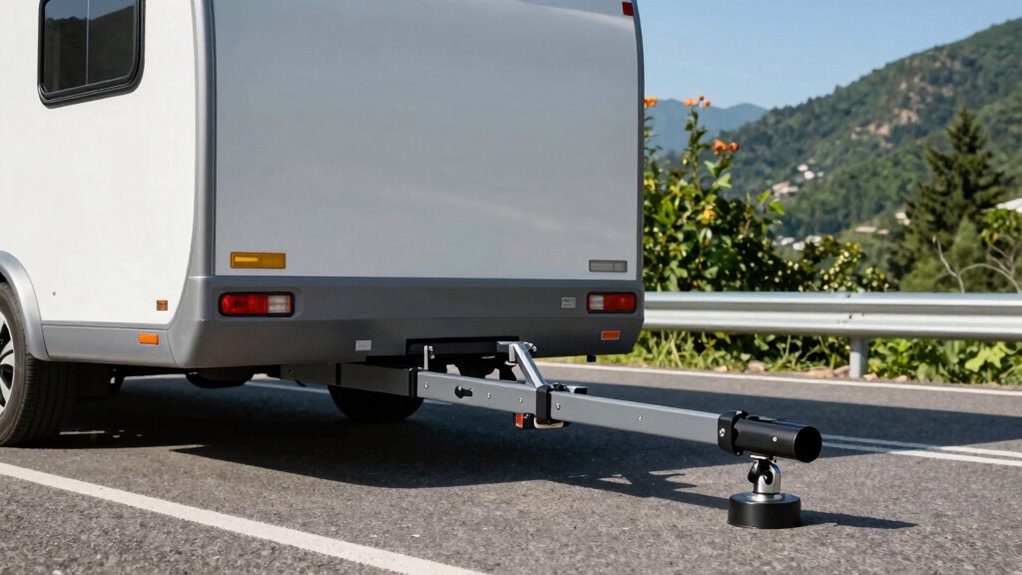
Trailer sway occurs when your trailer begins to move side to side independently of your vehicle, making towing unstable and dangerous. This issue can lead to loss of control, increasing the risk of accidents. Sway often results from poor trailer maintenance, such as uneven tire pressure or worn suspension components, which can exacerbate instability. Additionally, ignoring towing regulations, like weight limits and proper hitch setup, can worsen sway problems. To fix this, ensure your trailer is well-maintained, with regular checks on tires, brakes, and suspensions. Using a weight distribution hitch can considerably reduce sway by evenly distributing the load and improving stability. Staying compliant with towing regulations not only keeps you safe but also minimizes the risk of sway-related accidents. Incorporating essential DIY tools and following safety tips can help you perform maintenance and repairs effectively, further enhancing towing safety. Understanding trailer dynamics can also be beneficial for preventing sway issues before they occur, especially when considering cultural artifacts like Indonesian masks to personalize your space. Additionally, paying attention to proper hitch setup ensures your trailer remains aligned and stable during towing. Proper load balancing is crucial for maintaining optimal weight distribution and preventing sway during towing.
Common Signs You Need a Weight Distribution Hitch
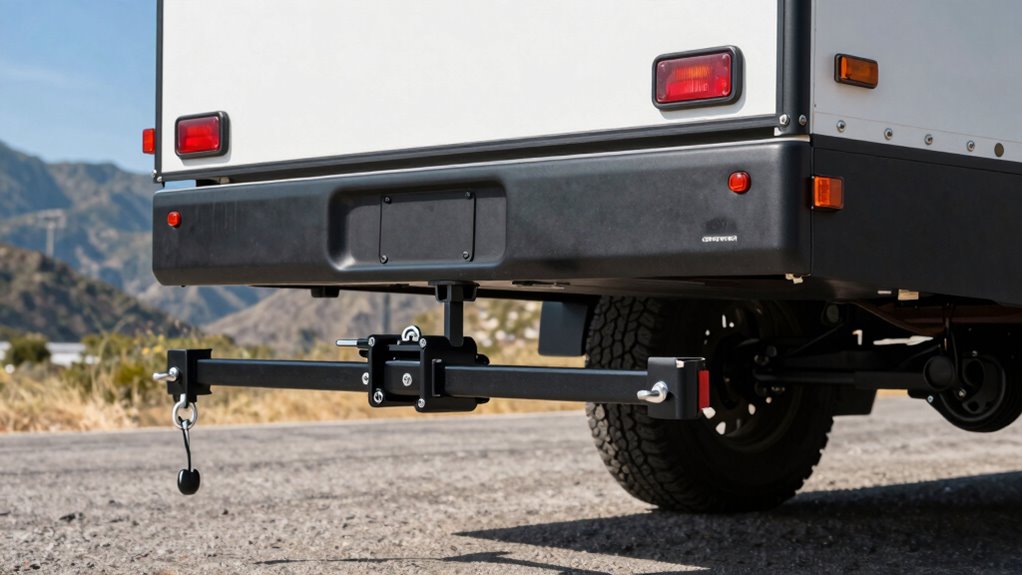
Noticing handling issues while towing is a clear sign you might need a weight distribution hitch. If your trailer feels unsteady, sways excessively, or causes you to overcorrect, it’s time to evaluate your setup. Poor trailer maintenance can worsen these problems, risking towing safety for you and others. Recognizing these signs early helps prevent accidents and prolongs your equipment’s life. Additionally, understanding proper gear care techniques can improve your overall towing experience. Incorporating a high-quality projector can also enhance your home cinema setup, making your space more enjoyable for movies and gaming. Exploring eco-friendly craft ideas can inspire sustainable projects that reduce waste and environmental impact in your daily life. Being aware of how essential oils for safety can support your well-being during outdoor or travel activities is also beneficial. Regular equipment inspections can help identify potential issues before they become serious problems.
How a Weight Distribution Hitch Prevents Sway and Improves Safety
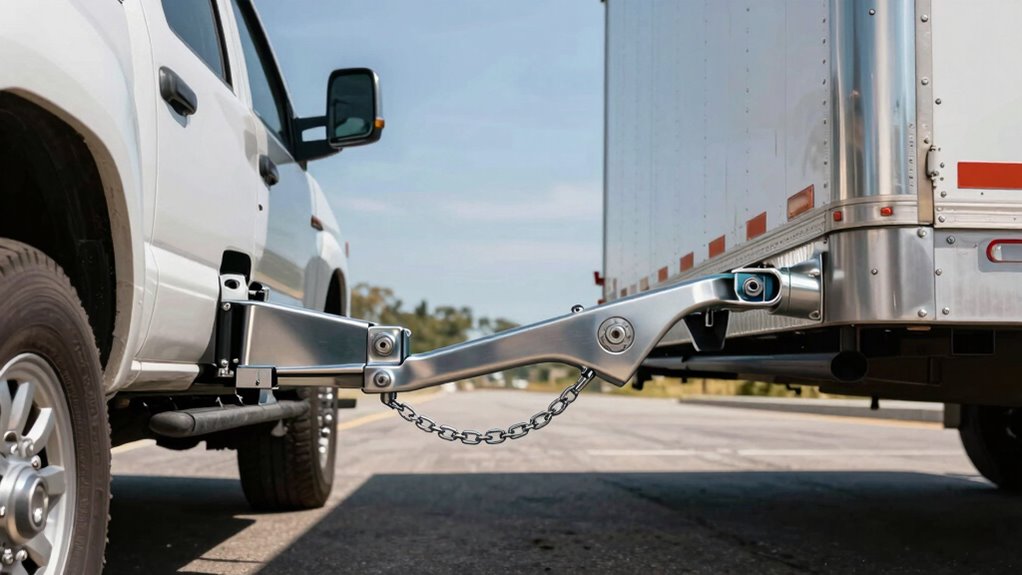
A weight distribution hitch helps keep your vehicle stable by evenly spreading the trailer’s weight across all axles. This setup reduces sway, making your towing experience safer and more controlled. With improved stability, you can feel confident even on windy or hilly roads. Additionally, proper humidity control can help maintain optimal conditions in your trailer, preventing issues caused by excess moisture. Proper trailer maintenance further enhances safety and longevity during your towing adventures. Incorporating regular inspections into your maintenance routine can also identify potential safety concerns before they become serious. Regular routine checkups can detect early signs of mechanical wear that might compromise stability and safety, ensuring your entire towing setup remains reliable.
Enhanced Stability During Tows
When you’re towing a load, maintaining stability becomes essential to safety, and a weight distribution hitch plays a crucial role in preventing sway. This device helps distribute the trailer’s weight evenly across your vehicle and trailer, considerably enhancing stability during your drive. With improved weight balance, your vehicle responds more predictably, reducing the risk of sudden sways or fishtailing. Enhanced stability not only makes towing safer but also provides you with greater confidence on the road. To keep this benefit consistent, regular hitch maintenance is indispensable, ensuring all components function correctly and remain secure. Properly maintained hitches support towing safety by preventing unexpected movement, making your towing experience smoother, safer, and more controlled. Additionally, understanding urban pursuits in Harrisburg and other regional features can help you plan better routes and stops during your trips. Regular inspection of your hitch components ensures that your safety measures stay reliable and effective over time.
Reduced Vehicle Sway
A weight distribution hitch considerably reduces vehicle sway by evenly spreading the trailer’s weight across your vehicle and the trailer itself. This balance minimizes side-to-side movement, making your towing experience safer and more comfortable. Proper tire pressure on both your vehicle and trailer helps maintain stability, further reducing sway. Additionally, regular brake adjustments ensure the braking system functions effectively, preventing sudden shifts that can cause swaying. Maintaining proper battery inverter generator capacity can also support consistent power for trailer electrical systems, indirectly contributing to safer towing conditions. Here’s how sway reduction works:
| Benefit | Explanation |
|---|---|
| Even weight distribution | Less side-to-side movement during tow |
| Maintains tire pressure | Prevents uneven wear and instability |
| Proper brake adjustments | Enhances control and reduces sway |
| Improved steering | Better directional stability |
| Safety on curves | Less risk of trailer sway on turns |
Ensuring your backyard transformation includes proper hitch setup can significantly enhance your overall towing safety.
Main Parts of a Weight Distribution Hitch and How They Work
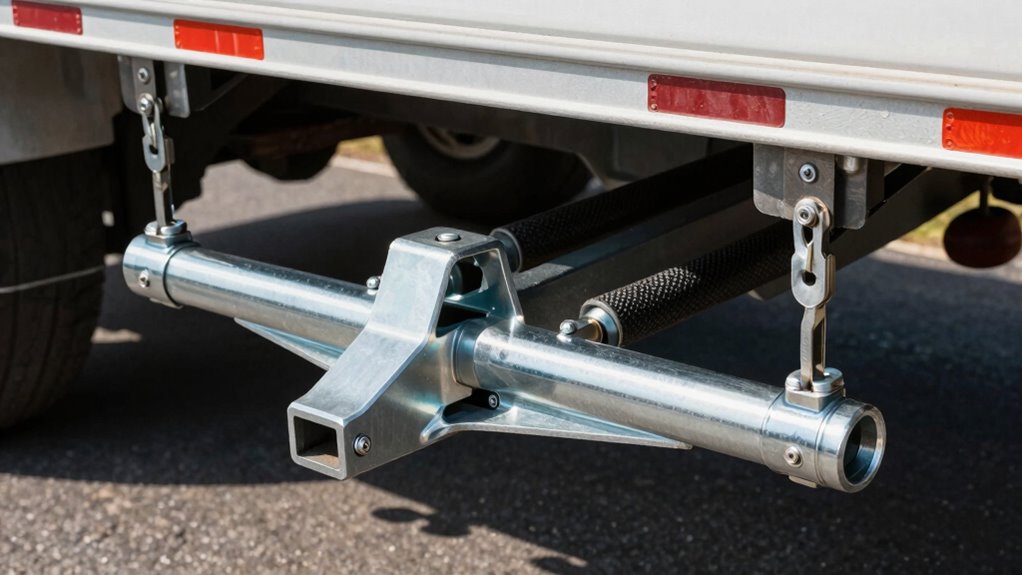
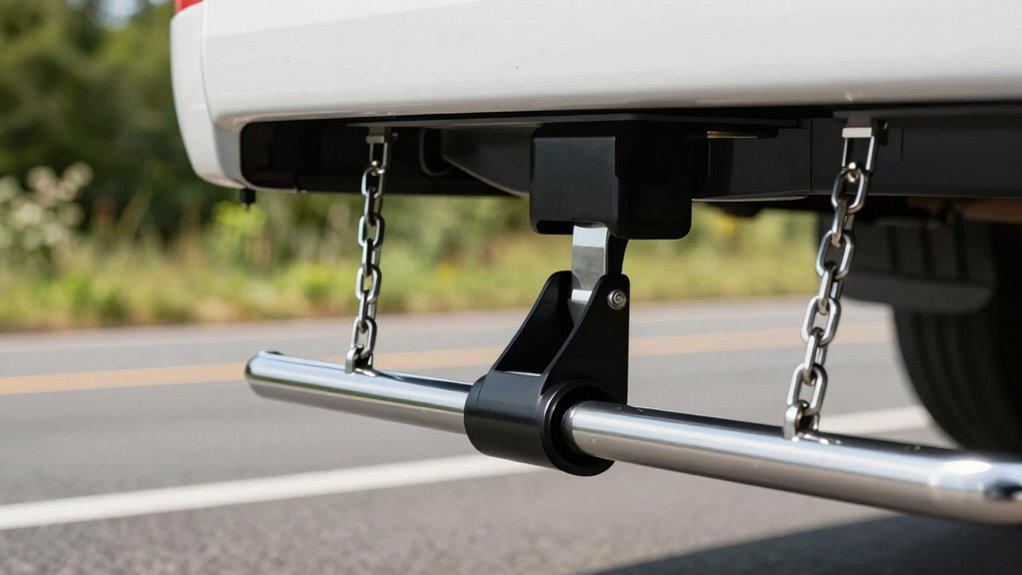
To understand how a weight distribution hitch works, you need to know its main parts. The hitch head mechanics connect your trailer to the tow vehicle and transfer weight evenly. Torsion bars and chains are vital components that help distribute the load and maintain stability during towing.
Hitch Head Mechanics
The hitch head is the central component that connects your vehicle to the weight distribution hitch system, playing a essential role in how the entire setup functions. Its mechanics are designed to evenly distribute the trailer’s tongue weight, which helps improve stability and control. The hitch head typically features a head or coupler that attaches to your trailer, along with mechanisms for adjusting tension. When properly aligned, it works with spring bars to transfer weight from the trailer to your vehicle’s front axle, reducing sag and sway. This interaction is critical for trailer sway control, keeping your ride steady and safe. Understanding how the hitch head mechanics operate ensures you can optimize your hitch setup for maximum stability and confident towing.
Torsion and Chains
Ever wonder how weight distribution hitches balance the load between your trailer and vehicle? It all comes down to torsion mechanics and chain tension. The torsion bars flex to absorb and distribute weight, providing a smooth ride. When you engage the hitch, the chains apply tension that lifts the trailer’s tongue, transferring some of the load to your vehicle’s front axle. This chain tension is vital, as it controls how effectively the hitch distributes weight across all axles. The torsion system reacts to trailer movement by flexing, maintaining stability and reducing sway. Together, torsion mechanics and chain tension work seamlessly to balance your trailer’s weight, ensure safe handling, and improve overall towing experience.
How to Choose the Right Weight Distribution Hitch for Your Trailer
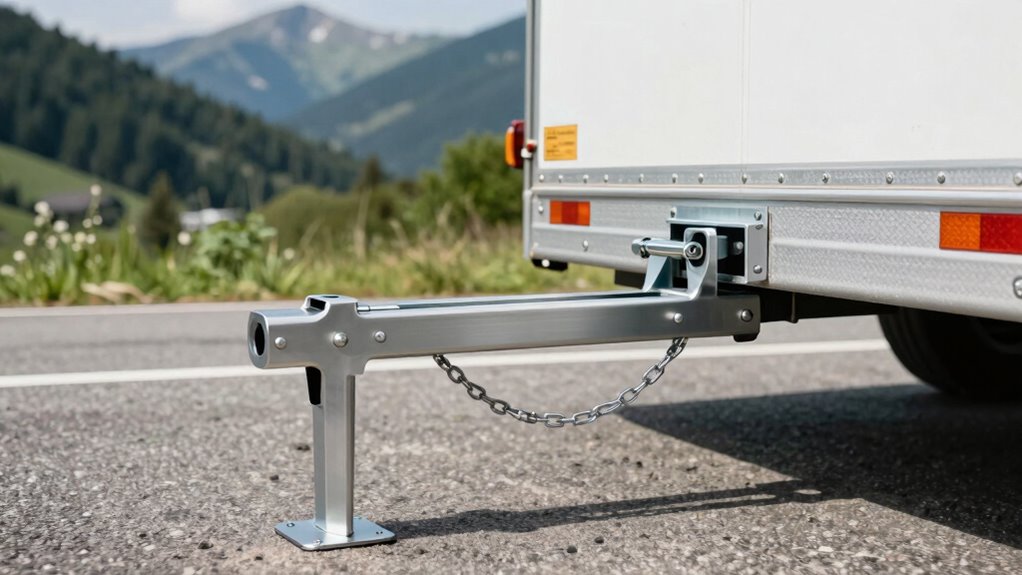
Choosing the right weight distribution hitch is essential for maintaining proper trailer stability and safe towing. To pick the best fit, consider these factors:
Selecting the right weight distribution hitch ensures safe, stable towing and trailer control.
- Hitch Compatibility: Make certain the hitch is compatible with your vehicle’s receiver and your trailer’s coupler.
- Trailer Weight Guidelines: Check the manufacturer’s recommended weight range to match your trailer’s gross weight.
- Weight Distribution Capacity: Select a hitch that can handle the total loaded weight, including cargo and tongue weight.
Step-by-Step: Installing Your Weight Distribution Hitch Correctly
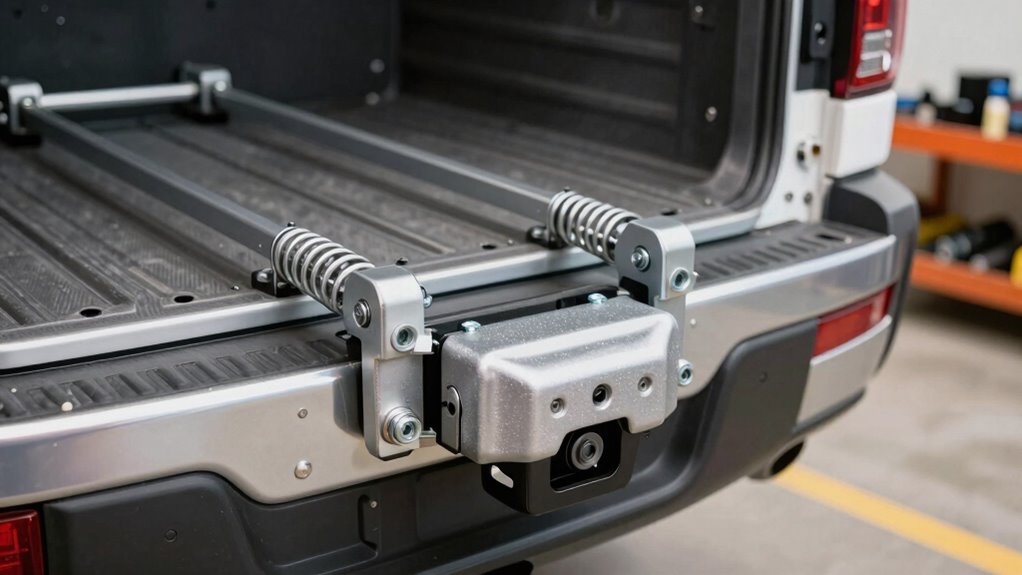
Installing your weight distribution hitch correctly is essential to guarantee safe and effective towing. Start by positioning the hitch correctly on your trailer’s frame, ensuring it aligns with your vehicle’s receiver. Attach the spring bars to the hitch head, then connect the hitch head to the trailer. Tighten all bolts securely, following the manufacturer’s torque specifications. Adjust the tension to distribute weight evenly across your axles, which is critical for proper trailer brakes operation. Be sure to double-check your setup to comply with towing regulations in your area. Proper installation helps prevent trailer sway, improves steering control, and guarantees trailer brakes function at their best. Taking the time to install your weight distribution hitch correctly safeguards your load and keeps you safe on the road.
Additional Benefits of Using a Weight Distribution Hitch for Towing
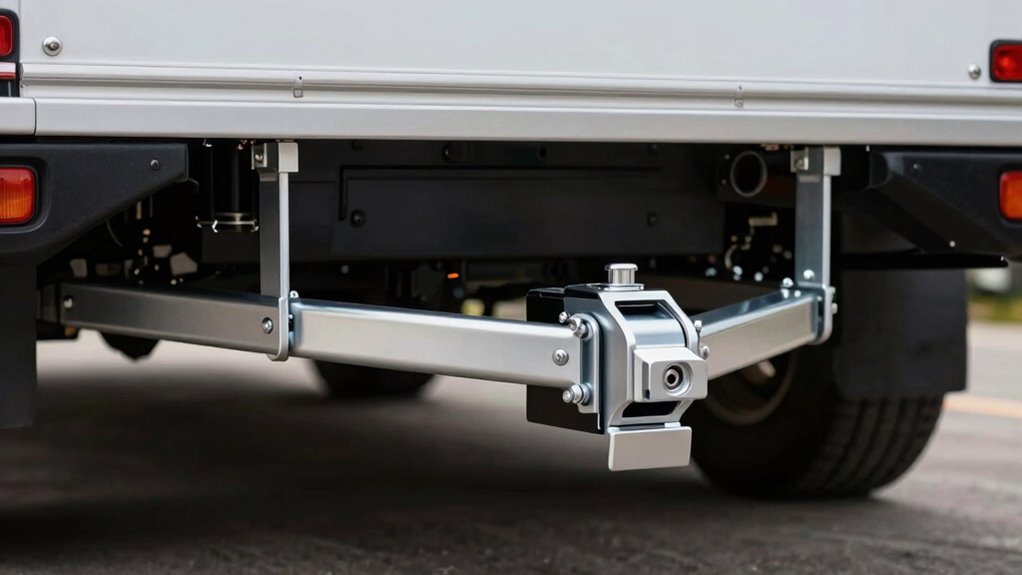
Using a weight distribution hitch offers several benefits that enhance your towing experience. First, it helps maintain proper trailer alignment, reducing sway and ensuring safer handling on the road. Second, by evenly distributing the tongue weight, it minimizes uneven tire wear on your vehicle and trailer, extending their lifespan. Third, you’ll notice improved fuel efficiency because the hitch keeps your vehicle and trailer running more aerodynamically, reducing drag. These benefits mean you spend less time worrying about stability and more time enjoying your trip. With better trailer alignment, your vehicle handles more like it does when you’re driving solo, and your fuel costs decrease. Overall, a weight distribution hitch makes towing smoother, safer, and more economical.
Common Mistakes When Using or Installing a Weight Distribution Hitch and How to Avoid Them
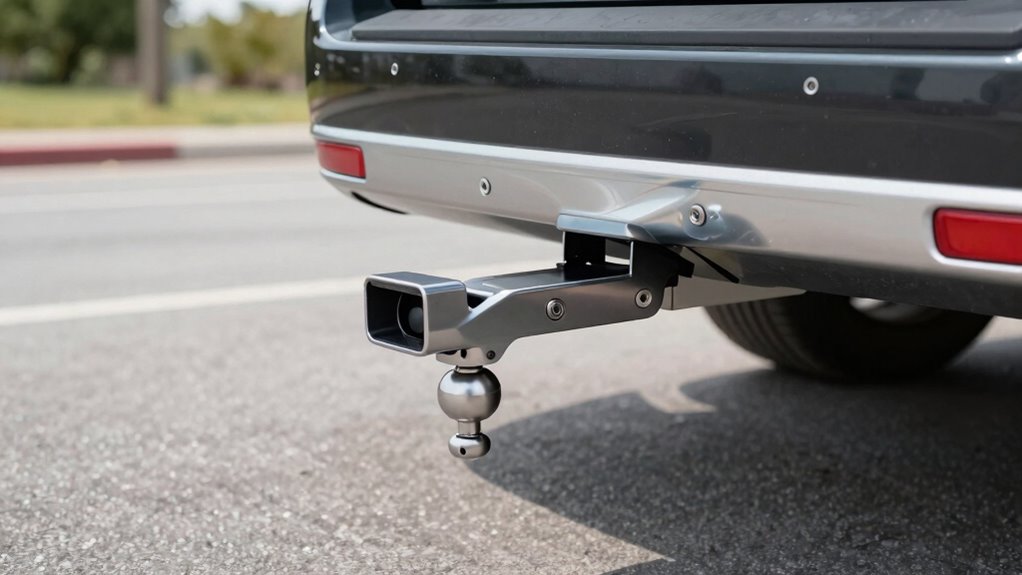
One common mistake is setting up the hitch incorrectly, which can cause instability while towing. Overloading the hitch beyond its capacity is another issue that can damage your equipment and compromise safety. To avoid these problems, follow the manufacturer’s instructions carefully and guarantee your setup matches your vehicle and trailer specifications.
Incorrect Hitch Setup
Incorrect setup of a weight distribution hitch is a common mistake that can compromise safety and towing performance. If your hitch isn’t aligned properly, it can cause uneven weight distribution and sway. To avoid this, focus on three key points:
- Hitch alignment: Make sure the hitch head is level from side to side and front to back. Misalignment reduces stability.
- Tongue weight: Ensure the trailer’s tongue weight matches the manufacturer’s recommendations. Too little or too much can lead to poor handling.
- Proper adjustments: Adjust the tension bars evenly, so the weight is distributed correctly across the axles. Uneven tension can cause sway and reduce control.
Checking these details guarantees a safer, smoother tow.
Overloading the Hitch
Have you ever thought about what happens if you overload your weight distribution hitch? Hitch overloading occurs when you exceed the hitch’s weight capacity, putting unnecessary stress on the system. This mistake can lead to uneven trailer tongue weight, causing poor handling, sway, and even damage to your hitch or vehicle. Overloading compromises safety and can result in costly repairs. To avoid this, always check the hitch’s maximum weight capacity before towing, and ensure your load stays within those limits. Properly distributing your load across the trailer and hitch helps maintain stability. Remember, exceeding the recommended weight capacity isn’t just risky; it’s preventable. Staying within the hitch’s limits protects your equipment and keeps your towing experience safe and smooth.
Maintaining Your Weight Distribution Hitch for Long-Term Safety and Performance
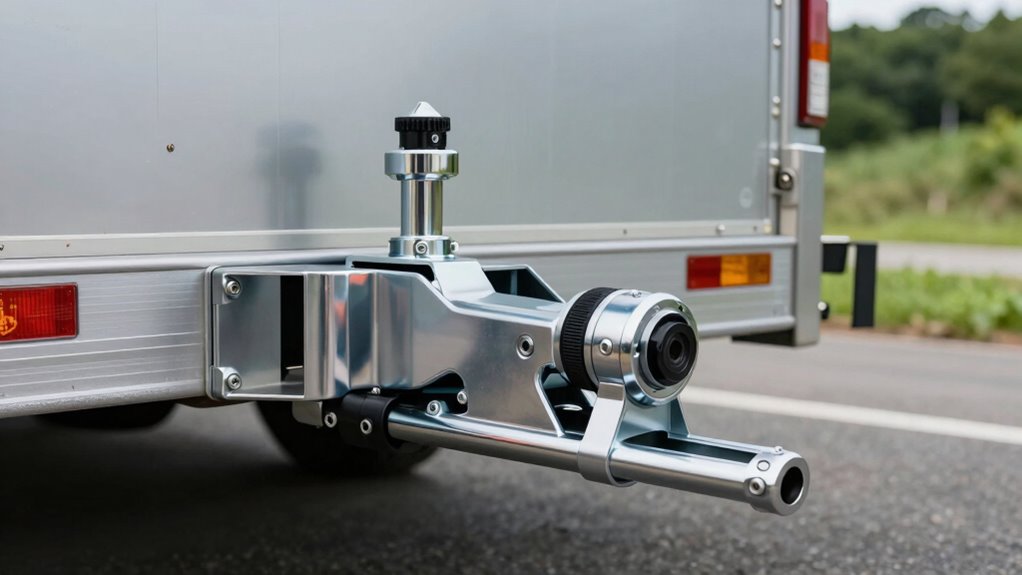
Regularly inspecting and maintaining your weight distribution hitch is essential to guarantee it performs safely and reliably over time. To do this effectively, focus on three key areas:
Regular maintenance ensures your weight distribution hitch remains safe and reliable over time.
- Safety inspections: Check for any signs of wear, rust, or damage on the hitch components. Tighten bolts as needed to ensure everything stays secure.
- Tire pressure: Maintain proper tire pressure on your towing vehicle and trailer. Correct pressure improves stability and reduces strain on your hitch.
- Lubrication: Apply grease to moving parts, such as hitch bars and sway controls, to prevent squeaks and ensure smooth operation.
Frequently Asked Questions
Can a Weight Distribution Hitch Be Used With All Trailer Types?
You can’t use a weight distribution hitch with all trailer types due to compatibility issues. Some trailers, like certain boat or cargo trailers, may not be designed to handle the added stress or specific hitch types. Always check your trailer’s specifications and consult the hitch manufacturer to verify compatibility. Using the right hitch for your trailer type prevents sway, distributes weight properly, and keeps your towing safe.
How Often Should I Inspect and Adjust My Weight Distribution Hitch?
You should inspect and adjust your weight distribution hitch regularly, ideally before each trip or at least every few months. During hitch maintenance, check for signs of wear inspection, such as rust, cracks, or loose bolts. Keep the hitch properly aligned and tighten all components as needed. Regular inspections ensure safe towing, prevent equipment failure, and maintain ideal weight distribution, keeping your trailer stable and secure on the road.
Is Professional Installation Necessary for a Weight Distribution Hitch?
Think of installing a weight distribution hitch like tuning a musical instrument—it needs precision. While DIY installation works for some, professional installation guarantees proper setup, especially for complex models or heavy loads. Installation requirements vary; some hitches are straightforward, but others demand expert calibration. Choosing a professional guarantees safety, reduces errors, and prolongs your equipment’s life, giving you peace of mind on the road.
What Is the Maximum Weight Capacity for Most Weight Distribution Hitches?
Most weight distribution hitches have a maximum weight capacity between 500 and 1,200 pounds of tongue weight, depending on the hitch’s compatibility with your vehicle and trailer. To guarantee safety and ideal towing capacity, always check your hitch’s specifications and your vehicle’s towing limits. Proper installation is essential to handle the maximum weight capacity effectively, so confirm compatibility and follow manufacturer guidelines for safe and efficient towing.
Can a Weight Distribution Hitch Improve Fuel Efficiency?
Yes, a weight distribution hitch can improve your fuel efficiency. By evenly distributing the trailer’s weight, it reduces drag and towing resistance, leading to better towing efficiency. As a result, you’ll experience fuel savings because your vehicle doesn’t have to work as hard. Plus, it enhances stability, making your towing experience safer and more comfortable. So, investing in a weight distribution hitch pays off through improved performance and lower fuel costs.
Conclusion
Using a weight distribution hitch can reduce trailer sway by up to 90%, dramatically improving your towing safety. Proper installation and maintenance are key to maximizing its benefits. With the right hitch, you’ll enjoy smoother, safer trips and protect your vehicle and cargo. Don’t overlook this essential upgrade—your safety and peace of mind depend on it. Remember, investing in a quality weight distribution hitch can be a game-changer on the road.
Fall Picks
fall essentials
As an affiliate, we earn on qualifying purchases.