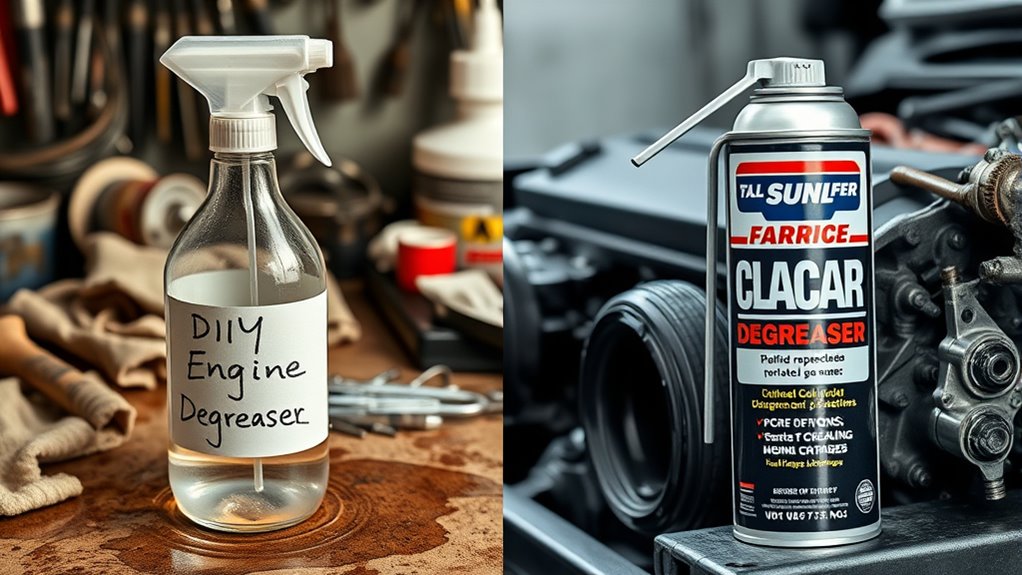

When choosing between DIY and commercial engine degreasers, safety and effectiveness are key. DIY solutions like baking soda and vinegar are safer and eco-friendly but may require more effort and time for tough grease. Commercial degreasers work faster and are more effective on stubborn grime but often contain stronger chemicals that need careful handling. If you’re willing to weigh these differences, you’ll find tips that help you make the best choice for your needs.
Key Takeaways
- DIY degreasers with natural ingredients are safer but may be less effective against heavy grease.
- Commercial degreasers are formulated for quick, powerful cleaning but often contain stronger chemicals requiring safety precautions.
- DIY solutions generally pose fewer health risks if used properly, while commercial products may need protective gear.
- Effectiveness varies: commercial products typically clean faster and more thoroughly than DIY methods.
- Proper disposal of both DIY and commercial degreasers is essential to prevent environmental harm.

When it comes to cleaning your engine, you have the choice between DIY solutions and commercial degreasers. Both options can effectively remove grease and grime, but they differ notably in terms of environmental impact and cost comparison. Understanding these differences helps you make a smarter, safer decision for your vehicle and the planet.
DIY engine cleaning methods often involve household products like dish soap, baking soda, or vinegar. These are generally inexpensive and readily available, making them a cost-effective choice if you’re on a budget. However, their environmental impact varies. For instance, dish soap and baking soda are biodegradable and pose less harm to the environment, but they may require more scrubbing and time to achieve the same results as commercial products. On the other hand, some DIY solutions might contain chemicals that can be harmful if not used properly or disposed of correctly, potentially contaminating soil and water sources. So, while DIY options tend to be less costly upfront, they might demand more effort and time, and their environmental footprint depends heavily on the specific ingredients you choose.
DIY engine cleaning with household products is budget-friendly but varies in environmental impact depending on ingredients.
Commercial degreasers, by contrast, are formulated specifically for engine cleaning, often containing powerful chemicals designed to break down stubborn grease quickly. These products usually cost more than DIY solutions initially, which can add up over time if you’re cleaning frequently. Yet, they offer the advantage of efficiency, saving you time and effort. From an environmental perspective, many commercial degreasers contain solvents and chemicals that can be harmful if not used properly or disposed of responsibly. Some brands now offer eco-friendly options, but these tend to be more expensive. When comparing costs, it’s important to factor in not just the purchase price but also the potential costs related to safety measures, disposal, and environmental impact.
In essence, DIY solutions are more budget-friendly and environmentally friendly if you choose natural ingredients, but they may require more effort and longer cleaning times. Commercial degreasers, while more costly upfront, deliver quick, effective results but demand careful handling and proper disposal to minimize their environmental impact. Your choice should balance your budget, safety considerations, and environmental consciousness. If you prioritize eco-friendliness and low cost, DIY methods using biodegradable products are a solid option. If you need fast, powerful cleaning and are willing to invest in safe disposal practices, commercial degreasers might be the better route. Ultimately, both have their pros and cons, so consider your specific needs and values before making a decision.
Additionally, proper disposal methods are crucial to prevent environmental contamination when using any type of degreaser.
engine degreaser commercial
As an affiliate, we earn on qualifying purchases.
As an affiliate, we earn on qualifying purchases.
Frequently Asked Questions
Are DIY Degreasers Environmentally Friendly?
DIY degreasers can be environmentally friendly if you use eco-friendly ingredients and biodegradable options. You have control over what goes into your homemade solution, allowing you to avoid harsh chemicals found in commercial products. By choosing natural substances like vinegar, baking soda, or citrus extracts, you create a safer, biodegradable cleaner. This way, you reduce environmental impact and guarantee your engine cleaning is both effective and gentle on the planet.
Can DIY Degreasers Damage Engine Components?
Yes, DIY degreasers can damage engine components if you’re not careful. Harsh chemicals may cause engine corrosion or trigger unwanted chemical reactions, especially on sensitive parts like rubber hoses or electrical connections. Always test your homemade solution on a small area first, and avoid using overly aggressive ingredients. Properly neutralizing or rinsing your DIY degreaser helps prevent damage, ensuring your engine stays safe and functional.
How Long Do Commercial Degreasers Take to Work?
Most commercial degreasers work within 5 to 10 minutes, but application timing is key for ideal results. You should let the degreaser sit long enough to loosen grime, usually around 5 minutes, but avoid letting it dry. Keep in mind, using environmentally friendly options reduces environmental impact and minimizes health risks. Follow the manufacturer’s instructions carefully, and you’ll see the best cleaning results efficiently and safely.
Are DIY Degreasers Cost-Effective Long-Term?
DIY degreasers can be cost-effective long-term if you focus on ingredient quality and proper mixing. By making your own cleaner, you save on commercial product costs and can customize formulas for your needs, leading to significant cost savings over time. However, guarantee the ingredients are high-quality and safe to avoid damage or health risks. Proper maintenance and careful use maximize your savings and keep your engine clean effectively.
Do Commercial Products Require Special Safety Gear?
When handling commercial degreasers, you’ll want to wear protective gear like gloves and goggles, as these products often contain powerful chemicals that pose hazards to your skin and eyes. Visualize the harsh chemical hazards lurking in each spray or splash—protective gear acts as your barrier. Always follow the manufacturer’s safety instructions to avoid chemical burns, respiratory issues, or irritation, ensuring your cleaning process is both safe and effective.

WD-40 Specialist Machine & Engine Degreaser Foaming Spray, 18 OZ
Powerful degreaser removes oil, dirt, grime, and grease from machinery and all types of engines
As an affiliate, we earn on qualifying purchases.
As an affiliate, we earn on qualifying purchases.
Conclusion
Choosing between DIY and commercial engine degreasers is like picking a trusty toolbox or a shiny new gadget—you’ll want what best suits your needs. DIY options can be like a secret recipe, effective if you’re careful, but commercial degreasers act like a seasoned chef, delivering consistent results safely. Whichever path you take, remember that safety and effectiveness are your guiding stars, ensuring your engine shines bright without risking a fiery mess. Your engine’s health depends on your wise choice!

3D Orange Degreaser – Citrus-Based Car Cleaner for Oil, Grease, Grime & Adhesives – Water-Based, Non-Corrosive, Eco-Friendly, Interior & Exterior Use – 16 Fl oz
Powerful Citrus Cleaning Formula: Packed with d'Limonene terpenes, 3D Orange Degreaser cuts through grease, grime, and oil buildup…
As an affiliate, we earn on qualifying purchases.
As an affiliate, we earn on qualifying purchases.
![CRC 05483 Heavy Duty Pro-Strength Degreaser, 20 Wt Oz, [1 Pack]](https://m.media-amazon.com/images/I/416dTJDjowL._SL500_.jpg)
CRC 05483 Heavy Duty Pro-Strength Degreaser, 20 Wt Oz, [1 Pack]
FORMULA: CRC Heavy Duty Pro-Strength Degreaser foaming water-based formula is aggressive yet gentle enough for various applications. It's…
As an affiliate, we earn on qualifying purchases.
As an affiliate, we earn on qualifying purchases.