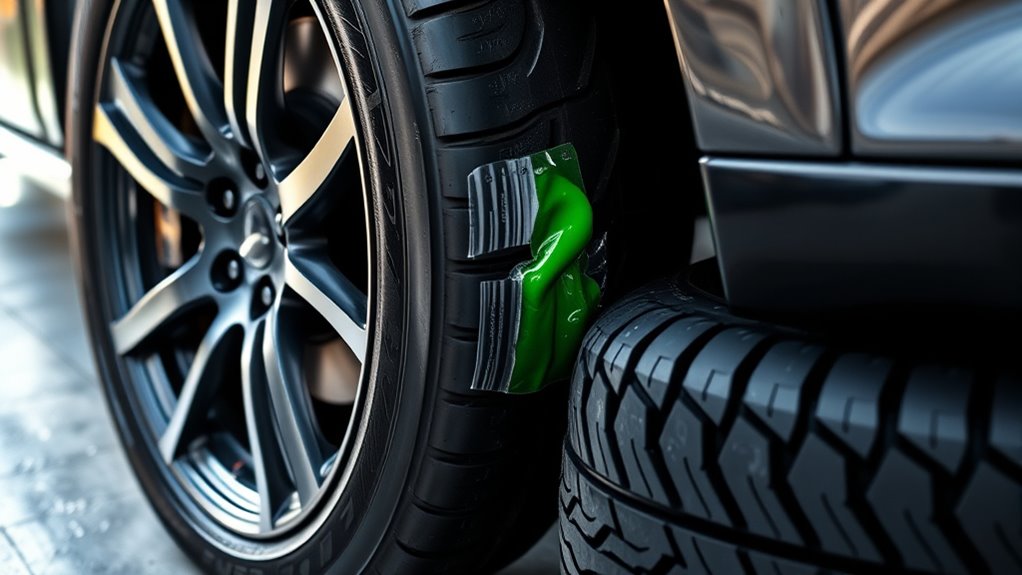

If you’re choosing between tire sealant and a spare tire, consider their pros and cons. Sealants are quick and easy to use, allowing you to get back on the road fast, but they’re only effective for small punctures and are temporary fixes. Spare tires, especially full-size ones, provide a more reliable, long-term solution but require effort and space. To weigh your options and learn which suits your needs best, keep exploring these options further.

Get business pricing on garage and car supplies
- Business-only prices and quantity discounts
- Tax-exempt purchasing
- Multiple users, one account, clear invoices
Key Takeaways
- Tire sealants offer quick, easy fixes for small punctures without the need for vehicle lifting.
- Spare tires provide a more reliable, long-term solution, suitable for larger damages or multiple punctures.
- Sealants are lightweight and convenient but are temporary and may require professional inspection afterward.
- Spare tires, especially compact ones, limit driving speed and distance, and involve physical effort to replace.
- Choice depends on your need for immediate mobility versus long-term safety and readiness.
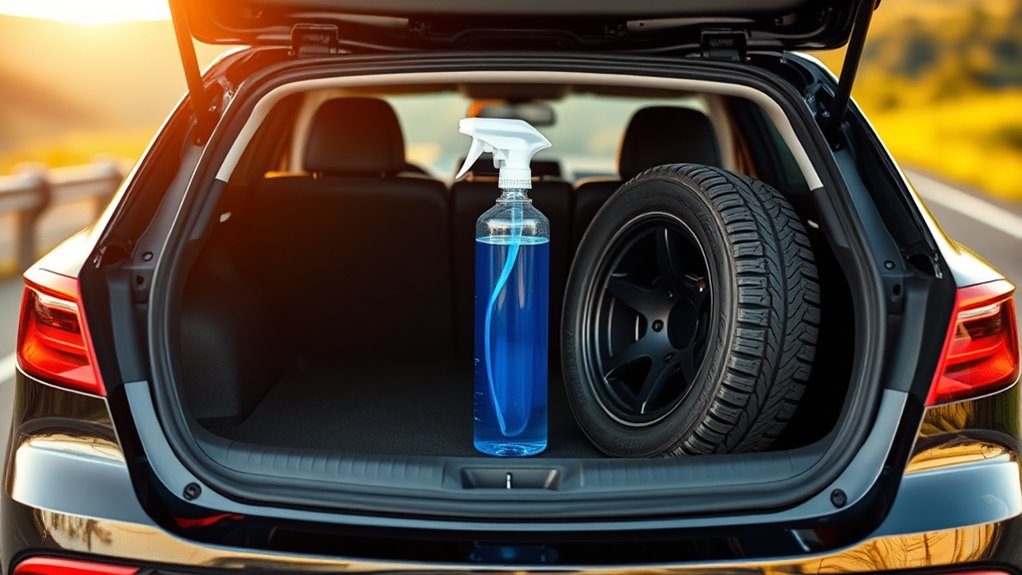
When your tire suddenly goes flat, you have to decide between using a tire sealant or a spare tire. Both options serve as quick fixes, but they come with different advantages and limitations. Your choice can impact not only your immediate safety but also your overall emergency preparedness. Understanding the pros and cons of each can help you make an informed decision when faced with a flat tire on the road.
Using a tire sealant is often the fastest way to get moving again. It works by injecting a liquid substance into your tire that seals small punctures from the inside. This method is especially handy if you’re in a situation where changing a tire isn’t feasible—say, on a busy highway or in bad weather. Tire sealants are lightweight and don’t require you to jack up your vehicle, making them a convenient option for quick flat tire repair. However, they’re not a permanent solution. Sealants typically work only on small punctures and may not be effective if the damage is large or if the tire has a significant tear. After using a sealant, it’s essential to get your tire inspected and repaired professionally as soon as possible to avoid further issues. Additionally, the effectiveness of a sealant can vary depending on the brand and type used, so choosing a reputable product is crucial.
On the other hand, a spare tire gives you a more reliable, long-term fix. When you have a spare tire ready, you can replace a flat with minimal fuss, provided you have the tools and know-how. Carrying a spare tire enhances your emergency preparedness because it allows you to address a flat immediately and continue your journey without delay. But it does require some effort—lifting, jacking, and fitting the new tire—and not all spare tires are full-sized. Many are compact “donuts,” which can be a temporary fix and may limit your driving speed and distance until you reach a repair shop. Plus, spare tires add weight to your vehicle, which can slightly impact fuel efficiency.
Choosing between a tire sealant and a spare tire depends on your comfort level with changing tires, the driving conditions you typically face, and how quickly you need to get back on the road. Sealants are more convenient for quick, temporary fixes, especially if you’re alone or in a tricky spot. Spares offer a more robust, dependable solution, but they require some preparation and physical effort. Both options are valuable in an emergency, but knowing their strengths and limitations helps you stay prepared and safe when faced with a flat tire. Being aware of grocery savings strategies and other safety tips can further enhance your preparedness in various situations.
best tire sealant for small punctures
As an affiliate, we earn on qualifying purchases.
As an affiliate, we earn on qualifying purchases.
Frequently Asked Questions
How Long Does a Tire Sealant Last Before Needing Replacement?
A tire sealant typically lasts between 6 to 12 months before needing replacement, depending on the product and driving conditions. You should check the sealant’s lifespan regularly and look for signs of drying or clumping. It’s important to monitor the sealant’s condition because timely replacement guarantees maximum performance, especially after a repair or if you’re preparing for a long trip. Always follow the manufacturer’s guidelines for replacement timing.
Can Tire Sealant Be Used on All Types of Tires?
Yes, tire sealant can be used on most types of tires, but you should verify for compatibility first. Tire compatibility varies, especially with high-performance or specialty tires, and sealant limitations might affect its effectiveness. Always follow the manufacturer’s guidelines to guarantee proper application. If you’re unsure about your tire type or sealant limitations, consult a professional to avoid potential damage or reduced performance.
What Are the Environmental Impacts of Tire Sealants?
Imagine a quiet forest disrupted by chemical runoff from tire sealants seeping into the soil. You should know that tire sealants can pose pollution concerns, as chemicals may wash into waterways during rain, impacting ecosystems. While convenient, their environmental impacts include potential pollution concerns and chemical runoff that harm wildlife. Be mindful of these effects, especially if you frequently use sealants or drive in sensitive areas.
How Quickly Can a Spare Tire Be Installed After a Flat?
You can usually install a spare tire within 10 to 20 minutes, making it a quick solution for a flat. When you experience a flat, you might perform a Tire repair yourself or call roadside assistance for help. Having a spare tire on hand guarantees you won’t be stranded long. Just follow your vehicle’s manual for proper installation, and consider roadside assistance if you’re unsure or need professional help.
Are There Any Safety Concerns With Using Tire Sealants?
Using tire sealant can pose safety concerns, especially regarding chemical reactions that might weaken your tire’s structure or cause imbalance. You should also be cautious about allergic reactions to certain sealant chemicals, which could be harmful if inhaled or touched. Always read the label, use sealant in a well-ventilated area, and consider alternatives if you have allergies or sensitivities. If unsure, consult a professional before application.
Conclusion
Just as Odysseus faced choices on his journey, you must weigh your options. Tire sealant offers convenience and quick fixes, but doesn’t substitute a full repair. A spare tire provides peace of mind, yet takes up space. Consider your adventures—whether they’re short trips or long voyages—so you can choose wisely. Ultimately, understanding these tools guarantees you’re prepared for life’s unexpected potholes, steering your journey with confidence rather than uncertainty.
Halloween Picks
halloween
As an affiliate, we earn on qualifying purchases.