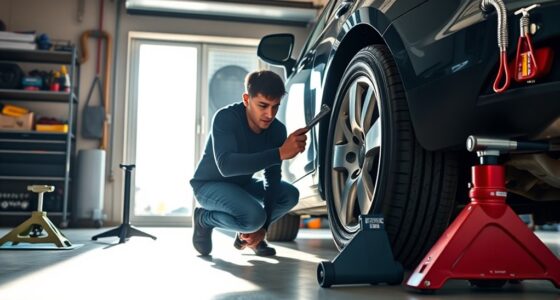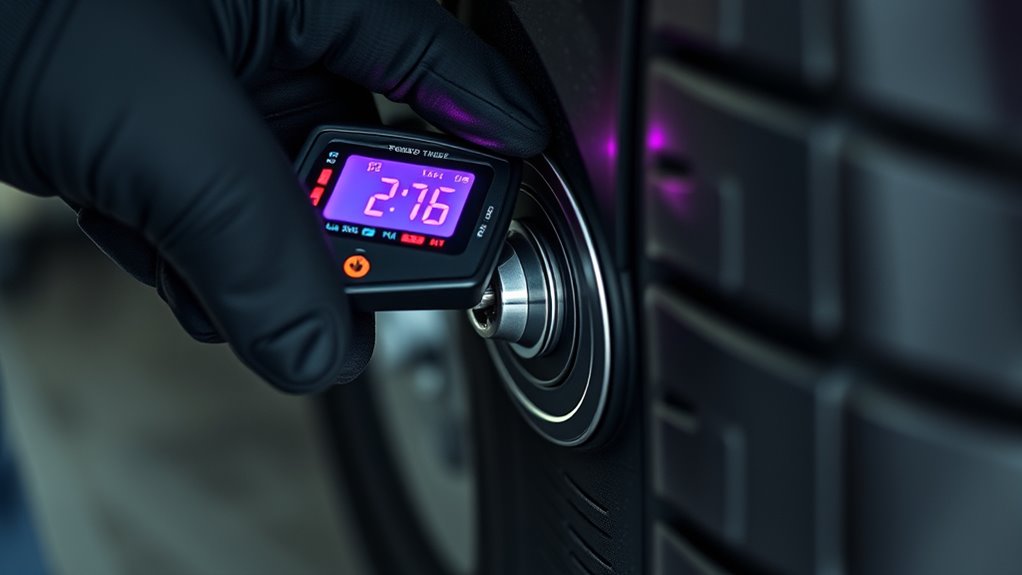

To calibrate your tire pressure monitoring sensors, first inflate your tires to the recommended pressure levels. Follow your vehicle’s manual instructions for the calibration process, which usually involves driving for a few minutes or using a diagnostic tool at a service center. Regular calibration guarantees accurate readings, helping you avoid false warnings and improve safety. If you’re interested in more detailed steps or tips, keep exploring to learn how proper calibration benefits your vehicle.

Get business pricing on garage and car supplies
- Business-only prices and quantity discounts
- Tax-exempt purchasing
- Multiple users, one account, clear invoices
Key Takeaways
- Follow the vehicle manufacturer’s instructions for recalibrating TPMS sensors after tire inflation or replacement.
- Inflate tires to the recommended pressure before starting the calibration process.
- Use the vehicle’s built-in reset or calibration function, often accessible via the dashboard menu.
- Drive the vehicle for a specified distance or speed to allow sensors to auto-calibrate.
- Visit a professional service center if calibration issues persist or warning lights remain on.
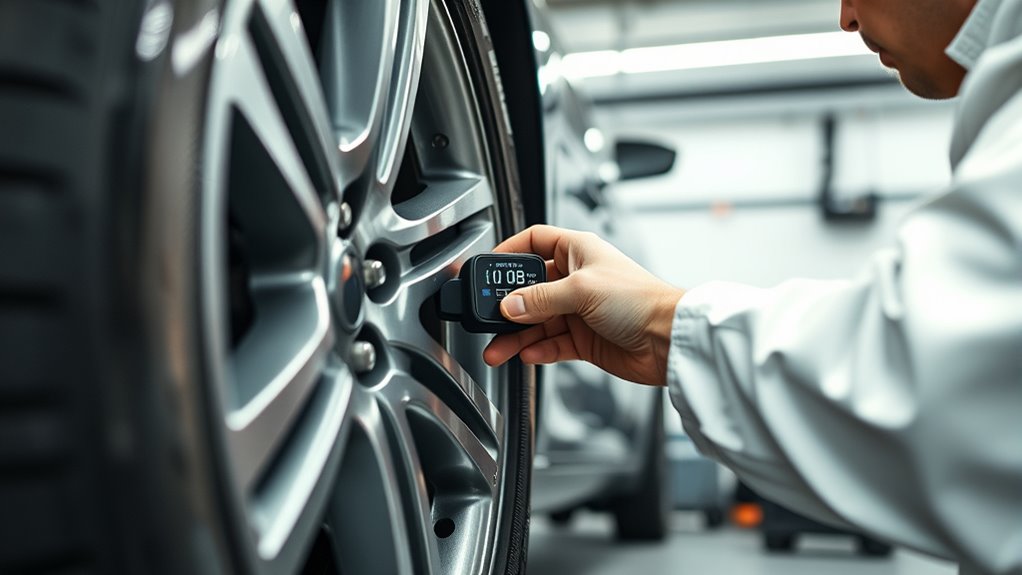
Calibrating your tire pressure monitoring sensors is essential to guarantee accurate readings and maintain safe driving conditions. When your sensors are properly calibrated, you can trust the tire pressure readings displayed on your dashboard, helping you avoid underinflated or overinflated tires. Proper sensor calibration directly impacts tire pressure accuracy, ensuring that you’re alerted promptly to any issues that could compromise safety or fuel efficiency. If your sensors aren’t calibrated correctly, you risk false warnings or, worse, missing critical alerts that could lead to tire damage or accidents.
Proper calibration ensures accurate tire pressure readings for safe, efficient driving.
The calibration process begins with understanding how your vehicle’s system receives data from the sensors. Each tire has a sensor that transmits pressure information wirelessly to the car’s onboard computer. Over time, these sensors can drift from their original calibration due to temperature fluctuations, sensor battery life, or sensor replacement. When this happens, the tire pressure readings become unreliable, and calibration is necessary to restore accuracy. Many modern vehicles include built-in procedures to calibrate sensors, often requiring only a few simple steps, such as inflating the tires to the recommended pressure and then following specific instructions outlined in your owner’s manual.
Sensor calibration isn’t a one-time task; it’s something you should perform periodically, especially after changing tires, rotating wheels, or replacing sensors. Ensuring tire pressure accuracy isn’t just about avoiding a warning light; it affects your vehicle’s handling, fuel economy, and tire lifespan. Accurate sensor readings enable you to identify issues early, saving you money and preventing dangerous situations caused by improperly inflated tires. If you notice your tire pressure warning light stays on or flashing, it’s a clear sign that calibration might be needed. Sometimes, the sensors themselves are faulty, but often, recalibrating the system will resolve the issue.
In cases where your vehicle doesn’t have an automatic calibration feature, you might need specialized tools or visit a service center. Many auto shops have equipment specifically designed for sensor calibration, ensuring you get precise tire pressure accuracy. Regularly checking your tire pressure with a manual gauge can also help verify the sensor readings, giving you peace of mind. Remember, accurate calibration and tire pressure accuracy are essential to maintaining ideal vehicle performance, safety, and fuel efficiency. Taking the time to calibrate your sensors properly is a simple yet important step toward safer driving and longer-lasting tires.
Additionally, using self-watering plant pots with reservoir systems can help ensure consistent moisture levels in plants, much like how proper calibration maintains accurate tire pressure readings.
As an affiliate, we earn on qualifying purchases.
Frequently Asked Questions
How Often Should I Calibrate My Tire Pressure Sensors?
You should calibrate your tire pressure sensors whenever you notice sensor accuracy issues or after changing tires. Typically, calibration frequency depends on driving conditions and manufacturer recommendations, but doing it every 1,000 miles or if you experience warning lights helps guarantee your sensors stay precise. Regular calibration maintains ideal sensor accuracy, so you can trust your tire pressure readings and improve safety. Always check your vehicle’s manual for specific calibration intervals.
Can I Calibrate Sensors Without Professional Tools?
It’s like trying to fix a ship with a paperclip, but you can’t DIY calibration of tire pressure sensors without proper tools. You need specialized equipment for accurate sensor adjustment, so it’s best to leave it to professionals. Attempting a DIY calibration risks incorrect readings, which could compromise safety. Invest in professional service to guarantee your sensors are properly calibrated, keeping your vehicle safe and your tire pressure ideal.
Do All Vehicles Require Calibration After Tire Changes?
Not all vehicles require calibration after tire changes, but many do, especially if the sensors need sensor alignment. If you perform a tire rotation, you might also need to recalibrate the sensors to guarantee accurate readings. Always check your vehicle’s manual, as some models automatically calibrate, while others require manual calibration. Proper calibration keeps your TPMS functioning correctly, helping you maintain safe tire pressure and avoid false alerts.
What Signs Indicate a Faulty TPMS Sensor?
Did you know that about 50% of TPMS sensors fail within their first five years? If your warning light stays on or flashes, it’s a clear sign of a sensor malfunction. You might also notice inconsistent tire pressure readings or trouble resetting the system. These signs indicate that your TPMS sensor isn’t functioning correctly, so you should get it checked to ensure safe driving and accurate tire pressure monitoring.
Is Calibration Necessary After Replacing the TPMS Battery?
Yes, calibration is necessary after replacing the TPMS battery to guarantee sensor accuracy. When you change the battery, the sensor may lose its calibration, which can affect the system’s ability to monitor tire pressure correctly. Additionally, consider the battery lifespan; a new battery can improve sensor performance, but recalibration assures that the system functions reliably. Always follow your vehicle’s guidelines to maintain ideal tire pressure monitoring.
Conclusion
Think of your tire pressure sensors as the orchestra’s conductor—when they’re in tune, everything runs smoothly. Calibrating them is like fine-tuning their instruments, ensuring each note is perfect. When you take the time to calibrate, you’re guiding your vehicle’s harmony, preventing miscommunications that could lead to issues down the road. Keep your sensors calibrated, and your driving experience will stay in perfect rhythm—smooth, safe, and in tune with every mile.
Halloween Picks
halloween
As an affiliate, we earn on qualifying purchases.