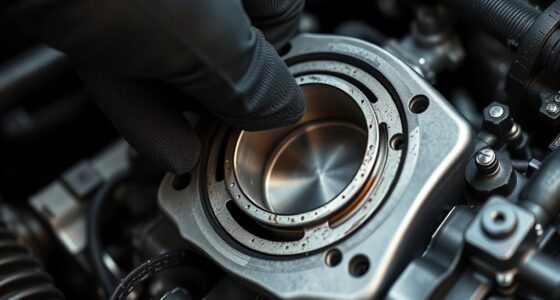

To diagnose car odors effectively, start by pinpointing where the smell is strongest and when it occurs, such as after heating or in certain areas like the trunk. Inspect for mold, dampness, and hidden spills, which are common causes. Check the cabin air filter and look for leaks or debris buildup. Focus on hidden spots like under seats and inside compartments. If you investigate these areas carefully, you’ll uncover the true source before masking the problem with air fresheners.
Key Takeaways
- Focus on areas with the strongest or most persistent smells, especially after specific conditions or activities.
- Use your nose to identify unusual scents and pinpoint their sources, such as mold, spills, or decaying items.
- Inspect hidden spots like under seats, in door panels, trunk, and vents for mold, debris, or moisture buildup.
- Check for moisture, water stains, or dampness indicating leaks or mold growth contributing to odors.
- Address and eliminate odor sources through cleaning, leak repairs, and filter replacements before masking the smell.

Puroma 1 Cabin Air Filter Activated Carbon for CP285 CF10285 Toyota Lexus
- Effective Odor and Contaminant Capture: Activated carbon and soda woven filter
- High-Quality Filtration: Close-meshed non-woven layer
- Protects Vehicle Interior: Prevents particles from entering cabin
As an affiliate, we earn on qualifying purchases.
As an affiliate, we earn on qualifying purchases.
How to Identify the Main Causes of Car Odors
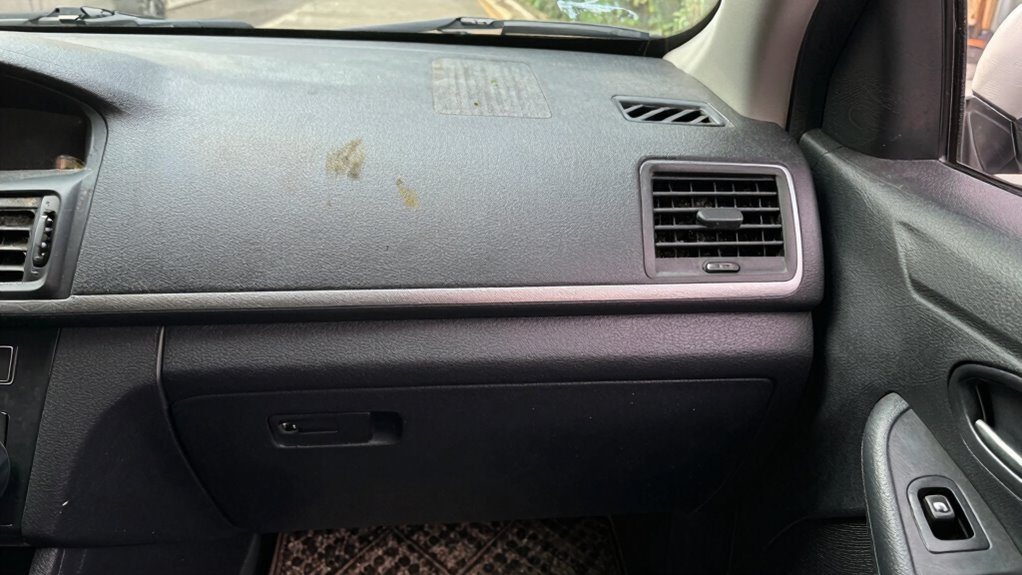
To effectively identify the main causes of car odors, you need to pay close attention to where the smell is strongest and when it occurs. This helps you pinpoint odor sources and understand scent indicators. For example, if the smell intensifies after turning on the heater, it might be linked to mold or mildew in the ventilation system. If it’s strongest near the trunk or cargo area, check for spilled substances or decaying items. Pay attention to timing—some odors may only appear after driving long distances or during specific weather conditions. Noticing which areas emit the most scent indicators guides you toward the root problem, whether it’s a wet carpet, spoiled food, or another source. Additionally, be aware of potential sources of indoor air pollutants like microplastics in dust, which can contribute to odors and impact air quality. Recognizing indoor air pollutants can help you address underlying issues rather than just masking unpleasant smells. Being familiar with testing accuracy methods allows you to better evaluate the effectiveness of your cleaning efforts and ensure the problem is truly resolved. It is also helpful to consider air quality testing to detect hidden pollutants that may be causing persistent odors. This focus allows you to target your cleaning efforts effectively.
Check and Replace Your Car’s Cabin Air Filter

Since a clogged or dirty cabin air filter can trap dust, mold, and other odor-causing particles, inspecting and replacing it regularly is essential for fresh-smelling air inside your vehicle. Proper air filter maintenance guarantees that odors don’t circulate and helps improve overall air quality. To perform a cabin filter replacement, locate the filter housing—usually behind the glove box or under the dashboard—and remove the old filter. Check for dirt, debris, or mold buildup; if it’s dirty, replace it with a new one. Regular cabin filter replacement not only prevents unpleasant odors but also keeps your HVAC system running efficiently. Additionally, DIY beauty secrets can inspire you to maintain your vehicle’s interior with simple, effective cleaning tips. Incorporating vehicle maintenance routines ensures your car stays fresh and odor-free over time. Make it a habit to inspect the filter at least every 12,000 to 15,000 miles or as recommended by your vehicle’s manual. Regularly inspecting and replacing the cabin filter is a vital part of proper vehicle care to keep your driving environment comfortable and healthy. Remember that air filtration systems play a crucial role in maintaining air quality inside your vehicle, especially in areas with high pollution or allergens. Properly maintaining your vehicle’s air filtration system can also prevent the buildup of mold and bacteria that cause persistent odors.
Look for Mold, Dampness, and Moisture Inside Your Car
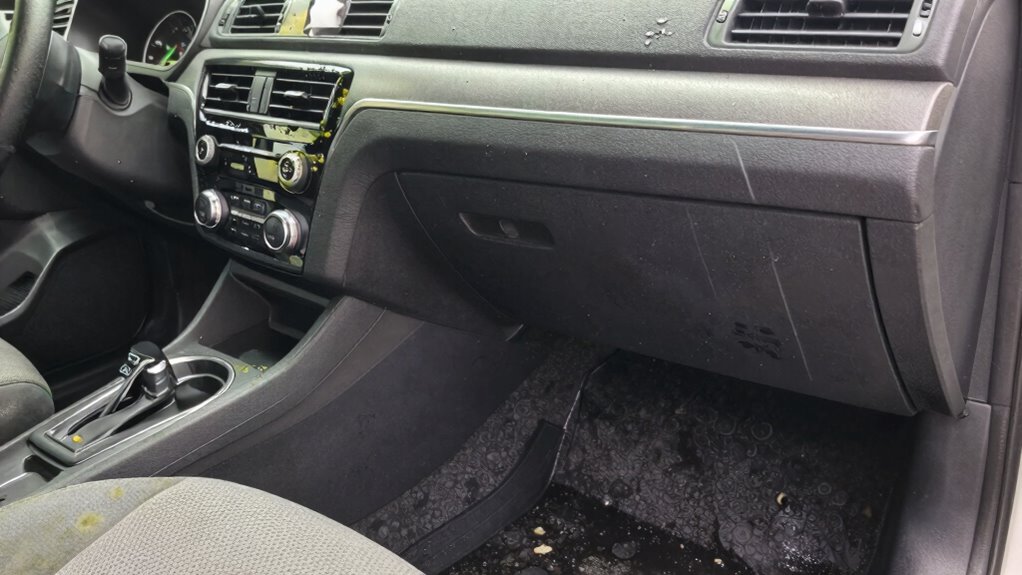
Start by checking for any visible mold spots or discoloration on your seats and carpets. Keep an eye out for persistent dampness or a musty smell that won’t go away. Addressing these issues early can help eliminate odors and prevent further damage inside your car. Investigating underlying causes such as leaks or high humidity levels can be essential for a thorough diagnosis. Additionally, understanding Indonesian decor masks can inspire creative ways to incorporate cultural elements into your home, creating a harmonious environment that reflects your personal style. Recognizing moisture management techniques can also help you reduce humidity and prevent future odors from developing, especially with the help of modern AI tools that can analyze environmental conditions.
Check for Visible Mold
Visible mold is a clear sign of moisture problems inside your car. When you see mold, it indicates persistent dampness that promotes mold growth and can trigger airborne allergens, worsening allergies or asthma. Mold often appears as fuzzy or slimy patches on seats, carpets, or other surfaces. While exterior odors might come from outside environments, mold inside your vehicle is a direct sign of internal moisture issues. Check hidden corners, under mats, and around vents for signs of mold growth or discoloration. Addressing visible mold promptly helps eliminate the source of the smell and prevents health problems. Remember, mold isn’t just unsightly—it can compromise your air quality and lead to persistent odors that won’t go away with masking sprays. Regular inspections and humidity control can help prevent future mold growth inside your vehicle.
Inspect for Persistent Dampness
Moisture can hide in your car’s interior even if you don’t see obvious signs. Check for persistent dampness by inspecting carpets, seats, and trunk areas for water stains or mold growth. Use proper ventilation techniques, like opening windows or running the AC, to help dry out moisture buildup. Feel for damp spots or musty smells that linger, indicating hidden moisture. Address any leaks or spills promptly to prevent ongoing dampness. Once dry, consider using odor neutralizers designed for car interiors to eliminate residual smells. Regularly inspecting for dampness and maintaining good ventilation can prevent mold and musty odors from developing, keeping your car fresh and odor-free. Additionally, installing dehumidifiers or moisture absorbers can further reduce humidity levels inside your vehicle, helping to prevent future odor problems. Don’t ignore moisture—it’s often the root cause of persistent car odors.
Find and Remove Food Spills and Trash That Cause Smells
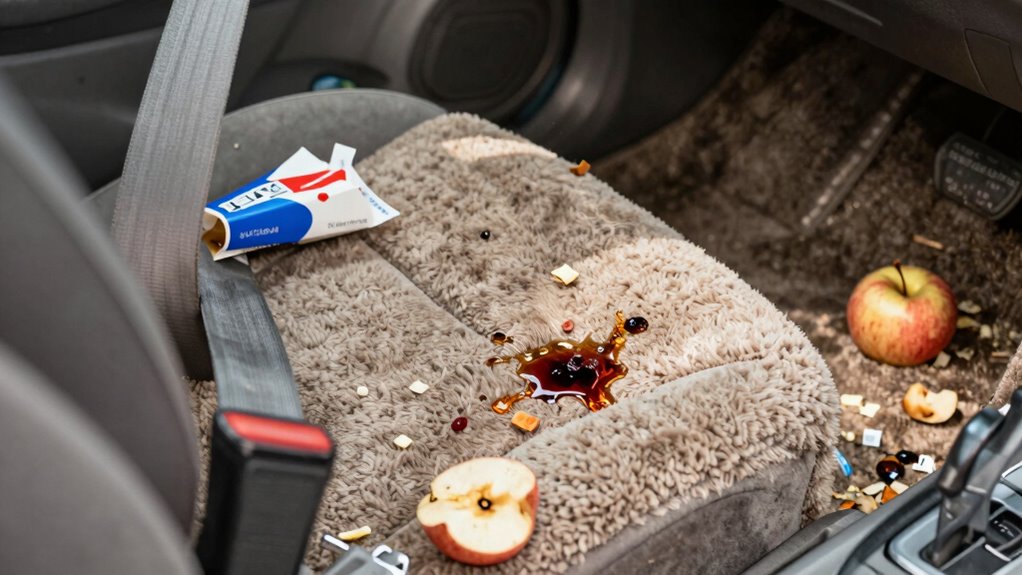
Food spills and trash are common sources of persistent car odors, and addressing them promptly can make a significant difference. Start by thoroughly inspecting your vehicle for any visible food crumbs, spills, or trash. Remove all trash and dispose of it properly. Use a wet cloth or upholstery cleaner to tackle food spills, especially on seats and carpets. Don’t forget hidden areas like under seats and in cup holders. Regular trash removal prevents odors from building up. To stay organized, check the following table:
| Area to Check | Action | Tips |
|---|---|---|
| Seat upholstery | Clean with fabric cleaner | Use vacuum first |
| Carpet | Spot clean or shampoo | Focus on spills |
| Floor mats | Remove and wash | Air dry thoroughly |
| Under seats | Vacuum and wipe | Check for hidden trash |
| Cup holders | Empty and clean | Use disinfectant |
Consistent trash removal and cleaning eliminate food odors effectively. Additionally, using AI-driven cleaning tools can help identify hard-to-see spots and maintain a fresh car interior.
Inspect for Mechanical Leaks and Fluid Residues

Since mechanical leaks and fluid residues can silently cause persistent odors, it’s vital to regularly inspect your vehicle’s engine bay and undercarriage. Look for signs of engine oil leaks around the valve cover gasket, oil pan, or seals. These leaks often leave behind oily spots that can produce a strong, burnt smell over time. Additionally, check for transmission fluid residues on the transmission pan or nearby components; these residues may indicate a leak that releases a slightly sweet, burnt odor. Fluid leaks not only cause bad smells but can also damage your vehicle’s parts. Regular inspections help you catch leaks early, preventing odor buildup and costly repairs. Addressing these issues promptly keeps your car smelling fresh and running smoothly. Using the right DIY tools and safety tips can make these inspections safer and more effective. Moreover, being familiar with common leak sources enables you to identify potential problems before they worsen. Furthermore, understanding regional flavors and unique vehicle components can assist in identifying unusual odors that are specific to your vehicle’s make or model.
DIY Tips to Detect Hidden Car Odors

To find hidden car odors, start by inspecting less obvious areas like under the seats and inside door panels. Use your nose to perform smell tests in different spots, noting any persistent or unusual scents. Also, check for moisture or dampness, which can indicate hidden mold or leaks contributing to odor problems. Considering the use of electric bikes and their quiet operation can sometimes help in detecting unusual sounds or vibrations that might reveal hidden issues inside the vehicle. Additionally, paying attention to environmental impact and how the car’s interior materials may influence odor persistence can aid in comprehensive diagnosis. Regular cleaning and understanding the Glycolic Acid benefits for skin may not directly relate but highlight the importance of proper maintenance and material choices to prevent odor-causing buildup. Being aware of vehicle maintenance practices can further help in identifying underlying causes of persistent odors.
Inspect Hidden Areas
Hidden areas in your car can harbor stubborn odors that aren’t immediately obvious. To detect these, you need to inspect often-overlooked spots. Check hidden compartments, like glove boxes or under seats, where moisture or debris can cause smells. Perform upholstery inspection by lifting seat cushions and examining seat backs for mold or spills. Don’t forget door panels and trunk spaces, as odors can linger there too. Here’s a quick guide:
| Area | What to Look For |
|---|---|
| Hidden Compartments | Spills, mold, or debris buildup |
| Upholstery Inspection | Stains, mold, or trapped moisture |
| Under Seats | Food crumbs, pet hair, dampness |
Regularly inspecting these spots helps you catch odors early and keeps your car smelling fresh.
Use Smell Tests
Using your sense of smell is one of the most straightforward ways to detect hidden car odors. Start by sniffing around the interior, focusing on seats, carpets, and vents. To better identify persistent smells, try using aromatherapy blends or natural scent masking agents, but only after pinpointing the source. If a particular area smells off, dig deeper—hidden spills or mold may be lurking underneath or behind panels. Keep in mind that scent masking might temporarily hide odors, so rely on your nose to distinguish between the original smell and added fragrances. Regular smell tests help you track where odors originate and whether they’re improving or worsening. This simple, intuitive approach can save you time and effort before resorting to more invasive inspections.
Check for Moisture
Moisture is often a key factor behind persistent car odors, especially when they seem to linger despite cleaning. Water intrusion from leaks, broken seals, or wet items can lead to moisture buildup inside your vehicle. To check for hidden moisture, look for damp carpets, seats, or upholstery, especially in the footwells and trunk. Use a flashlight to spot water stains or mold growth, which indicates ongoing water intrusion. Feel for soft or damp areas that may hide moisture. You can also use a moisture meter or a small desiccant pack to detect excess humidity. Addressing water intrusion early prevents mold and mildew, which are major sources of stubborn odors. Eliminating moisture is essential before masking the smell with air fresheners or sprays.
When Should You See a Professional for Car Odors

You should consider seeing a professional for car odors when the smell persists despite your efforts to clean and air out the vehicle. Persistent odors can indicate deeper issues that require a professional evaluation. If cleaning, airing out, and odor-eliminating products don’t work, it’s time to seek expert help. A professional can identify hidden sources like mold, bacterial growth, or leaks that cause ongoing smells.
Consider seeing a specialist if:
- The odor remains after deep cleaning
- You notice mold or mildew buildup
- The smell worsens over time
- You experience health symptoms, like allergies or respiratory issues
Addressing persistent odors early with a professional evaluation can save you time and prevent long-term damage to your vehicle’s interior.
Frequently Asked Questions
Can Car Odors Indicate Underlying Mechanical Issues?
Yes, car odors can indicate underlying mechanical issues. Odor detection helps you identify potential odor sources, such as coolant leaks, burning oil, or mold from a clogged air conditioning system. If you notice unusual smells, it’s a sign you should investigate further, as these odors often point to problems that could affect your vehicle’s performance or safety. Addressing the source early keeps your car running smoothly and prevents costly repairs.
Are Certain Car Models More Prone to Specific Odors?
Certain car models do seem to carry their own signature scents, like a whisper from manufacturer differences. You might notice model-specific odors that linger longer or smell more pungent, often due to design or materials used. These unique smells can be a telltale sign of manufacturer quirks, making it easier for you to identify the source. So, pay attention to your car’s personality—each model has its own aromatic fingerprint.
How Long Does It Typically Take to Eliminate Persistent Car Smells?
It usually takes a few days to a week to eliminate persistent car smells if you improve air circulation and address odor absorption sources. Keep windows open, use fans, and clean interior surfaces thoroughly. For stubborn odors, consider using odor absorbers like activated charcoal or baking soda. Regularly replacing filters and deep cleaning vents can also speed up the process, ensuring fresh air circulates and odors are absorbed effectively.
Do Natural Remedies Effectively Neutralize Strong Car Odors?
Natural remedies can help with odor neutralization, but their effectiveness depends on the odor’s strength and source. You might find that items like baking soda, vinegar, or activated charcoal absorb some smells, yet they often fall short for stubborn or strong car odors. For lasting results, combine natural remedies with thorough cleaning and ventilation. Remember, identifying and addressing the source ultimately provides the best odor neutralization.
What Are the Health Risks Associated With Prolonged Exposure to Car Odors?
Prolonged exposure to car odors can harm your health by reducing air quality and increasing allergy triggers. You might experience headaches, dizziness, or respiratory issues, especially if you’re sensitive or have allergies. Continual inhalation of these odors can worsen asthma symptoms or cause skin irritation. To protect yourself, make sure proper ventilation and identify the odor source promptly, so you don’t keep breathing in potentially harmful airborne chemicals.
Conclusion
If you notice persistent car odors, don’t just mask them—find the source. Imagine discovering mold behind your dashboard after a rainy day or old food crumbs buried under seats. Addressing these issues early keeps your car fresh and safe. By checking filters, cleaning spills, and inspecting for leaks, you’re taking control. If odors linger despite your efforts, a professional can help. Taking action now saves you headaches down the road and keeps your drive pleasant.