
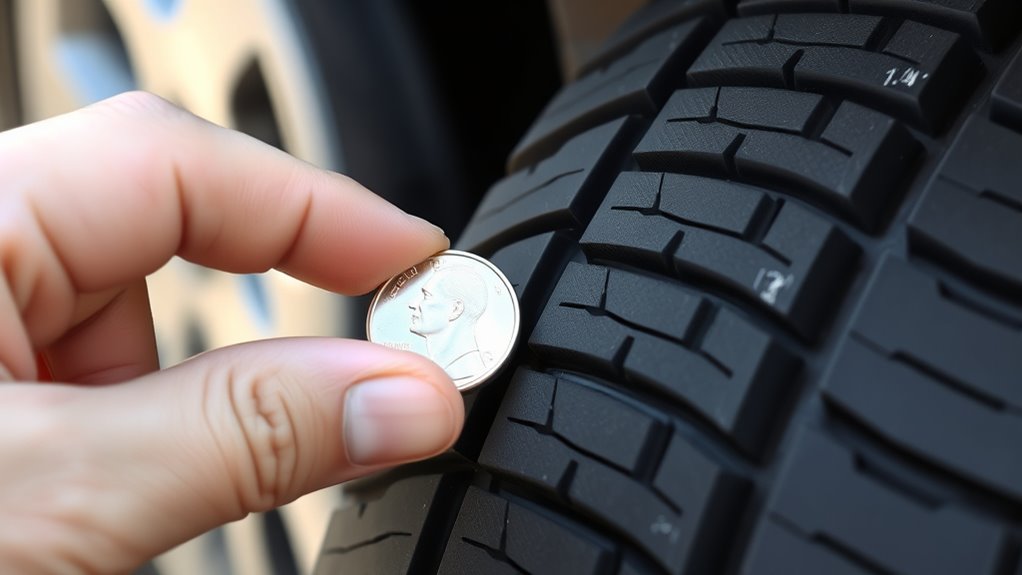
To check your tire tread depth, start with the penny test by inserting a penny into the tread groove with Lincoln’s head facing down. If you can see the top of Lincoln’s head, your tread is worn and needs replacing. You can also look for built-in tread wear indicators or use a tread depth gauge for a more accurate measurement. Continue exploring to discover additional tips for keeping your tires in top shape.
Key Takeaways
- Use the Penny Test by inserting a penny into the tread with Lincoln’s head facing down; if it’s visible, the tread is worn.
- Check for uneven wear patterns, bald spots, or objects embedded in the tread during visual inspection.
- Measure tread depth with a built-in wear indicator or a tread depth gauge for accuracy.
- Look for raised bars across the tread grooves, which signal the need for replacement.
- Regularly monitor tire tread depth to ensure safety, especially in wet conditions, and prevent hydroplaning.
Ever wondered how to tell if your tires have enough tread? Maintaining proper tire tread depth is a vital part of tire maintenance and directly impacts your road safety. Worn-out tires can reduce traction, increase the risk of hydroplaning, and compromise your ability to stop quickly in emergencies. That’s why regularly checking your tire tread depth should be part of your routine before hitting the road. The good news is, you don’t need special tools or equipment—simple methods like the penny test make it easy to assess whether your tires are still safe to drive on.
Checking your tire tread regularly is essential for safety and optimal vehicle performance.
Start by examining your tires visually. Look for uneven wear patterns, bald spots, or objects embedded in the tread. If you notice any irregularities, it’s time to get a professional inspection. Once visually checked, you can perform the penny test to get a more precise idea of your tread depth. Grab a penny and insert it into the tread groove with Lincoln’s head facing down and toward you. If you can see the top of Lincoln’s head, it indicates that your tread depth is less than 2/32 of an inch, meaning your tires are dangerously worn and need replacement. This simple test helps you quickly determine if your tires are still suitable for driving, especially in wet conditions where tread depth is vital for channeling water away and preventing hydroplaning.
Besides the penny test, there are other practical ways to check your tire tread depth. Many tires now feature built-in tread wear indicators—raised bars that run across the tread grooves. When the tread wears down to the level of these bars, it’s time to replace the tires. You can also use a tread depth gauge, a small tool available at auto parts stores, which provides an accurate measurement in millimeters or 32nds of an inch. Regularly measuring your tread depth with these tools helps you stay ahead of any potential safety risks and assists in planning timely tire replacements. Remember that consistent monitoring of tread depth is crucial for safe driving conditions.
Maintaining proper tire tread depth isn’t just about avoiding fines or keeping your car in good shape; it’s about safeguarding your safety and the safety of others on the road. Worn tires can greatly impair your vehicle’s handling, braking, and overall performance, especially during adverse weather conditions. By making a habit of checking your tire tread depth regularly, you’re actively participating in good tire maintenance, which translates into better road safety and peace of mind during your travels. Remember, taking a few minutes to inspect your tires can prevent accidents, save money on repairs, and keep you confidently on the move.

Tire Tread Depth Gauge,Tire Tread Gauge Color Coded,Tread Depth Gauge in 1/32 inch(Pack of 2)
1.Accurate and Efficient: Different colors on the bar represents different scopes, the red range on bar: 0 -…
As an affiliate, we earn on qualifying purchases.
As an affiliate, we earn on qualifying purchases.
Frequently Asked Questions
How Often Should I Check My Tire Tread Depth?
You should check your tire tread depth at least once a month to guarantee safe driving. Regularly perform tire rotation and tread pattern analysis to spot uneven wear or potential issues early. This routine keeps your tires in good condition, improving traction and extending their lifespan. Don’t wait for a visual cue—staying proactive helps prevent accidents and costly repairs, keeping you safe on every journey.
Can Uneven Tread Wear Indicate Alignment Issues?
Uneven tread wear often signals more than just tired tires; it can point to alignment issues. When you notice this, it’s a sign to get a tire rotation and camber adjustment. These steps help realign your wheels, ensuring even contact with the road. Ignoring uneven wear can lead to faster tire deterioration and compromised safety. Regular checks keep your ride smooth, safe, and ready to roll without surprises.
What Causes Rapid Tread Wear on Tires?
Rapid tread wear happens when you don’t regularly perform tire rotation, which helps make certain even wear across your tires. Poor tread pattern design can also cause uneven contact with the road, accelerating wear. Additionally, misalignment, over- or under-inflation, and aggressive driving habits contribute to faster tread loss. To extend your tires’ lifespan, maintain proper inflation, rotate your tires regularly, and check your vehicle’s alignment.
Are There Different Tread Depth Standards for Summer and Winter Tires?
Oh, the joy of winter tires—because apparently, summer tires just aren’t enough! Yes, there are different standards for tread depth, mainly due to tire material and tread pattern design. Winter tires require deeper treads for icy grip, while summer tires have shallower ones for dry traction. So, you should always check your tire type and follow the recommended tread depth for safety, no matter the season.
How Does Tire Tread Depth Affect Fuel Efficiency?
Your tire tread depth impacts fuel efficiency because worn tires increase rolling resistance, making your engine work harder. Proper tire pressure is vital, as underinflated tires also reduce efficiency. Additionally, your driving habits matter—aggressive acceleration and high speeds consume more fuel. By maintaining good tread depth, keeping tires properly inflated, and adopting smoother driving habits, you can improve fuel economy and guarantee safer driving conditions.
Tire Tread Depth Gauge,Tire Tread Gauge Color Coded,Tread Depth Gauge in 1/32 inch(Pack of 2)
1.Accurate and Efficient: Different colors on the bar represents different scopes, the red range on bar: 0 -…
As an affiliate, we earn on qualifying purchases.
As an affiliate, we earn on qualifying purchases.
Conclusion
Now that you know how to check your tire tread depth, you can avoid dangerous blowouts and enjoy smooth drives. Think of it as the difference between a safe journey and a risky gamble—both happen on the road, but only one keeps you protected. Regularly inspecting your tires might seem simple, but it’s the key to safety and savings. Don’t wait for trouble; stay ahead with quick, easy checks before your next trip.
TEST BOPIS Tires
As an affiliate, we earn on qualifying purchases.
As an affiliate, we earn on qualifying purchases.

LCD Display Tire Tread Depth Gauge, Car Tire Digital Measuring Gauge Tool with Inch MM Conversion, Tire Wear Gauge Tread Checker for Motorcycle, Truck, Car, SUV, Not Include Battery
【Portable and Convenient】:The digital thread depth gauge is compact and lightweight, making it perfect for both indoor and…
As an affiliate, we earn on qualifying purchases.
As an affiliate, we earn on qualifying purchases.