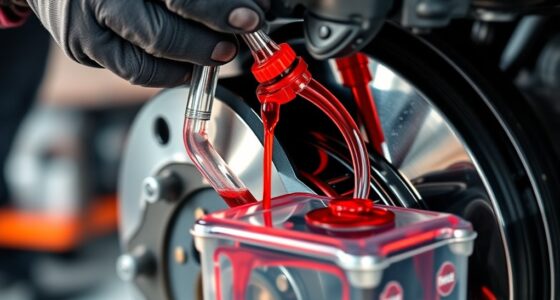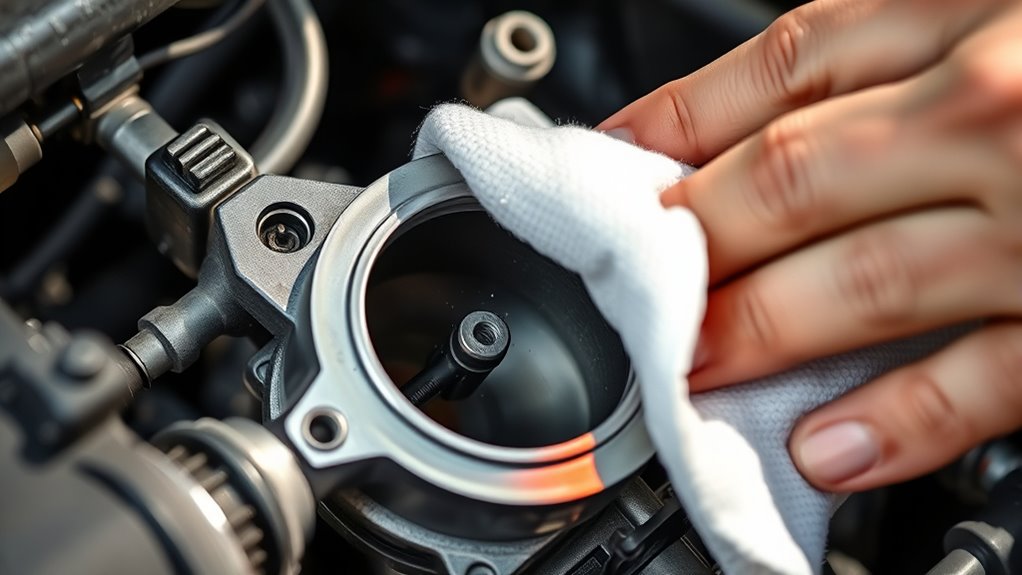

To clean your throttle body, start by disconnecting the battery to prevent electrical issues. Remove the intake hose and spray throttle body cleaner or degreaser onto the internal surfaces, gently wiping away grime and carbon deposits with a soft cloth or non-abrasive brush. Be careful around sensors. After cleaning, reconnect everything, start the engine, and let it stabilize. Proper maintenance like this guarantees your engine runs smoothly—if you’re ready, you’ll discover more tips to keep it in top shape.
Key Takeaways
- Locate and disconnect the battery, then remove the intake hose to access the throttle body.
- Spray throttle body cleaner on internal surfaces and gently wipe away grime without damaging sensors.
- Check and clean airflow sensors, like the MAF sensor, to ensure accurate readings after cleaning.
- Reassemble components, reconnect the battery, and restart the engine to allow ECU recalibration if necessary.
- Regularly clean the throttle body to maintain optimal airflow, improve engine performance, and enhance fuel efficiency.

A dirty throttle body can cause your engine to run roughly, stall, or experience poor acceleration. When it gets clogged with carbon buildup or grime, it disrupts the airflow that your engine needs to operate smoothly. This is especially true when it comes to idle adjustment, as a contaminated throttle body can make it difficult to keep the engine idling steadily. You might notice the engine surging or struggling to stay at a consistent RPM, which can be frustrating and potentially dangerous.
Cleaning your throttle body is a key step in restoring proper engine function. One essential component to *contemplate* during this process is the airflow sensors. These sensors, particularly the mass airflow sensor or MAF sensor, help your vehicle’s computer determine how much air is entering the engine. When the throttle body is dirty, these sensors can become contaminated or give inaccurate readings, leading to poor fuel economy and rough running. Cleaning the throttle body helps ensure that airflow sensors receive cleaner signals, improving overall engine response.
Cleaning the throttle body ensures airflow sensors work accurately, improving engine response and fuel economy.
To begin, you should first locate the throttle body, which is usually between the air filter box and the intake manifold. Before you start cleaning, disconnect the battery to prevent any electrical issues. Next, remove the intake hose and inspect the throttle plate and bore for signs of grime or carbon deposits. Using a throttle body cleaner or a gentle degreaser, spray liberally on the inside surfaces, paying close attention to the throttle plate and the surrounding areas. As you clean, gently wipe away debris with a soft cloth or a non-abrasive brush. Be careful not to damage the airflow sensors, which are often integrated into the throttle body assembly.
After cleaning, it’s a good idea to perform an idle adjustment if your vehicle allows manual tuning. Many modern vehicles have electronic throttle control, so a simple restart might suffice to let the ECU recalibrate. However, if your car is equipped with a throttle position sensor that requires manual adjustment, follow the manufacturer’s instructions for setting a proper idle speed. This process helps ensure that the engine runs smoothly at idle and responds well to throttle inputs.
Once everything’s cleaned and adjusted, reconnect all hoses and components, then start your engine. Allow it to run for a few minutes to stabilize, and observe how it idles. If you notice any irregularities, it may indicate that airflow sensors are still contaminated or that further cleaning is needed. Regular maintenance of the throttle body and associated sensors keeps your engine running efficiently, reducing emissions and prolonging the lifespan of your vehicle. Cleaning your throttle body isn’t complicated, but it makes a big difference in engine performance and overall driving experience.
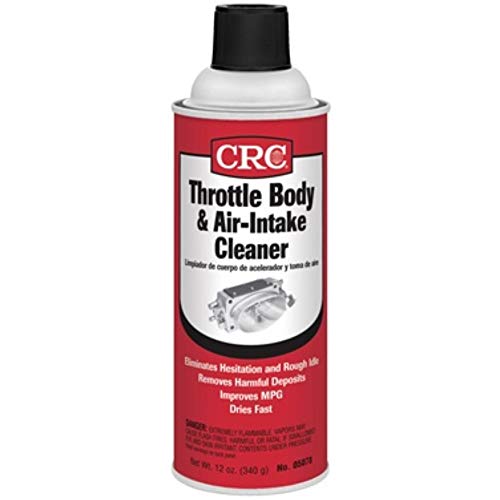
CRC 05078 Throttle Body and Air-Intake Cleaner – 12 Wt Oz.
- Deep cleaning of carbon deposits: Removes carbon, varnish, and gum buildup
- Enhances engine performance: Easier starts and smoother operation
- Universal fuel injection use: Suitable for all fuel-injected gasoline engines
As an affiliate, we earn on qualifying purchases.
As an affiliate, we earn on qualifying purchases.
Frequently Asked Questions
How Often Should I Clean My Throttle Body?
You should clean your throttle body every 30,000 to 50,000 miles, following your vehicle’s maintenance schedule. Keep an eye out for signs of clogging, like rough idling, poor acceleration, or decreased fuel efficiency. If you notice these symptoms, it’s a good idea to inspect and clean the throttle body sooner. Regular maintenance helps guarantee smooth engine performance and prevents more costly repairs down the line.
Can I Clean the Throttle Body Without Removing It?
Think of your throttle body as the gateway to your engine’s performance. You can clean it without removing it by using a throttle body cleaner spray and a cloth or brush. Carefully open the throttle, spray the cleaner, and wipe away dirt and grime. This DIY maintenance helps keep your engine running smoothly, saving you time and money without the hassle of removal. Just be gentle and thorough.
What Tools Are Best for Cleaning the Throttle Body?
You’ll want a good throttle cleaner and wire brushes for cleaning your throttle body effectively. Use a spray throttle cleaner to loosen grime, then gently scrub with wire brushes to remove carbon buildup. Make sure to choose brushes that fit the throttle body’s shape for thorough cleaning without damage. These tools help you clean the throttle body properly, ensuring smooth engine performance and better fuel efficiency.
Are There Any Risks Involved in Cleaning the Throttle Body?
Yes, there are risks involved when cleaning your throttle body. You should follow safety precautions to avoid chemical hazards, such as wearing gloves and eye protection. Use the correct cleaning agents and work in a well-ventilated area to prevent inhaling fumes. Be careful around sensitive components, and avoid spraying electrical parts. Taking these precautions helps protect you from potential injuries or damage to your vehicle.
How Do I Know if My Throttle Body Needs Cleaning?
Your throttle body is like the conductor of an orchestra, ensuring smooth engine performance. If you notice your engine idling roughly or experiencing hesitation during acceleration, it’s a sign it needs cleaning. Additionally, a decrease in fuel efficiency or unusual engine stalling can point to buildup inside. Regular checks and maintenance help keep your throttle body clean, preventing these issues and ensuring your engine runs smoothly.
Conclusion
Cleaning your throttle body may seem like a small task, but it can make a big difference in your engine’s performance. When you keep it clean, you prevent issues like rough idling and poor acceleration. Remember, an ounce of prevention is worth a pound of cure—so don’t wait until problems arise. Regular maintenance saves you time and money in the long run, and your car will thank you for it. Keep up the good work!