
To replace your brake pads yourself, start by safely lifting your vehicle with jack stands and removing the wheel. Carefully detach the caliper, inspect the rotor, and replace worn pads, making sure to lubricate the caliper slide pins. Reassemble everything securely and tighten lugs to the proper torque. Pump the brake pedal to seat the new pads, then test your brakes before driving. If you’re keen to learn more, you’ll find detailed steps that guide you through each stage.
Key Takeaways
- Safely lift and support the vehicle using jack stands on a flat surface before removing the wheel.
- Remove the wheel and caliper, supporting the caliper securely to avoid stress on brake lines.
- Inspect the brake rotor for damage and ensure the caliper slide pins are well-lubricated before installing new pads.
- Properly seat the new brake pads, reassemble the caliper, and tighten all bolts to manufacturer specifications.
- Reinstall the wheel, torque lug nuts correctly, and pump the brake pedal to ensure proper pad seating before driving.
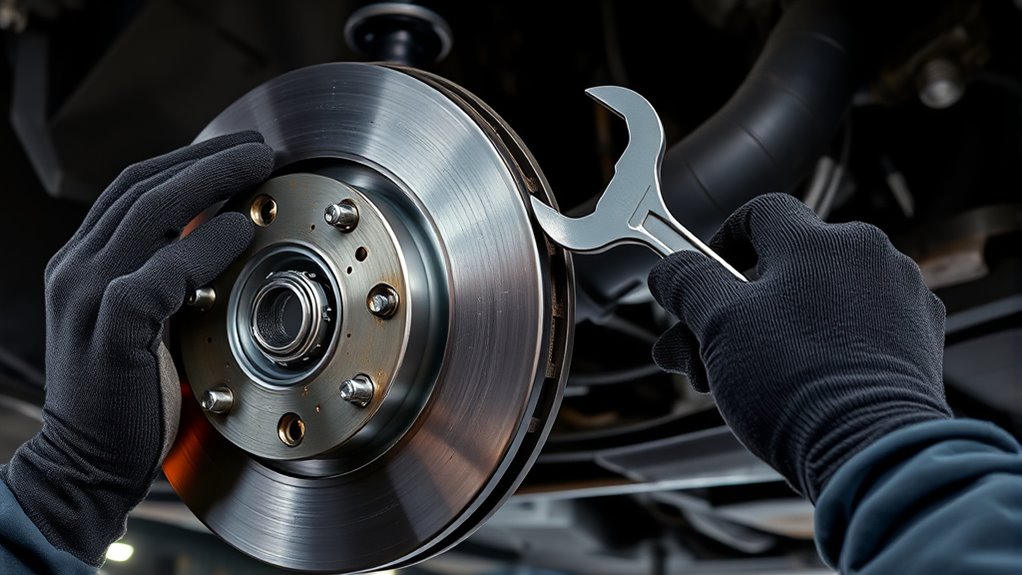
Replacing your brake pads yourself can save money and give you a better understanding of your vehicle’s maintenance. Before you start, it’s vital to familiarize yourself with the brake system and follow proper safety precautions. The brake system is a key safety feature, and working on it requires attention to detail and respect for the potential hazards involved. You need to confirm the vehicle is securely lifted and supported, so it doesn’t shift or fall while you’re working underneath. Using jack stands on a flat, stable surface is essential for safety. Never rely solely on a hydraulic jack, as it can fail unexpectedly. Wearing gloves and eye protection is also recommended to prevent injury from brake dust or accidental debris.
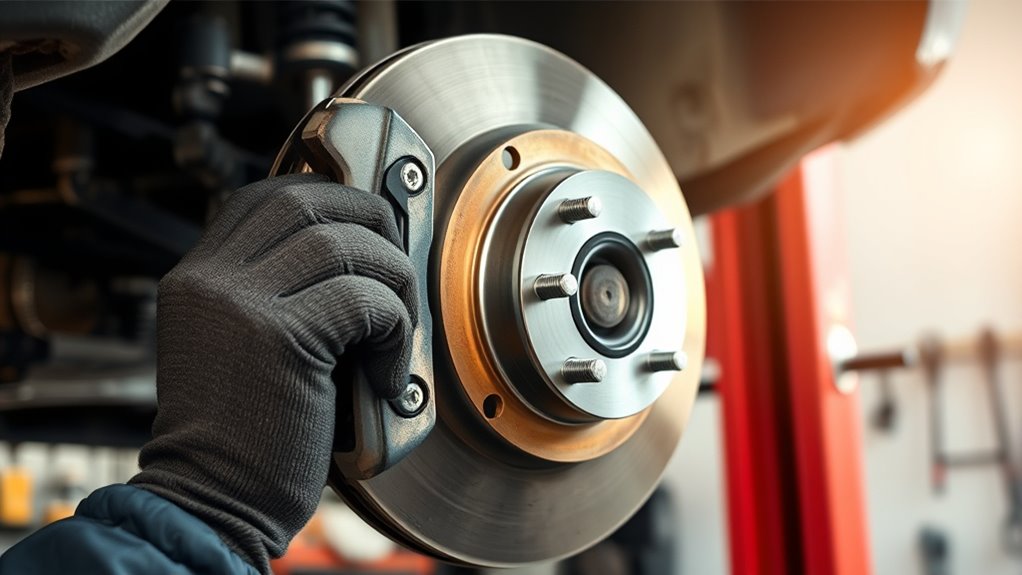
Once your vehicle is properly supported, you can begin by removing the wheel. Use the appropriate socket and wrench to loosen the lug nuts before lifting the car. With the wheel removed, you’ll see the brake caliper, which houses the brake pads. Before removing the caliper, make sure to disconnect the brake hose if necessary, but only if you’re experienced, as this can introduce more complications. For a straightforward replacement, many people just unbolt the caliper and suspend it safely with a bungee cord or wire, avoiding stress on the brake hose. This step prevents damage to the brake line and keeps the system intact.
Remove the wheel, then unbolt and suspend the brake caliper carefully to avoid damage to the brake line.
When it comes to removing the old brake pads, take note of how they fit in the caliper to confirm proper installation of the new ones. Inspect the rotor for any signs of damage or excessive wear. If the rotor is warped or deeply scored, you might need to have it resurfaced or replaced, but for basic pad replacement, a smooth rotor is preferable. Before installing the new pads, lubricate the caliper slide pins with high-temperature brake grease to guarantee smooth operation. Always double-check that the pads are seated correctly, and make sure the caliper piston is retracted fully to accommodate the new, thicker pads. Additionally, understanding the effectiveness and results timeline can help you set realistic expectations for your repair process.
Throughout this process, safety precautions are paramount. Wear gloves and a dust mask if you’re working with old brake components to avoid inhaling brake dust, which can be harmful. Keep your workspace clean and organized, and never rush through the procedure. Once the new pads are in place and the caliper is reassembled, put the wheel back on, tighten the lug nuts by hand, then lower the vehicle and torque the lug nuts to the manufacturer’s specifications. Finally, pump the brake pedal a few times to confirm the pads are properly seated and the brake system is functioning correctly before taking your vehicle for a test drive. Following these steps carefully will help you replace your brake pads safely and effectively.

Orion Motor Tech 24pc Brake Caliper Compression Tool Set, Heavy Duty Brake Piston Compressor Tool and Wind Back Tool Kit for Brake Pad Replacement, Universal Disc Brake Caliper Tool Set with Blue Case
Complete Tool Set: Orion Motor Tech's 24-piece brake caliper compression tool set includes 2 retaining plates, 2 thrust…
As an affiliate, we earn on qualifying purchases.
As an affiliate, we earn on qualifying purchases.
Frequently Asked Questions
How Do I Choose the Right Brake Pads for My Vehicle?
To select the right brake pads, consider your driving habits and vehicle type. Look at brake pad materials—ceramic for quieter braking, semi-metallic for durability, or organic for softer stops. Think about noise during braking; some materials produce less noise. Check your vehicle’s manual for specifications, and consult a professional if you’re unsure. Choosing the right pads guarantees ideal performance, safety, and comfort on the road.
Can I Replace Brake Pads Without Professional Tools?
You can replace brake pads without professional tools, but it’s challenging. You’ll need basic tools like a jack, lug wrench, and C-clamp, which are essential for brake pad maintenance. Be aware of different brake pad materials, as some require specific handling. Properly replacing brake pads ensures safe driving and maximum brake performance. If you’re uncomfortable with the process, consulting a professional ensures your vehicle’s safety and longevity.
How Do I Dispose of Old Brake Pads Safely?
You should dispose of old brake pads safely by taking them to a recycling center that accepts hazardous materials. Avoid throwing them in regular trash, as brake pads contain harmful metals and chemicals. Wear gloves to handle them and store them in a sealed plastic bag. Contact your local waste management facility for specific disposal guidelines, ensuring you’re following environmental regulations and protecting your community from potential health risks.
What Are Signs of Uneven Brake Pad Wear?
You’ll notice uneven brake pad wear if your brake pads look different in thickness or if your vehicle pulls to one side when braking. During brake pad inspection, check for irregular patterns or excessive wear on one side. Common uneven wear causes include misaligned calipers or sticking pistons. Address these signs promptly to prevent further damage, ensuring your brakes function smoothly and safely.
How Often Should Brake Pads Be Replaced?
Back in the day, folks replaced brake pads every 25,000 to 70,000 miles, and today’s vehicles follow similar guidelines. You should check your brake pads every 10,000 miles and replace them when they’re worn down to about 1/8 inch or if you notice squealing. The replacement cost varies based on brake pad materials—ceramic or semi-metallic—and labor, but it’s worth maintaining safe stopping power.
Orion Motor Tech 24pc Brake Caliper Compression Tool Set, Heavy Duty Brake Piston Compressor Tool and Wind Back Tool Kit for Brake Pad Replacement, Universal Disc Brake Caliper Tool Set with Blue Case
Complete Tool Set: Orion Motor Tech's 24-piece brake caliper compression tool set includes 2 retaining plates, 2 thrust…
As an affiliate, we earn on qualifying purchases.
As an affiliate, we earn on qualifying purchases.
Conclusion
Now that you’ve learned the basics of replacing your brake pads, remember—this task isn’t just about stopping; it’s about regaining control and confidence on the road. With a little patience and attention, you can turn a formidable chore into a rewarding achievement. Think of it as restoring your vehicle’s heartbeat—every step bringing you closer to safety and mastery. So go ahead, take charge and keep your journey smooth and secure.

Permatex 24125 Ceramic Extreme Brake Parts Lubricant, 8 oz., Pack of 1
100% synthetic formula with ceramic solids forming a premium quality brake lubricant
As an affiliate, we earn on qualifying purchases.
As an affiliate, we earn on qualifying purchases.

Amazon Basics Steel Jack Auto Stands, 3 Ton (2.7 metric Ton) Capacity, Easy to Use, Adjustable Height, 6,000 lb, 1 Pair, Black and Red
Pair of 3 Ton (2.7 metric Ton) jack stands with 6,000-pound capacity
As an affiliate, we earn on qualifying purchases.
As an affiliate, we earn on qualifying purchases.