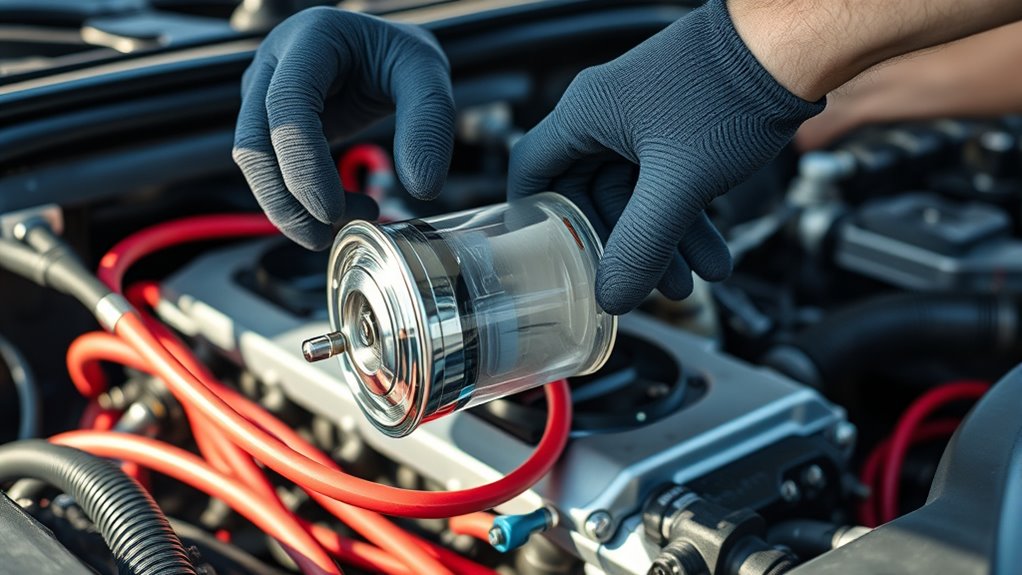

To replace your fuel filter yourself, start by gathering the right tools and safety gear, then disconnect the negative battery terminal. Relieve the system pressure by removing the fuel pump fuse and starting the engine until it stalls. Carefully disconnect the fuel lines and remove the old filter, noting the flow direction. Install the new filter securely, reconnect everything, and pressurize the system to check for leaks. If you keep going, you’ll learn step-by-step how to do it safely and effectively.
Key Takeaways
- Gather necessary tools, safety gear, and locate the fuel filter before starting the replacement process.
- Relieve fuel system pressure by removing the fuel pump relay and starting the engine until it stalls.
- Disconnect fuel lines carefully, noting their orientation, and remove the old filter from its mounting bracket.
- Install the new filter, ensuring correct orientation with the flow arrow, and reconnect all fuel lines tightly.
- Pressurize the system, check for leaks, and safely dispose of old parts and spilled fuel after completing the replacement.
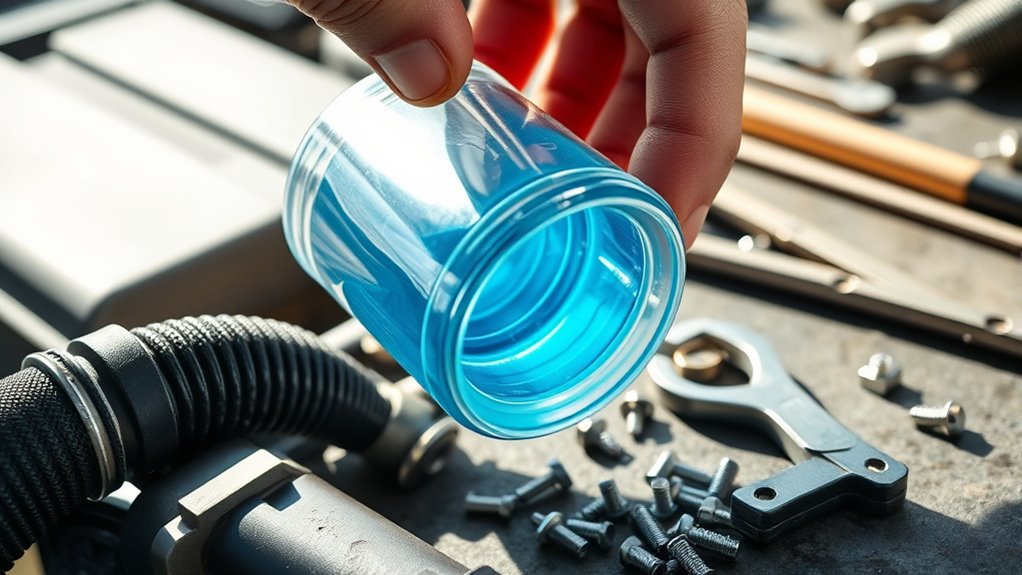
Ever wondered how to replace your fuel filter yourself? Tackling this task can save you money and give you a better understanding of your vehicle’s fuel system. Before diving in, it’s essential to review your vehicle’s maintenance checklist. The fuel filter plays a vital role in keeping debris and contaminants out of your engine, ensuring smooth performance and longevity. Regularly replacing it prevents clogs that can lead to poor fuel efficiency or even engine damage. By following a straightforward process, you can confidently handle this maintenance step without needing to visit a mechanic.
Replacing your fuel filter yourself saves money and boosts your vehicle’s performance.
Start by gathering the necessary tools and parts, including a new fuel filter compatible with your vehicle, safety gloves, eye protection, and basic hand tools like screwdrivers and pliers. Always ensure your engine is cool before starting the process to avoid burns or injuries. Disconnect the negative terminal of your battery to prevent accidental sparks. Locate the fuel filter—it’s usually along the fuel line, either under the vehicle or near the engine bay. Consult your owner’s manual if you’re unsure of the exact location. Recognizing the importance of proper maintenance procedures can help prevent issues down the line.
Next, relieve the fuel system pressure to prevent fuel spray when disconnecting lines. This can be done by removing the fuel pump relay or fuse and starting the engine until it stalls. Once pressure is relieved, carefully disconnect the fuel lines from the filter. Be prepared for some residual fuel to leak out; having a container or rags on hand helps contain spills. Remove the mounting bracket or clips holding the filter in place, then take out the old filter.
Compare the new filter with the old one to ensure correct fit and orientation. Many filters have an arrow indicating fuel flow direction, which must match the system’s flow. Install the new filter, secure it with the bracket or clips, and reconnect the fuel lines tightly to prevent leaks. Double-check all connections and ensure everything is secured before restoring power. Reconnect the battery terminal and turn on the ignition to pressurize the fuel system. Check for leaks around the filter.
Finally, start the engine and let it run for a few minutes, observing for any irregularities or leaks. Properly disposing of the old filter and any spilled fuel is essential for safety and environmental reasons. By following this simple process, you’ve successfully replaced your fuel filter, contributing to a healthier fuel system and improved vehicle performance. Remember, regular maintenance as outlined in your checklist keeps your vehicle running smoothly, and performing this task yourself boosts your confidence in handling basic car repairs.

RARAYC 6.7L Cummins Fuel Filter Kit | Replacement for 2013-2018 Dodge Ram 2500 3500 4500 5500 6.7L | Replaces# 68197867AA 68157291AA 5083285AA Air Filter 53034051AB Cabin Air Filter 68406048AA
Crafted from high-grade filter medium that provide maximum filtration and minimal flow restriction. Deliver increased flow and efficiency…
As an affiliate, we earn on qualifying purchases.
As an affiliate, we earn on qualifying purchases.
Frequently Asked Questions
Can I Replace the Fuel Filter While the Engine Is Hot?
You shouldn’t replace the fuel filter while the engine is hot, as it can be dangerous and compromise fuel system safety. Wait until the engine cools down to prevent burns or fuel vapor ignition. Hot engines can cause pressure buildup or leaks, so ensuring proper engine cooling reduces risks. Always prioritize safety, follow manufacturer instructions, and take necessary precautions when working on your fuel system.
What Tools Are Essential for Fuel Filter Replacement?
Think of your tools as your vehicle’s toolkit for success. You’ll need a wrench set to loosen and tighten fittings, and a few basic hand tools to disconnect the fuel line safely. Make certain you have screwdrivers and pliers on hand for removing clamps. These essentials make replacing the fuel filter smooth sailing, helping you avoid leaks and ensuring your engine runs clean and efficient.
How Do I Dispose of the Old Fuel Filter Safely?
You should dispose of the old fuel filter safely by taking it to a designated fuel filter recycling center or hazardous waste disposal site. Do not throw it in regular trash, as it contains residual fuel and contaminants. Make sure to handle it carefully to prevent spills. Check local regulations for proper disposal procedures, and always store the filter in a sealed, leak-proof container until you can dispose of it properly.
Is It Necessary to Relock the Fuel System After Replacement?
You should relock the fuel system after replacement to guarantee fuel system integrity and safety precautions. Many experts confirm that securing the system prevents leaks, reduces fire risks, and maintains proper pressure. Skipping this step might compromise safety and cause fuel delivery issues. Always double-check that all connections are tight and the system is properly relocked before starting your vehicle, safeguarding both your vehicle and yourself.
How Often Should I Replace My Vehicle’s Fuel Filter?
You should replace your vehicle’s fuel filter roughly every 30,000 miles or as recommended by your manufacturer. Regular replacements help maintain fuel efficiency and prevent clogging caused by debris or filter material buildup. Keep an eye on engine performance; if you notice sputtering or difficulty starting, it might be time to change the filter sooner. Proper maintenance ensures smooth operation and maximizes your vehicle’s longevity.

6" & 8" Collar/Vent Cap Fuel Filter Wrench Set for Davco Fuel Water Separator 380134 382 482 483 782, Removal Tools Compatible with Detroit Diesel Truck DD13 DD15 DD16 & Navistar Engines
【6 Inch Fuel Filter Wrench】Diesel fuel filter wrench with inner diameter of 6 inch, for Davco 380134 382…
As an affiliate, we earn on qualifying purchases.
As an affiliate, we earn on qualifying purchases.
Conclusion
Now that you’ve replaced your fuel filter, you’re all set to hit the road with a smoother engine and better fuel efficiency. Remember, tackling this task yourself saves money and boosts your confidence. Keep an eye on your vehicle’s performance and don’t hesitate to do maintenance when needed. It’s true what they say—forewarned is forearmed. Stay proactive with your car care, and you’ll keep running like a well-oiled machine for miles to come.
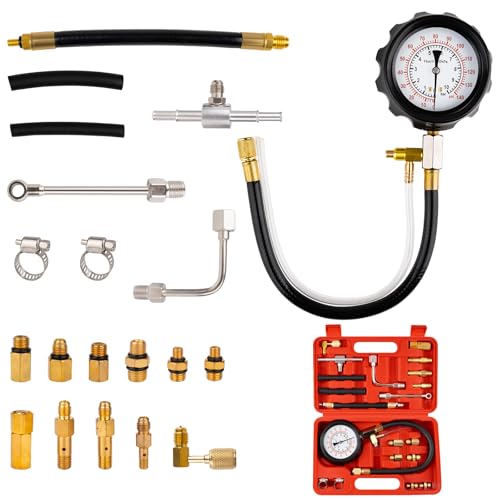
0-140PSI Fuel Pressure Tester Kit, Fuel Injector Injection Pump Pressure Gauge, Fuel Pump Pressure Tester Diagnostic Tool for Gasoline Cars, Trucks, Motorcycles and RVs
Compatibility Note: For further confirmation of specific model compatibility, refer to the vehicle owner's manual or contact a…
As an affiliate, we earn on qualifying purchases.
As an affiliate, we earn on qualifying purchases.

smilfuy Fuel Line Plier, Quick Disconnect Release Removal Tool, Petrol Hose Pipe Clamp Clip with Handle, Universal Fuel Line Clip Removal Plier, Pipe Clip Repair Tool for Most Cars (Red)
【Material】:The fuel pipe clamp is made of high-quality carbon steel, which is resistant to oxidation, high-temperature resistance, sturdy…
As an affiliate, we earn on qualifying purchases.
As an affiliate, we earn on qualifying purchases.