
Many EV maintenance myths are false; in reality, electric vehicles are simpler and cheaper to care for than traditional cars. You don’t need oil changes, spark plug replacements, or engine repairs. Instead, focus on tire pressure, brake checks, and proper coolant levels. Proper charging habits—like avoiding overuse of fast chargers—can help extend battery life. Keep these facts in mind to maintain your EV better—learn more about how to keep your vehicle in top shape.
Key Takeaways
- EVs require less maintenance than traditional vehicles, with no oil changes or engine repairs needed.
- Proper charging habits, such as avoiding frequent full charges, extend battery life and reduce replacement costs.
- High-speed charging generates heat that can damage batteries if overused; regular, slower charges are recommended.
- Most EV batteries last 8-15 years, with warranties covering battery health, minimizing concerns about early replacement.
- Regenerative braking and fewer moving parts significantly lower maintenance requirements and costs for EV owners.
Many people believe that electric vehicles (EVs) require more maintenance than traditional cars, but is that really true? In fact, EVs tend to need less upkeep overall, mainly because they have fewer moving parts. One common concern is battery longevity. You might worry that the battery will wear out quickly, forcing you to replace it frequently. However, most EV batteries are designed to last many years—often between 8 to 15 years—thanks to advancements in technology and improved battery chemistry. Proper charging habits play a vital role in extending your battery’s lifespan. If you frequently overcharge or let the battery drain completely, you could accelerate degradation. Instead, maintaining a consistent charging routine—such as keeping the charge level between 20% and 80%—can help preserve battery health over time. Many manufacturers recommend avoiding frequent full charges to 100%, as this can stress the battery and reduce its longevity.
You might also hear that EV batteries are expensive to replace, which can sound intimidating. While replacing a battery isn’t cheap, it’s rarely needed within the vehicle’s warranty period. Plus, many automakers now offer warranties covering battery health for 8 years or more, giving you peace of mind. When you follow good charging habits, like avoiding high-speed charging sessions unless necessary, you reduce the risk of premature battery wear. High-speed chargers can generate more heat, which may impact battery health if used excessively. Instead, using standard or slower chargers for regular topping off helps keep your battery in prime condition. Additionally, vetted information about proper maintenance can help you make informed decisions and avoid unnecessary repairs.
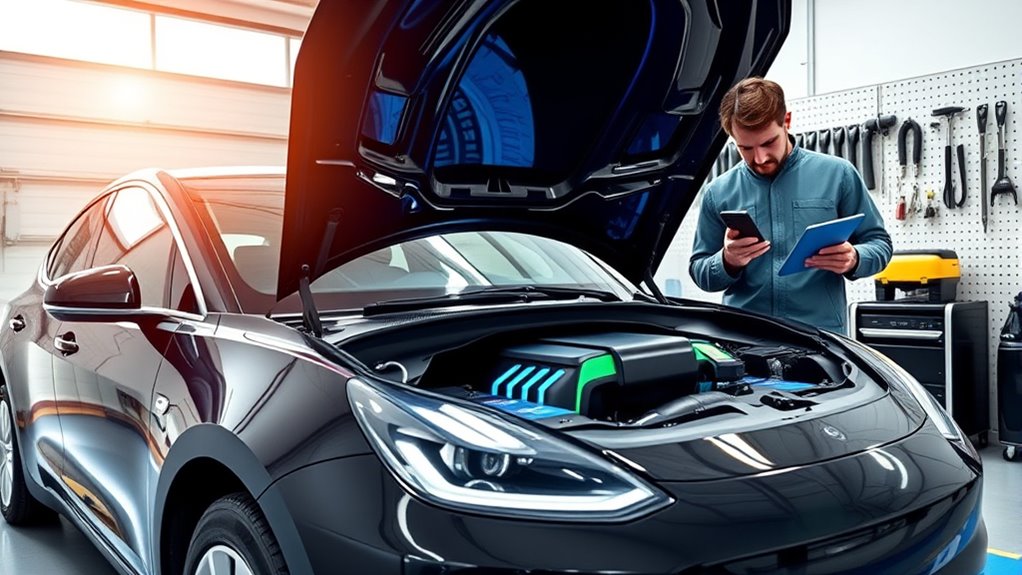
Another myth is that EVs require complex maintenance routines. That’s not the case. You won’t need to change oil, spark plugs, or perform major engine repairs. Instead, your focus should be on keeping the tires properly inflated, checking brake systems (since regenerative braking reduces wear), and monitoring coolant levels for the thermal management system. These simple tasks are easier and less costly than traditional vehicle maintenance. Overall, if you adopt good charging habits—like avoiding extreme charge levels and using appropriate charging speeds—you can maximize your EV’s battery longevity and enjoy trouble-free driving for years. The myth that EVs are high-maintenance vehicles is just that—a myth. Proper care and understanding of how to maintain your battery will ensure your electric vehicle remains reliable and cost-effective long-term.

ETENWOLF T300 Digital Tire Pressure Gauge 3-200 PSI, Industrial Tire Gauge Calibrated to ANSI B40.7 Grade 2A(Plus-Minus 0.5%), Replaceable AAA Batteries (Vivid Orange)
PROCESS LEVEL ACCURACY: Each ETENWOLF’s digital tire pressure gauge is calibrated manually to ANSI B40.7 Grade 2A(plus-minus 1…
As an affiliate, we earn on qualifying purchases.
As an affiliate, we earn on qualifying purchases.
Frequently Asked Questions
Do EVS Require Oil Changes Like Traditional Cars?
You might wonder if EVs need oil changes like traditional cars. The good news is, they don’t require engine oil because they lack a conventional engine that uses oil for lubrication. Instead, EVs have fewer moving parts, so you won’t need to worry about oil changes or replacing engine oil. This means less maintenance overall, saving you time and money while keeping your vehicle running smoothly.
How Often Should I Check Tire Pressure on My EV?
You should check your EV’s tire pressure at least once a month as part of your maintenance schedule. Proper tire pressure guarantees safety, efficiency, and extends tire life. Keep in mind that temperature changes can affect tire pressure, so regular checks are essential. Use a reliable gauge to monitor and adjust to the recommended PSI listed in your owner’s manual. Consistent tire pressure checks help your EV perform at its best.
Are EV Batteries Prone to Rapid Degradation in Cold Weather?
You might wonder if EV batteries degrade quickly in cold weather. Cold weather effects can slow down battery chemistry, but modern EVs use battery cooling systems to manage temperature and prevent rapid degradation. While cold temperatures can temporarily reduce range, they don’t cause long-term damage if you follow proper care. Regularly preconditioning your EV and keeping the battery within ideal temperature ranges helps maintain battery health during winter months.
Can EVS Be Safely Charged During a Power Outage?
During a power outage, you can safely charge your EV if you have a power backup or access to emergency charging options. Using portable generators or emergency charging stations, you guarantee your vehicle stays ready. Just make sure to follow safety guidelines, avoid overloading circuits, and confirm your charging setup’s compatibility. This way, you maintain mobility and peace of mind even when the grid goes down.
Is Regular Maintenance Necessary if the EV Is Rarely Driven?
If you rarely drive your EV, you might wonder if regular maintenance is needed. The truth is, yes—maintaining battery health and monitoring charging frequency helps prevent issues, even with infrequent use. You should check your battery’s condition, keep an eye on charge levels, and occasionally start the vehicle to keep systems active. This proactive approach guarantees your EV stays reliable, ready to go whenever you need it.

ZeriLion Automotive Brake Pad Wear Measurement Kit – Color-Coded Gauges with Both SAE & Metric Markings – Mechanic Inspection Tool
[Accurate Brake Measurement] Ensure vehicle safety with this precise brake pad measuring tool, Get quick, reliable readings –…
As an affiliate, we earn on qualifying purchases.
As an affiliate, we earn on qualifying purchases.
Conclusion
Don’t let myths drive your EV maintenance decisions. While traditional cars demand frequent oil changes and exhaust repairs, your EV mostly runs on batteries and software updates. It’s the simplicity that surprises you—less hassle, less cost. So, while gas cars require constant attention, your EV offers peace of mind. Embrace these truths, and you’ll enjoy a smoother, more reliable ride, proving that sometimes, less is truly more when it comes to vehicle maintenance.

MITZONE Car Auto Coolant Liquid Level Sensor Compatible with 2005-2025 Land Rover LR3 LR4 Defender 90 110 130 Discovery PCJ500030
COOLANT LIQUID LEVEL SENSOR FITMENT: Compatible with Jaguar: Fit for 2021 E-Pace 1.5L l3, 2017-2025 F-Pace 2.0L l4,…
As an affiliate, we earn on qualifying purchases.
As an affiliate, we earn on qualifying purchases.

EVDANCE Level 1&2 EV Charger, Electric Vehicle Portable Charger with 25FT Cable, Home EV Charging Station for J1772 Electric Cars, 12A 120V/16A 240V, NEMA 5-15 & NEMA 6-20 Plug
Flex Level 1 EV Charger – The EVDANCE Level 1 electric car charger is compatible with J1772 electric…
As an affiliate, we earn on qualifying purchases.
As an affiliate, we earn on qualifying purchases.