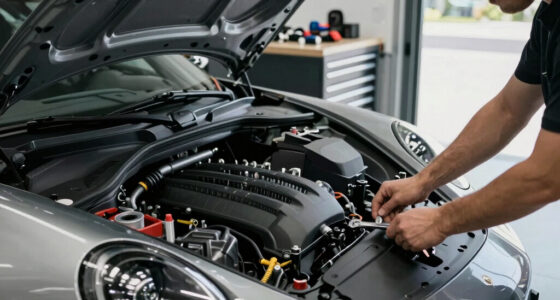
To jumpstart a car safely, first make sure both vehicles are off, then connect the red positive clamp to the dead battery’s positive terminal and the other end to the good battery’s positive terminal. Next, attach the black negative clamp to the good battery’s negative terminal, and finally, connect the other black clamp to an unpainted metal surface on the dead car. Start the good vehicle, then the dead one, and remove the cables in reverse order. To learn the complete steps, keep going.

Get garage and car supplies delivered free — and shop member deals
- Fast, free delivery on millions of items
- Access to Prime Big Deal Days deals on October 6–7
- Prime Video, Amazon Music and more included
Key Takeaways
- Ensure both vehicles are off, then connect jumper cables in the correct order: positive to positive, negative to chassis.
- Use heavy-duty, insulated cables rated at least 6-gauge for safety and efficiency.
- Start the working vehicle first, let it run a few minutes, then attempt to start the dead vehicle.
- Remove cables in reverse order: negative from chassis, then negative from good battery, followed by positive from both batteries.
- Keep the jumpstarted vehicle running for at least 15 minutes to recharge the battery fully.
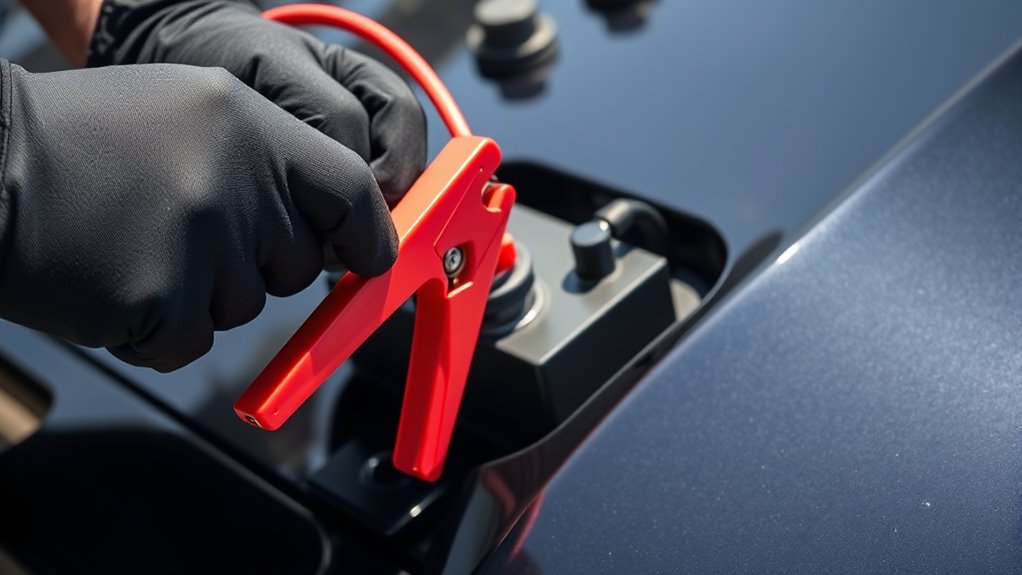
Having a dead car battery can be frustrating, but jumpstarting your vehicle is a straightforward process if you follow the right steps. Before you begin, it’s essential to prioritize battery safety. Always wear gloves and safety glasses to protect yourself from any sparks or acid leaks. Make sure both vehicles are turned off before connecting the jumper cables. This prevents accidental sparks that could cause injury or damage. Also, check that the batteries are in good condition and free of cracks or leaks. Damaged batteries can be hazardous and should be replaced instead of jumpstarted.
Always wear gloves and safety glasses before jumpstarting a vehicle to ensure battery safety.
When it comes to jumper cable types, you’ll want to guarantee you’re using the right ones. Heavy-duty cables with thick clamps and high-quality insulation are ideal for a safe and efficient jumpstart. Look for cables rated for at least 6-gauge wire, which can carry more current and reduce the risk of overheating. Avoid thin or cheap cables that might not handle the necessary current, as they can cause sparks or even melt during the process. Proper jumper cables have sturdy, insulated clamps that grip the battery terminals securely, reducing the chance of accidental contact with other metal parts or shorts.
Once you have your jumper cables ready, position the vehicles so that the batteries are close but not touching. Turn off both vehicles, then connect the jumper cables in the correct order: first, attach one red clamp to the positive (+) terminal of the dead battery, then connect the other red clamp to the positive (+) terminal of the good battery. Afterward, connect one black clamp to the negative (–) terminal of the good battery. Instead of connecting the last clamp directly to the dead battery’s negative terminal, attach it to an unpainted metal surface on the engine block or chassis of the dead vehicle. This reduces the risk of sparks near the battery, which can emit flammable gases.
With all connections secure, start the working vehicle first and let it run for a few minutes. Then, try starting your dead vehicle. If it doesn’t start immediately, wait a few more minutes and try again. Once your car starts, remove the jumper cables in the reverse order: first the black clamp from the vehicle chassis, then the black clamp from the good battery, followed by the red clamps from both batteries. Keep the jumped vehicle running for at least 15 minutes to allow the battery to recharge. Throughout the process, always handle jumper cables carefully, ensuring clamps don’t touch each other or other metal surfaces, maintaining battery safety at all times. Additionally, understanding contrast ratio can help you appreciate how visual clarity is affected during different lighting conditions in a home theater setup.
heavy-duty jumper cables 6-gauge
As an affiliate, we earn on qualifying purchases.
As an affiliate, we earn on qualifying purchases.
Frequently Asked Questions
Can I Jumpstart a Car With a Dead Battery in Winter?
Yes, you can jumpstart a car with a dead battery in winter, but you need to be cautious. Cold weather can weaken your battery, making it harder to start your car. Proper battery maintenance helps make certain of reliable starts, especially in winter. When jumpstarting, ensure cables are connected correctly and avoid short circuits. Always check your battery’s condition before winter to prevent unexpected breakdowns and keep your vehicle running smoothly.
What Safety Precautions Should I Take When Jumpstarting a Car?
When jumpstarting a car, you should always wear protective gear like gloves and safety glasses to prevent injury. Make sure proper positioning of the vehicles, keeping them close but not touching, and connect the jumper cables correctly. Always follow safety steps carefully, and avoid leaning over the batteries. Taking these precautions reduces risk, keeps you safe, and ensures the process goes smoothly.
Is It Safe to Jumpstart a Hybrid or Electric Vehicle?
Jumpstarting a hybrid or electric vehicle isn’t always safe unless you follow proper hybrid safety guidelines. These vehicles contain high-voltage systems that can pose serious risks if mishandled. Always consult your owner’s manual or contact professional roadside assistance. Never attempt to jumpstart an electric vehicle on your own unless you’re trained in electric vehicle safety. Protect yourself by understanding the risks and following manufacturer instructions carefully.
What Should I Do if My Car Doesn’T Start After Jumpstarting?
Did you know that about 80% of car breakdowns are due to battery issues? If your car still doesn’t start after jumpstarting, don’t force it or keep trying. You might need a battery replacement or explore alternative solutions like checking the alternator or wiring. It’s best to consult a mechanic to diagnose the problem properly. Ignoring persistent issues can lead to more costly repairs later on.
How Often Should I Check My Car’S Battery Health?
You should check your car’s battery health at least every six months to guarantee proper battery maintenance. Regular inspections help identify issues early, especially if you notice dimming headlights or slow engine cranks. Keep an eye on your charging frequency, making sure the alternator charges the battery effectively. Proper testing and maintenance prevent unexpected breakdowns, extending your battery’s lifespan and keeping your vehicle running smoothly.
Conclusion
Now that you’ve learned how to jumpstart a car correctly, you’re like a skilled conductor bringing a silent orchestra back to life. Remember, patience and precision are your best tools; rushing can turn a simple fix into a bigger problem. Think of it as reviving a slumbering giant—gentle yet confident. With these steps, you’re not just starting a car, you’re reigniting a heartbeat, ready to roar back to life wherever the road takes you.
Halloween Picks
halloween
As an affiliate, we earn on qualifying purchases.