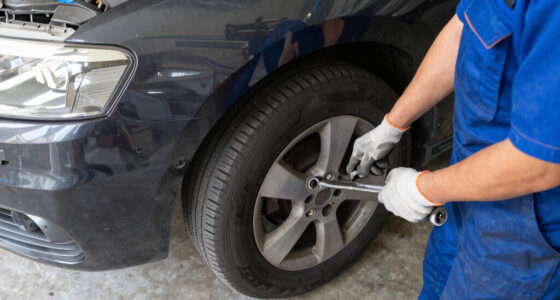
To check and adjust your tire pressure, start by finding the recommended psi inside your driver’s door or in the owner’s manual. Use a reliable gauge and measure when the tires are cold. If the pressure is too low, add air gradually; if too high, release some air and recheck. Regularly maintaining proper tire pressure improves safety, handling, and fuel efficiency—keep going, and you’ll discover more tips to keep your tires in top shape.

Get business pricing on garage and car supplies
- Business-only prices and quantity discounts
- Tax-exempt purchasing
- Multiple users, one account, clear invoices
Key Takeaways
- Check tire pressure monthly and before long trips using a reliable gauge when tires are cold.
- Locate the recommended pressure on the driver’s door sticker or owner’s manual.
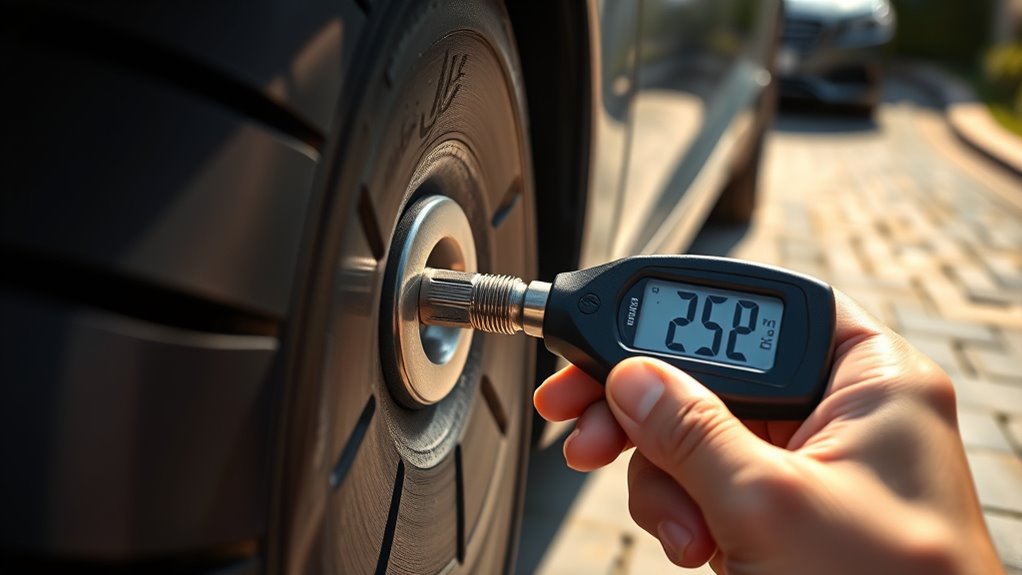
- Remove the valve cap, press the gauge firmly onto the valve stem, and read the pressure.
- Add air gradually if below the recommended level or release air if overinflated, then recheck.
- Reinstall the valve cap and regularly verify tire pressure to maintain safety and optimal vehicle performance.
Regularly checking and adjusting your tire pressure is essential for safe driving and ideal vehicle performance. Proper tire pressure maintenance guarantees your tires function correctly, providing better grip, fuel efficiency, and safety on the road. When your tires are inflated to the correct level, they wear evenly, last longer, and help you avoid costly repairs or accidents. It’s easy to overlook tire pressure, especially since it can fluctuate with temperature changes or over time, but staying on top of it is a simple step that markedly impacts your driving experience.
Checking and adjusting your tire pressure regularly ensures safety, better performance, and longer-lasting tires.
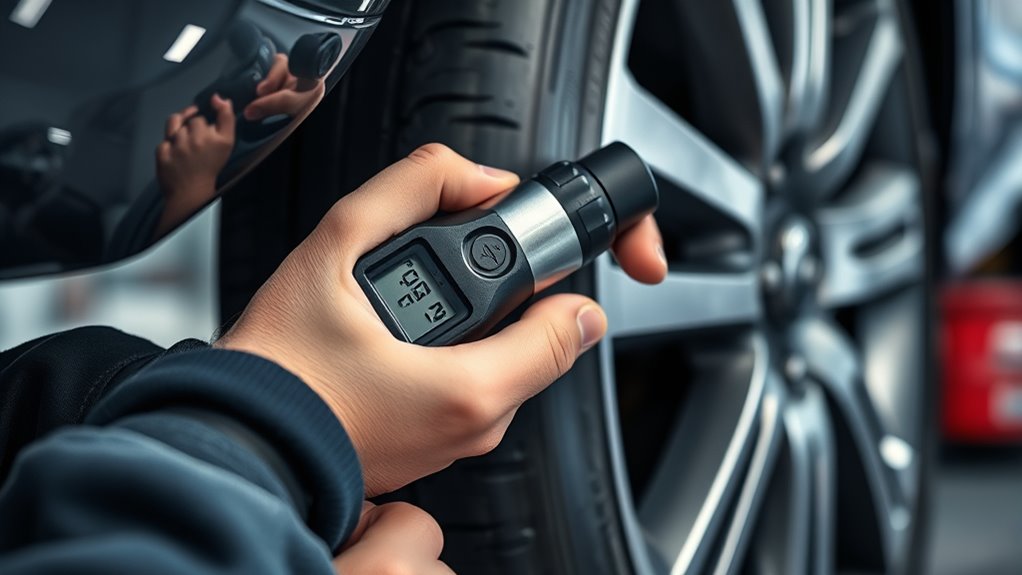
To maintain perfect inflation levels, you should check your tire pressure at least once a month and before long trips. Many drivers forget or neglect this routine, but it only takes a few minutes to verify your tires’ pressure using a reliable tire pressure gauge. First, locate your vehicle’s recommended tire pressure, which is usually printed on a sticker inside the driver’s door or in the owner’s manual. This figure reflects the ideal inflation levels for your specific vehicle, balancing safety, comfort, and efficiency. Always use a good-quality gauge to ensure accurate readings, as low-quality tools can give misleading results.
When checking your tires, make sure they are cold, meaning the car has been stationary for at least three hours or has not been driven more than a mile. Hot tires expand and can give false readings, so measuring when cold provides the most accurate data. Remove the valve cap from the tire, press the gauge firmly onto the valve stem, and note the pressure reading. If your tire pressure is below the recommended level, add air gradually until you reach the perfect inflation levels. Many gas stations have air pumps with built-in gauges, but it’s wise to carry your own gauge for more precise adjustments.
Adjusting your tire pressure is straightforward. Just fill the tire with air until it reaches the recommended pressure, then recheck with your gauge to confirm accuracy. If you overinflate, release some air by pressing the valve stem’s center pin, then re-measure. Proper tire pressure isn’t a one-time task; it’s an ongoing process that ensures your tires are always in prime condition. By maintaining the right pressure, you improve your vehicle’s handling, reduce tire wear, and maximize fuel economy. Remember, tire pressure maintenance is a small but impactful part of responsible driving that keeps you safe and saves you money over time. Additionally, maintaining proper tire pressure can also help prevent uneven tire wear, which can extend the lifespan of your tires and improve overall vehicle safety.
As an affiliate, we earn on qualifying purchases.
Frequently Asked Questions
How Often Should I Check My Tire Pressure?
You should check your tire pressure at least once a month and before long trips. Tire pressure sensors make it easier to monitor pressure levels, but don’t rely solely on them—manual checks are important. Remember to do seasonal tire checks, especially as temperatures change, since cold weather can lower pressure. Maintaining proper tire pressure improves safety, fuel efficiency, and tire lifespan. Make this a routine for peak vehicle performance.
Can Low Tire Pressure Affect Fuel Efficiency?
Yes, low tire pressure can negatively impact your fuel efficiency. When your tires are underinflated, they increase rolling resistance, causing your engine to work harder and consume more fuel. Additionally, low pressure accelerates uneven tire wear, which can compromise safety. It is crucial to regularly check your tire pressure to guarantee peak performance, prolong tire life, and maintain safety on the road. Properly inflated tires save you money and reduce safety concerns.
What Tools Are Best for Measuring Tire Pressure?
You should use a digital gauge or an analog meter to measure tire pressure accurately. For example, a driver noticed uneven wear and discovered low pressure with a digital gauge, then fixed it. Digital gauges are quick and easy to read, while analog meters offer a classic, reliable option. Both tools help guarantee you maintain correct tire pressure, improving safety, fuel efficiency, and tire lifespan.
How Does Temperature Impact Tire Pressure?
Temperature fluctuation directly impacts tire pressure, causing it to increase in hot weather and decrease in cold. When temperatures rise, air expands, leading to higher pressure, which can affect pressure stability. Conversely, cold weather causes air to contract, lowering pressure and increasing the risk of under-inflation. Regularly check your tire pressure, especially with changing temperatures, to maintain ideal pressure stability and ensure safe driving conditions.
When Should I Replace My Tires Based on Pressure Issues?
You should consider tire replacement if pressure loss causes persistent issues, even after adjustments. When your tires show uneven wear, cracks, or bulges, it’s a sign they’re nearing the end of their lifecycle. Don’t ignore subtle hints like frequent pressure drops, as these indicate underlying problems. Regularly checking for these signs helps you catch issues early, ensuring your safety and ideal vehicle performance. Trust your instincts and replace tires when they no longer hold the pressure reliably.
Conclusion
Remember, keeping your tires properly inflated is like giving your car a regular health check-up. I once ignored my tires, and it cost me a long, bumpy ride. Studies show that correct tire pressure improves fuel efficiency and safety. So, make it a habit to check and adjust your tire pressure regularly—think of it as watering a plant; a little attention goes a long way in keeping your journey smooth and safe.
Fall Picks
fall essentials
As an affiliate, we earn on qualifying purchases.