
Lifting a lowered vehicle without damage requires careful planning and the right tools. You need to identify proper jacking points, often found near the frame or chassis, and avoid standard lift spots that are too high or soft. Use a low profile hydraulic jack, support stands, and wheel chocks for stability. Always lift slowly, double-check your support before working underneath, and follow safety measures closely. Continue exploring these steps to prevent costly mistakes and protect your car.
Key Takeaways
- Use a low profile hydraulic jack and ensure it is placed on reinforced, manufacturer-approved lift points to prevent damage.
- Consult the vehicle’s owner manual to identify safe jacking points specific to lowered cars.
- Always use sturdy jack stands and support blocks after lifting to maintain stability and safety.
- Work on flat, firm surfaces to prevent slipping and ensure accurate positioning of lifting equipment.
- Avoid using standard jacks or lifting points not designed for lowered vehicles to prevent chassis or suspension damage.

Maxority 3-Ton (6600lbs) Low Profile Hydraulic Heavy-Duty Steel Floor Jack with Dual Pistons Quick Lift Pump, Home and Workshop Car Maintenance for Various Vehicles (Random Color, 3 Ton Low Profile)
Extended Reach for Low Clearance: This jack's long reach allows it to easily access vehicles with low ground…
As an affiliate, we earn on qualifying purchases.
As an affiliate, we earn on qualifying purchases.
What Makes Lifting a Lowered Car Different From a Regular One?

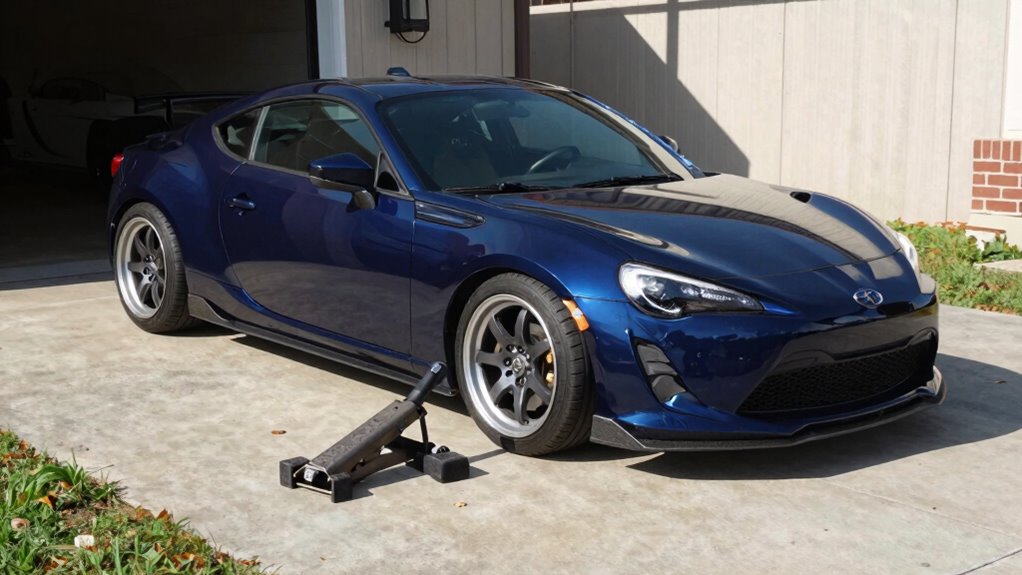
Lifting a lowered car differs considerably from raising a regular vehicle because of its reduced ground clearance. With less space between the chassis and the ground, you need to be extra careful to avoid damaging essential components. Lowered cars sit closer to the ground, increasing the risk of scraping or crushing parts during jacking. Additionally, the suspension stress in these vehicles is more sensitive; improper jacking can exacerbate this stress, causing misalignment or damage. You can’t rely on standard jacking points like you would with a regular car, as they may be too low or not reinforced for lifting. Instead, you must identify specific, safe lifting points and use appropriate tools to prevent damage and ensure stability during the lift. Proper planning and understanding the unique needs of lowered vehicles are crucial for safe lifting.

VEVOR Underhoist Support Stand, 3/4 Ton (1653 lbs) Capacity Under Hoist Jack Stand with Two Wheels, Lifting from 51.97" to 80", Bearing Mounted Spin Handle, Foot Pedal, Support Vehicle Components
1653.5 lbs Impressive Load Capacity: This underhoist support stand can support a weight of 1653.5 lbs / 0.75…
As an affiliate, we earn on qualifying purchases.
As an affiliate, we earn on qualifying purchases.
How to Find Safe Jacking Points on Your Low Car
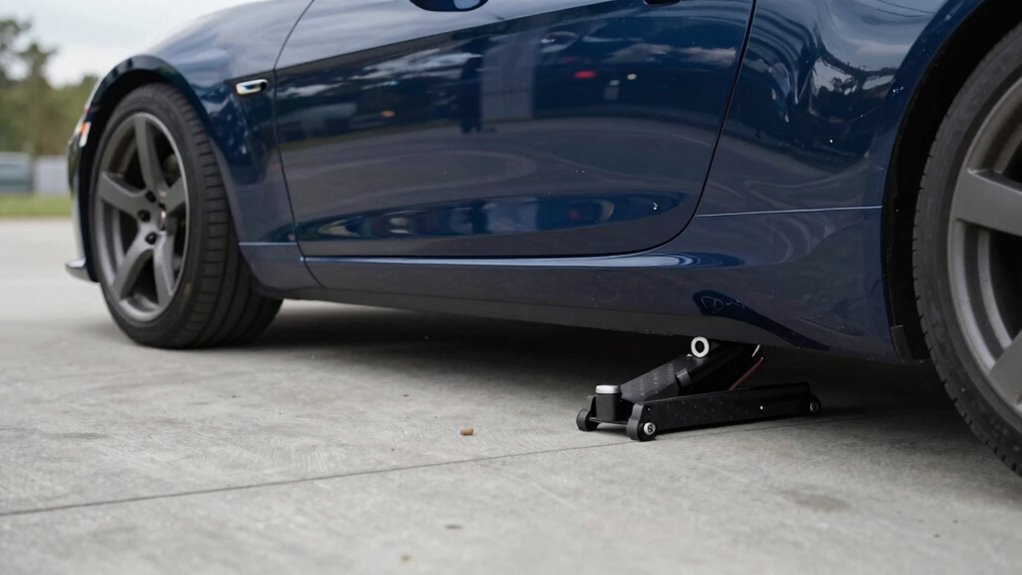
Finding the right jacking points on your lowered car is key to avoiding damage. Because of the reduced ground clearance, standard lift points may be hard to access or could cause damage if misused. Start by inspecting your vehicle’s stance and noting the reinforced areas near the frame or chassis. Consult your owner’s manual for specific jacking points designed for your car model. Look for flat, sturdy sections away from suspension components or fuel lines. Lowered vehicles often have less clearance, so carefully position the jack to avoid scraping or bending. Using these designated points guarantees you lift safely without damaging the undercarriage or risking instability, preserving both your vehicle’s integrity and your safety during maintenance.

PR1ME Wheel Chocks with Non-Slip Base for RV & Trailer. 2 Pack Heavy Duty Wheel Chock with Bright Yellow. Lightweight Wheel Stoppers for Cars Camper Trucks RVs, Fit for Most Tyre Sizes
Ultra-Lightweight & Rope-Free Design: Crafted from rugged UV-resistant hard plastic, PR1ME chocks weigh 30% less than standard models,…
As an affiliate, we earn on qualifying purchases.
As an affiliate, we earn on qualifying purchases.
Tools You Need to Lift a Lowered Vehicle Safely
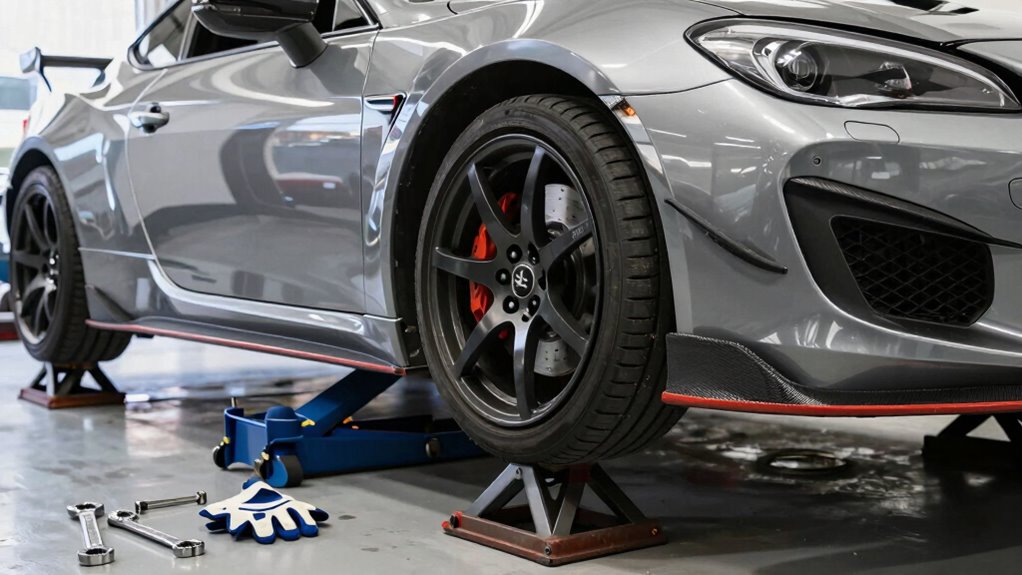
To lift a lowered vehicle safely, you need the right set of tools designed for stability and precision. A quality hydraulic floor jack with a low profile is essential to access your vehicle’s jacking points without damaging the suspension. Wheel chocks help prevent rolling during the lift. A sturdy jack stand ensures the vehicle remains stable once raised. To prevent issues with tire alignment later, use a torque wrench to tighten lug nuts properly. Additionally, consider a wheel dolly for easy movement if needed. These tools protect your vehicle’s suspension components and maintain proper alignment, reducing the risk of damage. Incorporating Free Floating concepts can help you understand how to distribute weight evenly and avoid additional strain on lowered vehicles. Understanding proper lifting techniques is crucial for safety and preventing damage during the process. Investing in reliable equipment makes the lifting process safer and more effective, especially when working on lowered cars that require extra care. Using proper safety gear such as gloves and eye protection is also vital to prevent injuries during the lifting process. Moreover, practicing correct lifting procedures can significantly reduce the risk of accidental damage or injury. Being aware of sound vibrations can also help in creating a calmer environment during maintenance, minimizing stress and ensuring focus.

Suvnie 2 PCS Jack Stand Pad Adapter, Universal Rubber Pinch Weld Side Frame Rail Protector Pad, Vehicle Heavy Duty Slotted Floor Jack Pad, Lift Protection Tool Car Accessories
【Main Function】: Jack pads are located on top of the jacks. They provide protection and cushioning for the…
As an affiliate, we earn on qualifying purchases.
As an affiliate, we earn on qualifying purchases.
Step-by-Step: Safely Jacking and Lifting Your Low Car
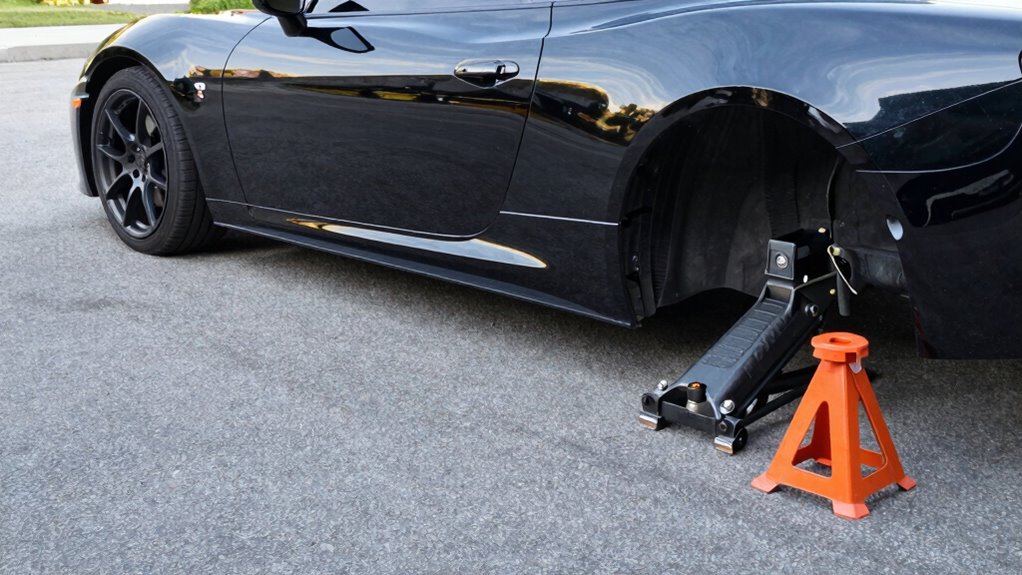
Before you start jacking up your low car, make certain the vehicle is parked on a flat, stable surface and the parking brake is engaged. Check your ground clearance to identify the best jacking points, usually near the frame or designated lift spots. Since lowered cars often have reduced ground clearance, use a jack pad or rubber block to prevent damage. Carefully position your jack under the recommended lift point, ensuring it’s secure. As you lift, be mindful of suspension tension; avoid lifting too quickly to prevent stressing or damaging suspension components. Raise the vehicle slowly until the tire is just off the ground. This careful approach helps prevent damage to your lowered car’s suspension and minimizes the risk of slipping or misalignment. Additionally, understanding regional car modification styles can help you choose the safest lifting techniques tailored to your vehicle. Knowing the proper vehicle maintenance procedures is also important to avoid unintended damage during the process, especially considering the specific ground clearance of lowered vehicles. To further ensure safety, always consult your vehicle’s owner’s manual for manufacturer-recommended lifting points and procedures.
Common Mistakes That Can Damage Your Lowered Car
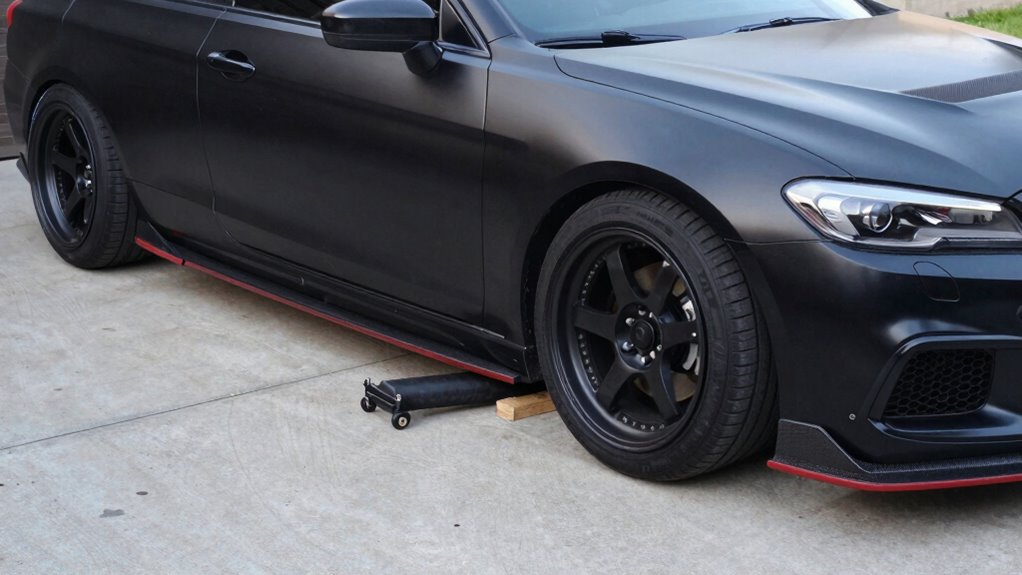
One common mistake is using the wrong jack points, which can bend or crack your suspension. Ignoring proper lifting equipment increases the risk of slipping or causing damage. To protect your lowered car, always use the right tools and follow recommended procedures. Additionally, employing protective gear like gloves and safety glasses can help prevent injuries during the lifting process. Ensuring your tools have the appropriate load capacity can prevent accidents and damage to both your vehicle and equipment. Proper vehicle support is essential to maintain safety and prevent unintended damage. Understanding the importance of vehicle specifications can help you choose the proper lifting method for your specific car model. Moreover, being aware of battery maintenance considerations, even in lifting scenarios, can help prevent unforeseen issues with your vehicle’s electrical systems.
Using Inappropriate Jack Points
Using an incorrect jack point might seem convenient, but it risks crushing or denting parts of the frame or suspension. If you’re unsure, consult your vehicle’s manual or seek professional advice. Properly placed jack stands on the correct lift points distribute weight evenly, preventing damage. Remember, taking the time to identify and use the right jack point safeguards your car’s integrity during maintenance. Proper support techniques are essential to prevent accidental damage when lifting a lowered vehicle. Additionally, understanding vehicle lift points can help you avoid costly repairs and ensure safety during maintenance. Being familiar with lifting techniques can further reduce the risk of damage and improve your overall safety during the process. Knowing vehicle weight distribution can also assist in choosing the correct lifting method, especially for lowered cars. Moreover, using correct tools designed for lowered vehicles can make the process safer and more effective.
Ignoring Proper Lifting Equipment
Neglecting to use the proper lifting equipment can easily lead to damage when working on a lowered car. Making certain jack stand safety is essential, as unstable or unsuitable stands can cause your vehicle to slip or fall, risking costly repairs. Always choose the right hydraulic jack by considering your vehicle’s weight and specifications; a jack that’s too small or weak can fail under pressure. Avoid improvising with makeshift supports or unreliable equipment. Proper hydraulic jack selection ensures stable lifting and prevents damage to the chassis or suspension components. Remember, investing in quality tools and following safety guidelines helps protect your vehicle and keeps you safe during maintenance. Additionally, understanding vehicle weight distribution can help you select the most appropriate lifting equipment for your specific car. Proper lifting techniques are also crucial to prevent accidents and damage during the process. Ignoring these precautions can result in costly repairs or personal injury, so prioritize proper equipment every time. Always verify the tool ratings to ensure they meet your vehicle’s requirements for safe lifting. Moreover, being aware of lifting capacity is vital to avoid overloading your equipment and causing accidents.
Post-Lift Safety Tips to Protect Your Car and Future Repairs
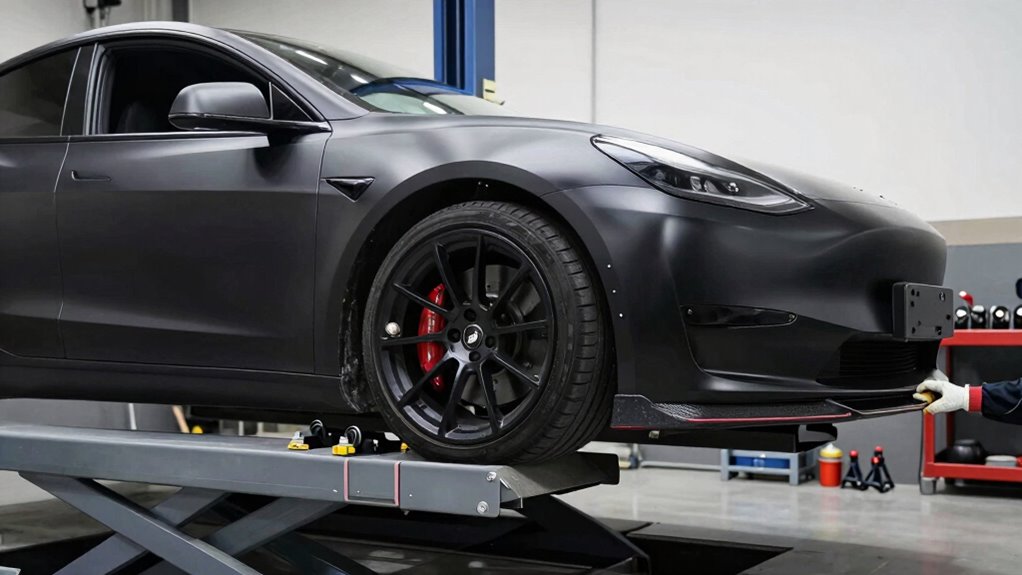
After lifting your car, make certain you place the jack correctly to avoid damage. Use support blocks to stabilize the vehicle and prevent it from shifting or falling. Always stay clear of the area underneath the car until you’re confident it’s securely supported.
Proper Jack Placement
Proper jack placement is crucial to guarantee your vehicle stays stable and undamaged during the lifting process. First, assess your vehicle’s ground clearance to find the safest jacking points, usually indicated in the owner’s manual. Accurate jack positioning ensures even weight distribution, preventing slipping or damage. Place the jack directly under the manufacturer-recommended lift points to avoid stressing the frame or suspension components. Make sure the ground beneath the jack is firm and level to maintain stability. Avoid placing the jack on uneven or soft surfaces that could cause it to shift. Confirm the jack is securely positioned before lifting, and always use a jack stand once the vehicle is off the ground. Proper placement safeguards your car and ensures safe, effective repairs.
Use of Support Blocks
Using support blocks is vital to keep your vehicle stable and protected once it’s lifted. Support blocks, or wheel chocks, prevent any unintended movement, especially on inclined surfaces or uneven ground. Place them snugly against the tires that remain on the ground, ensuring they’re positioned securely to avoid slipping. Always double-check that your support blocks are stable before working underneath. They provide an extra layer of safety by stopping the vehicle from rolling or shifting unexpectedly. Remember, never rely solely on a jack or lift; support blocks are a crucial safety measure. With the support blocks in place, you can focus on your repairs confidently, knowing your lowered vehicle is secure and protected from accidental movement that could cause damage or injury.
Avoiding Underneath Risks
Even with your vehicle securely lifted and supported, it’s essential to stay vigilant to avoid underneath risks. Check your ground clearance to ensure there’s enough space between the undercarriage and the ground, preventing accidental contact that could cause damage. Use proper undercarriage protection, like skid plates or mats, to shield sensitive components during maintenance. Always double-check that the vehicle is stable before working underneath it, avoiding sudden shifts that could lead to accidents. Keep tools organized and away from the undercarriage to prevent accidental drops. Remember, a cautious approach not only protects your car but also reduces the risk of injury. Staying alert and aware of these safety tips ensures your repairs are effective and your vehicle remains in top condition.
Frequently Asked Questions
Can I Lift My Lowered Car With a Standard Jack Safely?
You can lift your lowered car with a standard jack, but it’s not always safe or effective. Standard jacks aren’t designed for low cars and may slip or cause damage. For lifting safety, use a jack that’s rated for your vehicle’s weight and consider a low-profile or specialized lift jack. Always lift on a flat, stable surface and secure your vehicle with jack stands to prevent accidents.
What Are the Best Brands of Jacks for Low Cars?
You should choose brands like Arcan, Pittsburgh, or Torin for low cars, as they prioritize jack safety and are designed for precise lifting techniques. These brands offer low-profile jacks with strong durability, making them ideal for safely lifting a lowered vehicle without damage. Always follow proper lifting techniques, guarantee the jack is rated for your car’s weight, and use jack stands for added safety during maintenance.
How Often Should I Inspect Lifting Points on My Lowered Vehicle?
You should inspect your lowered vehicle’s lifting points at least every 3,000 to 5,000 miles or before each significant lift. Regular inspection guarantees that the lifting points are free from rust, damage, or wear. Proper lifting point maintenance prevents accidents and damage to your car. Always check for any signs of stress or corrosion and address issues promptly to keep your vehicle safe when lifting.
Are There Specific Lifts Designed for Lowered or Modified Vehicles?
Yes, there are lifts designed specifically for lowered or modified vehicles. Unlike standard lifts, these accommodate reduced ground clearance caused by suspension modifications. They often feature adjustable arms or low-profile platforms that prevent damage to your lowered car. Using a lift suited for your vehicle’s ground clearance guarantees safe, effective lifting while protecting your suspension and bodywork, making maintenance easier and safer without risking costly repairs or damage.
How Do I Prevent Undercarriage Damage During Lifting?
To prevent undercarriage damage when lifting your lowered vehicle, guarantee you use the correct lifting points to avoid suspension misalignment. Choose a lift with adjustable arms or ramps designed for low clearance, and double-check tire clearance beforehand. Always lift slowly, keeping an eye on suspension components and undercarriage to prevent strikes or damage, especially if your vehicle has a lowered stance. Proper technique minimizes risk and protects your car’s integrity.
Conclusion
Lifting a lowered car is like walking a tightrope—you need precision and care to avoid damage. By understanding what makes your vehicle different and following safe lifting practices, you can keep your car in top shape and avoid costly repairs. Think of it as giving your car a gentle hug instead of a rough tug. With the right tools and careful steps, you’ll keep your lowered ride riding smooth for miles to come.