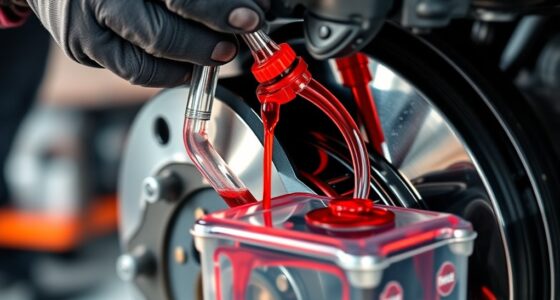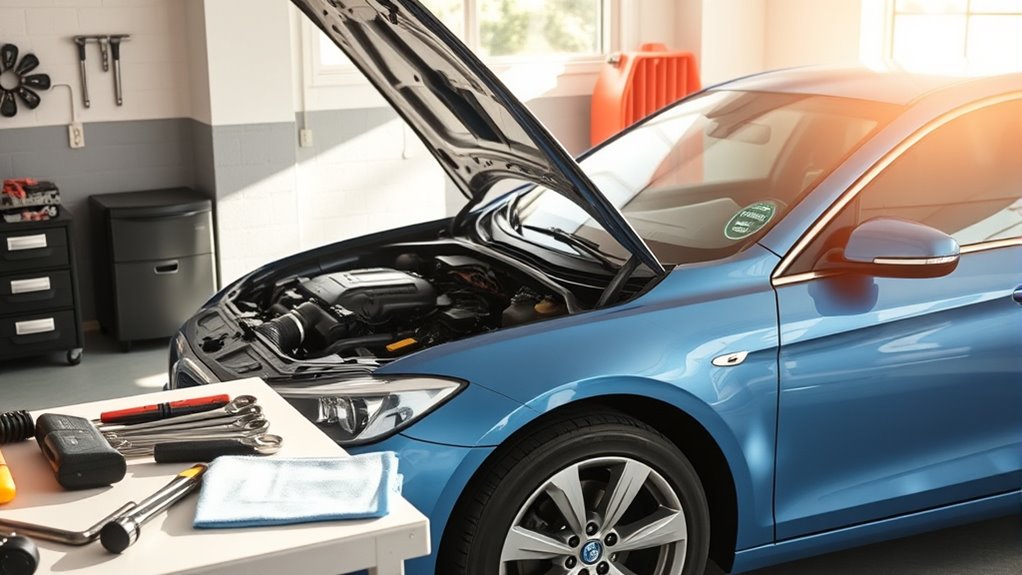

To prepare your car for storage, start by cleaning and waxing the exterior, then check and top off all essential fluids like oil, coolant, and brake fluid using manufacturer-recommended types. Disconnect the battery or use a trickle charger, and store it in a cool, dry place. Inflate tires to recommended pressure, elevate the vehicle if possible, and cover it with a breathable cover. Following these steps helps protect your car from damage—keep going to learn more tips for long-term storage.
Key Takeaways
- Disconnect the battery or use a trickle charger and store it in a cool, dry place.
- Top off all essential fluids with manufacturer-recommended types to prevent corrosion and system damage.
- Wash, dry, and apply wax to the vehicle, then inflate tires and elevate on jack stands if possible.
- Cover the vehicle with a breathable cover to protect from dust, moisture, and environmental elements.
- Regularly inspect the vehicle for signs of damage or moisture and maintain proper tire pressure and storage conditions.
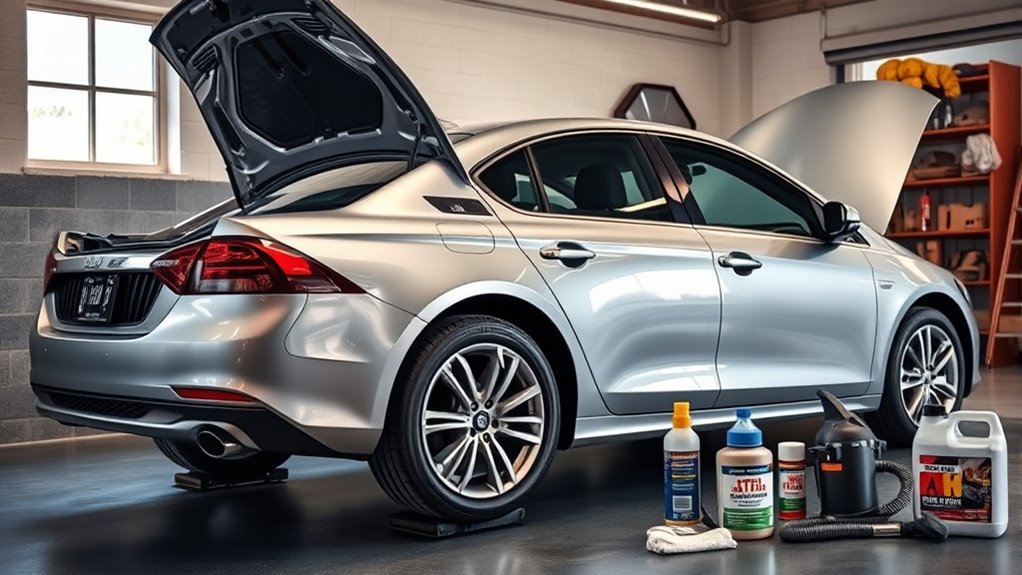
When you’re preparing your car for storage, proper steps can prevent damage and keep it in good condition for when you’re ready to use it again. One of the most critical tasks is battery maintenance. A car sitting idle for an extended period can drain the battery, leading to a dead cell and making it difficult to start later. To prevent this, you should disconnect the negative terminal or use a trickle charger to keep the battery charged. If you choose to disconnect it, store the battery in a cool, dry place and check its charge periodically. This simple step can save you from the hassle and cost of a new battery when you take your car out of storage.
Fluid top-offs are equally important. Before storing your vehicle, ensure all essential fluids—such as engine oil, coolant, brake fluid, and transmission fluid—are at their proper levels. Low fluid levels can cause corrosion, especially if the car sits unused for months. Top off these fluids with the manufacturer-recommended types to prevent moisture buildup and corrosion, which could damage your vehicle’s systems over time. Pay particular attention to engine oil; fresh oil creates a protective film that shields engine parts from corrosion. Coolant levels should be checked and topped off to prevent freezing or overheating, especially if you live in a climate with significant temperature fluctuations. Maintaining proper fluid levels ensures your car remains protected from internal damage during storage.
In addition to battery and fluids, consider other maintenance measures. Wash and thoroughly dry your vehicle to remove dirt and grime that could cause rust. Applying a coat of wax adds a protective barrier against moisture and dust. Inflate the tires to the recommended pressure to prevent flat spots from developing during long storage periods. If possible, elevate the vehicle on jack stands to take the weight off the tires, further preventing flat spots. Cover your car with a breathable cover to shield it from dust, dirt, and light moisture, but avoid plastic covers that trap condensation and promote rust.

NOCO GENIUS1: 1A 6V/12V Smart Battery Charger – Automatic Maintainer, Trickle Charger & Desulfator with Overcharge Protection & Temperature Compensation – for Lead-Acid & Lithium Batteries
MEET THE GENIUS1 — Similar to our G750, just better. It's 35% smaller and delivers over 35% more…
As an affiliate, we earn on qualifying purchases.
As an affiliate, we earn on qualifying purchases.
Frequently Asked Questions
How Often Should I Start My Stored Car During Long-Term Storage?
You should start your stored car every 2 to 4 weeks to maintain the battery and engine. During these startups, check the battery for corrosion and guarantee the engine runs smoothly. Let the engine reach operating temperature, and consider turning on the accessories to keep the battery charged. This routine prevents battery drain and helps you spot any issues early, keeping your car ready for use when needed.
What Type of Fuel Stabilizer Is Best for Preserving My Gas?
Imagine your gas as a fragile potion, ready to lose its potency over time. You should choose a fuel stabilizer with quality fuel additives to extend its shelf life. Opt for stabilizers designed specifically for long-term storage, as they effectively prevent engine gum and varnish. By doing so, you preserve your gas’s freshness, ensuring your vehicle starts smoothly when you need it again, even after months of dormancy.
Can I Store My Car Outside Without a Garage?
You can store your car outside, but you need to follow outdoor storage tips and weatherproofing strategies. Park it on a level surface and use a high-quality, breathable car cover to protect it from the elements. Consider applying a weatherproofing spray to guard against rain, snow, and UV rays. Regularly check on your vehicle to make sure it’s protected, and remove any debris that might accumulate around it.
How Do I Prevent Tire Flat Spots During Storage?
To prevent tire flat spots during storage, prioritize proper tire inflation to maintain consistent contact with the ground. You should also regularly rotate the wheels to distribute pressure evenly and prevent hard spots from forming. Additionally, consider using tire cradles or jacks to lift the tires slightly off the ground. These proactive practices help keep your tires round and ready, avoiding flat spots and ensuring smooth driving once you take your car out of storage.
What Should I Do if My Car Develops Mold or Musty Odors?
If your car develops mold or musty odors, start with mold removal by cleaning affected areas with a mixture of water and vinegar or a specialized cleaner. To prevent odors, leave the windows slightly open for ventilation and place odor absorbers like baking soda or activated charcoal inside. Regularly inspect and clean your car during storage to keep mold at bay and maintain fresh air inside.

Season Guard Car Cover Dirtproof, Water-Resistant, Breathable, Snow Dustproof, Indoor and Limited Outdoor Car Covers Fits Sedans up to 200", Gray
Easy Fit Guide: Fits all Full-Size Sedans up to 200" Length; 76" Width; and 60" Height. Car Covers…
As an affiliate, we earn on qualifying purchases.
As an affiliate, we earn on qualifying purchases.
Conclusion
Now that you’ve gone through this DIY checklist, your car is ready to rest like a sleeper waiting for spring. Proper preparation keeps it safe and sound, preventing any surprises when you’re ready to hit the road again. Think of it as tucking your vehicle in for a peaceful nap, so it wakes refreshed and ready. With these steps, your car’s storage journey will be smooth sailing, ensuring it stays in top shape until you’re ready to drive again.
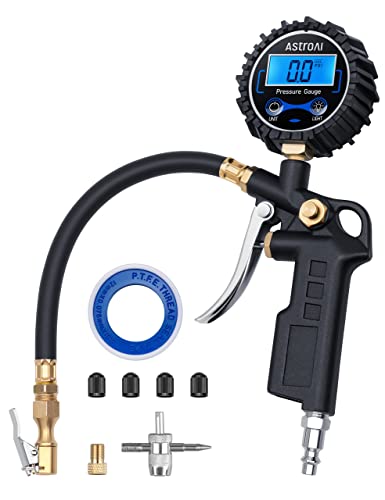
AstroAI Digital Tire Pressure Gauge with Inflator, 3-250 PSI Air Chuck & Compressor Accessories Heavy Duty with Quick Connect Coupler, 0.1 Display Resolution, 1pack
COMPATIBLE WITH both ¼” and ½” NPT air compressors outputs. COMPATIBLE WITH Standard Schrader Valves.
As an affiliate, we earn on qualifying purchases.
As an affiliate, we earn on qualifying purchases.

Amazon Basics Steel Jack Auto Stands, 3 Ton (2.7 metric Ton) Capacity, Easy to Use, Adjustable Height, 6,000 lb, 1 Pair, Black and Red
Pair of 3 Ton (2.7 metric Ton) jack stands with 6,000-pound capacity
As an affiliate, we earn on qualifying purchases.
As an affiliate, we earn on qualifying purchases.