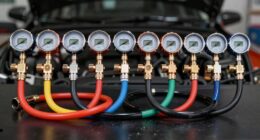
If your car A/C isn’t cooling well, it probably needs a recharge. You’ll locate the low-pressure service port, connect a recharge kit, and add refrigerant while keeping an eye on the pressure gauges. Make sure to use the correct refrigerant type for your vehicle to avoid damage. Be careful not to overfill, as too much refrigerant can harm your system. Want to find out more about the proper process and safety tips? Keep going.
Key Takeaways
- Locate the vehicle’s low-pressure service port and connect the recharge hose securely before adding refrigerant.
- Use the correct refrigerant type specified in your vehicle’s manual, such as R-134a or R-1234yf.
- Start the engine, turn on the AC to maximum cool, and add refrigerant gradually, monitoring pressure gauges.
- Avoid overfilling or underfilling to prevent system damage and ensure proper cooling performance.
- Consider professional diagnosis for leaks or system issues to maintain optimal AC function and safety.
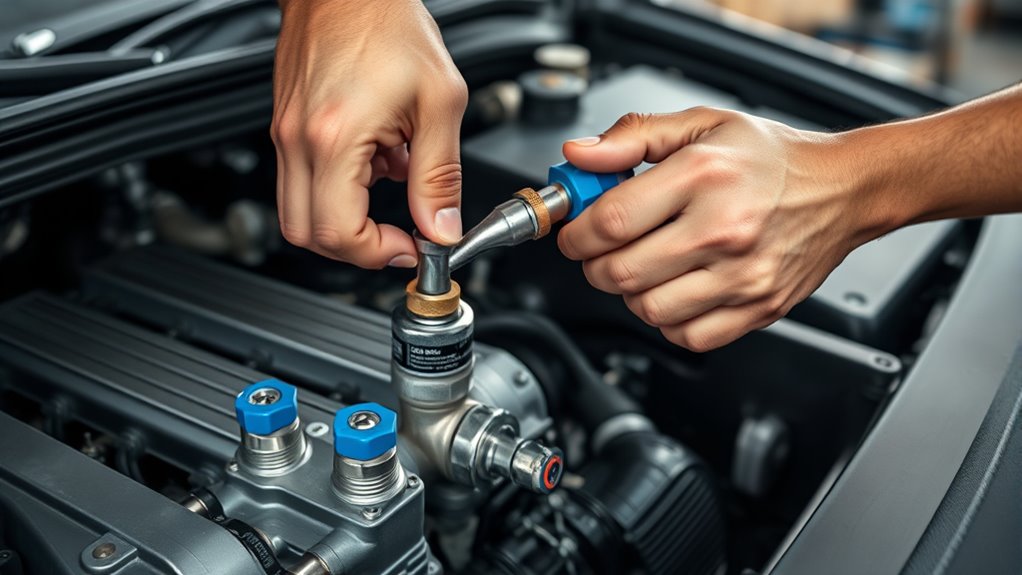
If your car’s air conditioner isn’t cooling as effectively as it used to, recharging the system can restore its performance. Over time, the refrigerant—the chemical responsible for absorbing and releasing heat—leaves the cooling system through leaks or normal wear. When this happens, your AC struggles to produce cold air, making drives uncomfortable, especially during hot weather. Recharging the system involves adding refrigerant back into the cooling system to guarantee it functions properly again. Before doing so, it’s essential to understand the different refrigerant types compatible with your vehicle, as using the wrong one can cause damage or reduce efficiency. The most common refrigerants are R-134a and R-1234yf. R-134a has been the standard for many years, but newer models often use R-1234yf, which is more environmentally friendly. Checking your vehicle’s manual or existing service labels will tell you which refrigerant type you need. Once you know this, recharging is straightforward but must be done carefully to avoid overfilling or underfilling, both of which can impair your AC’s performance. You’ll need a recharge kit that includes the appropriate refrigerant and a gauge to monitor pressure levels. Start by locating the low-pressure service port, usually near the refrigerant lines or compressor. Connect the recharge hose to this port, ensuring it’s sealed tightly. Then, start your engine and turn on the AC to maximum cool. Follow the instructions on your recharge kit to add refrigerant gradually, watching the pressure gauges closely. The goal is to reach the recommended pressure level specified for your vehicle, which indicates the right amount of refrigerant in the system. Too much refrigerant can cause high pressure, risking damage to the compressor or other components, while too little results in poor cooling. If you’re unsure about the process or the refrigerant type, it’s wise to consult a professional. They have the expertise and tools to perform a precise recharge, leak detection, and system diagnosis. Proper refrigerant handling is crucial for safety and system efficiency. Recharging your cooling system is a cost-effective way to restore your AC’s efficiency, but it’s not a permanent fix if leaks persist. Regular maintenance and inspections can prevent refrigerant loss and ensure your system operates smoothly. Remember, handling refrigerants requires caution; these chemicals can be hazardous if mishandled. Wearing gloves and eye protection is recommended. In conclusion, recharging your car’s air conditioning system involves identifying the correct refrigerant type, safely adding refrigerant, and monitoring pressure levels to restore top cooling performance. Proper care not only keeps your car comfortable but also prolongs the lifespan of your cooling system components.
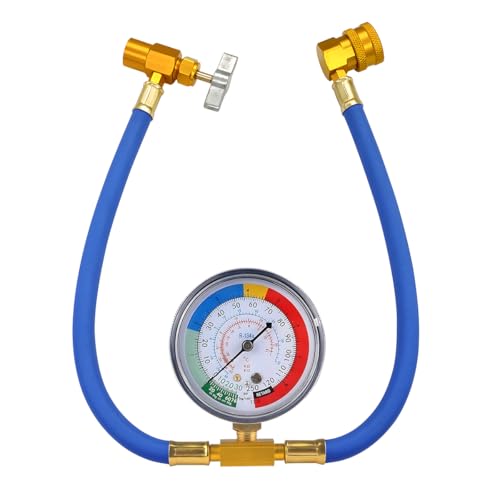
TNAIYH R134A Car AC Refrigerant Charge Hose Kit, Air Conditioning Charge Hose with Gauge & 1/2 Dispensing Valve, Vehicle Refrigerant Recharge Measuring Accessories, Universal Fit
High Quality Material: This car AC refrigerant charge hose is crafted with high-strength aluminum material, which strong pressure…
As an affiliate, we earn on qualifying purchases.
As an affiliate, we earn on qualifying purchases.
Frequently Asked Questions
How Often Should I Recharge My Car’s A/C System?
You should typically recharge your car’s A/C system every 2-4 years, but it depends on refrigerant types and system condition. If you notice reduced cooling or leaks, it’s time for a recharge. Regular maintenance helps extend your A/C system lifespan, preventing costly repairs. Keep an eye on refrigerant levels, and get a professional checkup when needed to assure your system stays efficient and cools effectively.
Can I Recharge My A/C System Myself?
You can attempt a DIY refrigerant recharge with an A/C toolkit if you have some mechanical skills, but it’s often better left to professionals. Using DIY refrigerant kits might seem easy, but incorrect handling can damage your system or cause leaks. If you’re confident and follow instructions carefully, you can try recharging your A/C system yourself. However, for ideal safety and performance, visiting a certified technician is recommended.
What Are Signs My A/C Needs Recharging?
Think of your car’s AC like a loyal sidekick—if it starts acting up, you’ll notice signs. You might see coolant leaks under your vehicle or a decrease in cooling power. Unusual compressor noise or warm air blowing from vents also hint at low refrigerant levels. These signs tell you it’s time to recharge your system, preventing further damage and keeping you cool on the road.
Is Recharging Safe for My Vehicle’s Environment?
Recharging your car’s A/C is safe for the environment when you use eco-friendly refrigerants and guarantee there are no refrigerant leaks. Modern refrigerants are less harmful and help reduce ozone depletion. Always have a professional check for leaks before recharging, as leaks can release harmful gases. Proper recharging minimizes environmental impact and keeps your system running efficiently, so it’s a responsible choice if done correctly.
How Much Does Professional A/C Recharging Cost?
You can expect a professional A/C recharging to cost between $100 and $300, depending on your vehicle and location. The cost estimate covers refrigerant, labor, and possible system checks. Service options vary, including simple recharges or extensive inspections. Always ask your technician for a detailed estimate beforehand, so you understand what’s included and can choose the best option for your car’s cooling needs.

VEVOR AC Gauge Set, 3-Way AC Manifold Gauge Set for R134A, R22, R12, R502 Refrigerants – Freon Gauges Include 5 ft Hoses, Couplers, and Can Tap for Car Auto Freon Charging and Evacuation
Multi-Scenario Cooling Adaptability: This pressure gauge set supports four types of refrigerants, catering to maintenance needs for vehicle…
As an affiliate, we earn on qualifying purchases.
As an affiliate, we earn on qualifying purchases.
Conclusion
Now that you know how to recharge your car air conditioner, you’re all set to stay cool on those hot days. Regular maintenance can prevent costly repairs and keep your system running smoothly. Don’t you want to enjoy invigorating, cold air whenever you hit the road? Just remember to check your refrigerant levels and recharge when needed. With a little effort, you can keep your car comfortable and cool all summer long.

ZeroR AC Refrigerant R134a Replacement – Eco-Friendly, 100% Natural Hydrocarbon Gas – Compatible and Easy to Install with R134a A/C Recharge Systems – 3 Cans (6oz Each)
GREEN REFRIGERATION SOLUTION: ZeroR AC Refrigerant is a 100% natural hydrocarbon gas, offering a more eco-friendly alternative to…
As an affiliate, we earn on qualifying purchases.
As an affiliate, we earn on qualifying purchases.

REALHUNLEE Air Conditioner UV Dye Leak Detector, Pro Auto Oil AC UV Dye Leak Test Detection Tool Kit 68 LED A/C UV Flashlight Detector with Protective Glasses
【Professional Grade & High Accuracy】– Pro High-intensity true UV leak detection flashlight, INCLUDE GLASSES! 12.3 W 385-395nm leak…
As an affiliate, we earn on qualifying purchases.
As an affiliate, we earn on qualifying purchases.