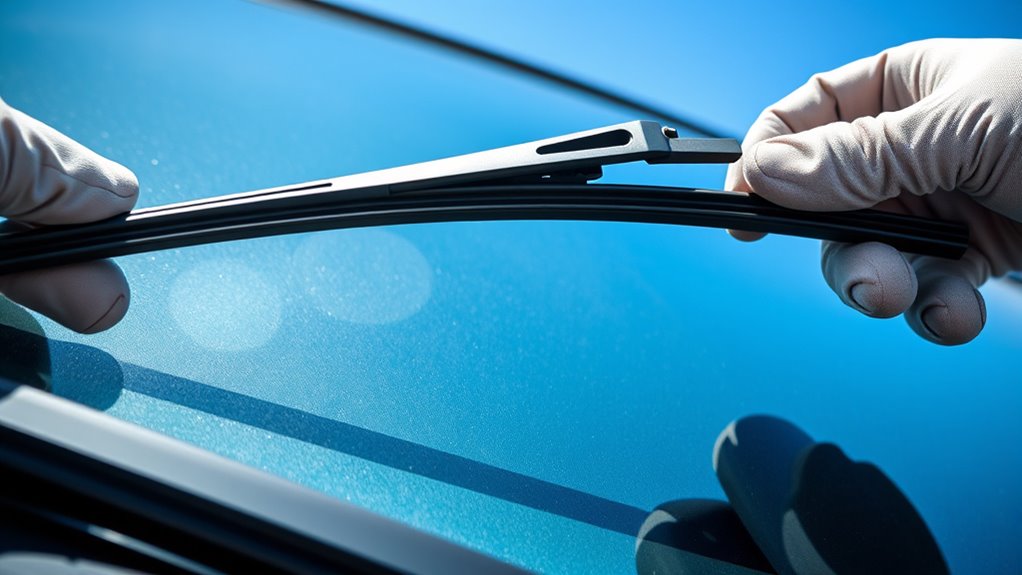

Replacing your windshield wipers is simple and boosts visibility in bad weather. First, lift the wiper arm carefully and identify how your blades attach—whether they slide on or clip in. Remove the old blades and slide or clip in the new ones, making sure they’re secure. Lower the arm gently and test the blades. If you want to guarantee a perfect fit and proper installation, keep going for more tips and details.
Key Takeaways
- Identify your wiper blade type and check for compatibility before purchasing replacements.
- Lift the wiper arm carefully, then release the old blade using the appropriate tab or connector.
- Attach the new blade securely, ensuring it clicks into place and fits properly on the arm.
- Lower the wiper arm gently onto the windshield, avoiding damage or scratches.
- Test the wipers to confirm smooth operation and clear visibility after installation.
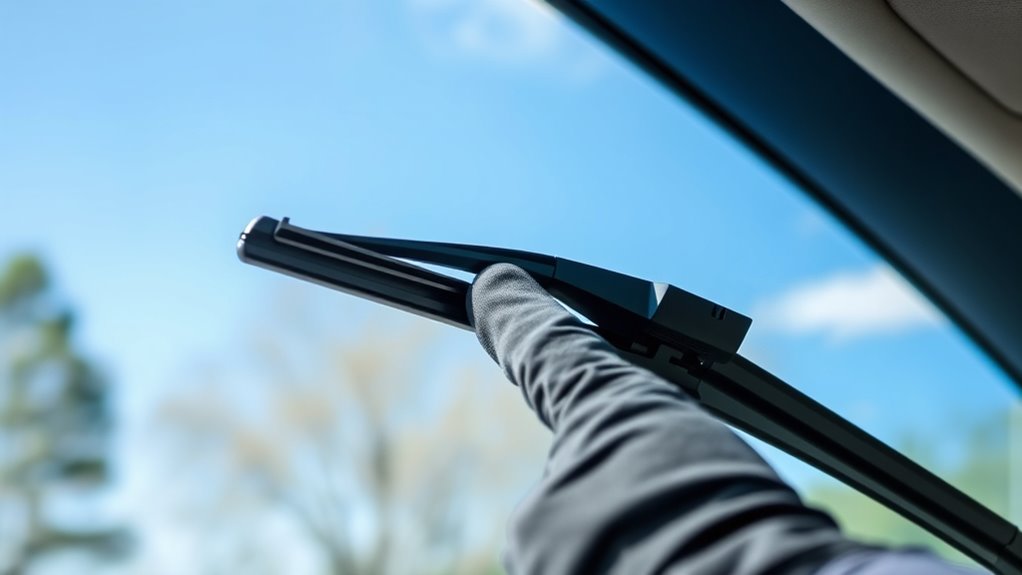
Replacing your windshield wipers is a simple task that can substantially improve your visibility during bad weather. When it’s time to swap out those old, streaky blades, understanding the different wiper blade types and having the right installation tools makes the process smoother and more efficient. Wiper blade types vary mainly in material and design, with traditional frame blades and modern beam blades being the most common. Frame blades have a metal framework that holds the rubber strip, making them generally more affordable and easier to find. Beam blades, on the other hand, have a sleek, single-piece design that provides better contact with the windshield, especially in winter conditions. Knowing which type fits your vehicle ensures you get the right match and prime performance.
Before you begin, gather your installation tools. Typically, you’ll need a pair of gloves, a clean cloth, and possibly a small screwdriver or pliers if your wiper arms have retaining clips. Most wiper blades come with a connector or adapter, but double-check your car’s specific requirements before heading to the store or attempting the replacement. The key is to follow the instructions provided with the blades carefully, since installation methods can vary slightly depending on the brand and type.
Start by lifting the wiper arm away from the windshield, being careful not to let it snap back and crack the glass. Inspect the attachment area to identify the type of connector your blade uses. Many blades simply slide into place and lock, but some may require you to press a tab or release a clip. If you’re using installation tools like a screwdriver, you might need to remove a retaining clip or adjust the connector. Once you’ve aligned the new blade with the wiper arm’s hook or connector, slide or clip it into position, ensuring it’s secure. Double-check that the blade moves smoothly and is firmly attached before lowering the arm back onto the windshield.
windshield wiper replacement kit
As an affiliate, we earn on qualifying purchases.
As an affiliate, we earn on qualifying purchases.
Frequently Asked Questions
How Often Should I Replace My Windshield Wipers?
You should replace your windshield wipers when the wiper blade lifespan ends or if they start streaking, skipping, or making noise. Typically, a seasonal replacement schedule is recommended, with blades lasting about six to twelve months depending on weather conditions and usage. Regularly inspect your wipers for signs of wear to guarantee clear visibility and safety. Don’t wait until it rains to realize your wipers need replacing.
Can I Use Any Type of Wiper Blades for My Car?
Choosing wiper blades is like finding a puzzle piece that fits perfectly. You can’t just pick any, as wiper blade materials vary, and not all are compatible with your vehicle models. Always check your car’s manual to find the right type. Some blades suit specific weather conditions, while others match only certain models. Using incompatible blades can lead to streaks and poor visibility, so select wisely for a clear, safe drive.
How Do I Know if My Wipers Are Damaged?
You can tell if your wipers are damaged through a visual inspection; look for tears, cracks, or missing pieces on the blades. If you notice streaks, skipping, or smudges during use, performance issues are likely. These signs indicate your wipers aren’t functioning properly and need replacement. Regularly checking your wipers guarantees clear visibility and safe driving, especially during bad weather.
Are There Different Wiper Blade Sizes for Different Vehicles?
When you’re shopping for new wiper blades, you’ll notice that blade compatibility varies by vehicle. Different vehicles require specific sizes to fit properly, ensuring ideal performance. To find the right fit, check your owner’s manual, look for vehicle-specific sizes, or measure your current blades. Using the correct size guarantees proper contact with the windshield, prevents streaks, and maintains clear visibility, making your driving safer and more comfortable.
What Tools Do I Need for Replacing Windshield Wipers?
To replace your windshield wipers, you’ll need a few simple tools. Grab a pair of new wiper blades, ideally matching your vehicle’s size, and consider the wiper blade material for durability. A small flathead screwdriver helps remove the old blades, and a cloth or windshield cleaning techniques can prepare the glass for the new ones. No fancy tools required—just these basics to guarantee clear visibility and safe driving.
beam windshield wiper blades
As an affiliate, we earn on qualifying purchases.
As an affiliate, we earn on qualifying purchases.
Conclusion
Now that you know how easy it is to replace your windshield wipers yourself, you’ll save time and money. Some say that changing wipers regularly can prevent costly windshield damage, but studies show that worn blades mainly cause streaks and reduced visibility. So, while DIY is simple, don’t forget to check your wipers often—your safety depends on clear vision. Keep them fresh, and you’ll stay safer on the road, rain or shine.
car wiper blade installation tools
As an affiliate, we earn on qualifying purchases.
As an affiliate, we earn on qualifying purchases.
universal windshield wiper connectors
As an affiliate, we earn on qualifying purchases.
As an affiliate, we earn on qualifying purchases.