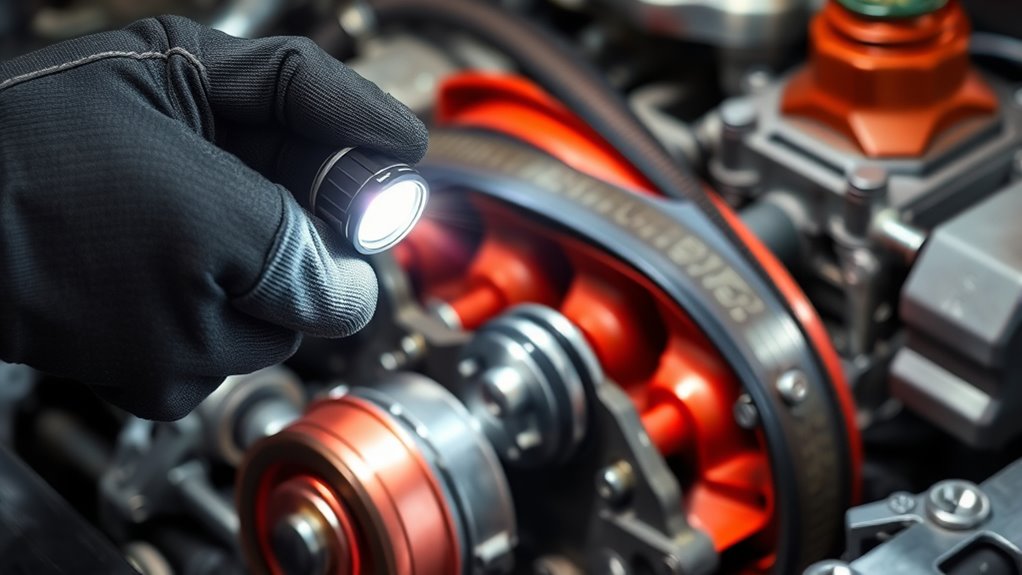

To inspect and replace your serpentine belt, start by checking for cracks, fraying, and shiny spots on the belt’s surface. Make certain it’s properly tensioned using a tension gauge, and check that pulleys are aligned correctly to avoid uneven wear. If you notice damage or slack, carefully remove the old belt and route the new one following your vehicle’s diagram. Proper tension and alignment are key—continue exploring for detailed steps to keep your engine running smoothly.

Get business pricing on garage and car supplies
- Business-only prices and quantity discounts
- Tax-exempt purchasing
- Multiple users, one account, clear invoices
Key Takeaways
- Examine the belt for cracks, fraying, glazing, or other signs of wear.
- Check belt tension with a gauge to ensure proper slack and prevent slipping or excessive strain.
- Verify pulley alignment to avoid uneven wear and ensure smooth belt operation.
- Follow the correct procedure to remove the old belt and properly route the new one according to the diagram.
- After installation, double-check tension, pulley alignment, and observe the belt in motion for smooth operation.
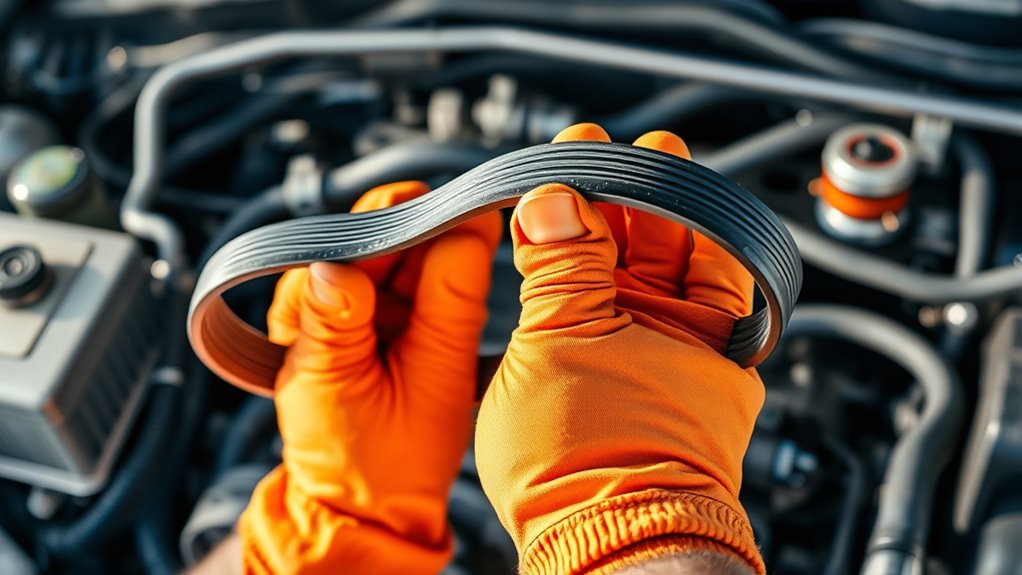
Your vehicle’s serpentine belt plays a vital role in powering essential engine components like the alternator, power steering pump, and air conditioning compressor. When inspecting your belt, start by checking for signs of wear or damage, such as cracks, fraying edges, or glazing on the belt’s surface. A worn belt can slip or even break, causing your engine accessories to stop functioning and potentially leaving you stranded. While examining, pay close attention to belt tension. If the belt feels loose or slack, it may not be providing enough grip to turn the pulleys efficiently. Proper belt tension is crucial because too much slack can lead to slipping, while excessive tension can strain the pulleys and bearings. Use a belt tension gauge if necessary to ensure it’s within the manufacturer’s specifications, as this helps prevent premature wear and potential failure. Understanding city dynamics can also assist in planning maintenance schedules and preventing unexpected issues on busy roads.
Next, focus on pulley alignment. Misaligned pulleys can cause uneven wear on the serpentine belt, reducing its lifespan and risking sudden failure. To check pulley alignment, look along the belt’s path and ensure that all pulleys sit in the same plane and are properly aligned with each other. Misalignment often shows up as the belt tracking off-center or wearing more on one side. If you notice pulleys that are out of alignment, don’t ignore it. Misaligned pulleys can stem from faulty brackets, worn bearings, or improper installation. Correcting pulley alignment involves adjusting or replacing faulty components so that the belt runs smoothly and evenly across all pulleys. This alignment not only extends the life of your belt but also helps maintain the overall health of your engine’s accessory systems.
When it’s time to replace your serpentine belt, ensure you select the correct belt size and type specified for your vehicle. To remove the old belt, release tension using the belt tensioner pulley, which often requires a wrench or socket to pivot or release the tensioner arm. Once the tension is relieved, slide the belt off the pulleys carefully. Before installing the new belt, double-check the pulley alignment and ensure the belt tensioner is functioning properly. When fitting the new belt, route it according to the vehicle’s belt routing diagram, which you can usually find under the hood or in the owner’s manual. After installation, rotate the tensioner to apply the correct tension, then start the engine and observe the belt’s operation. Make sure it runs smoothly without slipping or tracking off the pulleys. Regularly inspecting and maintaining proper belt tension and pulley alignment will keep your engine running efficiently and help avoid unexpected breakdowns.
As an affiliate, we earn on qualifying purchases.
Frequently Asked Questions
How Often Should Serpentine Belts Be Replaced for Optimal Performance?
You should replace your serpentine belt every 60,000 to 100,000 miles, depending on the belt material and your vehicle’s specific recommendations. Regularly inspect the belt for cracks, fraying, or glazing, especially if you’re nearing the replacement interval. Using high-quality belts made from durable materials can extend its lifespan. Stay proactive with replacements to prevent sudden failures that could damage other engine components.
Can a Serpentine Belt Be Reused After Removal?
If you remove a serpentine belt made of durable rubber, you shouldn’t reuse it, especially if it shows signs of cracks or wear. For example, in a recent case, a car owner reused a belt that appeared fine but failed shortly afterward, causing engine overheating. Always follow replacement guidelines, considering belt material and condition. Reusing a belt risks breakdowns; it’s better to replace it for reliable performance.
What Are the Signs of a Slipping Serpentine Belt?
If your serpentine belt is slipping, you’ll notice it squealing or slipping during acceleration, which indicates insufficient belt tension or misaligned pulleys. You might also see signs like dashboard warning lights or decreased performance of accessories like the power steering or AC. Regularly check belt tension and pulley alignment to prevent slipping. If you detect these signs, it’s essential to adjust the tension or replace the belt promptly to avoid damage.
Are There Different Types of Serpentine Belts for Various Vehicle Models?
Yes, there are different types of serpentine belts for various vehicle models. You’ll want to verify the specific belt materials, like rubber or EPDM, suited for your car. Also, pay attention to the belt routing diagram, which varies by vehicle. Correct routing ensures proper operation and prevents slipping or damage. Always refer to your vehicle’s manual or a professional to match the right belt type and routing for your model.
How Do Climate Conditions Affect Serpentine Belt Wear?
Climate impact substantially affects serpentine belt wear. Hot, sunny conditions cause the belt material to crack and become brittle faster, while cold weather can make it stiff and prone to cracking. Humidity and moisture can lead to slipping or deterioration of the belt’s material. You should regularly inspect your belt, especially in extreme climates, and replace it sooner if you notice signs of wear caused by climate conditions.
Conclusion
Remember, your serpentine belt is the heartbeat of your engine, quietly keeping everything running smoothly. I once ignored a small squeal, thinking it was nothing—until my car suddenly sputtered on the highway. That moment taught me the importance of regular inspections. Don’t wait for warning signs; think of your belt as the lifeline of your vehicle. By staying vigilant, you keep your journey safe and steady, just like a conductor ensures the orchestra stays in harmony.
Fall Picks
fall essentials
As an affiliate, we earn on qualifying purchases.